

Maintaining an open source project on GitHub often means reviewing PRs from strangers at midnight, catching security issues nobody else noticed, and doing it all for free. The contributor queue grows faster than any volunteer can handle, and GitHub’s native review features only go so far.
AI code review tools change that equation. They provide automated, context-aware feedback on every pull request, catching bugs, enforcing standards, and flagging vulnerabilities before they reach your main branch. This guide covers seven tools that offer free tiers for public repositories, seamless GitHub integration, and the kind of intelligent feedback that lets maintainers focus on what actually matters.
Why Open Source Maintainers Need AI Code Review Tools
For GitHub-hosted open source maintainers, the best AI code review tools offer a free tier for public repositories, seamless GitHub integration via Apps or Actions, and contextual feedback on every pull request. Top choices include CodeAnt AI, CodeRabbit, and many more, each providing automated reviews that catch bugs, security flaws, and code quality issues before they reach your main branch.
But why does this matter so much for open source specifically? The answer comes down to time, consistency, and risk.
PR Backlogs Drain Maintainer Time and Energy
Community contributions pile up faster than any volunteer maintainer can review them. A popular project might receive dozens of PRs weekly, and each one requires careful attention. This backlog creates stress, delays releases, and often leads to burnout among the very people keeping open source alive.
External Contributors Bring Inconsistent Code Quality
Contributors range from first-time programmers to seasoned experts. One PR follows every convention perfectly, while the next ignores your style guide entirely. AI provides consistent baseline feedback regardless of who submitted the code, helping maintain standards without exhausting human reviewers.
Security Risks From Unknown Contributors
Public repositories attract contributions from anyone, including those who might introduce vulnerabilities. AI tools catch security issues, exposed secrets, and risky dependencies before they merge into your codebase.
GitHub Native Reviews Lack Automation
GitHub’s built-in review features handle the basics well: comments, approvals, and branch protection. However, they don’t offer intelligent suggestions, auto-fixes, or security scanning beyond free CodeQL scanning and Dependabot alerts. That gap is exactly where AI code review tools step in.
What to Look for in AI Code Review Tools for GitHub
Before choosing a tool, check for a few key capabilities.
Seamless GitHub Integration and PR Automation
The best tools install in minutes and run automatically:
GitHub App support: installs without pipeline changes
PR-triggered reviews: runs on every pull request automatically
Inline comments: feedback appears directly on changed lines
Free Tiers or Open Source Friendly Pricing
Most open source projects operate on zero budget. Look for “free for public repos” models, though watch for usage limits on monthly PRs or lines of code scanned.
Security Scanning and Vulnerability Detection
Static Application Security Testing (SAST) identifies vulnerabilities in your code before deployment. SAST tools analyze source code without running it, catching issues like SQL injection, hardcoded secrets, and insecure configurations. For public repositories accepting external contributions, security scanning is essential.
Customizable Review Rules for Project Standards
Every project has unique conventions. Your AI tool can allow custom rulesets or learn from existing patterns in your codebase.
Multi-Language Support
Open source projects often span multiple languages. Look for tools supporting JavaScript, Python, Go, Rust, Java, TypeScript, and beyond.
Quick Comparison of the Best GitHub AI Code Review Tools
Tool | Best For | Free for Public Repos | Key Strength |
CodeAnt AI | Review, security, and quality in one | Yes (100% off, contact-based) | Security + quality + AI reviews unified |
CodeRabbit | Conversational PR feedback | Yes | Natural language explanations |
GitHub Copilot Code Review | GitHub-native experience | No (paid Copilot plans) | Deep GitHub integration |
Codacy | Quality dashboards | Yes (limited) | Comprehensive metrics |
SonarQube Cloud | Enterprise quality gates | Yes | Industry-standard rules |
DeepSource | Auto-fix suggestions | Yes | One-click fixes |
Qodo | Test generation focus | Yes (free for OSS repos) | AI-generated test cases |
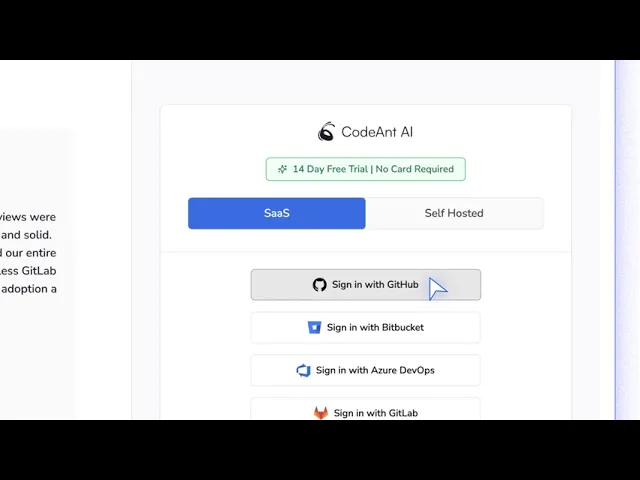
CodeAnt AI
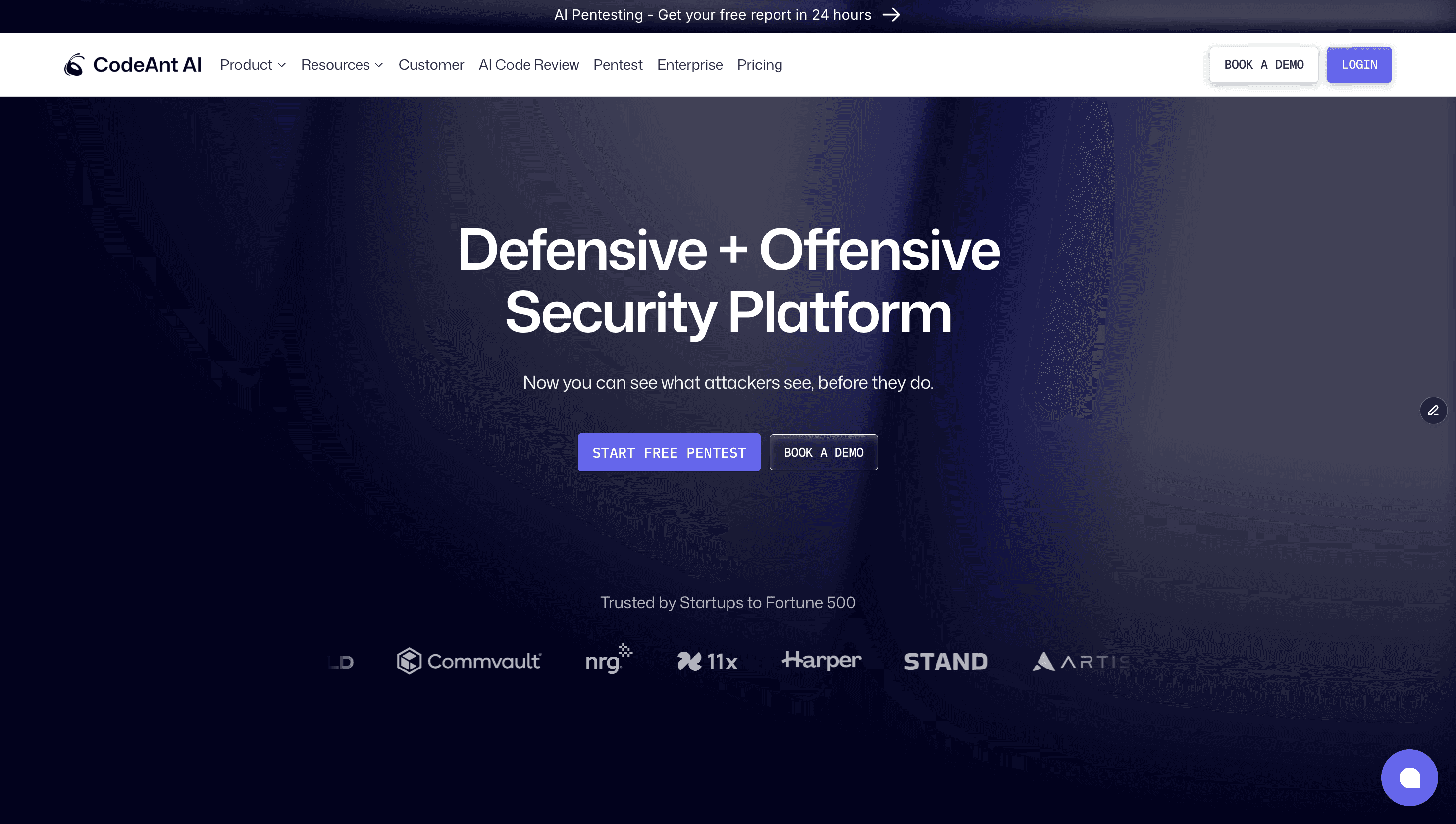
CodeAnt AI brings AI-powered code reviews, security scanning, and quality metrics together in one platform. Rather than juggling multiple tools, you get a unified view of code health. For maintainers who want comprehensive coverage without complexity, this approach saves significant setup time.
Key Features
AI-powered PR reviews: line-by-line suggestions with context-aware explanations
Security scanning: SAST, secrets detection, and dependency risk analysis
Quality metrics: tracks complexity, duplication, and maintainability over time
Custom rules: enforce project-specific standards automatically
30+ languages supported: covers most open source tech stacks
What sets CodeAnt apart is its 360° approach. It doesn’t just flag issues. Instead, it understands your code’s context, provides actionable fixes, and delivers developer-level insights like commit patterns, review velocity, and security issues mapped to contributors.
Best For: Open source maintainers who want security, quality, and AI review in a single GitHub integration.
Pricing: Premium is $24/user/month with a 14-day free trial covering 100 PR reviews. Open source projects get 100% off, arranged with the team rather than through an automatic public-repo tier.
CodeRabbit
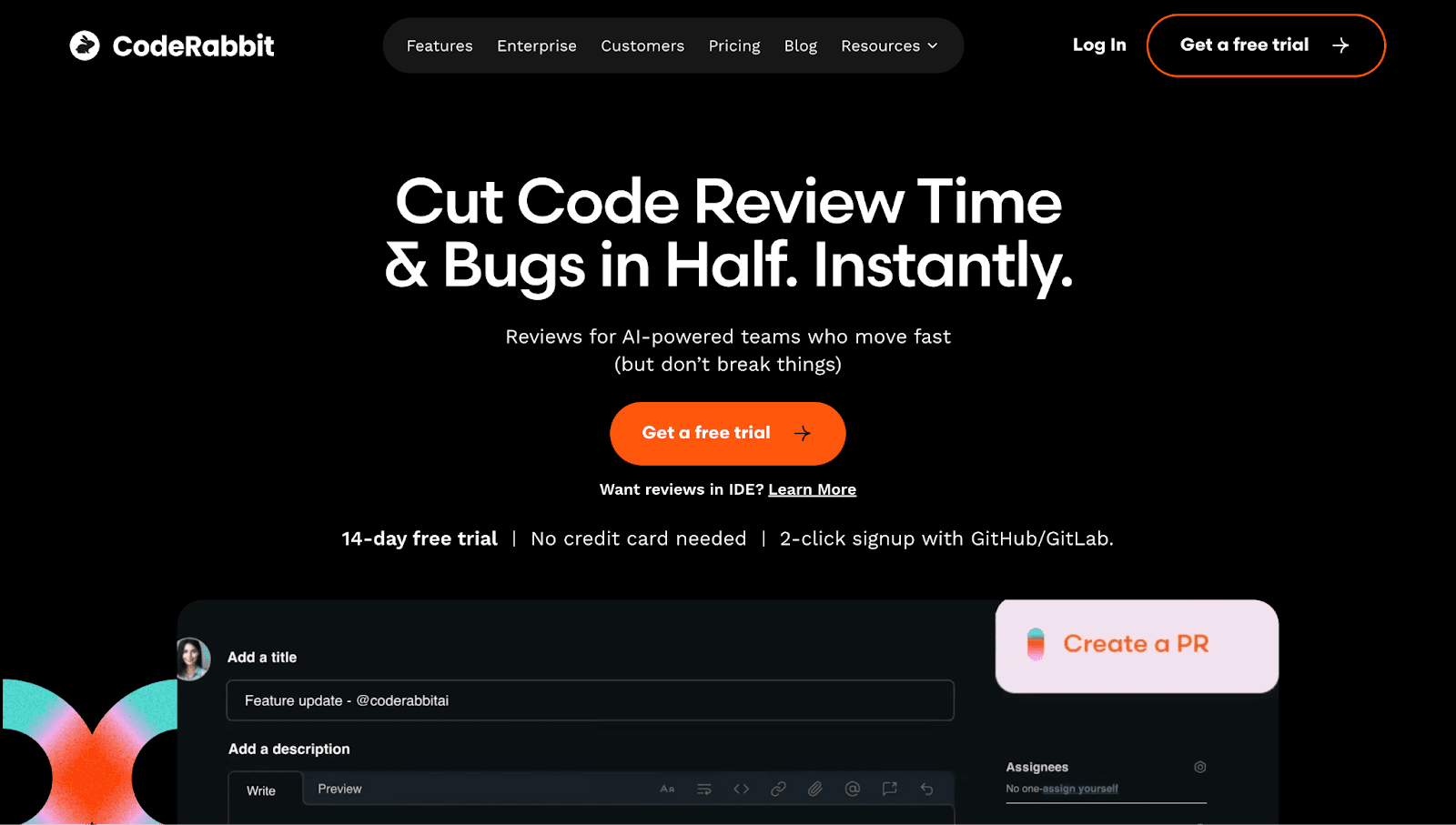
CodeRabbit focuses on making AI feedback approachable and conversational. It explains changes in plain language, which helps onboard new contributors who might feel intimidated by terse automated comments.
Key Features
Conversational summaries: explains changes in plain language
Interactive chat: ask follow-up questions directly in PR comments
Auto-review on PR open: no manual triggers required
Best For: Teams wanting human-readable feedback that educates contributors while reviewing their code.
Pricing: Free reviews forever for public repositories at Pro level. Paid Pro is $24/user/month billed annually, Pro Plus $48.
Limitations: Security scanning depth is limited compared to dedicated SAST tools. Quality metrics are less comprehensive than full code health platforms.
Check out this CodeRabbit alternative.
GitHub Copilot Code Review
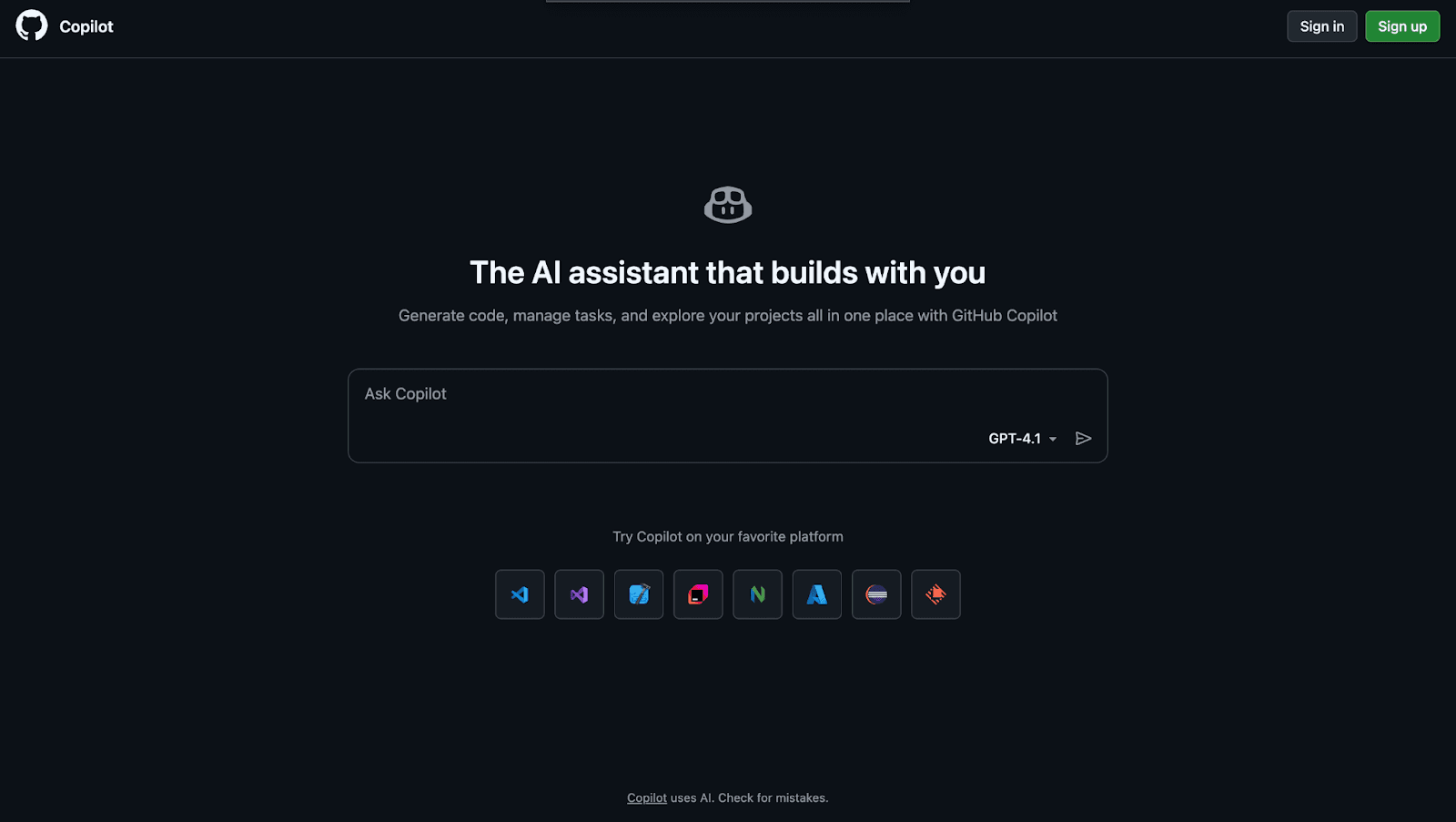
If your team already uses GitHub Copilot for code completion, Copilot Code Review provides a unified AI experience across coding and reviewing. No third-party apps required.
Key Features
Native GitHub integration: no additional app installation
AI suggestions: powered by the same model as Copilot autocomplete
Review summaries: condensed overview of PR changes
Best For: Teams already invested in the GitHub Copilot ecosystem who want consistency across their AI tools.
Pricing: Included in paid Copilot plans from Pro ($10/month) up, and each review consumes AI credits. Not available on Copilot Free.
Limitations: No standalone free tier for open source projects. On private repos, code security scanning is a paid GitHub product, though CodeQL stays free on public repos. Reviews are comment-only and never count as required approvals.
Check out this GitHub Copilot alternative.
Codacy
Codacy emphasizes quality dashboards and long-term code health tracking. If you want visibility into how your codebase evolves over time, Codacy provides the metrics.
Key Features
Quality dashboards: visualize code health trends over time
Coverage tracking: integrates with test coverage reports
Multi-repo support: manage standards across multiple projects
Best For: Maintainers who want to track technical debt and quality trends across releases.
Pricing: Free tier available for open source with limitations on advanced features.
Limitations: AI suggestions are less advanced than newer tools. Initial setup can require more configuration to reduce noise from non-critical alerts.
Check out this Codacy Alternative.
SonarQube Cloud (Formerly SonarCloud)
SonarQube Cloud brings enterprise-grade quality gates to open source. With thousands of pre-built rules across languages, it’s the choice for projects that want rigorous, reproducible standards.
Key Features
Quality gates: block merges that fail defined standards
Industry-standard rules: thousands of pre-built checks across languages
CI/CD integration: works with GitHub Actions and other pipelines
Best For: Established open source projects matching enterprise quality expectations.
Pricing: Free for public repositories and private projects under 50k lines. Team starts at $34/month for 100k lines of code.
Limitations: Historically rule-driven, though it now ships AI CodeFix and AI Code Assurance. The static-rule core still produces more volume than conversational reviewers, so expect tuning.
Check out this SonarQube Alternative.
DeepSource
DeepSource specializes in actionable fixes. Instead of just reporting issues, it offers one-click fixes that reduce back-and-forth with contributors.
Key Features
Autofix suggestions: one-click fixes for detected issues
Security analysis: identifies vulnerabilities and anti-patterns
Performance insights: flags inefficient code patterns
Best For: Maintainers who want fixes, not just reports. DeepSource reduces the time spent explaining how to resolve issues.
Pricing: Free for public repositories with 1,000 PR reviews a month, plus pay-as-you-go AI review beyond that. Team is $24/user/month billed yearly.
Limitations: Focuses primarily on issue detection and fixing. Less emphasis on PR summarization or conversational feedback.
Check out this Deepsource Alternative.
Qodo
Qodo takes a different approach by focusing on test generation alongside code review. If your project struggles with test coverage, Qodo helps fill that gap.
Key Features
AI test generation: suggests unit tests for new code
Code review comments: identifies potential bugs and edge cases
IDE integration: works in VS Code and JetBrains alongside GitHub
Best For: Projects prioritizing test coverage and wanting AI help writing tests for contributed code.
Pricing: Free for any open source GitHub repo through Qodo’s Google Cloud partnership. Individuals get 30 PRs a month free, and Pro Team runs $30/month base.
Limitations: Test generation focus means less comprehensive security scanning. PR review features are less mature than dedicated review tools.
Check out this Qodo Alternative.
Fully Open Source AI Code Review Tools You Can Self-Host
Every tool above is a hosted service with an open-source-friendly tier. If you want the reviewer itself to be open source, these six projects ship code you can run yourself. Stars and releases checked July 5, 2026.
Tool | Stars | License | Latest release |
|---|---|---|---|
PR-Agent | 11,968 | Apache-2.0 | v0.39.0 (Jul 2026) |
reviewdog | 9,425 | MIT | v0.21.0 (Sep 2025) |
Danger | 5,684 | MIT | v9.6.0 (Jun 2026) |
Semgrep | 15,771 | LGPL-2.1 | v1.168.0 (Jun 2026) |
Kodus | 1,218 | AGPL-3.0 | Jul 2026 |
shippie | 2,446 | MIT | v0.21.2 (Jun 2026) |
PR-Agent
The original Qodo PR-Agent moved to a community org in April 2026, and qodo-ai/pr-agent now redirects to The-PR-Agent/pr-agent. Apache-2.0, with v0.39.0 shipped in July 2026.
The README is explicit that this is the community-maintained project, not the Qodo free tier. Most roundups still cite the old repo, so check the org name before you install.
reviewdog
Bring-your-own-linter review comments, posted straight to the PR through GitHub Actions. MIT licensed with around 9,400 stars. Not an LLM reviewer, which is exactly why CI purists like it.
Danger
Rule-based PR convention enforcement in Ruby or JavaScript, MIT licensed. It will not find logic bugs, but it retires the you-forgot-the-changelog comment forever.
Semgrep
The de facto open source SAST engine, LGPL-2.1, with about 15,800 stars. Pair it with an LLM reviewer for security coverage the model alone will not give you. The rules carry their own license terms.
Kodus
An AGPL-3.0 open-core review agent you can self-host, model-agnostic by design. Around 1,200 stars and shipping weekly as of July 2026.
shippie
An MIT-licensed, extendable review agent where you bring your own model keys. About 2,400 stars, with v0.21.2 released in June 2026.
How to Choose the Right AI Code Review Tool for Your Project
Three questions settle the choice for most projects.
Match Tool Capabilities to Project Size and PR Volume
A small project with occasional PRs has different requirements than a high-traffic repository. Consider free tier limits, since some tools cap monthly PRs or lines scanned.
Prioritize Security for Public Repositories
Public repos face higher security risk by nature. If you accept external contributions, security scanning is foundational.
Consider Contributor Experience and Feedback Tone
AI feedback tone affects whether contributors stick around. Harsh or confusing comments discourage first-time contributors. Look for tools that provide clear, constructive messaging that educates rather than criticizes.
Decide Between a GitHub App and a Self-Hosted Reviewer
Hosted apps win on setup time. Five minutes, no infrastructure, and the vendor absorbs model costs on free OSS tiers.
Self-hosted reviewers win on data control, model choice, and license freedom. Maintainers with sponsorship budgets usually pick an app, while foundations with their own infra go self-hosted.
Automate Reviews and Focus on What Matters Most
AI code review tools free maintainers to focus on architecture, community building, and roadmap decisions instead of repetitive review tasks. The right tool catches bugs, enforces standards, and improves security automatically on every PR.
For open source maintainers juggling limited time and unlimited contributions, that automation is what makes sustainable maintenance possible.
Ready to automate your open source code reviews?Book your 1:1 with our experts today!

