

It's 4 PM on Friday, and your team just pushed a critical feature. You're staring at a pull request with 47 files changed, three reviewers tagged, and zero comments after two hours. Meanwhile, your senior engineers are buried in their own review queues, and that security vulnerability from last sprint is still haunting you.
GitHub's native code review works fine until it doesn't. Once your team scales past a few dozen developers, manual reviews become the bottleneck that slows everything down.
This guide covers the 10 best GitHub AI code review tools for US engineering teams—what they do, how they compare, and how to pick the right one for your workflow.
Why GitHub's Built-In Code Review Falls Short
GitHub's native pull request features give you a solid starting point. You can assign reviewers, leave inline comments, and set branch protection rules. For small teams with straightforward workflows, that's often enough.
But here's the thing: once your team grows past a handful of developers, the cracks start showing. PRs pile up waiting for human reviewers. Security issues slip through because nobody caught them in the diff. And your senior engineers spend half their day reviewing code instead of building features.
The best GitHub AI code review tools for US engineering teams solve this by adding automation, security scanning, and intelligent suggestions directly into your existing workflow. Let's look at where GitHub's native features fall short, then dive into the tools that fill those gaps.
No AI-Powered Suggestions or Guidance
GitHub's built-in review relies entirely on human reviewers. There's no automated intelligence flagging bugs, suggesting improvements, or catching patterns across your codebase. Every issue depends on someone manually spotting it, which means inconsistent coverage and missed problems.
Manual Processes That Cannot Scale
Review queues grow as teams add developers. Senior engineers become bottlenecks when every PR waits for their attention. For US teams with 100+ developers spread across time zones, PRs can sit for days before anyone looks at them.
Limited Security and Vulnerability Detection
GitHub's basic features don't include deep security scanning. Static Application Security Testing (SAST), which analyzes source code for vulnerabilities, requires separate tools. The same goes for secret detection and dependency risk analysis. Without adding more tools, security gaps slip through reviews and into production.
Poor Context Across Large Pull Requests
When a PR touches dozens of files, reviewers often skim rather than dig deep. GitHub doesn't summarize changes or highlight high-risk areas automatically. Critical issues get buried in the diff, and reviewers lose context trying to understand what changed and why.
What GitHub AI Code Review Tools Actually Do
AI code review tools automate the tedious parts of reviewing pull requests. They work alongside your existing GitHub workflow, adding intelligence without changing how your team operates.
Automated Line-by-Line Feedback on Every PR
AI tools comment directly on code changes, flagging bugs, style issues, and potential improvements. Think of it as having an expert reviewer available around the clock, providing instant feedback the moment a PR opens.
Integrated Security and Quality Scanning
Many tools combine code review with vulnerability detection, secret scanning, and dependency risk analysis. Instead of juggling multiple point solutions, you get a unified view of code health in one place.
PR Summaries and Change Documentation
AI generates plain-language summaries of what changed and why. This helps reviewers understand large PRs quickly and creates useful documentation for future reference.
Codebase-Aware Contextual Analysis
Advanced tools learn your codebase patterns and organization-specific standards. They provide relevant, context-aware suggestions rather than generic advice, understanding how your team writes code and what matters most to your architecture.
How to Evaluate GitHub AI Code Review Tools
Choosing the right tool depends on your team's specific situation. Here's what to look for when comparing options.
GitHub Integration Depth
Native GitHub App integrations work more smoothly than webhook-based alternatives. Look for tools that post comments directly in PRs, respect your branch protection rules, and require minimal configuration to get started.
Security and Compliance Capabilities
For US teams, especially in regulated industries, security features matter significantly:
SAST scanning: Identifies vulnerabilities in source code before deployment
Secret detection: Flags exposed API keys, tokens, and credentials
Compliance standards: SOC 2, GDPR, and HIPAA support for audit requirements
Language and Framework Support
Verify support for your stack before committing. Some tools excel in specific languages while others cover broader ecosystems. A tool that's excellent for JavaScript might offer limited value for a Go-heavy codebase.
Pricing and Scalability for Large Teams
Pricing models vary: per-seat, per-repo, or usage-based. US teams with 100+ developers benefit from predictable costs at scale. Watch for tools that become expensive as you grow.
Comparison of the Top 10 GitHub AI Code Review Tools
Tool | Best For | Key Strength | GitHub Integration | Pricing Model |
CodeAnt AI | Unified code health | AI reviews + security + metrics | Native App | Per-user |
GitHub Copilot | IDE-first teams | Native GitHub experience | Built-in | Per-user |
CodeRabbit | PR summaries | Conversational feedback | Native App | Per-repo |
Snyk Code | Security-focused teams | Vulnerability detection | Native App | Per-developer |
SonarQube | Technical debt tracking | Quality gates | Pipeline | Per-instance |
Codacy | Quick setup | Broad language support | Native App | Per-user |
Qodo | Test coverage | Test generation | Native App | Per-user |
Amazon CodeGuru | AWS teams | AWS ecosystem fit | Pipeline | Usage-based |
DeepSource | Developer experience | Fast autofix | Native App | Per-user |
Code Climate | Maintainability metrics | Trend analysis | Native App | Per-user |
Top 10 GitHub AI Code Review Tools for US Engineering Teams
CodeAnt AI
CodeAnt AI brings together AI-powered code reviews, security scanning, and quality metrics in a single platform. It reviews every pull request line-by-line, suggests fixes, and enforces your organization's specific standards automatically.
Features:
AI-driven PR reviews with actionable fix suggestions
Integrated SAST, secret detection, and dependency scanning
Organization-specific rule enforcement
DORA metrics and maintainability tracking
Support for 30+ languages
Best for: US engineering teams wanting a single platform for AI reviews, security, and code quality without juggling multiple tools.
Pricing: 14-day free trial, no credit card required. Plans start at $10/user/month.
Limitations: Newer entrant compared to established players, though the feature set is comprehensive.
GitHub Copilot Code Review
GitHub's native AI assistant focuses on code suggestions within the IDE and newer PR review features. The tight GitHub integration means zero setup friction since it works where your team already lives.
Best for: Teams wanting AI assistance without adding external tools.
Limitations: Limited security scanning depth. Copilot comments don't count as required approvals in branch protection.
Checkout this GitHub Copilot alternative.
CodeRabbit
CodeRabbit positions itself as an AI-first PR reviewer with conversational feedback. It generates detailed PR summaries and allows interactive review comments where you can ask follow-up questions.
Best for: Teams prioritizing PR documentation and reviewer onboarding.
Limitations: Security features are less comprehensive than dedicated security tools.
Checkout this CodeRabbit alternative.
Snyk Code
Snyk specializes in identifying and resolving security vulnerabilities in code and open-source dependencies. It integrates directly into the development workflow and catches issues before they reach production.
Best for: Teams working on high-risk applications where security is paramount.
Limitations: Requires pairing with other tools for full code quality coverage beyond security.
Checkout these Top 13 Snyk Alternatives.
SonarQube
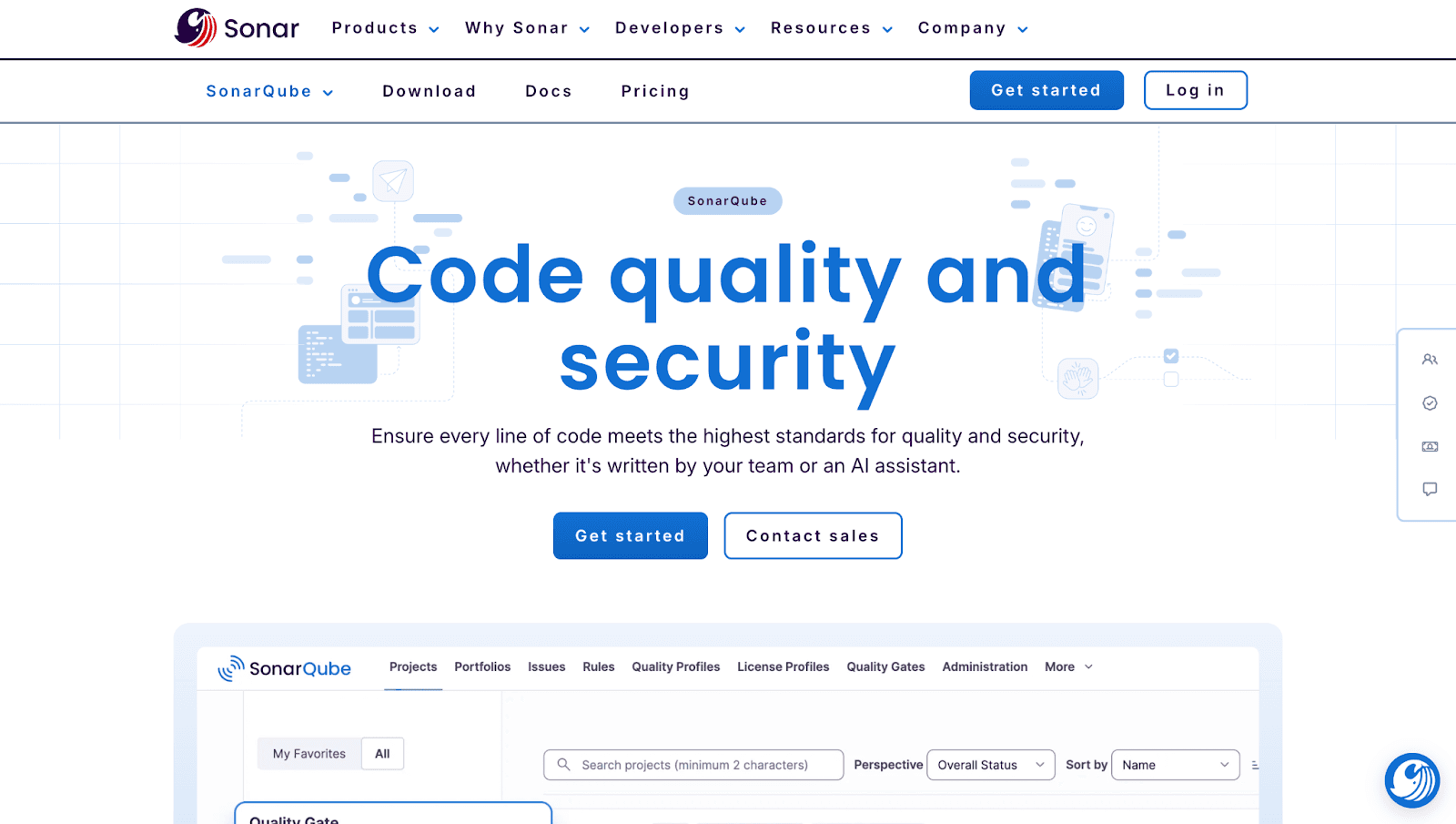
SonarQube is an established code quality platform with recent AI additions. It offers both on-prem and cloud options, with strong technical debt tracking and quality gates that block merges when code doesn't meet standards.
Best for: Enterprise teams needing self-hosted options and detailed quality metrics.
Limitations: Steeper learning curve. Initial setup and rule configuration take time.
Checkout this SonarQube Alternative.
Codacy
Codacy provides automated code review with quality and security checks. It's known for ease of setup and broad language support, so you can be running in minutes rather than hours.
Best for: Teams wanting quick wins without extensive configuration.
Limitations: AI depth is less advanced than purpose-built AI review tools.
Checkout this Codacy Alternative
Qodo
Qodo combines AI code review with test generation capabilities. It focuses on code integrity and suggests test coverage improvements alongside review feedback.
Best for: Teams prioritizing test coverage and code reliability.
Limitations: Newer entrant with an evolving feature set.
Amazon CodeGuru
Amazon CodeGuru is AWS-native, making it a natural fit for teams already deep in the AWS ecosystem. It analyzes code for performance issues and security vulnerabilities.
Best for: AWS-centric organizations wanting consolidated tooling.
Limitations: Limited value outside AWS environments. Less flexible for multi-cloud teams.
Checkout this Qodo Alternative.
DeepSource
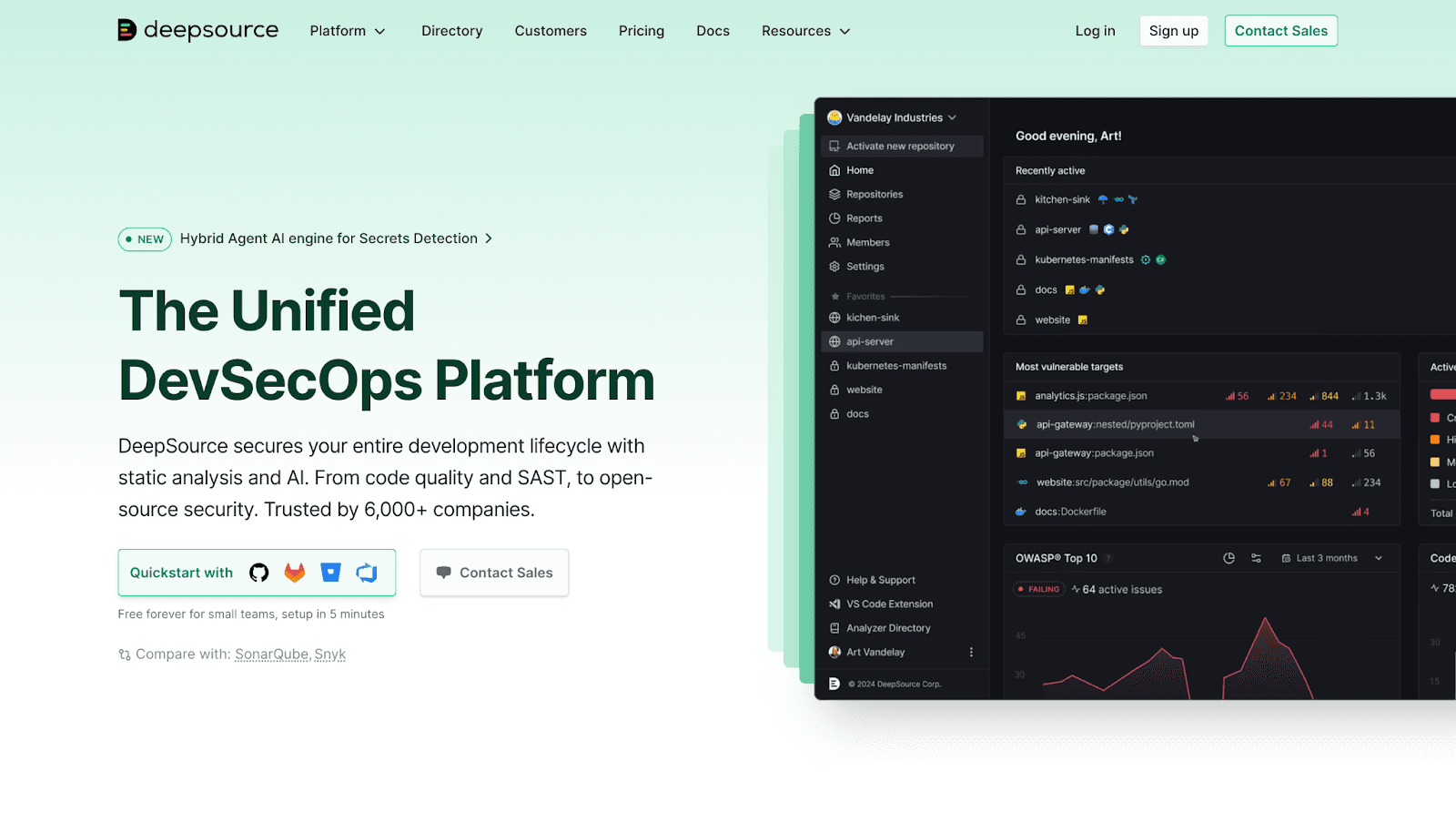
DeepSource offers developer-focused static analysis with autofix capabilities. It's known for speed and a clean UI that developers actually enjoy using.
Best for: Teams prioritizing developer experience and fast feedback loops.
Limitations: Security features are less comprehensive than dedicated security tools.
Checkout this Deepsource Alternative.
Code Climate
Code Climate tracks maintainability and technical debt with quality metrics dashboards and trend analysis. It helps teams visualize code health over time.
Best for: Engineering leaders wanting visibility into codebase trends.
Limitations: AI features are less advanced than purpose-built AI review tools.
How GitHub AI Reviews Improve Team Productivity
The right AI code review tool delivers measurable improvements to how your team ships code.
Faster Pull Request Turnaround
Automated first-pass reviews eliminate waiting for human reviewers to begin. PRs move through the queue faster because AI provides instant feedback the moment a PR opens.
Consistent Review Quality Across Distributed Teams
AI applies the same standards to every PR regardless of reviewer availability or timezone. This consistency matters for US teams with members across coasts or working with offshore partners.
Reduced Context Switching for Senior Engineers
AI handles routine feedback like style issues, common bugs, and documentation gaps. Senior developers focus on architecture decisions and complex reviews rather than nitpicking semicolons.
More Developer Time for High-Impact Work
Automating repetitive review tasks lets engineers spend time on features and innovation. When AI catches the obvious issues, humans can focus on what actually requires human judgment.
Challenges to Expect with AI Code Review Tools
AI tools aren't magic. Setting realistic expectations helps your team adopt them successfully.
Over-Reliance on AI Suggestions
Teams sometimes treat AI feedback as final decisions. Human judgment remains essential for complex logic, business context, and architectural choices. AI is an assistant, not a replacement.
Contextual Limitations and False Positives
AI may flag issues incorrectly or miss context-specific patterns. Teams typically spend the first few weeks tuning rules and providing feedback to reduce noise.
Data Privacy and Security Concerns
Some tools send code to external servers for analysis. Teams with strict data requirements can verify data handling policies, SOC 2 compliance, and on-prem options before deployment.
Team Adoption and Learning Curve
Introducing new tools requires onboarding. Plan for initial configuration, workflow adjustments, and a period where developers learn to trust (and appropriately question) AI suggestions.
How to Maximize ROI from GitHub AI Reviews
Getting value from AI code review tools requires intentional setup and ongoing attention.
Establish Clear Review Guidelines and Standards
Document organization-specific rules so AI tools can enforce them consistently. Define what constitutes a blocking issue versus a suggestion. This clarity helps both AI and human reviewers.
Combine AI Reviews with Human Oversight
The hybrid model works best: AI handles first-pass review, humans approve and handle edge cases. This approach captures the speed benefits of automation while maintaining human judgment where it matters.
Track Metrics and Measure Improvement
Monitor key metrics to quantify impact:
PR cycle time: Time from open to merge
Review turnaround: Time until first review comment
Defect escape rate: Bugs found in production versus caught in review
Integrate with Existing CI/CD Pipelines
AI reviews fit into existing workflows by blocking merges on critical issues and posting results to Slack or Teams. The best implementations feel invisible because they work within processes your team already follows.
Choosing the Right Tool for Your US Engineering Team
Your specific situation determines which tool fits best:
Security and compliance are top priorities: Look at CodeAnt AI or Snyk Code for integrated SAST and SOC 2 compliance
You want a single unified platform: CodeAnt AI combines review, security, and metrics without tool sprawl
You're already deep in AWS: Amazon CodeGuru fits that ecosystem naturally
Budget is constrained: Several tools offer generous free tiers for smaller teams
Your team exceeds 100 developers: Prioritize scalability and predictable pricing
Ship Cleaner Code Faster with the Right GitHub AI Review Tool
GitHub's native review features provide a foundation, but scaling US engineering teams benefit from AI-powered assistance that catches issues earlier, enforces standards consistently, and frees developers to focus on high-impact work.
The right tool combines speed, security, and quality in one workflow. It fits into how your team already works rather than forcing process changes.
Ready to see how AI code reviews transform your workflow?Book your 1:1 with our experts today

