AI Code Review
Top 10 Reasons Engineers Resist AI Code Reviews

Sonali Sood

Founding GTM, CodeAnt AI
On paper, AI reviews promise 50–70% faster pull-request cycles. In practice, many teams quietly resist using them, or disable them altogether.
This resistance isn’t anti-AI sentiment or fear of automation. It’s rooted in experience. Engineers have spent years dealing with tools that claim to “save time” but instead flood reviews with noise, miss real risks, and force humans to double-check every suggestion. When an AI review adds verification work instead of removing it, skepticism is the rational response.
Managers often view AI code review as a productivity lever. Engineers experience it as part of their daily workflow, where context, intent, and collaboration matter more than raw speed. When tools ignore those realities, they erode trust rather than earning it.
But first understand what AI-assisted code review workflows are.
This article breaks down the top 10 reasons engineers resist AI code reviews, based on patterns observed across millions of pull requests. More importantly, it shows how teams can address these concerns, so AI reviews reduce effort, strengthen code quality, and actually get adopted instead of quietly sidelined.
What Are AI Code Reviews?
At its core, this technology automates the feedback loop on pull requests. Instead of waiting hours for a senior engineer to look at your changes, an AI agent scans the code immediately. It uses machine learning models to identify bugs, style violations, and security risks.
The goal is to catch objective errors before a human ever sees them. That said, AI code reviews are an automated process that uses machine learning (ML) and natural language processing (NLP) models, to analyze, review, and provide feedback on code.
It is essentially a highly advanced, automated pair programmer that never sleeps. However, it is not just a simple syntax checker; it attempts to understand logic and intent.
How Do AI Code Reviews Work?
These tools generally function by integrating directly into your version control system. When a developer opens a pull request, the AI triggers a workflow to assess the changes. It typically follows a three-step process to generate feedback:
Code analysis: The tool breaks down the code into manageable chunks, often parsing the abstract syntax tree to understand structure.
Pattern recognition: It compares your code against millions of lines of open-source code and learns best practices to spot anomalies.
Issue detection: It flags everything from security vulnerabilities and performance bottlenecks to simple styling errors.
Most systems combine static code analysis with dynamic analysis rules to provide a comprehensive report.
And now why engineers resist AI code reviews. Let’s break down the top 10 reasons.
Reason #1: Lack of Deep Codebase and Business Context
The biggest complaint from engineers is that AI lacks the “why” behind the code. Most models analyze only the lines changed in a pull request, or at best, the surrounding file. They rarely understand the historical and business context baked into a real production system.
In practice, that missing context looks like this:
Code that appears inefficient but exists to support legacy system constraints
Logic shaped by hard-won production incidents no longer visible in the diff
“Ugly” patterns that protect critical downstream integrations like payments or auth
For example, a developer might write code that looks inefficient but is a deliberate workaround for a brittle legacy dependency. The AI flags it as “bad code” because it compares it to generic best practices. What it doesn’t see is that refactoring this module could silently break a critical payment flow.
The result? Engineers end up justifying intentional decisions to a bot, instead of reviewing real risks, an experience that’s frustrating, time-consuming, and quickly erodes trust.
Check out how to elevate “Code Quality” with “AI Code Reviews”
Reason #2: Excessive False Positives and Comment Noise
Developers hate alert fatigue. When a tool flags 50 issues and 45 of them don’t matter, trust collapses fast. Many AI review tools are tuned to be overly aggressive prioritizing theoretical coverage over real-world usefulness.
In practice, that noise shows up as:
Nitpicky comments on variable names or formatting
Style suggestions that don’t match the team’s conventions
Warnings that are technically correct but irrelevant in context
The result is pull requests cluttered with low-value feedback. Instead of reviewing logic errors, race conditions, or real failure modes, developers spend time dismissing comments that don’t improve the system.
Once the signal-to-noise ratio drops, the tool stops being a reviewer and starts feeling like background spam. At that point, engineers don’t argue with it, they just ignore it entirely.
See What Questions Engineers Actually Ask Before Trusting AI Code Reviews
Reason #3: Hallucinations and Inaccurate Suggestions
Generative AI is famous for being confidently wrong. In code reviews, this manifests as "hallucinations" where the AI suggests a fix that looks syntactically correct but is functionally broken. It might recommend a library function that doesn't exist or suggest a refactor that introduces a subtle bug.
Here is the danger:
Junior developers might blindly accept these changes, assuming the "smart" AI is correct.
Senior developers have to double-check every AI suggestion, which defeats the purpose of automation.
If an engineer spends more time verifying the AI's work than doing the review themselves, the tool has failed. Trust is hard to build and easy to lose when the AI suggests code that doesn't compile.
Reason #4: Loss of Peer Learning and Mentorship Opportunities
Code review is not just a bug-finding exercise. It’s the primary way engineering knowledge spreads across a team. When a senior engineer reviews a junior’s pull request, they’re doing much more than fixing syntax.
They’re transferring:
Architectural reasoning and system design intuition
Domain-specific knowledge that isn’t written down anywhere
Team conventions and “how we do things here” context
When teams lean too heavily on AI for reviews, this human feedback loop starts to erode. A bot can point out what is wrong, but it struggles to explain why a different approach is better for long-term maintainability or future scale.
That’s why engineers push back. They’re not protecting bad code, they’re protecting mentorship moments. Many worry that replacing human reviews with automation will turn learning into checklist compliance, slowing the growth of junior engineers and weakening team culture over time.
Reason #5: Erosion of Team Collaboration and Shared Ownership
Software development is a team sport. The pull request conversation is often where the team aligns on design and implementation details. It is a collaborative space where engineers discuss trade-offs and agree on the best path forward.
When an AI bot dominates the comment thread, it can silence this human conversation. Developers might feel less inclined to comment if the bot has already posted three paragraphs of feedback. This leads to a culture of "getting past the bot" rather than "improving the code together." Over time, this erodes the sense of shared ownership. If the AI approved it, developers might feel less responsible for the quality of the code, blaming the tool if something breaks in production.
Reason #6: Inability to Customize to Team-Specific Standards
Every engineering team has its own flavor of coding. One team might prefer functional programming patterns, while another insists on strict object-oriented design. Many teams also enforce domain-specific rules that intentionally diverge from generic “best practices.”
Common examples include:
Custom error-handling patterns for legacy systems
Mandatory logging or tracing conventions
Intentional duplication to decouple services
Performance trade-offs chosen for operational reasons
General-purpose AI models are trained on the average of the internet. As a result, they often struggle to adapt to these highly specific conventions. The AI repeatedly suggests “improvements” that directly conflict with internal standards or architectural decisions.
This creates friction. Developers feel like they are arguing with a tool that doesn’t understand their system or their constraints. Unless an AI review tool supports deep, team-level customization, such as configurable rules, context awareness, and trace-based reasoning, engineers experience it as an obstacle rather than an assistant.
Reason #7: Increased Review and Debugging Times
The promise of AI code review is speed. In practice, many tools do the opposite. When an AI floods a pull request with dozens of comments, the review process slows down instead of speeding up. The author now has to read, interpret, and respond to every automated note, whether it’s useful or not.
The slowdown usually comes from:
High comment volume with low prioritization
Suggestions that require manual validation
Refactors proposed without full system context
Fixes that look correct but introduce new bugs
In the worst cases, the AI suggests a “better” implementation that is subtly wrong. Developers then spend hours debugging code they didn’t even write. This creates a productivity paradox: a tool designed to save time ends up consuming more of it.
Engineers resist AI reviews not because they hate automation, but because they can often review the code faster themselves than triaging a wall of automated feedback. What they want is signal, not noise, tools that reduce cognitive load, not tools that add administrative overhead to an already busy workflow.
Reason #8: Failure to Grasp Developer Intent and Trade-offs
Good engineering is about making trade-offs. Sometimes, you write code that isn't "perfect" because you need to ship a hotfix immediately. Other times, you optimize for readability over raw performance because the code is rarely executed.
AI struggles with this nuance. It sees code in a vacuum. It doesn't know that:
This module is being deprecated next month.
This function needs to be slow to avoid rate limits on an API.
This duplication is intentional to decouple two services.
When AI flags these deliberate choices as errors, it shows a fundamental lack of understanding of developer intent. Engineers resist tools that force them to justify every pragmatic decision against a rigid, theoretical standard.
Reason #9: Inadequate Architectural and Risk Assessment
AI is excellent at catching local issues, missing null checks, unsafe casts, or small logic errors. Where it consistently fails is at the system level. A model reviewing a 50-line diff cannot reliably infer that the change introduces a scalability bottleneck, breaks a service boundary, or creates a long-term architectural liability.
What AI tools routinely miss:
Cross-service blast radius of a small change
Hidden N+1 queries introduced in hot paths
Circular dependencies between microservices
Data model changes that degrade future extensibility
Retry or caching logic that amplifies load under failure
Engineers understand that the most expensive failures are architectural, not syntactical. A missing semicolon is cheap. A design flaw in a critical service is not. This is why teams resist AI-only reviews: they fear management will treat the AI as a safety net and quietly reduce human oversight.
That creates a dangerous failure mode. When teams assume “the AI checked it,” subtle design risks slip through unchecked. The result is a false sense of security, clean builds, green checks, and systems that quietly accumulate fragility.
Engineers aren’t rejecting AI because it’s imperfect. They’re rejecting it because architecture requires intent, trade-offs, and system memory, things most AI reviewers still don’t truly understand.
Reason #10: Concerns Over Accountability and Security
Finally, there is the issue of data privacy and liability. To review code, AI tools often send snippets (or entire repositories) to external servers for processing. For companies in regulated industries like finance or healthcare, this is a massive red flag.
Engineers worry about:
IP Leakage: Is our proprietary code being used to train the model?
Security: Who has access to the code while it's being processed?
Accountability: If the AI suggests a security vulnerability that gets deployed, who is at fault?
Until these questions have clear, legally binding answers, many engineers will prefer to keep their code reviews in-house and human-led.
Best Practices for Overcoming Resistance
Resistance usually stems from poor implementation, not hatred of technology. If you want engineers to embrace AI code reviews, you have to treat the AI as a teammate, not a policeman.
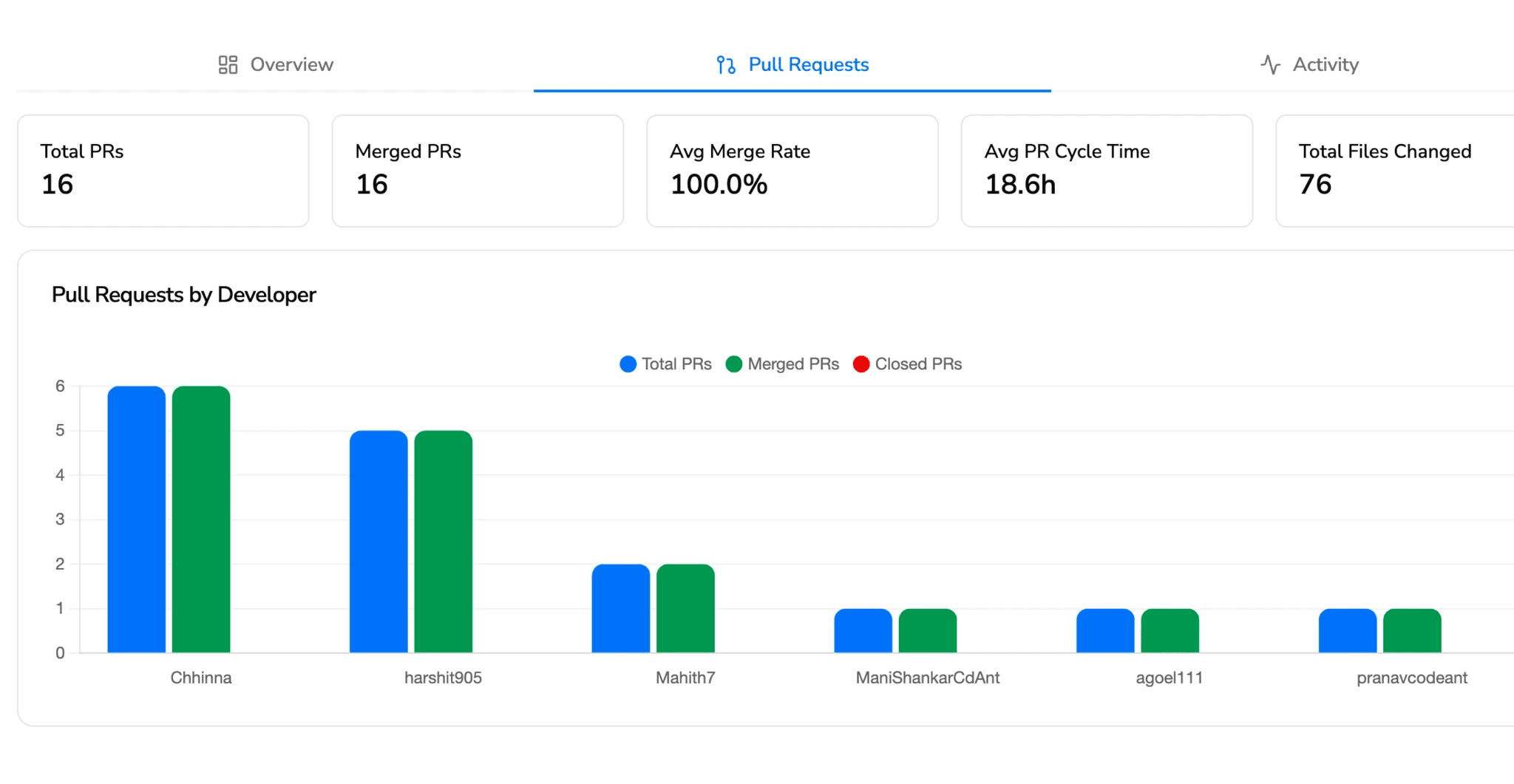
"Begin by documenting existing review workflows, identifying bottlenecks, and establishing baseline metrics."
You need a strategy that respects the developers' time and expertise. Here is how to do it right.
Involve Engineers Early in AI Tool Selection
Don't buy a tool and drop it on the team on a Monday morning. That is a recipe for mutiny. Instead, form a pilot group of senior engineers to test different platforms. Let them try to break the AI. Let them evaluate the false positive rate.
If the engineers choose the tool, they own the success of the rollout. They will be the ones championing it to the rest of the team. Buy-in starts with participation.
Customize AI Reviews to Your Standards
Out-of-the-box settings are rarely good enough. You must spend time configuring the AI to match your specific coding standards. Turn off rules that don't apply to your stack. Adjust the sensitivity to reduce noise.
Use tools that allow you to enforce organization-specific standards. If the AI respects your internal style guide and ignores irrelevant patterns, developers will start to trust it. The goal is to make the AI feel like it was built for your team, not for a generic user.
Hybrid Approach: AI Plus Human Oversight
Position AI as a pre-flight check, not the pilot. The best workflow is Hybrid:
AI Pass: The AI scans for syntax, linting, and known vulnerabilities immediately.
Human Pass: The engineer reviews the logic, architecture, and business requirements, knowing the basics are already checked.
This allows humans to focus on high-value work while the AI handles the grunt work. It maintains the mentorship and collaboration aspects of code review while still gaining efficiency.
Common Mistakes When Introducing AI Code Reviews
The biggest mistake is treating AI as a replacement for senior engineers. It is not. It is a productivity multiplier. Another common error is ignoring feedback. If developers say the tool is noisy, you have to tune it immediately. If you ignore their complaints, they will just ignore the tool.
Also, avoid using AI metrics to measure developer performance. If you start tracking "bugs found by AI" as a KPI for developers, they will game the system or resent the tool. Keep the focus on code health and team velocity, not individual shaming.
Fixing AI Code Reviews So Engineers Actually Use Them
Engineers don't hate AI; they hate tools that waste their time. The resistance to AI code reviews is often a rational response to noisy, inaccurate, and context-blind feedback. However, when implemented correctly, with customization, human oversight, and a focus on developer experience, AI can be a powerful asset.
By addressing these valid concerns and choosing tools that prioritize accuracy and context, teams can move past the resistance. The future of code review isn't humans vs. machines; it's humans and machines working together to ship better software. Now, if you are curious enough to check out some kickass AI code review tool, you can give it a try here for free.
FAQs
How can teams measure AI code review effectiveness?
What AI code review tools offer strong customization?
How do you reduce false positives in AI reviews?
Is AI code review safe for proprietary code?
What's the ideal hybrid AI-human review workflow?