

Your security team says no code leaves the network. Your engineering team wants AI-powered code reviews. These two requirements used to be mutually exclusive, but not anymore.
A new generation of AI code review tools supports full on-premises deployment, integrating directly with GitHub Enterprise Server while keeping your source code exactly where your compliance framework demands. This guide covers the ten best options for self-hosted AI code review, what to look for when evaluating them, and how to get them running in your environment.
Why GitHub Enterprise Teams Need AI Code Review Automation
For teams running GitHub Enterprise Server on-premises, the top AI code review tools with self-hosted deployment include SonarQube, Qodo PR-Agent, CodeAnt AI, and Codacy. These platforms automate pull request analysis, catch security vulnerabilities, and enforce coding standards—all while keeping source code within your own infrastructure.
On-prem deployment matters because many organizations in finance, healthcare, defense, and government operate under strict data residency requirements. Sending code to external cloud services isn't an option when compliance frameworks like FedRAMP, HIPAA, or SOC 2 dictate where sensitive data can live. For these teams, "on-premises" means the entire application runs on servers you control, with no data leaving your network.
Manual reviews create bottlenecks at scale
As engineering teams grow, human-only code reviews become a chokepoint. PRs stack up waiting for available reviewers, and feedback quality varies depending on who's reviewing that day.
Reviewer fatigue is real. When developers spend hours reviewing others' code, their own focus suffers, and they start missing issues they'd normally catch. The result? Slower releases and inconsistent quality.
Review queue delays: PRs sit idle while reviewers juggle their own feature work
Inconsistent feedback: Different reviewers apply different standards to similar code
Context switching costs: Reviewers lose productivity bouncing between their work and others' PRs
Native GitHub tools lack intelligent guidance
GitHub's built-in review features—comments, approvals, and requested changes—require manual effort for every piece of feedback. There's no automated suggestion engine or context-aware analysis out of the box.
GitHub Advanced Security adds vulnerability scanning, but it's primarily rule-based rather than AI-powered. You get alerts, not intelligent recommendations for how to fix issues.
Security gaps in basic code scanning
Standard static analysis catches known vulnerability patterns, but AI-powered tools go further. They recognize subtle anti-patterns, identify logic flaws, and understand context that rule-based scanners miss.
This becomes especially important for large codebases where security issues hide in the interactions between components, not just individual files.
Large pull requests overwhelm human reviewers
A 2,000-line PR is daunting for any reviewer. AI tools can parse these changes, summarize what's happening, and highlight the sections that actually need human attention.
This doesn't replace human judgment—it focuses it where it matters most.
What to Look for in On-Prem AI Code Review Tools
Choosing the right tool means matching your security requirements, infrastructure capabilities, and team workflows. Not every "enterprise" tool actually supports true on-premises deployment, so it's worth digging into the details.
Self-hosted deployment and air-gapped support
True on-prem deployment means the entire application runs within your infrastructure—no external API calls, no data leaving your network. Air-gapped environments (networks completely isolated from the internet) require tools that can operate without any external connectivity.
Some vendors advertise "enterprise" options that still route data through their cloud for AI inference. Always verify the actual data flow before committing to a tool.
Data residency and compliance features
For regulated industries, the tool's compliance certifications matter as much as its features. Look for SOC 2 Type II, ISO 27001, and industry-specific certifications like HIPAA or FedRAMP.
Audit logging, access controls, and data retention policies become critical when your security team demonstrates compliance during assessments.
GitHub Enterprise Server integration
The tool you choose will need native integration with GitHub Enterprise Server (the self-hosted version), not just GitHub.com. This typically means webhook support for PR events and compatibility with the GitHub Review API for posting feedback.
SAML SSO integration ensures your team uses existing identity providers rather than managing separate credentials.
Local AI model hosting
Some platforms let you run AI inference locally using self-hosted models, while others require connectivity to external LLM providers. For true air-gapped deployment, tools that support local model hosting work best—even if that means accepting some trade-offs in model capability.
Comparison of the Top 10 On-Prem AI Code Review Tools
Tool | Self-Hosted Option | GitHub Enterprise Server | AI-Powered Review | Security Scanning | Pricing Model |
CodeAnt AI | Yes | Yes | Yes | Yes | Free trial, paid tiers |
SonarQube | Yes | Yes | Limited | Yes | Open source + commercial |
Qodo PR-Agent | Yes | Yes | Yes | Limited | Open source + enterprise |
Codacy | Yes | Yes | Yes | Yes | Free tier + paid |
CodeScene | Yes | Yes | Yes | Limited | Paid |
Bito AI | Yes | Yes | Yes | Limited | Free tier + paid |
Amazon CodeGuru | AWS-hosted | Via connector | Yes | Yes | Pay-per-use |
CodeClimate | Yes | Yes | Limited | Yes | Paid |
DeepSource | Yes (Enterprise) | Yes | Yes | Yes | Free tier + paid |
Review Board | Yes | Yes | No | No | Open source |
Top 10 AI Code Review Tools for GitHub Enterprise On-Prem
CodeAnt AI
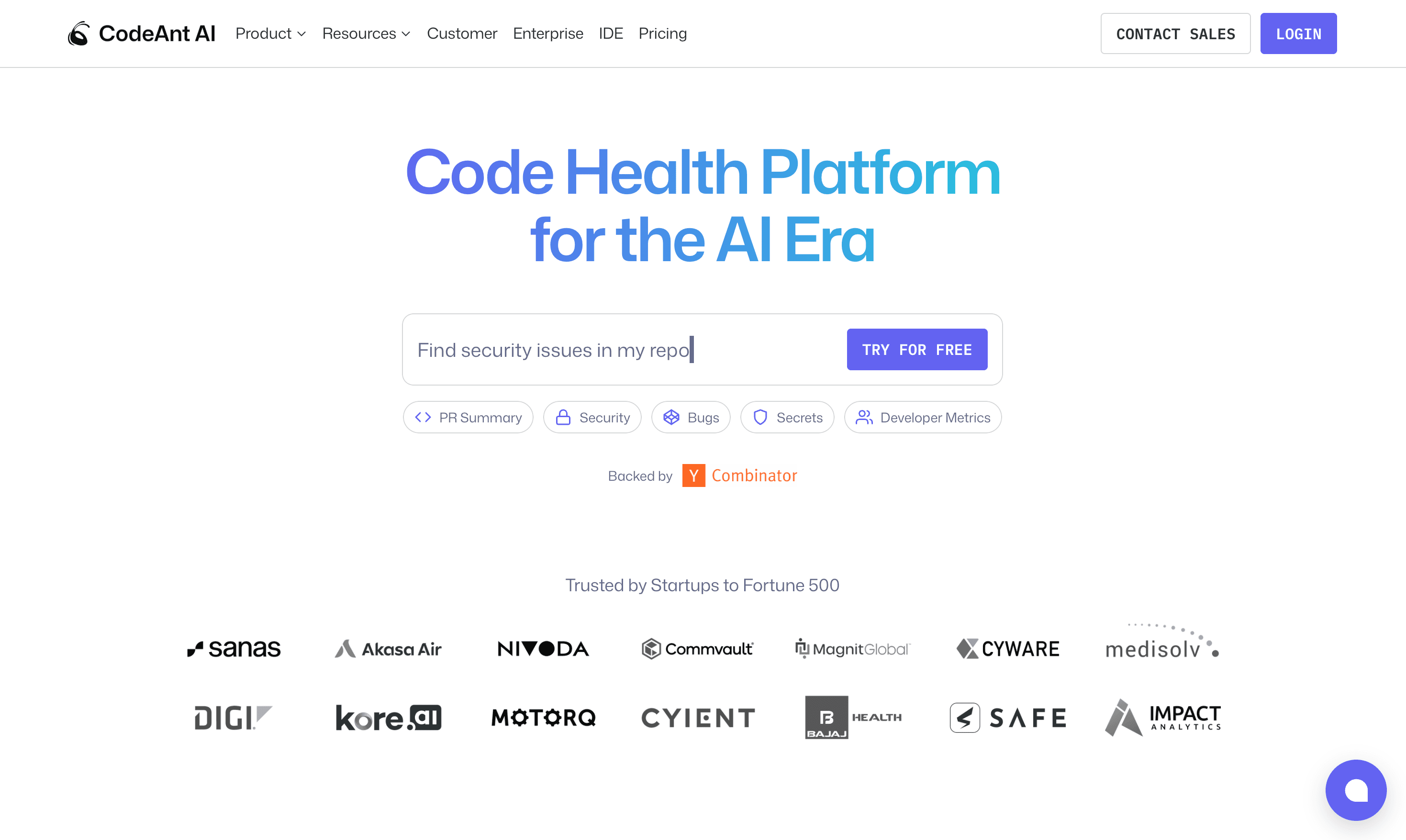
CodeAnt AI brings code review, security scanning, and quality metrics into a single platform designed for self-hosted deployment. It automatically reviews pull requests, summarizes changes, and suggests fixes while enforcing your organization's specific coding standards.
What sets it apart is the unified approach. Instead of juggling separate tools for review, security, and quality, you get one platform that understands your codebase and tracks maintainability, complexity, duplication, and DORA metrics over time.
Unified platform: Combines AI code review, vulnerability detection, and technical debt tracking
Organization-specific learning: Adapts to your team's conventions and patterns
GitHub Enterprise Server integration: Native webhook and API support
Self-hosting available: Full on-prem deployment with a 14-day free trial
Want to see it in action? Start a free 14-day trial of CodeAnt AI and connect it to your GitHub Enterprise Server instance.
SonarQube
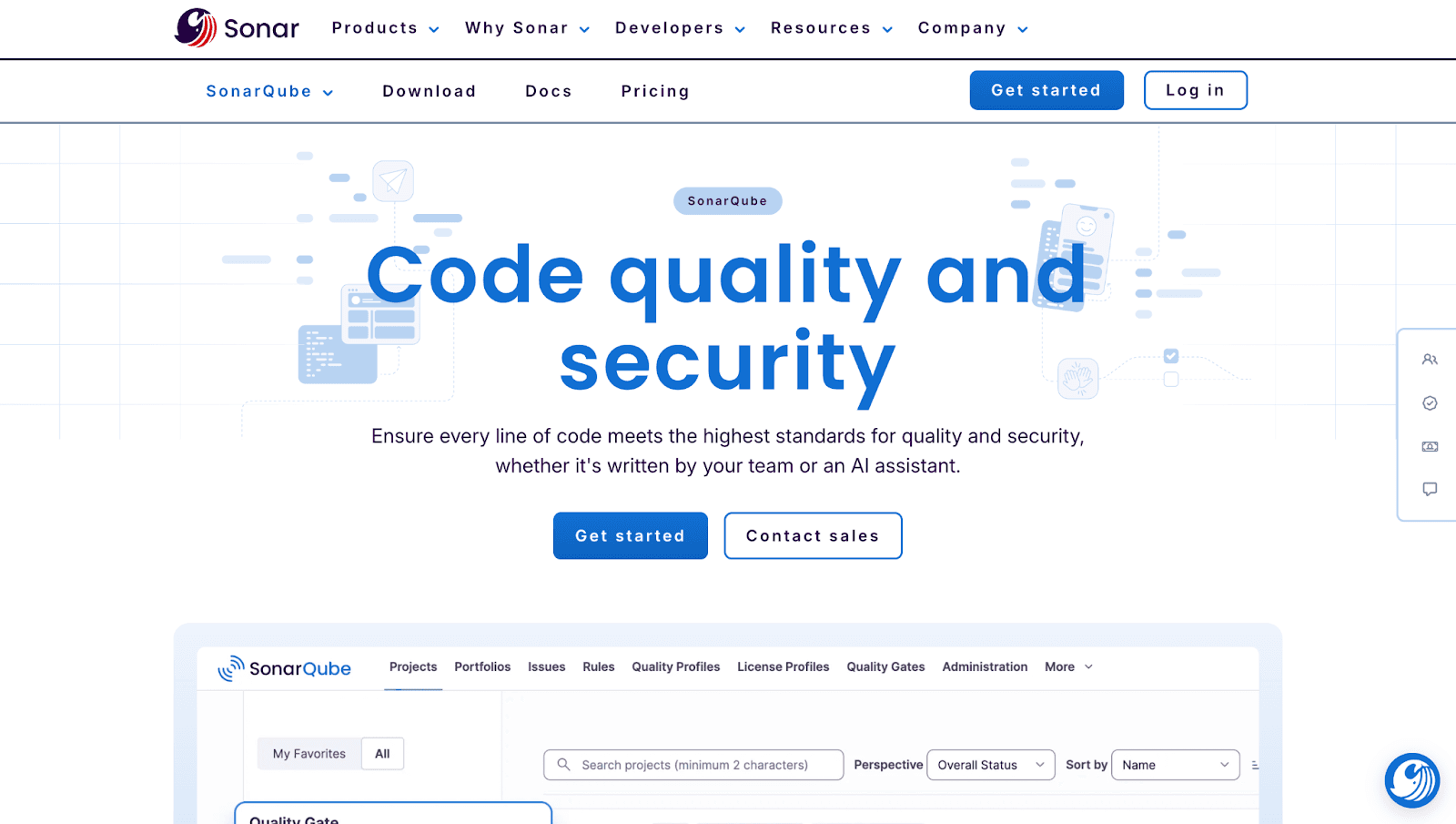
SonarQube is the established player in self-hosted code quality analysis, supporting over 25 programming languages. It identifies bugs, vulnerabilities, and "code smells" through static analysis rules.
The tool has been around for over a decade, which means it's battle-tested and well-documented. However, SonarQube is primarily rule-based rather than AI-powered. You get consistent, predictable analysis, but not the contextual intelligence of newer AI tools.
Open source core: Community edition available at no cost
Extensive language support: Covers most mainstream and legacy languages
CI/CD integration: Works with Jenkins, GitLab CI, GitHub Actions
Checkout this SonarQube Alternative.
Qodo PR-Agent
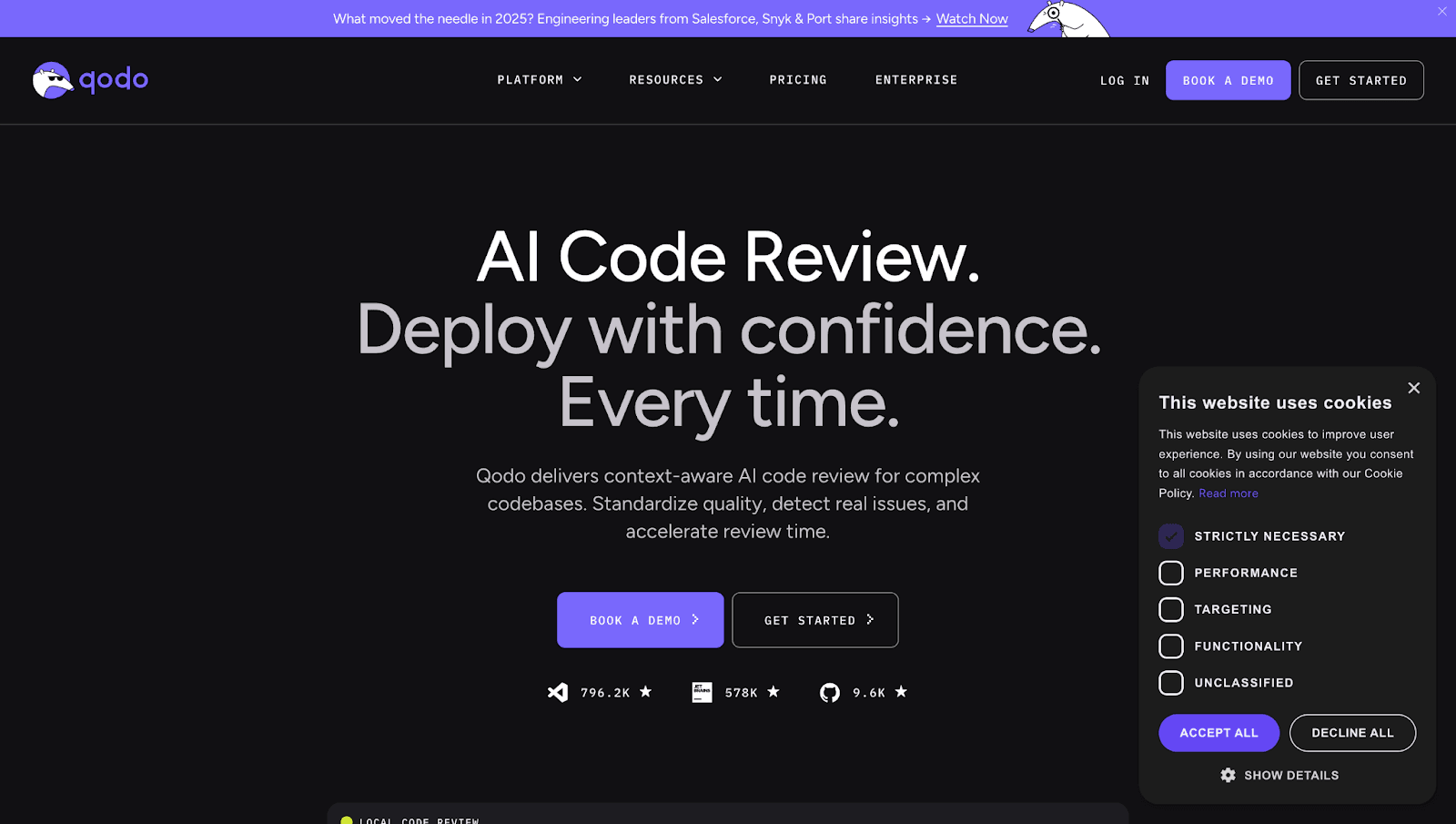
Qodo PR-Agent (formerly CodiumAI) is an open-source AI code review tool that can run entirely self-hosted. It supports local LLM deployment, making it viable for air-gapped environments where no external connectivity is allowed.
Teams wanting complete control over their AI code review infrastructure often start here. The open-source nature means you can inspect the code, modify it, and run it however you like.
Local LLM support: Can use self-hosted models like Ollama
PR summarization: Automatically generates change summaries
Customizable prompts: Tailor the AI's review focus to your team's priorities
Checkout this Qodo Alternative.
Codacy
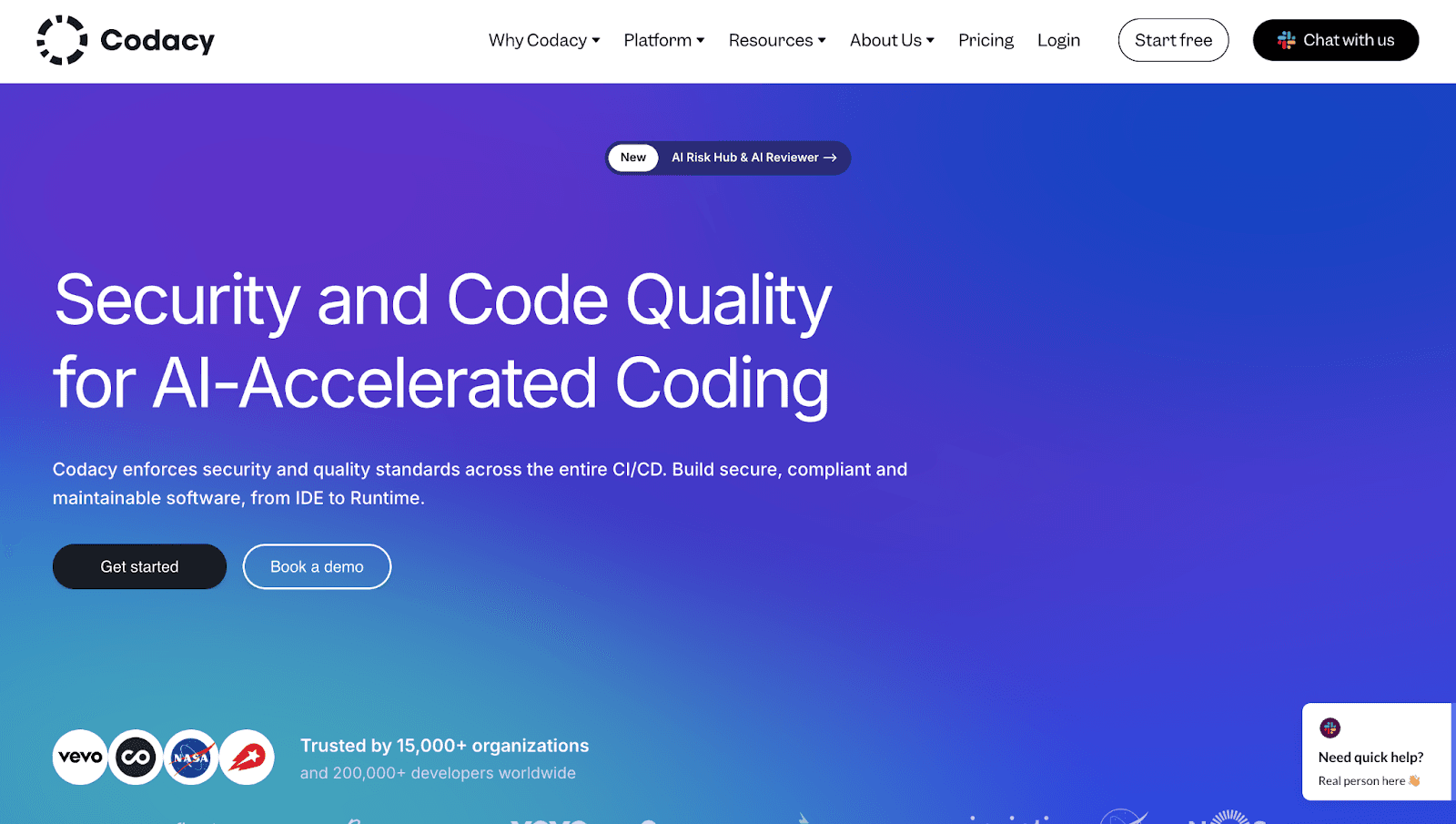
Codacy offers automated code review with a self-hosted deployment option for enterprise customers. It covers security vulnerabilities, code patterns, and style consistency across multiple languages.
The platform comments directly on pull requests and provides dashboard analytics to track quality trends over time.
Checkout this Codacy Alternative
CodeScene
CodeScene takes a behavioral approach to code analysis, examining how code evolves and how teams interact with it. This surfaces hotspots—areas of the codebase that change frequently and carry high complexity.
Rather than just analyzing syntax, CodeScene looks at patterns in your version control history to identify risky code and coordination challenges.
Bito AI
Bito AI focuses on developer productivity with AI-powered code assistance in both IDEs and pull requests. Enterprise deployment options keep code within your infrastructure.
The tool works across VS Code, JetBrains, and other editors, so developers get assistance both while writing code and during review.
Amazon CodeGuru
Amazon CodeGuru provides AI-powered code review through AWS infrastructure. While not truly on-prem, it can connect to self-hosted repositories through AWS PrivateLink and VPC configurations.
Organizations already invested in AWS may find this fits their existing infrastructure patterns, though it does require AWS services to function.
CodeClimate
CodeClimate focuses on maintainability and technical debt tracking with a self-hosted option for enterprise teams. It calculates maintainability scores and identifies code that needs attention.
The platform also integrates with test coverage reports to give a fuller picture of code health.
DeepSource
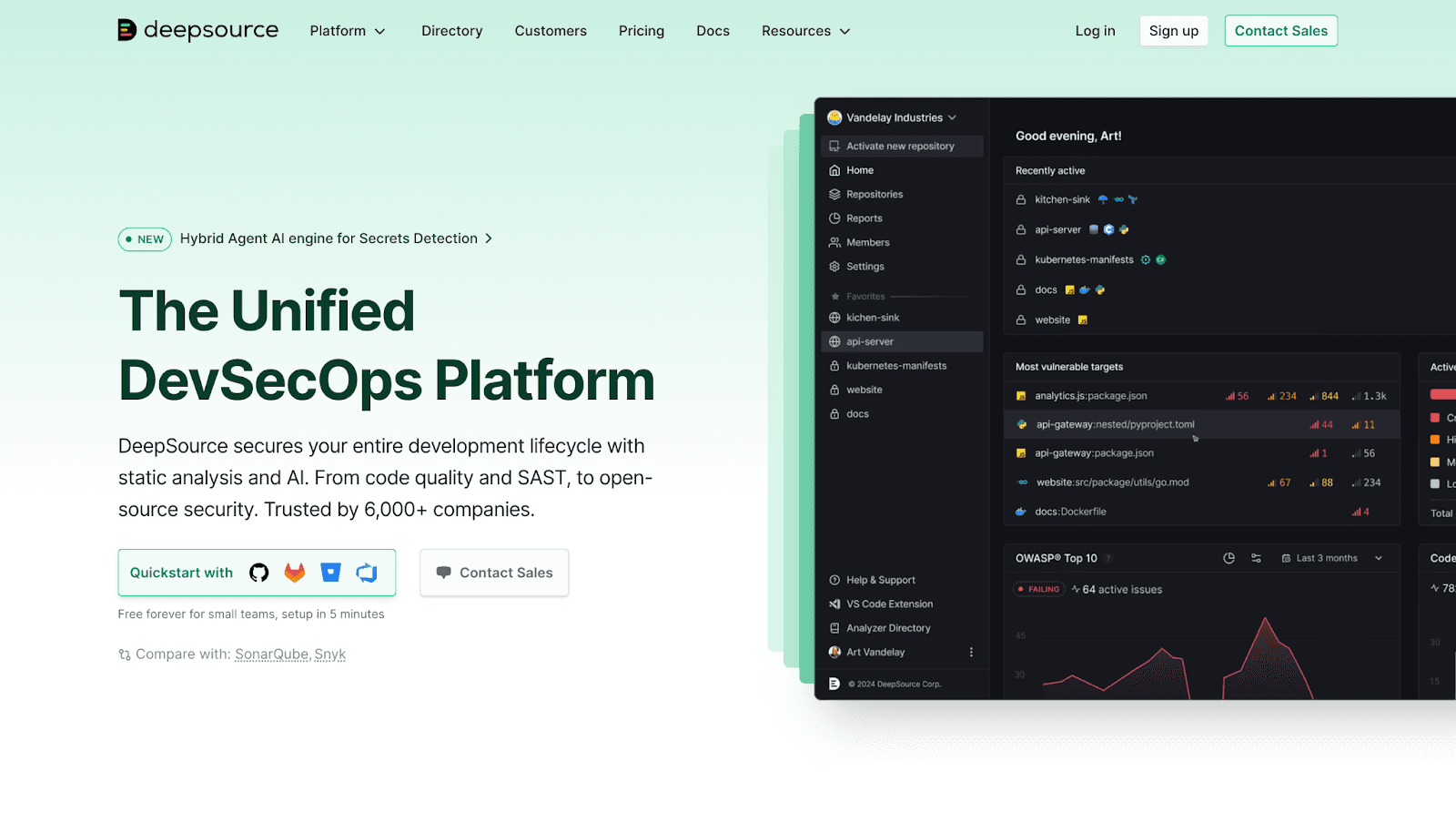
DeepSource automates code review with a focus on security, performance, and anti-pattern detection. Enterprise plans include on-prem deployment options.
One useful feature: DeepSource proposes concrete code changes through autofix suggestions, not just flagging issues.
Checkout this Deepsource Alternative.
Review Board
Review Board is an open-source, self-hosted code review tool that predates the AI era. It's not AI-powered, but it provides a solid foundation for teams that want complete control over their review infrastructure.
Some teams use Review Board as a base and integrate AI tools separately through webhooks and custom scripts.
How to Choose the Right AI Code Review Tool for Your Team
The "best" tool depends on your specific constraints. A startup with a cloud-native stack has different priorities than a defense contractor operating in an air-gapped environment.
Align features with security and compliance requirements
Start with your compliance requirements, not feature lists. If you're subject to FedRAMP, your options narrow significantly. If HIPAA applies, verify the vendor's BAA availability and data handling practices.
Your security team likely has a vendor assessment process—involve them early rather than discovering blockers after you've invested in evaluation.
Evaluate total cost of ownership for self-hosting
License fees tell only part of the story. Self-hosted deployments require infrastructure, maintenance, and operational expertise that add to the real cost.
Infrastructure costs: Servers, storage, and compute for AI inference
Maintenance overhead: Updates, patches, and configuration management
Team expertise: DevOps resources for deployment and ongoing support
A cloud-hosted tool with a higher subscription fee might actually cost less than a "free" open-source tool that requires dedicated infrastructure and engineering time.
Assess infrastructure and maintenance demands
AI-powered tools often require significant compute resources, especially for local model inference. GPU availability, memory requirements, and storage for model weights all factor into deployment planning.
Some tools offer tiered deployment options—lighter-weight analysis that runs on modest hardware, with more powerful AI features requiring beefier infrastructure.
How to Integrate AI Code Review Tools with GitHub Enterprise Server
Once you've selected a tool, integration typically follows a predictable pattern. Most tools provide documentation specific to GitHub Enterprise Server, though the general approach is consistent across vendors.
Configure webhooks for pull request triggers
Webhooks notify your AI review tool when PRs are opened, updated, or merged. In GitHub Enterprise Server, you'll configure these at the organization or repository level, pointing to your self-hosted tool's endpoint.
The webhook payload includes PR metadata, and the tool fetches the actual code changes through the GitHub API.
Set up authentication and permissions
Most tools authenticate via GitHub Apps or personal access tokens. GitHub Apps are preferred for production use—they provide granular permissions and don't tie access to individual user accounts.
If your organization uses SAML SSO, verify the tool supports your identity provider for user authentication.
Connect to your CI/CD pipeline
AI code review can run as a standalone service or integrate into your existing CI/CD pipeline. GitHub Actions workflows can trigger analysis, and the tool can post results as PR checks that gate merging.
This creates a consistent quality gate: PRs don't merge until both automated analysis and human review approve the changes.
Ship Cleaner Code Faster with the Right AI Review Platform
The right AI code review tool transforms how your team handles pull requests. Instead of bottlenecks and inconsistent feedback, you get fast, thorough analysis that catches issues before they reach production.
For GitHub Enterprise Server teams, on-prem deployment isn't just a nice-to-have—it's often a requirement. The tools in this guide all offer paths to self-hosted deployment, though they vary in capability, complexity, and cost.
Rather than juggling multiple point solutions for review, security, and quality, consider platforms that bring these capabilities together. A unified view of code health across your development lifecycle makes it easier to spot trends, enforce standards, and keep your team moving fast.
Start a free 14-day trial of CodeAnt AI to see how AI-powered code review works with your GitHub Enterprise Server instance.

