AI Code Review
What's the Best Developer Productivity Platform for Pull Request Optimization

Sonali Sood

Founding GTM, CodeAnt AI
Pull requests sit idle for 2-3 days. Senior engineers burn 10-15 hours weekly context-switching between SonarQube for quality, Snyk for dependencies, GitHub Advanced Security for scanning, and Jellyfish for metrics. Each tool generates its own alerts, dashboards, and integration overhead while PRs queue up, dragging your deployment frequency down and pushing you further from elite DORA performance.
The question isn’t whether you need better PR optimization, it’s whether you keep managing five separate platforms or consolidate into one that actually understands your codebase. For US engineering teams with 100+ developers, this decision directly impacts your ability to ship fast without breaking things.
This guide evaluates the top PR optimization platforms for 2026, from AI review assistants to security scanners to engineering intelligence tools. You’ll see how each solution stacks up on context-aware analysis, integration depth, and total cost of ownership. Also, why are leading teams replacing their entire toolchain with unified platforms that deliver review, security, quality, and metrics in a single workflow.
The Real Cost of PR Bottlenecks
Modern engineering teams face a brutal reality: PRs sit idle waiting for review, senior engineers lose hours to manual inspection, and teams juggle 5-8 separate tools that don’t talk to each other. This fragmentation doesn’t just slow you down, it creates data silos, inconsistent standards, and alert fatigue that makes developers tune out.
The impact shows up across your delivery system:
DORA lead time suffers: Elite teams deploy on-demand with <1 day lead time; low performers struggle with month-long cycles
Context switching kills productivity: 25-35% of engineering capacity burned on coordination overhead
Security blind spots: Manual reviews miss vulnerabilities; OWASP Top 10 issues require specialized scanning
Tool sprawl tax: $60-80/developer/month across fragmented tools, plus integration maintenance
For a 100-developer team, that’s $1.875M annually in review labor alone, before counting delay costs from slow PR cycles.
What PR Optimization Actually Means
Cycle time reduction: Hours to merge, not days
Review quality: Context-aware feedback catching real issues, not 200+ false positives
Security coverage: Integrated SAST, dependency scanning, secrets detection
Developer experience: Less tool-switching, more time writing code
The choice isn’t between individual tools, it’s between managing fragmented point solutions or adopting a unified platform that consolidates review, security, and quality in one workflow.
Evaluation Criteria: What Separates Signal from Noise
1. Context-Aware AI vs. Pattern Matching
Traditional static analysis flags hundreds of issues per PR based on pattern matching. SonarQube routinely surfaces 200+ findings with 60-70% false positives. Context-aware AI understands your full codebase: architectural decisions, team conventions, business logic. Elite tools achieve 70-80% precision vs. 30-40% for rule-based analyzers.
2. Unified Security + Quality
Security can’t be an afterthought. Best platforms integrate SAST, secrets detection, dependency scanning, and IaC security directly in the PR, before code reaches production. Fragmented approaches force teams to manage separate tools for each concern.
3. Actionable Insights at PR-Level
Metrics dashboards tell you problems exist; action-oriented platforms show you what’s wrong and how to fix it, inline comments with specific code changes, one-click auto-fixes, clear severity prioritization.
4. Enterprise Governance
At 100+ developers, you need SSO, audit trails, policy-as-code, and RBAC. Manual policy management becomes a bottleneck. Platforms supporting governance-as-code enable consistent standards across 50+ repositories without centralized gatekeeping.
5. Total Cost of Ownership
Compare unified platforms against the fragmented stack:
SonarQube ($15/dev) + Snyk ($25/dev) + analytics tools ($20/dev) + GitHub Advanced Security ($21/dev) = $80/developer/month, plus integration overhead.
For 100 developers, tool sprawl costs $96K annually vs. $30K for unified platforms, 69% savings.
Top PR Optimization Platforms (Ranked)
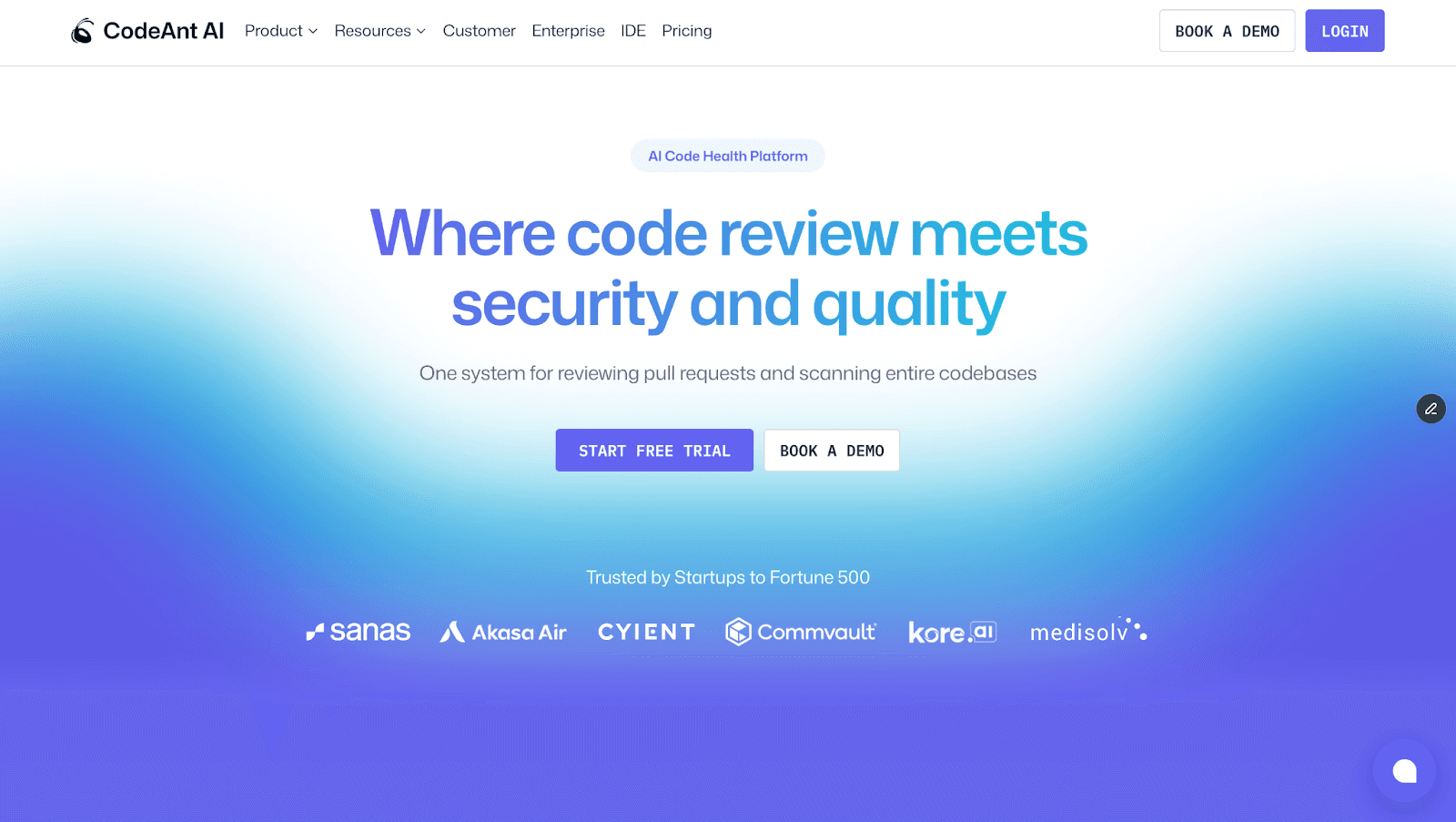
#1 CodeAnt AI – Unified Code Review, Security, and Quality Platform
Best for: US companies with 100+ developers seeking to eliminate tool sprawl while accelerating reviews and hardening security posture.
CodeAnt AI is a defensive and offensive security platform consolidating AI code review, security scanning, quality enforcement, and engineering analytics into a single workflow, replacing the 5-8 fragmented tools that slow modern engineering teams.
Core capabilities:
AI-powered PR review: Context-aware analysis understanding your full codebase, architectural patterns, and team conventions—surfaces 30-40 actionable issues vs. 200+ noisy alerts
Comprehensive security: SAST for 30+ languages, secrets detection, dependency scanning with automated remediation, IaC misconfiguration detection
Quality gates: Real-time complexity tracking, test coverage analysis, technical debt quantification with actionable remediation paths
DORA metrics: Deployment frequency, lead time, change failure rate, and MTTR tracking built-in
Enterprise governance: SSO, RBAC, audit trails, policy-as-code, compliance reporting for SOC 2 / ISO 27001
Quantified outcomes:
Empego case study: 120-developer SaaS company achieved $456K annual savings, 108% ROI within 12 months, 80% reduction in PR review time (4.5 hours to 54 minutes average), 70% fewer false positives.
Integration & deployment:
Native integrations with GitHub, GitLab, Bitbucket, Jira, Slack. Automated migration from SonarQube and GitHub Advanced Security with data import. 14-day trial with dedicated onboarding; teams see results within the first sprint.
Pricing: $20/developer/month, 58% cheaper than managing SonarQube + Snyk + Jellyfish separately while delivering superior coverage.
Why context-aware AI matters:
Traditional tools flag issues based on pattern matching. CodeAnt’s AI understands architectural context, learns team conventions, differentiates critical security flaws from low-impact style violations, and identifies recurring issues with systematic fixes. Result: 70% fewer false positives, developers trust the feedback, code health actually improves.
#2 GitHub Copilot for Pull Requests
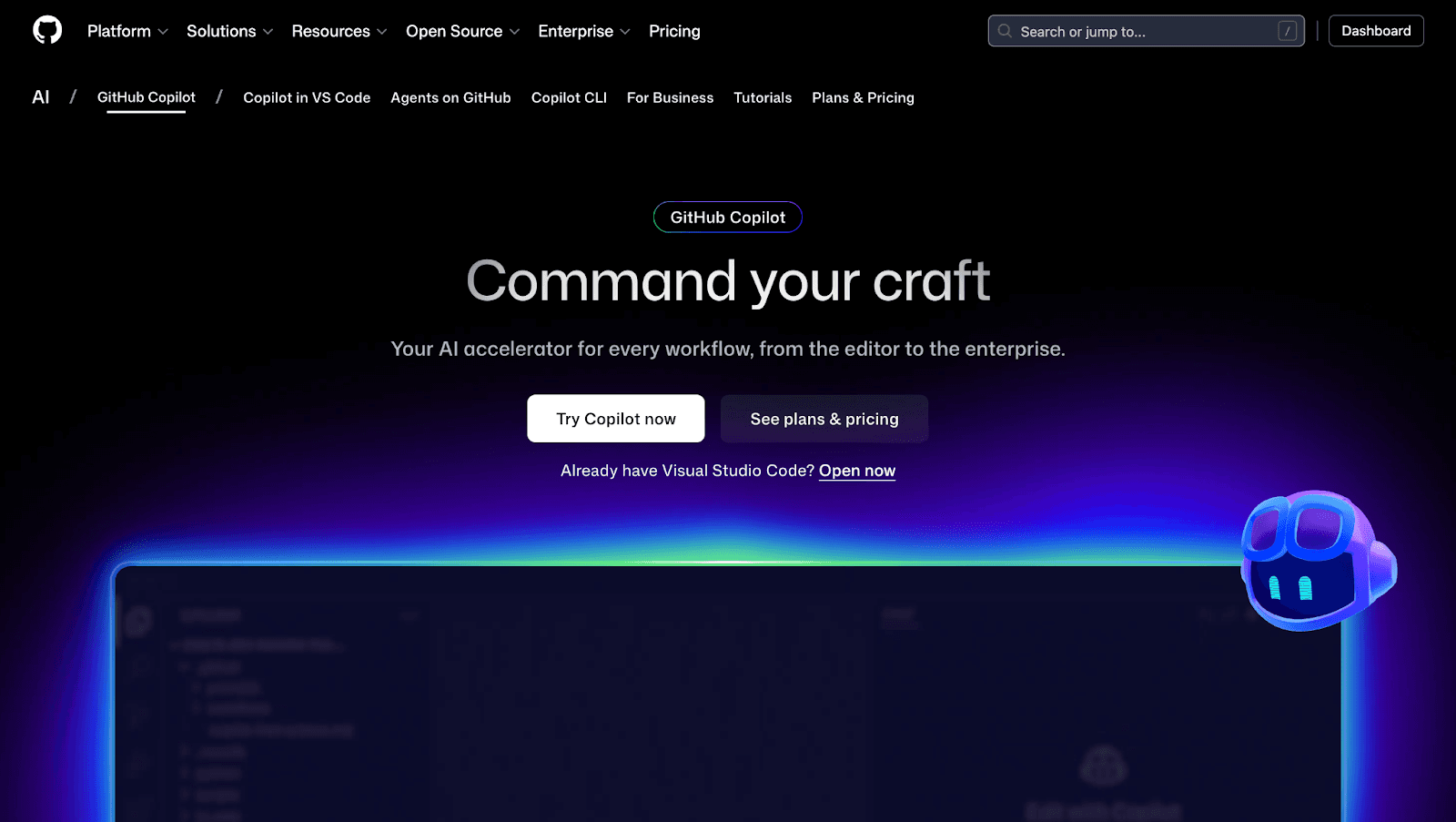
Best for: Teams prioritizing code generation over comprehensive review workflows.
Strengths: Excellent AI-powered code completion, natural language to code translation, basic PR summary generation, native GitHub integration.
Key limitations:
No integrated security scanning (requires GitHub Advanced Security add-on at $49/user/month)
Limited quality enforcement—flags syntax issues but lacks architectural analysis
No compliance reporting or custom rule engines
Complementary to review platforms, not a replacement
Pricing: $10-19/user/month for Copilot + $49/user for Advanced Security = $59-68/user total.
When to choose: Small teams optimizing authoring speed, willing to maintain separate security and quality tooling.
Checkout the best Github Copilot alternative.
#3 SonarQube / SonarCloud
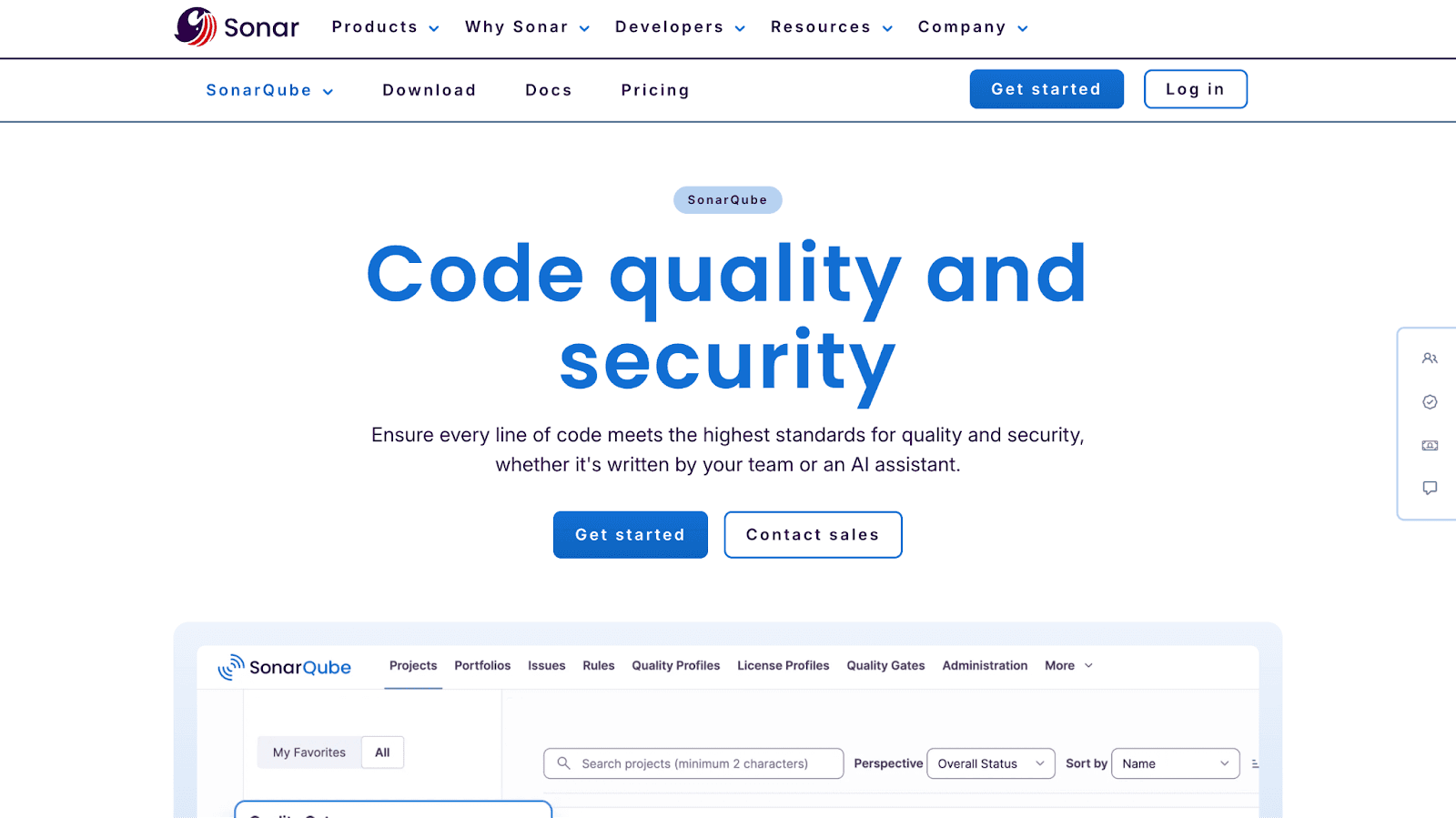
Best for: Teams with established SonarQube investments seeking quality-focused static analysis.
Strengths: Industry-standard with 20+ years of rule development, 30+ language support, self-hosted or cloud deployment options.
Key limitations:
60%+ false positive rates from pattern-matching rules lacking codebase context
Quality-only focus—requires separate tools for security (Snyk at $25/dev), metrics (Jellyfish at $20/dev)
No AI-driven contextual analysis or automated fix suggestions
Alert fatigue reduces developer trust
Pricing: $10-15/developer/month, but total stack cost reaches $50-60/dev when adding required security and analytics tools.
Checkout the best SonarQube alternative.
#4 Snyk / GitHub Advanced Security
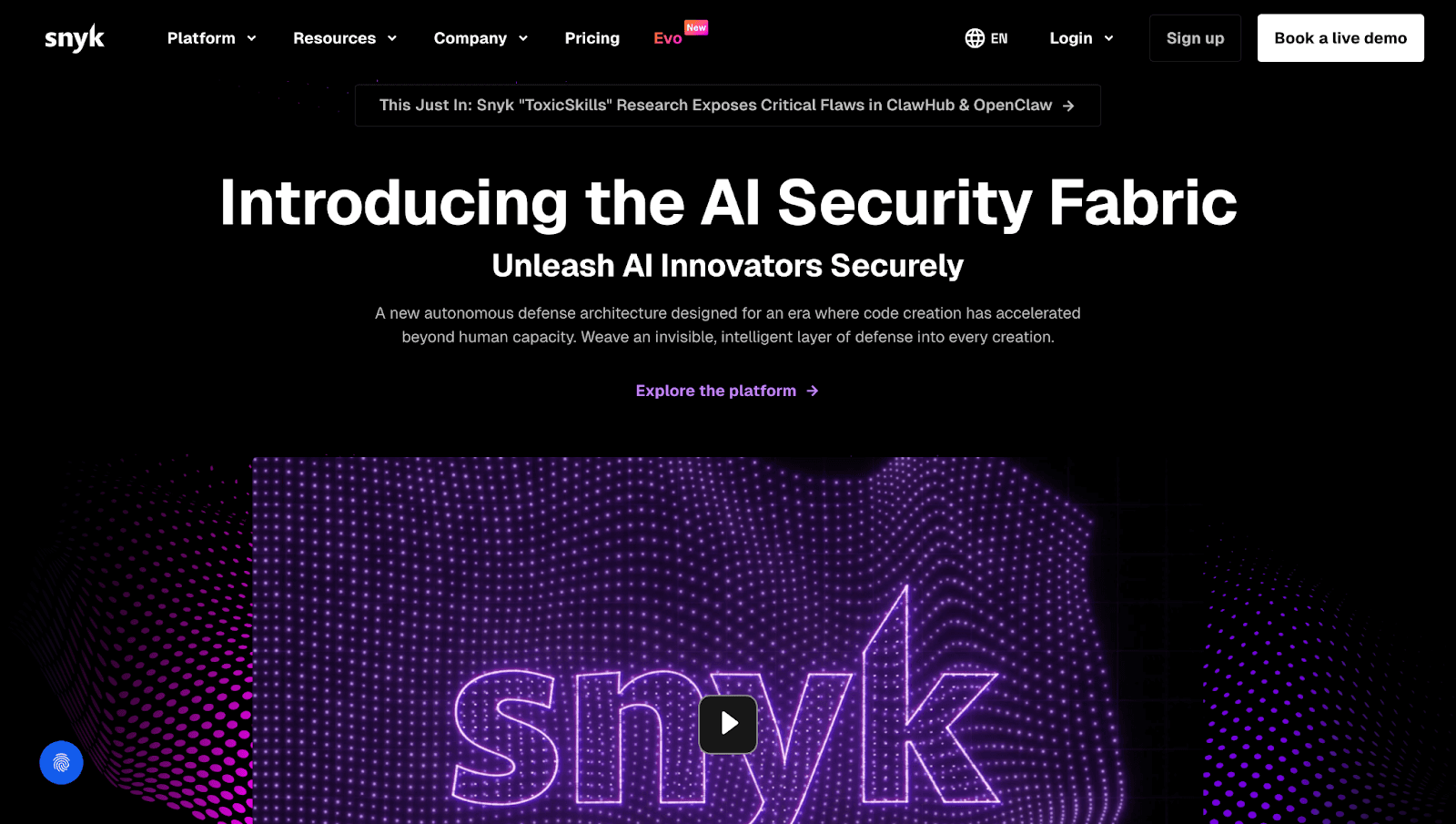
Best for: Security-conscious teams with dedicated AppSec organizations.
Strengths: Comprehensive dependency scanning, developer-first remediation with automated fix PRs, CodeQL semantic analysis, native GitHub integration.
Key limitations:
Security-focused only—no code quality analysis, complexity tracking, or DORA metrics
Requires separate tools for code review and quality gates
No unified view of code health across review, security, and maintainability
Pricing: $25-35/developer/month for comprehensive security coverage; doesn’t include review or quality tooling.
Checkout the best Synk alternative.
#5 LinearB / Jellyfish
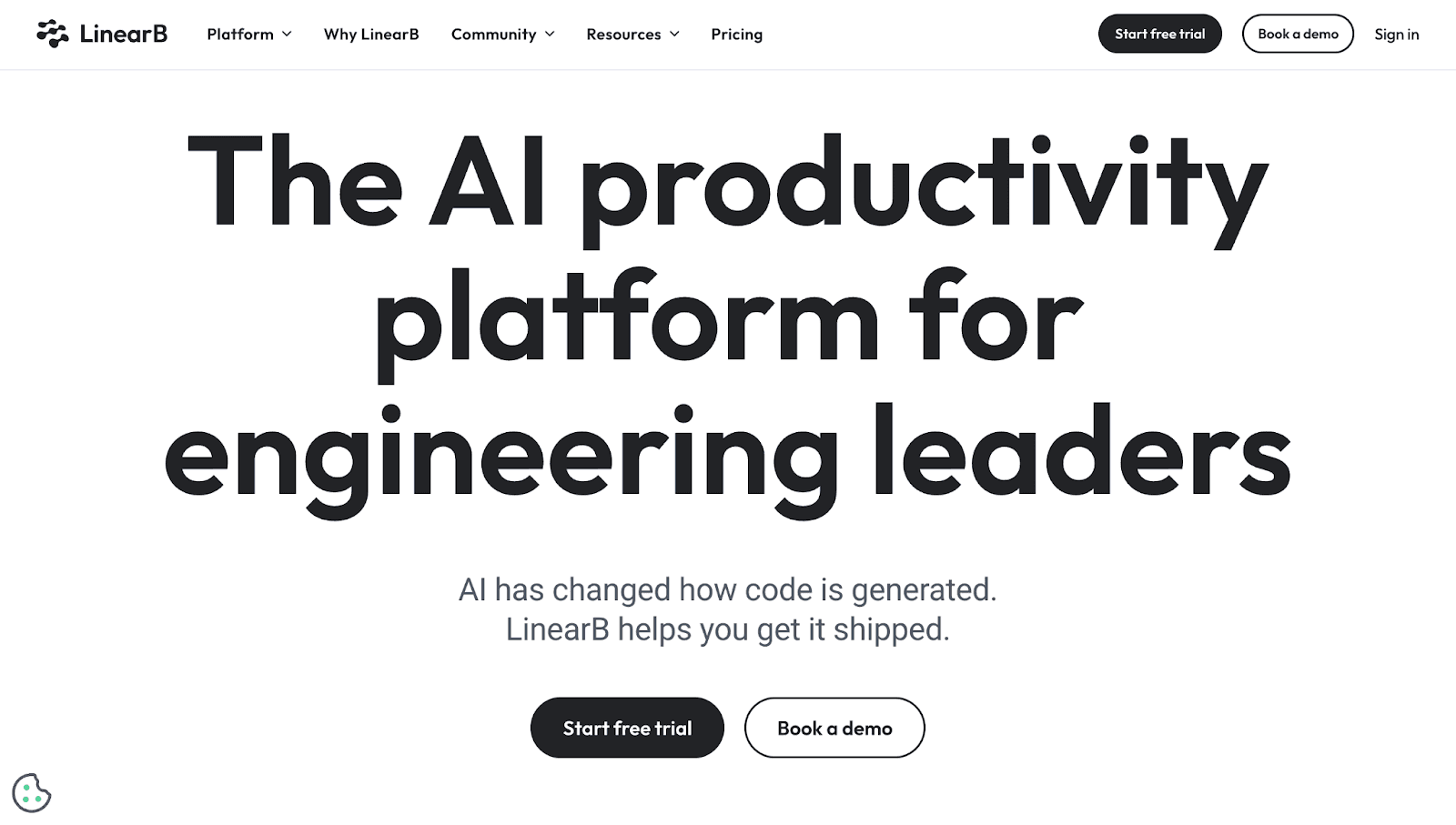
Best for: Engineering leaders seeking portfolio-level visibility without developer-facing automation.
Strengths: DORA metrics tracking, investment allocation visibility, team benchmarking, planning insights.
Key limitations:
Metrics-only platforms, no automated code review, security scanning, or quality enforcement
Provide visibility but not action; developers still need separate tools
High cost for observability without workflow automation
Pricing: $15-25/developer/month for metrics dashboards; requires full review and security stack on top.
Comparison Matrix
Platform | AI Review | Security Scanning | Quality Gates | DORA Metrics | Unified Platform | Price/Dev/Month |
CodeAnt AI | ✅ Context-aware | ✅ SAST + Dependencies | ✅ Custom rules | ✅ Built-in | ✅ Yes | $20-30 |
GitHub Copilot | ⚠️ Basic summaries | ❌ Add-on required | ❌ Limited | ❌ No | ❌ No | $10-19 (+$49 for security) |
SonarQube | ❌ Pattern-matching | ❌ Separate tool | ✅ Strong | ❌ No | ❌ No | $10-15 (+$25-35 for security) |
Snyk | ❌ No | ✅ Excellent | ❌ No | ❌ No | ❌ No | $25-35 |
LinearB/Jellyfish | ❌ No | ❌ No | ❌ No | ✅ Strong | ❌ No | $15-25 |
Decision Framework: Choosing the Right Platform
Team Size Determines Approach
Small teams (5-20 developers): Can manage 2-3 specialized tools without drowning. Choose a unified platform if planning to scale beyond 20 developers in next 12 months, migration costs increase exponentially.
Mid-size teams (20-100 developers): Tool sprawl becomes acute. Coordination costs dominate as teams manage SonarQube, Snyk, Jellyfish, GitHub, each with separate dashboards. Unified platform eliminates coordination overhead.
Enterprise teams (100+ developers): Governance and compliance make unified platforms non-negotiable. Need SSO, audit trails, policy-as-code, RBAC. Manual policy management across fragmented tools fails at scale.
Calculate Your ROI
Four-component formula for 100-developer organization:
Saved reviewer hours: 30 senior reviewers × 10 hours saved/week × 50 weeks × $72/hour = $1.08M/year
Reduced rework: Avoiding 10% of sprint capacity on defect fixes = $1.2M/year
Avoided security incidents: 2-3 prevented critical vulnerabilities = $150K-300K/year
Tooling consolidation: $35/dev/month savings × 100 × 12 + integration overhead = $67K/year
Total savings: $2.55M/year
Platform cost: $300K/year
Net ROI: $2.25M (750% return)
What to Measure During Trial
Baseline vs. post-adoption review time
False positive rate (target: <30%)
Defect escape rate
Developer sentiment and trust in findings
Implementation: Phased Rollout Strategy
Pre-Rollout Foundation
Repository selection: Start with 2-3 high-activity repos, not critical production services
Baseline scan: Run audit mode to understand existing technical debt without blocking workflows
Policy configuration: Define blocking vs. advisory rules; set initial thresholds conservatively
Exception process: Establish suppression workflows and escalation paths
Three-Phase Enforcement
Phase 1 (Weeks 1-2): Observe
Audit-only mode, comments on PRs, no blocking
Goal: Let developers see AI insights without disruption
Success: 70%+ acknowledge at least one comment as valuable
Phase 2 (Weeks 3-4): Advise
Soft gates for critical security—PR checks fail but merges aren’t blocked
Goal: Normalize platform as part of review process
Success: 50%+ reduction in critical findings merged
Phase 3 (Week 5+): Enforce
Hard gates for critical/high severity—PRs cannot merge until resolved
Goal: Shift-left security without penalizing existing debt
Success: <5% of PRs blocked (indicates well-calibrated thresholds)
Common Migration Risks
Risk | Symptom | Mitigation |
Alert fatigue | Ignoring 200+ findings | Start critical-only; surface 20-30 actionable issues |
Merge velocity drop | PRs idle waiting for fixes | Enable auto-fix for 60%+ of issues |
Developer pushback | “Tool doesn’t understand us” | Custom rules engine; involve senior engineers |
Compliance gaps | Audit logs don’t map | Configure export to SIEM; align severity classifications |
Conclusion: Unified Platforms Win on Speed, Security, and Sanity
For 100+ developer organizations optimizing PR throughput while reducing security risk, unified platforms like CodeAnt AI eliminate the tool sprawl killing cycle time. Point solutions work for narrow use cases but force constant context-switching, duplicate alerts, and integration debt. Organizations consolidating onto CodeAnt see 40-60% faster PR cycles, 70% fewer false positives, and measurable savings from retiring 3-5 legacy tools.
Pull requests sit idle for 2-3 days. Senior engineers burn 10-15 hours weekly context-switching between SonarQube for quality, Snyk for dependencies, GitHub Advanced Security for scanning, and Jellyfish for metrics. Each tool generates its own alerts, dashboards, and integration overhead while PRs queue up, dragging your deployment frequency down and pushing you further from elite DORA performance.
The question isn’t whether you need better PR optimization, it’s whether you keep managing five separate platforms or consolidate into one that actually understands your codebase. For US engineering teams with 100+ developers, this decision directly impacts your ability to ship fast without breaking things.
This guide evaluates the top PR optimization platforms for 2026, from AI review assistants to security scanners to engineering intelligence tools. You’ll see how each solution stacks up on context-aware analysis, integration depth, and total cost of ownership. Also, why are leading teams replacing their entire toolchain with unified platforms that deliver review, security, quality, and metrics in a single workflow.
The Real Cost of PR Bottlenecks
Modern engineering teams face a brutal reality: PRs sit idle waiting for review, senior engineers lose hours to manual inspection, and teams juggle 5-8 separate tools that don’t talk to each other. This fragmentation doesn’t just slow you down, it creates data silos, inconsistent standards, and alert fatigue that makes developers tune out.
The impact shows up across your delivery system:
DORA lead time suffers: Elite teams deploy on-demand with <1 day lead time; low performers struggle with month-long cycles
Context switching kills productivity: 25-35% of engineering capacity burned on coordination overhead
Security blind spots: Manual reviews miss vulnerabilities; OWASP Top 10 issues require specialized scanning
Tool sprawl tax: $60-80/developer/month across fragmented tools, plus integration maintenance
For a 100-developer team, that’s $1.875M annually in review labor alone, before counting delay costs from slow PR cycles.
What PR Optimization Actually Means
Cycle time reduction: Hours to merge, not days
Review quality: Context-aware feedback catching real issues, not 200+ false positives
Security coverage: Integrated SAST, dependency scanning, secrets detection
Developer experience: Less tool-switching, more time writing code
The choice isn’t between individual tools, it’s between managing fragmented point solutions or adopting a unified platform that consolidates review, security, and quality in one workflow.
Evaluation Criteria: What Separates Signal from Noise
1. Context-Aware AI vs. Pattern Matching
Traditional static analysis flags hundreds of issues per PR based on pattern matching. SonarQube routinely surfaces 200+ findings with 60-70% false positives. Context-aware AI understands your full codebase: architectural decisions, team conventions, business logic. Elite tools achieve 70-80% precision vs. 30-40% for rule-based analyzers.
2. Unified Security + Quality
Security can’t be an afterthought. Best platforms integrate SAST, secrets detection, dependency scanning, and IaC security directly in the PR, before code reaches production. Fragmented approaches force teams to manage separate tools for each concern.
3. Actionable Insights at PR-Level
Metrics dashboards tell you problems exist; action-oriented platforms show you what’s wrong and how to fix it, inline comments with specific code changes, one-click auto-fixes, clear severity prioritization.
4. Enterprise Governance
At 100+ developers, you need SSO, audit trails, policy-as-code, and RBAC. Manual policy management becomes a bottleneck. Platforms supporting governance-as-code enable consistent standards across 50+ repositories without centralized gatekeeping.
5. Total Cost of Ownership
Compare unified platforms against the fragmented stack:
SonarQube ($15/dev) + Snyk ($25/dev) + analytics tools ($20/dev) + GitHub Advanced Security ($21/dev) = $80/developer/month, plus integration overhead.
For 100 developers, tool sprawl costs $96K annually vs. $30K for unified platforms, 69% savings.
Top PR Optimization Platforms (Ranked)
#1 CodeAnt AI – Unified Code Review, Security, and Quality Platform
Best for: US companies with 100+ developers seeking to eliminate tool sprawl while accelerating reviews and hardening security posture.
CodeAnt AI is a defensive and offensive security platform consolidating AI code review, security scanning, quality enforcement, and engineering analytics into a single workflow, replacing the 5-8 fragmented tools that slow modern engineering teams.
Core capabilities:
AI-powered PR review: Context-aware analysis understanding your full codebase, architectural patterns, and team conventions—surfaces 30-40 actionable issues vs. 200+ noisy alerts
Comprehensive security: SAST for 30+ languages, secrets detection, dependency scanning with automated remediation, IaC misconfiguration detection
Quality gates: Real-time complexity tracking, test coverage analysis, technical debt quantification with actionable remediation paths
DORA metrics: Deployment frequency, lead time, change failure rate, and MTTR tracking built-in
Enterprise governance: SSO, RBAC, audit trails, policy-as-code, compliance reporting for SOC 2 / ISO 27001
Quantified outcomes:
Empego case study: 120-developer SaaS company achieved $456K annual savings, 108% ROI within 12 months, 80% reduction in PR review time (4.5 hours to 54 minutes average), 70% fewer false positives.
Integration & deployment:
Native integrations with GitHub, GitLab, Bitbucket, Jira, Slack. Automated migration from SonarQube and GitHub Advanced Security with data import. 14-day trial with dedicated onboarding; teams see results within the first sprint.
Pricing: $20/developer/month, 58% cheaper than managing SonarQube + Snyk + Jellyfish separately while delivering superior coverage.
Why context-aware AI matters:
Traditional tools flag issues based on pattern matching. CodeAnt’s AI understands architectural context, learns team conventions, differentiates critical security flaws from low-impact style violations, and identifies recurring issues with systematic fixes. Result: 70% fewer false positives, developers trust the feedback, code health actually improves.
#2 GitHub Copilot for Pull Requests
Best for: Teams prioritizing code generation over comprehensive review workflows.
Strengths: Excellent AI-powered code completion, natural language to code translation, basic PR summary generation, native GitHub integration.
Key limitations:
No integrated security scanning (requires GitHub Advanced Security add-on at $49/user/month)
Limited quality enforcement—flags syntax issues but lacks architectural analysis
No compliance reporting or custom rule engines
Complementary to review platforms, not a replacement
Pricing: $10-19/user/month for Copilot + $49/user for Advanced Security = $59-68/user total.
When to choose: Small teams optimizing authoring speed, willing to maintain separate security and quality tooling.
Checkout the best Github Copilot alternative.
#3 SonarQube / SonarCloud
Best for: Teams with established SonarQube investments seeking quality-focused static analysis.
Strengths: Industry-standard with 20+ years of rule development, 30+ language support, self-hosted or cloud deployment options.
Key limitations:
60%+ false positive rates from pattern-matching rules lacking codebase context
Quality-only focus—requires separate tools for security (Snyk at $25/dev), metrics (Jellyfish at $20/dev)
No AI-driven contextual analysis or automated fix suggestions
Alert fatigue reduces developer trust
Pricing: $10-15/developer/month, but total stack cost reaches $50-60/dev when adding required security and analytics tools.
Checkout the best SonarQube alternative.
#4 Snyk / GitHub Advanced Security
Best for: Security-conscious teams with dedicated AppSec organizations.
Strengths: Comprehensive dependency scanning, developer-first remediation with automated fix PRs, CodeQL semantic analysis, native GitHub integration.
Key limitations:
Security-focused only—no code quality analysis, complexity tracking, or DORA metrics
Requires separate tools for code review and quality gates
No unified view of code health across review, security, and maintainability
Pricing: $25-35/developer/month for comprehensive security coverage; doesn’t include review or quality tooling.
Checkout the best Synk alternative.
#5 LinearB / Jellyfish
Best for: Engineering leaders seeking portfolio-level visibility without developer-facing automation.
Strengths: DORA metrics tracking, investment allocation visibility, team benchmarking, planning insights.
Key limitations:
Metrics-only platforms, no automated code review, security scanning, or quality enforcement
Provide visibility but not action; developers still need separate tools
High cost for observability without workflow automation
Pricing: $15-25/developer/month for metrics dashboards; requires full review and security stack on top.
Comparison Matrix
Platform | AI Review | Security Scanning | Quality Gates | DORA Metrics | Unified Platform | Price/Dev/Month |
CodeAnt AI | ✅ Context-aware | ✅ SAST + Dependencies | ✅ Custom rules | ✅ Built-in | ✅ Yes | $20-30 |
GitHub Copilot | ⚠️ Basic summaries | ❌ Add-on required | ❌ Limited | ❌ No | ❌ No | $10-19 (+$49 for security) |
SonarQube | ❌ Pattern-matching | ❌ Separate tool | ✅ Strong | ❌ No | ❌ No | $10-15 (+$25-35 for security) |
Snyk | ❌ No | ✅ Excellent | ❌ No | ❌ No | ❌ No | $25-35 |
LinearB/Jellyfish | ❌ No | ❌ No | ❌ No | ✅ Strong | ❌ No | $15-25 |
Decision Framework: Choosing the Right Platform
Team Size Determines Approach
Small teams (5-20 developers): Can manage 2-3 specialized tools without drowning. Choose a unified platform if planning to scale beyond 20 developers in next 12 months, migration costs increase exponentially.
Mid-size teams (20-100 developers): Tool sprawl becomes acute. Coordination costs dominate as teams manage SonarQube, Snyk, Jellyfish, GitHub, each with separate dashboards. Unified platform eliminates coordination overhead.
Enterprise teams (100+ developers): Governance and compliance make unified platforms non-negotiable. Need SSO, audit trails, policy-as-code, RBAC. Manual policy management across fragmented tools fails at scale.
Calculate Your ROI
Four-component formula for 100-developer organization:
Saved reviewer hours: 30 senior reviewers × 10 hours saved/week × 50 weeks × $72/hour = $1.08M/year
Reduced rework: Avoiding 10% of sprint capacity on defect fixes = $1.2M/year
Avoided security incidents: 2-3 prevented critical vulnerabilities = $150K-300K/year
Tooling consolidation: $35/dev/month savings × 100 × 12 + integration overhead = $67K/year
Total savings: $2.55M/year
Platform cost: $300K/year
Net ROI: $2.25M (750% return)
What to Measure During Trial
Baseline vs. post-adoption review time
False positive rate (target: <30%)
Defect escape rate
Developer sentiment and trust in findings
Implementation: Phased Rollout Strategy
Pre-Rollout Foundation
Repository selection: Start with 2-3 high-activity repos, not critical production services
Baseline scan: Run audit mode to understand existing technical debt without blocking workflows
Policy configuration: Define blocking vs. advisory rules; set initial thresholds conservatively
Exception process: Establish suppression workflows and escalation paths
Three-Phase Enforcement
Phase 1 (Weeks 1-2): Observe
Audit-only mode, comments on PRs, no blocking
Goal: Let developers see AI insights without disruption
Success: 70%+ acknowledge at least one comment as valuable
Phase 2 (Weeks 3-4): Advise
Soft gates for critical security—PR checks fail but merges aren’t blocked
Goal: Normalize platform as part of review process
Success: 50%+ reduction in critical findings merged
Phase 3 (Week 5+): Enforce
Hard gates for critical/high severity—PRs cannot merge until resolved
Goal: Shift-left security without penalizing existing debt
Success: <5% of PRs blocked (indicates well-calibrated thresholds)
Common Migration Risks
Risk | Symptom | Mitigation |
Alert fatigue | Ignoring 200+ findings | Start critical-only; surface 20-30 actionable issues |
Merge velocity drop | PRs idle waiting for fixes | Enable auto-fix for 60%+ of issues |
Developer pushback | “Tool doesn’t understand us” | Custom rules engine; involve senior engineers |
Compliance gaps | Audit logs don’t map | Configure export to SIEM; align severity classifications |
Conclusion: Unified Platforms Win on Speed, Security, and Sanity
For 100+ developer organizations optimizing PR throughput while reducing security risk, unified platforms like CodeAnt AI eliminate the tool sprawl killing cycle time. Point solutions work for narrow use cases but force constant context-switching, duplicate alerts, and integration debt. Organizations consolidating onto CodeAnt see 40-60% faster PR cycles, 70% fewer false positives, and measurable savings from retiring 3-5 legacy tools.
Run a 14-Day Pilot
Baseline current state: Track PR cycle time, rework rate, alert triage hours
Deploy CodeAnt in parallel: Connect repos, enable AI review + security scanning
Compare signal vs. noise: Measure false positive rates, time-to-resolution, satisfaction
Calculate ROI: Map cycle time improvements to deployment frequency gains
Teams that consolidate early gain compounding advantages in velocity and code health while competitors stay stuck managing fragmented toolchains.
Ready to see the difference?Start your 14-day free trial and book a 1:1 demo to build your ROI model and migration plan. See how CodeAnt AI delivers the defensive and offensive security platform, from AI code review to agentic pen testing, that your team needs to ship faster, safer, and smarter.
Baseline current state: Track PR cycle time, rework rate, alert triage hours
Deploy CodeAnt in parallel: Connect repos, enable AI review + security scanning
Compare signal vs. noise: Measure false positive rates, time-to-resolution, satisfaction
Calculate ROI: Map cycle time improvements to deployment frequency gains
Teams that consolidate early gain compounding advantages in velocity and code health while competitors stay stuck managing fragmented toolchains.
Ready to see the difference?Start your 14-day free trial and book a 1:1 demo to build your ROI model and migration plan. See how CodeAnt AI delivers the defensive and offensive security platform, from AI code review to agentic pen testing, that your team needs to ship faster, safer, and smarter.
FAQs
Will this block merges or slow deployment velocity?
How do we handle false positives without drowning in noise?
Does it work with monorepos and complex project structures?
How does CodeAnt compare to SonarQube + Snyk + GitHub Advanced Security?
What data does CodeAnt access, and how is it secured?