

Trunk-based development (TBD) is built for speed. Teams merge changes into a single shared trunk multiple times a day, work on short-lived branches, and rely on continuous integration to keep the codebase deploy-worthy at all times. As simple as this sounds, it completely reshapes how code reviews must work.
In traditional branching models, reviews can be batched, queued, or delayed for days. But in trunk-based workflows, review delays immediately block integration, slow delivery, and increase the risk of merge conflicts. That means teams need code review systems that are fast, consistent, and automated—without sacrificing accuracy or safety.
This guide explains exactly how to review code effectively in trunk-based development, what to automate, and how to build a review culture that keeps trunk healthy.
pasted
What Is Trunk-Based Development and Why It Changes Code Review
Trunk-based development revolves around a single core idea: everyone integrates small changes into trunk frequently—usually daily or multiple times per day.
Unlike long-lived feature branches, where a change might sit isolated for days or weeks, TBD requires constant merging. That means code review becomes time-sensitive and tightly integrated into the development loop.
Core differences that affect code review:
Branches are short-lived, often lasting only hours
Merges to trunk happen continuously
Long review queues are unacceptable
Small, incremental changes are the norm
Review must happen fast—without compromising quality
Trunk-based development isn’t just a branching strategy. It’s a philosophy of continuous integration, shared ownership, and rapid feedback loops.
Core Principles of Trunk-Based Development
These are the pillars that determine how code review must operate:
Single shared trunk: Everyone commits to the same main branch.
Short-lived branches: Branches are small, focused, and quickly merged.
Frequent integration: Code integrates often to reduce drift and conflicts.
Deployment readiness: Trunk remains stable enough to deploy anytime.
In TBD, review is not an optional step—it’s a continuous safety mechanism that enables fast integration without breaking production.
Trunk-Based Development vs. GitFlow Review Workflows
GitFlow and trunk-based development require very different approaches to code review.
Here’s a clear comparison:
Aspect | Trunk-Based Development | GitFlow |
|---|---|---|
Branch lifespan | Hours to a few days | Days to weeks |
Review timing | Immediate or synchronous | Asynchronous queues acceptable |
Merge frequency | Multiple times daily | Per feature or per sprint |
Review scope | Small, focused changes | Large feature sets |
GitFlow allows review queues to build because branches live longer. Trunk-based development cannot tolerate that delay—reviews must be near-immediate.
How Short-Lived Branches Affect Review Timing
Short-lived branches create urgency.
If a branch sits open too long:
trunk moves ahead
conflicts emerge
developers lose context
integration becomes risky
That’s why TBD teams review continuously—not at the end of the day, not when convenient, but as part of the daily flow.
Synchronous vs. Asynchronous Code Reviews for Trunk Dev Teams
In a world where changes must be reviewed quickly, the question becomes: should reviews be real-time or queued? The answer depends on team structure, collaboration style, and time zones.
When Pair Programming Replaces Pull Request Reviews
Pair programming is the ultimate synchronous review.
Benefits include:
code is reviewed as it’s written
no separate PR cycle
instant feedback
increased shared understanding
This works especially well for:
colocated teams
high-stakes subsystems
junior–senior pairing
design-heavy changes
In pair programming, the PR becomes a formality rather than the review venue.
When Asynchronous Reviews Still Work in Trunk-Based Workflows
Async reviews are common—but they need speed.
For TBD, async only works when:
reviewers respond within hours
automation handles the early checks
PRs are extremely small
clear review expectations exist
If async reviews take a day or more, you’re no longer practicing trunk-based development—you're practicing delayed integration.
Hybrid Review Approaches for Distributed Teams
Globally distributed teams often use a hybrid model:
Authors open PRs
CodeAnt AI or CI automation reviews instantly
Reviewers follow up when online
Risk hotspots are flagged early to speed human review
This “AI-first, human-approved” model ensures trunk never waits for a time zone to wake up.
Code Review Best Practices for Trunk-Based Development
Reviewing code in TBD requires both speed and precision. Here are the best practices tailored specifically for fast integration cycles.
1. Keep Commits Small and Review-Ready
Small commits keep trunk clean. They:
reduce review load
isolate issues
simplify reverts
speed up approvals
A small, atomic PR is the foundation of high-velocity trunk-based work.
2. Review Before Every Merge to Trunk
This is the unbreakable rule: Nothing merges to trunk without review.
Skipping reviews undermines the entire workflow:
defects slip in
trunk becomes unstable
deployment confidence drops
Fast reviews don’t mean shallow reviews—they mean well scoped reviews.
3. Use Feature Flags to Separate Review From Release
Feature flags let you:
merge incomplete work safely
reduce long-lived branches
limit blast radius
test in production safely
With flags, reviewers no longer need to check “is the feature ready for users?” They only check “is the code safe to merge?”
4. Set Clear Review Turnaround Expectations
TBD cannot survive ambiguous review timelines.
Define expectations such as:
respond within 2–4 hours
complete review by end of day
escalate if blocked for more than one cycle
These expectations keep feedback loops tight.
5. Balance Human Review With Automation
Automation handles the repetitive parts:
linting
formatting
dependency checks
test execution
Humans handle:
business logic
architecture
edge cases
tradeoffs
This balance is essential for trunk stability.
Automating Code Review in CI/CD Pipelines for Trunk-Based Deployment
Automation isn’t “nice to have” in TBD—it is required to keep trunk safe while merging continuously.
Pre-Merge Automated Quality Checks
These should run before review even begins:
Linting & formatting: enforce consistency automatically
Unit tests: ensure no regressions
Build verification: confirm code compiles
Dependency scanning: detect vulnerable packages
When PRs fail these checks, reviewers avoid unnecessary overhead.
AI-Powered Code Review for Continuous Integration
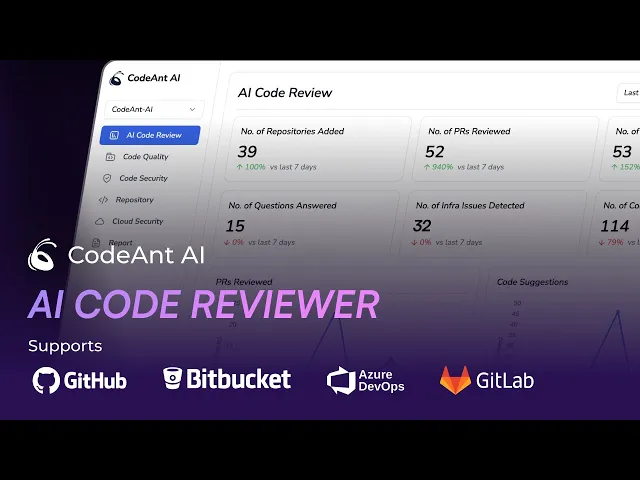
AI-powered tools like CodeAnt AI add a new layer of review:
PR summaries
risk detection
maintainability scoring
complexity warnings
security red flags
line-by-line fix suggestions
This gives reviewers a guided path through the PR instead of starting from scratch.
Security Scanning and Quality Gates
Quality gates ensure merging is safe.
Common gates include:
secret detection
license compliance
high-severity vulnerability blocking
In trunk-based workflows, these gates are essential because merges happen so frequently.
Tools for Code Review in Trunk-Based Development Workflows
Different tools support different parts of the review lifecycle—choose ones that keep pace with fast-moving integration.
Pull Request Code Review Platforms
GitHub, GitLab, Azure DevOps, and Bitbucket provide:
PR discussions
inline comments
reviewer assignment
branch protections
But for high-velocity teams, native features may not be enough.
Static Analysis and Automated Review Tools
These help enforce standards:
ESLint
Prettier
Black
Static analysis ensures consistent codebase hygiene at scale.
AI Code Review Assistants
AI tools are now essential:
they scale review coverage
provide context-aware suggestions
catch logic-level issues
reduce cognitive load on reviewers
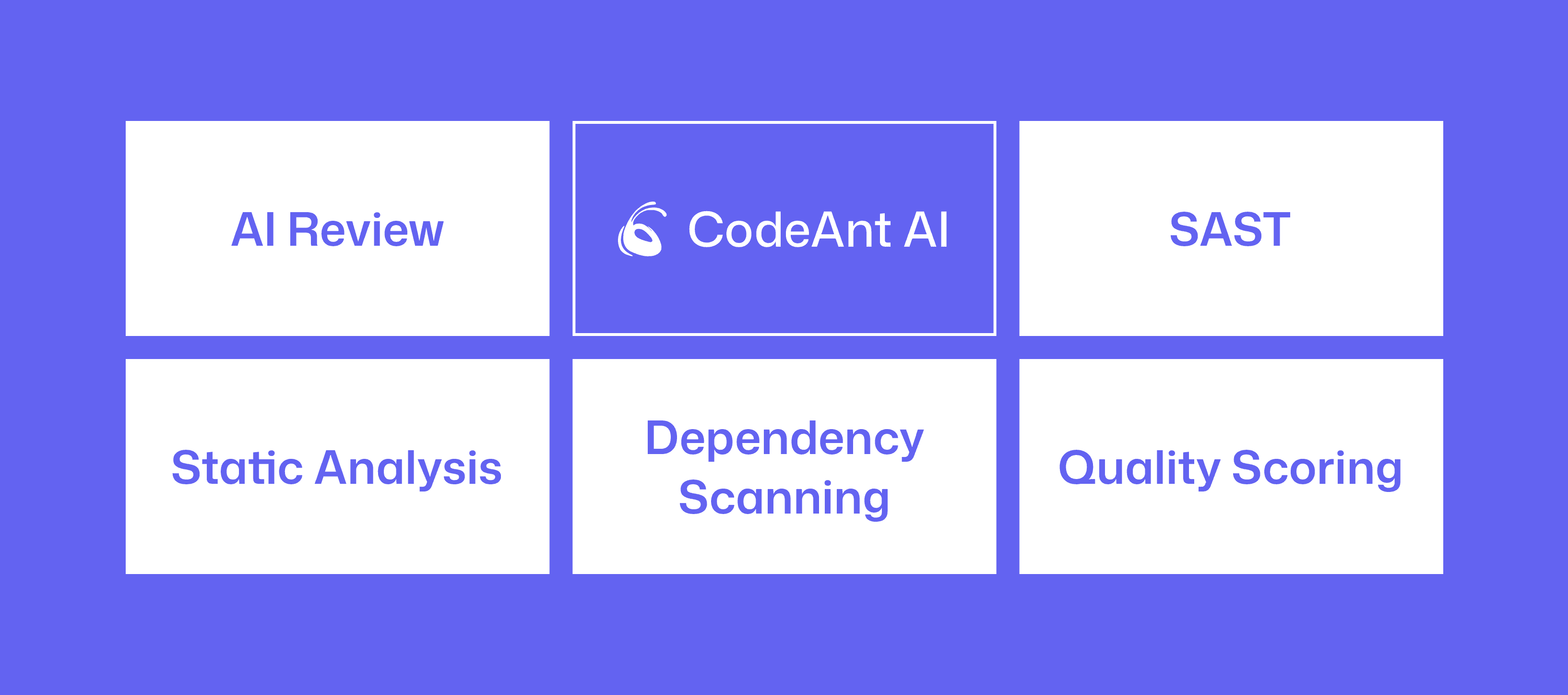
CodeAnt AI goes further by combining:
AI review
SAST
static analysis
dependency scanning
quality scoring
in a single platform.
Code Review Metrics for Trunk-Based Teams
Measurement is crucial because feedback loops are short.
Review Cycle Time
Time from PR opened → approved. Should be measured in hours.
Defect Escape Rate
How many bugs reach production despite review? An essential signal for review quality.
Review Coverage
Percentage of code changes reviewed. In TBD, this should be near 100%.
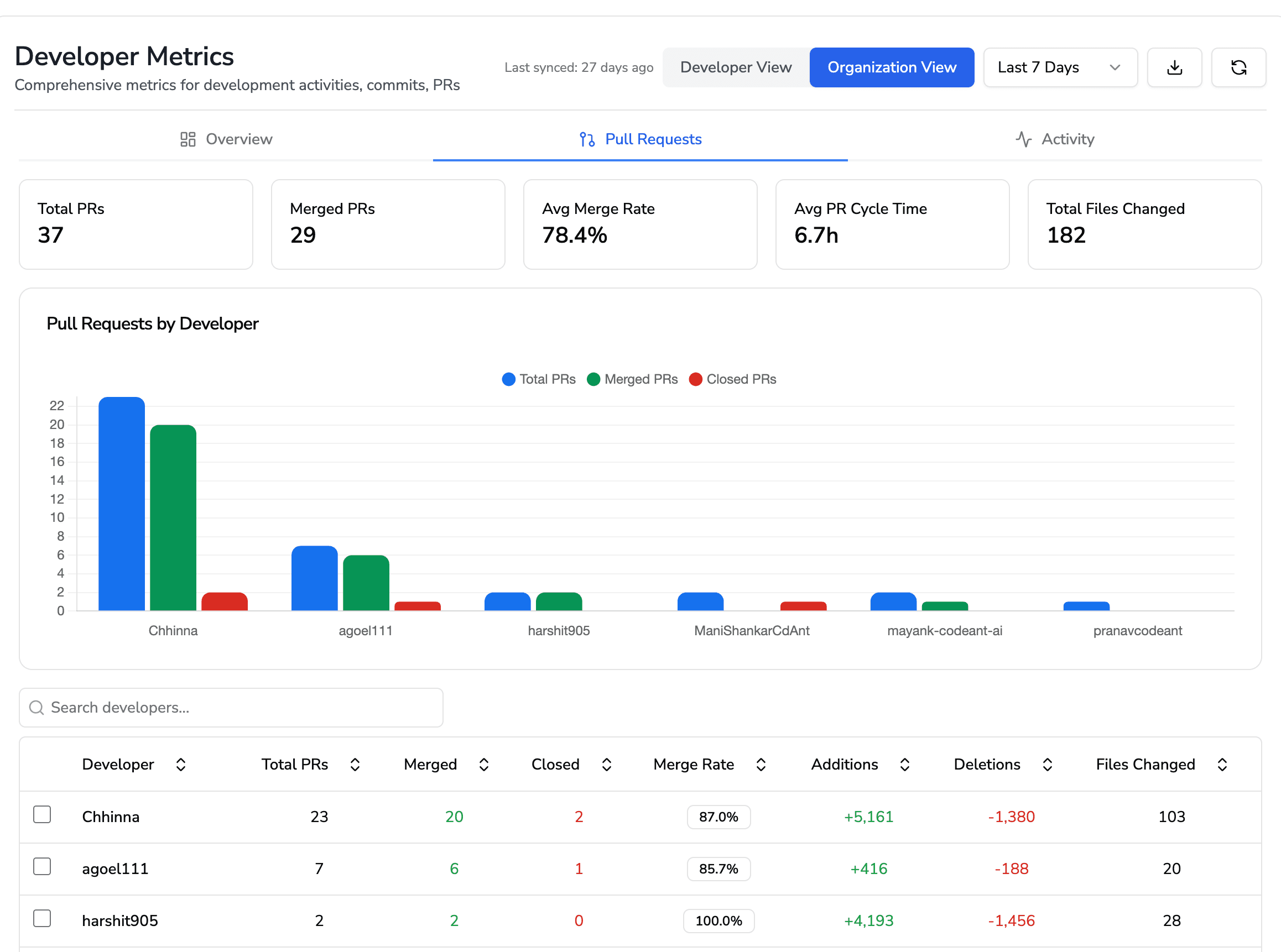
Reviewer Load Distribution
Ensures no single engineer becomes a bottleneck. CodeAnt AI provides dashboards across all repos to help teams balance reviewer load.
Common Code Review Pitfalls in Trunk-Based Workflows
Avoid these common mistakes that break trunk stability.
1. Skipping Reviews to Maintain Merge Velocity
Speed without quality breaks trunk. Fast ≠ careless.
2. Review Queues That Block Continuous Integration
Review queues are the enemy of trunk-based development.
Fix with:
smaller PRs
more reviewers
automation
clear SLAs
3. Inconsistent Standards Across Teams
Inconsistency leads to unpredictable code quality. Document standards and enforce them with automation.
4. Over-Reliance on Automated Checks Without Human Oversight
Automation catches patterns. Only humans catch business logic. Both are required for TBD.
Scaling Code Review for Large Trunk-Based Development Teams
Large engineering teams often struggle with reviewer bottlenecks and uneven ownership. These practices help scale review capacity.
Code Ownership and Automated Review Routing
Use:
CODEOWNERS
team boundaries
domain ownership maps
Automate assignment to reduce delays and remove ambiguity.
Modular Codebases and Review Boundaries
Modularization helps teams review only what they own, not the entire codebase. This keeps review load predictable as teams scale.
High-Volume Review Automation
Large teams generate hundreds of PRs weekly. AI-assisted review is the only scalable way to maintain:
coverage
safety
codebase health
without increasing reviewer headcount.
Building a Review Culture That Powers Continuous Code Integration
Successful trunk-based development requires treating review as a priority, not a disruption. When review is fast, consistent, and automated, trunk stays healthy and deployment-ready.
Automation handles repetitive checks; humans focus on reasoning and correctness.
Teams ready to accelerate both delivery and code quality rely on platforms like CodeAnt AI.
Run yourself through our free 14-day trial at https://app.codeant.ai to learn more.

