

CodeQL promised enterprise-grade security scanning, but somewhere between writing custom queries and waiting 30 minutes for scans to finish, your team started ignoring the alerts entirely. You’re not abandoning security, you’re looking for a tool that actually fits how developers work.
This guide covers seven AI code review tools that replace CodeQL’s security coverage while adding automated fix suggestions, faster scans, and code quality tracking that CodeQL never offered.
Why Teams Are Moving Away from GitHub CodeQL
For teams migrating from GitHub CodeQL, the best AI code review tools combine AI-powered insights, deep security scanning, and strong collaboration features without the complexity that makes CodeQL hard to maintain. CodeQL is GitHub’s semantic code analysis engine. It uses a custom query language to find vulnerabilities, but many teams discover that the steep learning curve, slow scan times, and high false positive rates create more friction than value.
The core issue is straightforward: CodeQL requires dedicated security engineers to write and maintain custom queries. Most development teams don’t have that bandwidth, especially when they’re already stretched thin shipping features.
Complex Query Language with Steep Learning Curve
CodeQL uses a proprietary query language that resembles SQL but targets code semantics. Writing effective queries takes weeks of learning. Maintaining queries as your codebase evolves takes even longer. Unless you have a dedicated AppSec team, queries often go stale or never get written in the first place.
High False Positive Rates and Alert Fatigue
Teams frequently report that CodeQL flags issues that aren’t real vulnerabilities. Over time, developers start ignoring alerts entirely. Alert fatigue is one of the fastest ways to undermine a security program because actual risks slip through unnoticed.
Slow Scan Times on Large Codebases
CodeQL’s deep semantic analysis comes at a cost: time. On large repositories, scans can take 30 minutes or more, blocking CI/CD pipelines and frustrating developers waiting to merge.
Limited AI and Context-Aware Analysis
CodeQL relies on static rules rather than AI. It can’t understand developer intent, suggest fixes, or learn from your organization’s coding patterns. Modern AI code review tools provide contextual feedback and one-click remediation. CodeQL simply flags problems and leaves the rest to you.
Expensive GitHub Advanced Security Bundling
CodeQL requires GitHub Advanced Security (GHAS) licensing, which bundles features many teams don’t use at a high per-seat cost. For organizations with 100+ developers, licensing adds up quickly.
If your GitHub environment includes a large monorepo, the review requirements are different. See our guide to AI code review for GitHub monorepos for a closer look at repository-wide context, cross-directory dependencies, and review workflows.
How AI Code Review Tools Solve CodeQL Limitations
AI code review tools take a fundamentally different approach. Instead of requiring custom queries, they work out of the box with pre-trained models that understand code patterns across languages. They provide fix suggestions, not just alerts, and integrate directly into pull requests.
Here’s how the two approaches compare:
Capability | CodeQL | AI Code Review Tools |
Setup complexity | High (custom queries) | Low (works immediately) |
Fix suggestions | None | Automated |
Learning curve | Steep | Minimal |
Review speed | Slow (30+ minutes) | Near-instant |
Security + quality | Security only | Both |
What to Look for When Replacing CodeQL
Before evaluating specific tools, it helps to know what capabilities matter most for a smooth migration.
Native GitHub Integration
The best tools install as GitHub Apps with one-click setup. They post comments directly on pull requests, update status checks, and require zero pipeline configuration.
Security and Vulnerability Detection
Your replacement tool covers Static Application Security Testing (SAST), secrets detection, and dependency scanning at minimum. SAST analyzes source code for security vulnerabilities without executing the program. Look for tools that detect OWASP Top 10 vulnerabilities and scan for hardcoded credentials.
Code Quality and Maintainability Metrics
CodeQL focuses exclusively on security. AI code review tools often go further by tracking complexity, duplication, and technical debt. Technical debt refers to the implied cost of future rework caused by choosing quick solutions over better approaches.
Auto Code Review with Fix Suggestions
Modern tools provide line-by-line feedback with suggested fixes you can apply in one click. If a tool only flags problems without offering solutions, you’re still doing most of the work manually.
Pricing Transparency and Scalability
Per-seat pricing models penalize growth. Look for per-repository or flat-rate pricing that scales with your codebase rather than your headcount.
Best GitHub AI Code Review Tools for CodeQL Migration
The seven tools below were evaluated for GitHub integration depth, security coverage, AI capabilities, and ease of migration from CodeQL.
CodeAnt AI
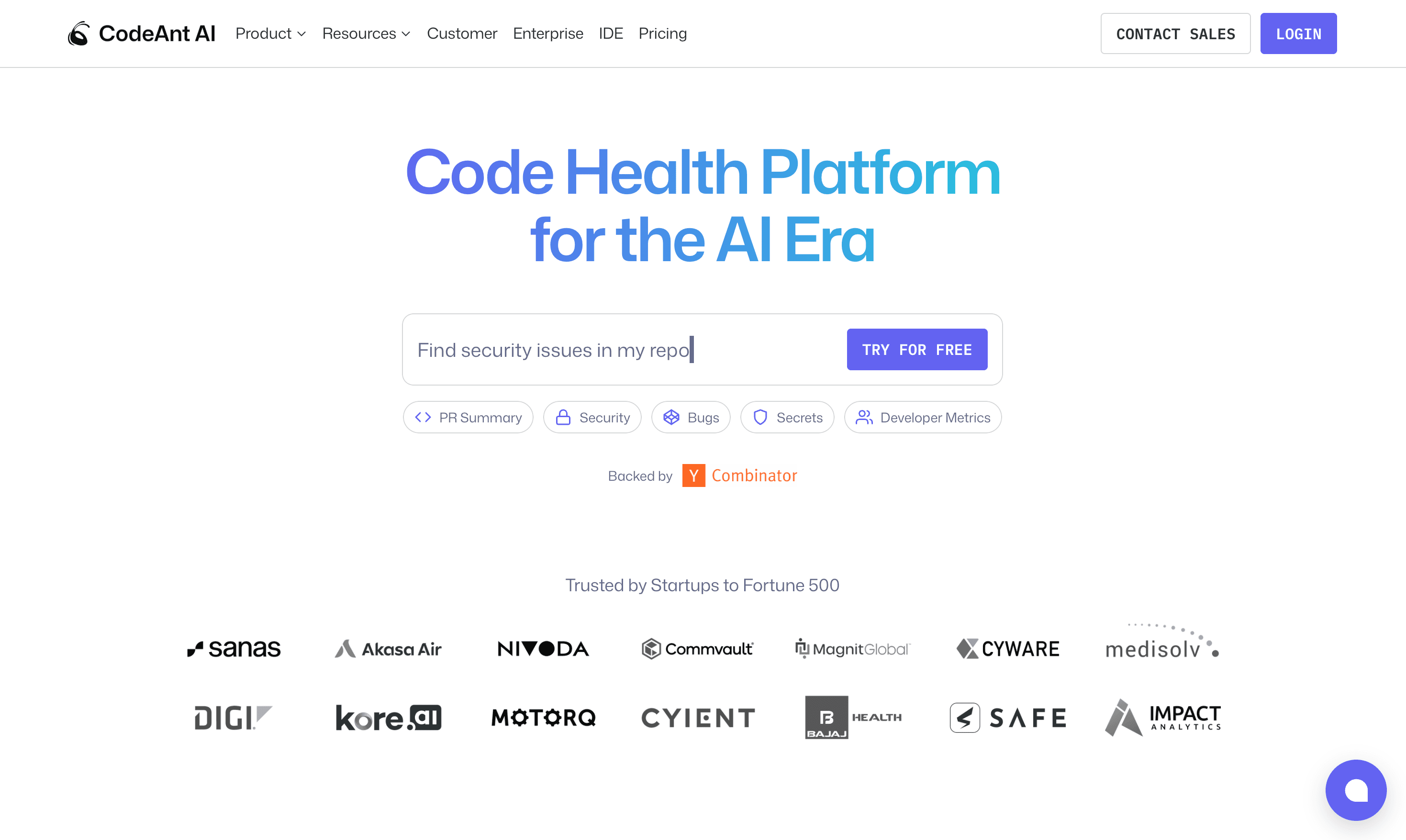
CodeAnt AI is a defensive and offensive security platform that combines security scanning, code quality analysis, and AI-powered reviews in a single tool. It’s designed for teams with 100+ developers who want to replace fragmented toolchains with one platform.
Key Features
AI-powered pull request reviews: Line-by-line feedback with context-aware fix suggestions
Security scanning: SAST, secrets detection, and dependency vulnerability checks
Code quality gates: Tracks complexity, duplication, and maintainability
DORA metrics: Measures deployment frequency, lead time, and change failure rate
30+ language support: Works across polyglot codebases without additional configuration
Why CodeAnt AI for CodeQL Migration: CodeAnt AI replaces CodeQL’s security scanning while adding quality and productivity features that CodeQL never offered. There’s no query language to learn. The platform works immediately after installation and improves over time as it learns your organization’s patterns.
Pricing: 14-day free trial, no credit card required. Plans start at $10/user/month (Lite) with Premium plans at $20/user/month.
CodeRabbit
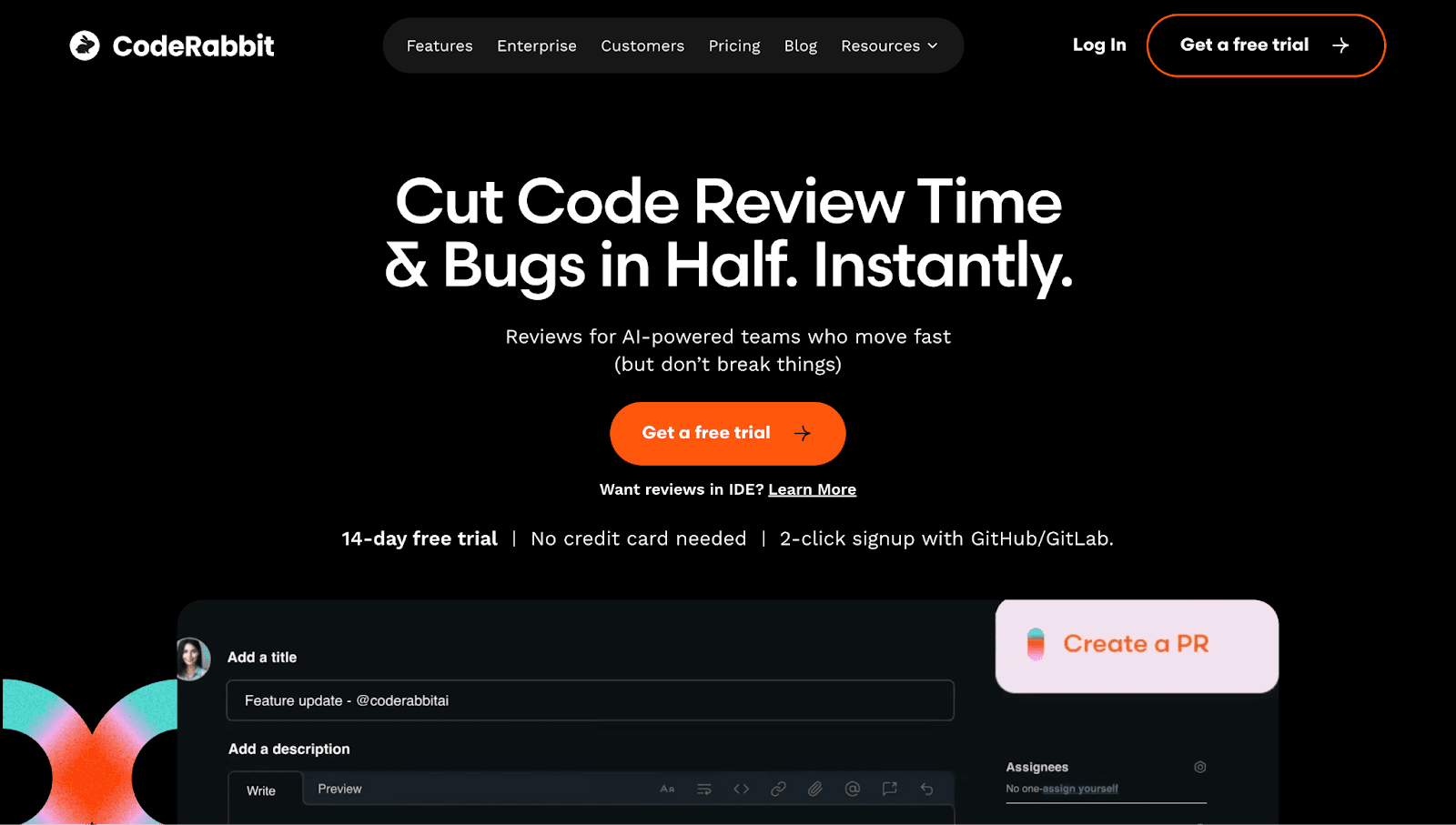
CodeRabbit positions itself as an AI-first code review assistant focused on conversational feedback. Rather than just flagging issues, it lets developers chat with the AI about suggested changes directly in pull requests.
Key Features
Conversational PR reviews: Ask follow-up questions about suggestions
Automated summaries: Generates PR descriptions and change summaries
Custom review instructions: Configure tone, focus areas, and review depth
Why CodeRabbit: CodeRabbit works well for teams prioritizing developer experience and PR documentation. The conversational interface makes it easier to understand why changes are suggested.
Checkout this CodeRabbit alternative.
Pricing: Free tier for open source projects; paid plans for private repositories start at $12/user/month.
Limitations: Security coverage is lighter than dedicated SAST tools. Teams with strict compliance requirements may want to layer additional security scanning.
Snyk Code
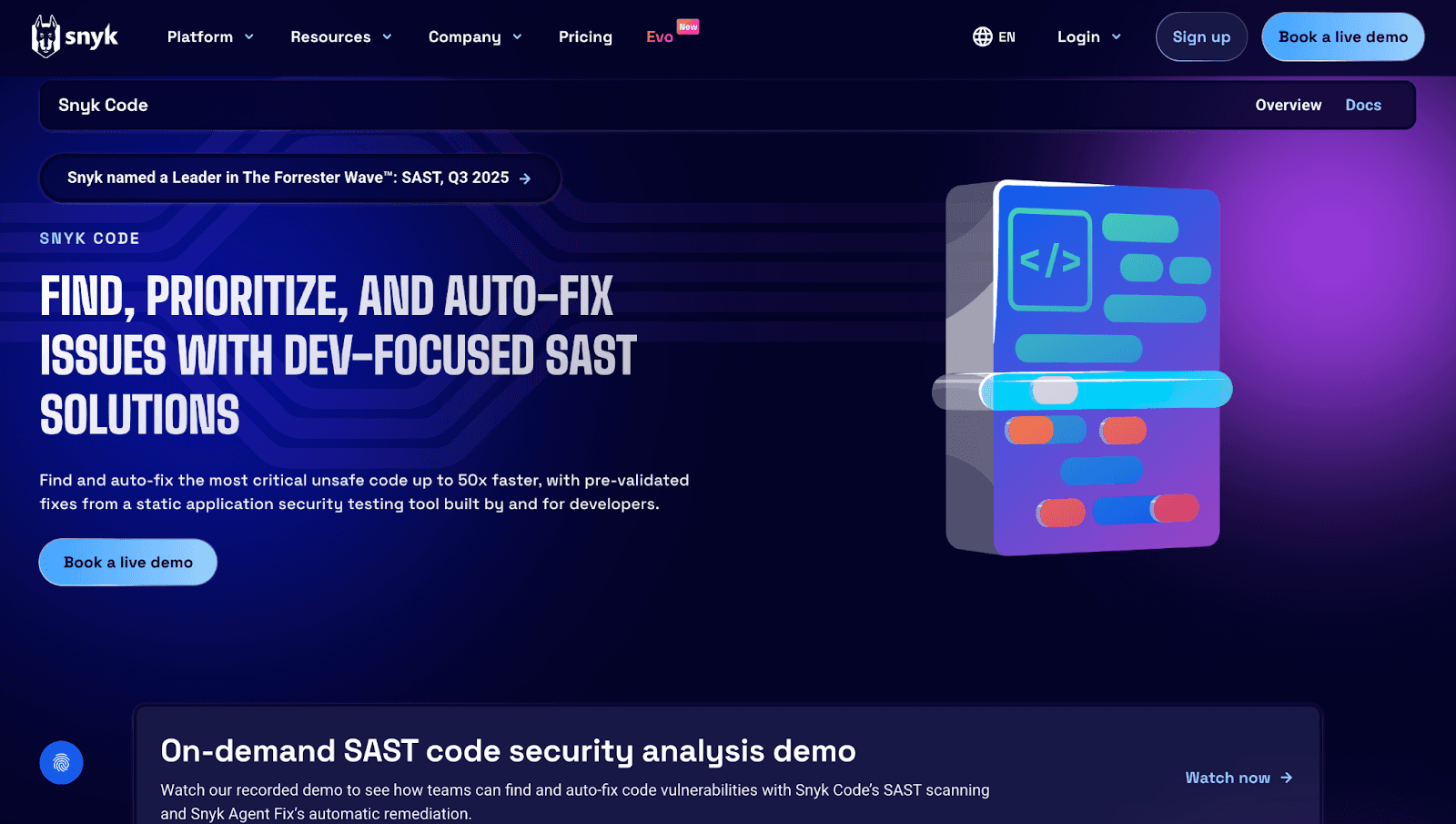
Snyk Code is a developer-first security tool that scans code in real-time as developers write it. The IDE integration catches issues before code even reaches GitHub.
Key Features
Real-time SAST: Scans code as developers type
IDE plugins: VS Code, JetBrains, and other popular editors
Fix suggestions: Provides remediation guidance with code snippets
Dependency scanning: Covers open-source vulnerabilities via Snyk Open Source
Why Snyk Code: Snyk is a strong choice for security-focused teams wanting to catch vulnerabilities earlier without disrupting developer workflow.
Checkout these Top 13 Snyk Alternatives.
Pricing: Free tier with limited scans; Team plans start at $25/user/month with Enterprise pricing available.
Limitations: Code quality features are limited. Teams tracking maintainability, complexity, or technical debt will likely want additional tooling.
SonarQube
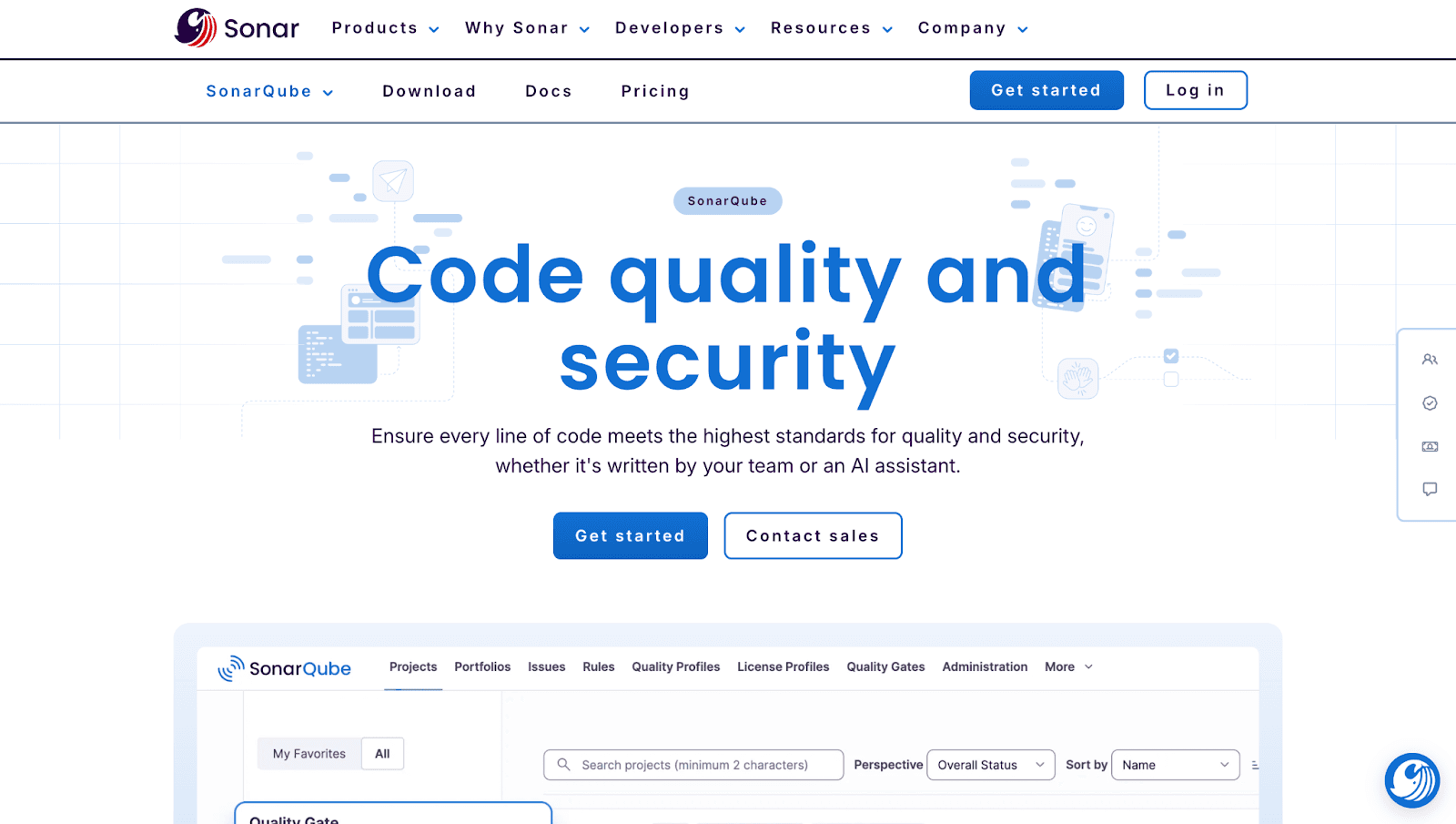
SonarQube is a mature, self-hosted code quality and security platform with widespread enterprise adoption. It’s been around since 2007 and offers extensive customization for teams with specific compliance requirements.
Key Features
Quality gates: Block merges when code doesn’t meet defined standards
Technical debt tracking: Quantifies effort required to fix issues
On-prem deployment: Full control over data and infrastructure
Multi-language support: Covers 30+ languages including legacy stacks
Why SonarQube: SonarQube is ideal for enterprises requiring self-hosted solutions with extensive customization. If your organization has strict data residency requirements, SonarQube delivers.
Checkout this SonarQube Alternative.
Pricing: Community Edition is free; Developer Edition starts at $160/year. Enterprise editions require custom pricing.
Limitations: Requires infrastructure management and ongoing maintenance. AI capabilities are limited compared to newer tools.
Codacy
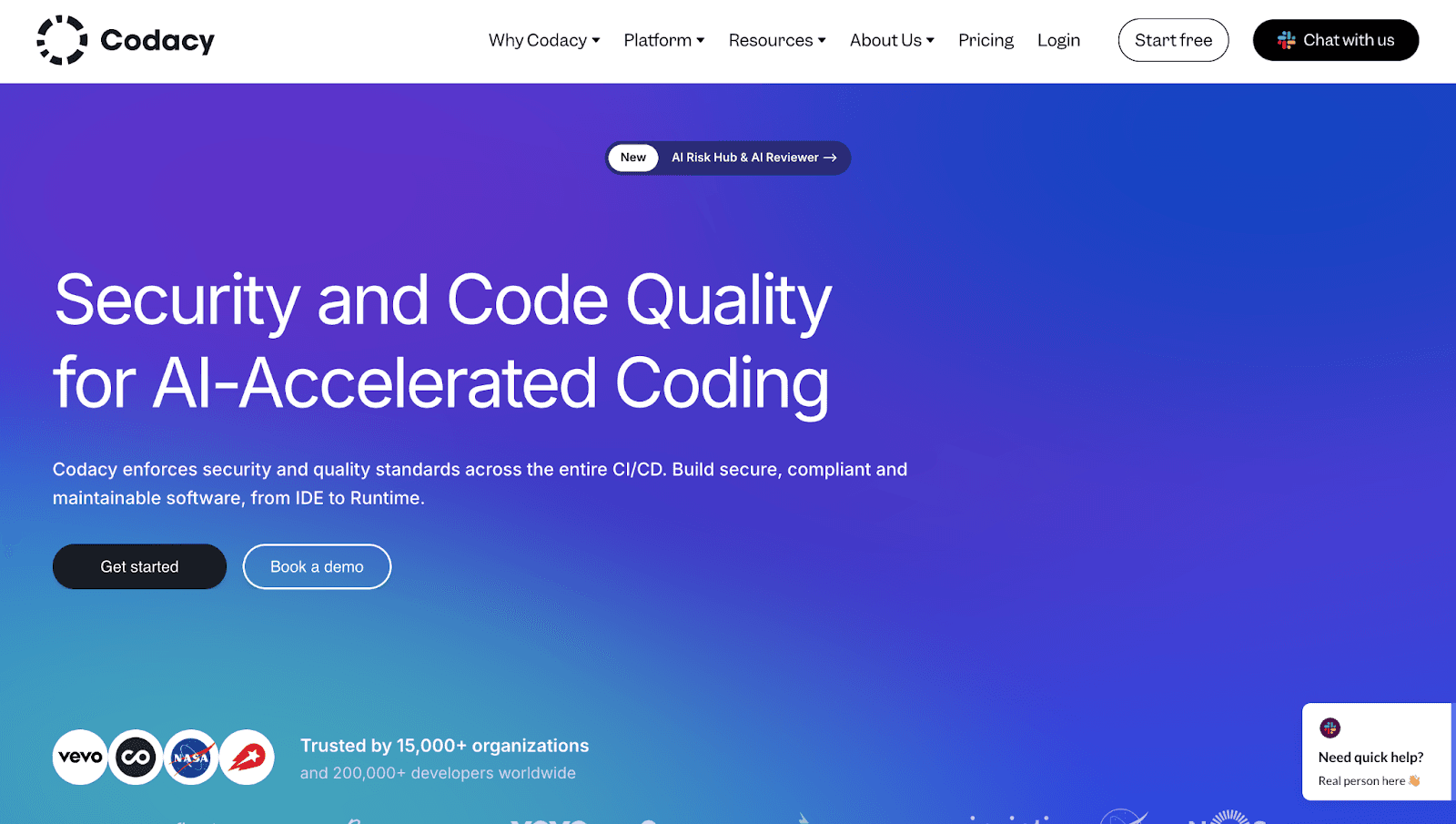
Codacy is a cloud-native code quality platform that automates style enforcement and security checks with minimal configuration.
Key Features
Automated code review: Comments on PRs with quality and security findings
Coverage tracking: Monitors test coverage trends over time
Security patterns: Detects common vulnerabilities and hardcoded secrets
GitHub App: Simple installation without pipeline changes
Why Codacy: Codacy offers a good middle ground for teams wanting quality and security without heavy configuration. It’s particularly useful for standardizing codebases with inconsistent styles.
Checkout this Codacy Alternative.
Pricing: Free for open source; Pro plans start at $15/user/month for private repositories.
Limitations: AI-driven suggestions are less advanced than dedicated AI review tools.
DeepSource
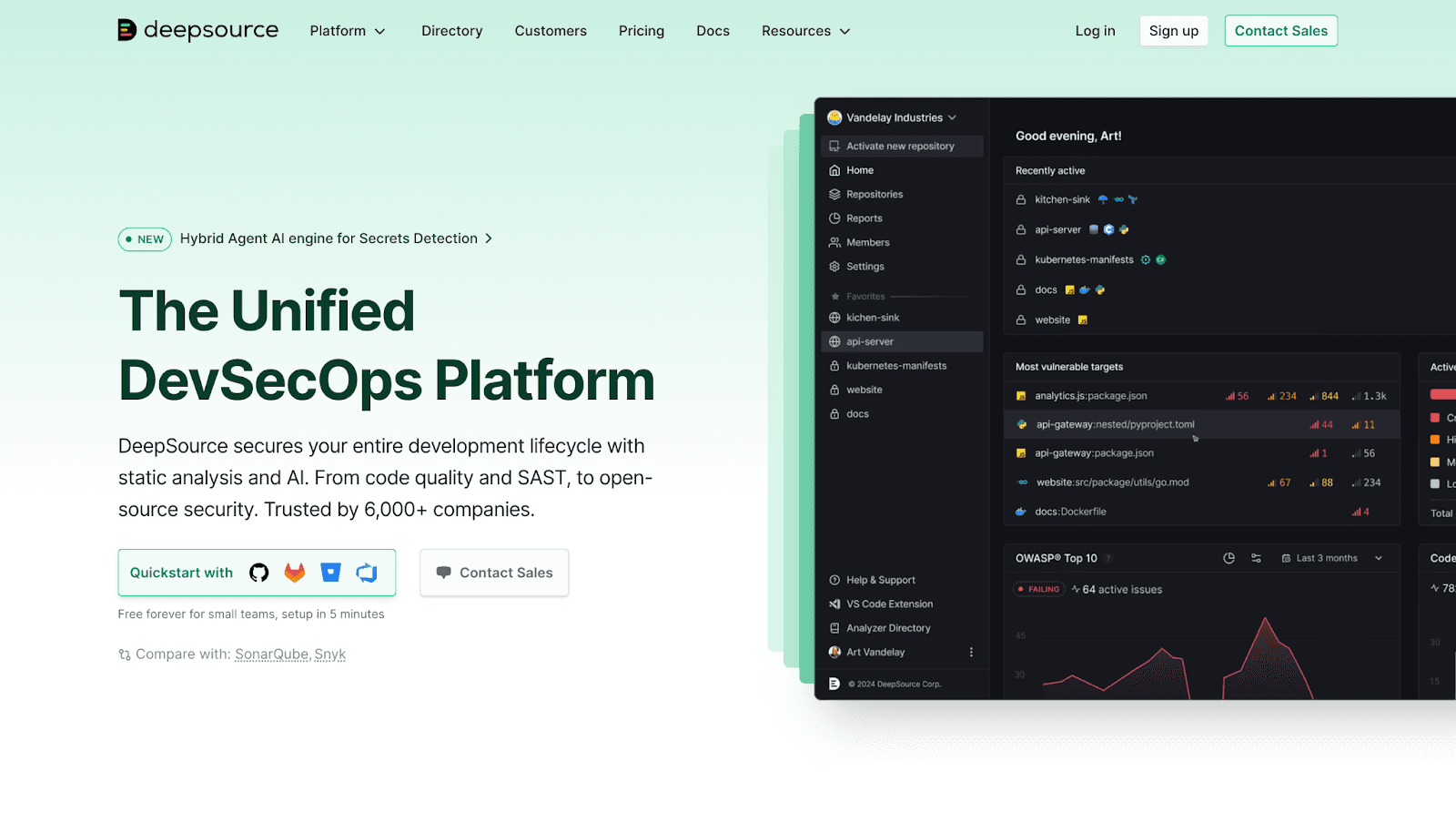
DeepSource is a fast, developer-friendly static analysis tool with autofix capabilities. It analyzes code in seconds rather than minutes.
Key Features
Autofix: Automatically generates patches for detected issues
Performance analysis: Flags inefficient code patterns
Security analyzers: Covers OWASP Top 10 vulnerabilities
Fast scans: Analyzes code in seconds
Why DeepSource: DeepSource appeals to teams prioritizing speed and automation. The autofix feature creates ready-to-merge patches that developers can apply with one click.
Pricing: Free tier for public repositories; paid plans scale by repository count starting at $12/user/month.
Limitations: Smaller rule library than enterprise tools. Fewer integrations outside the GitHub ecosystem.
Checkout this Deepsource Alternative.
Qodo
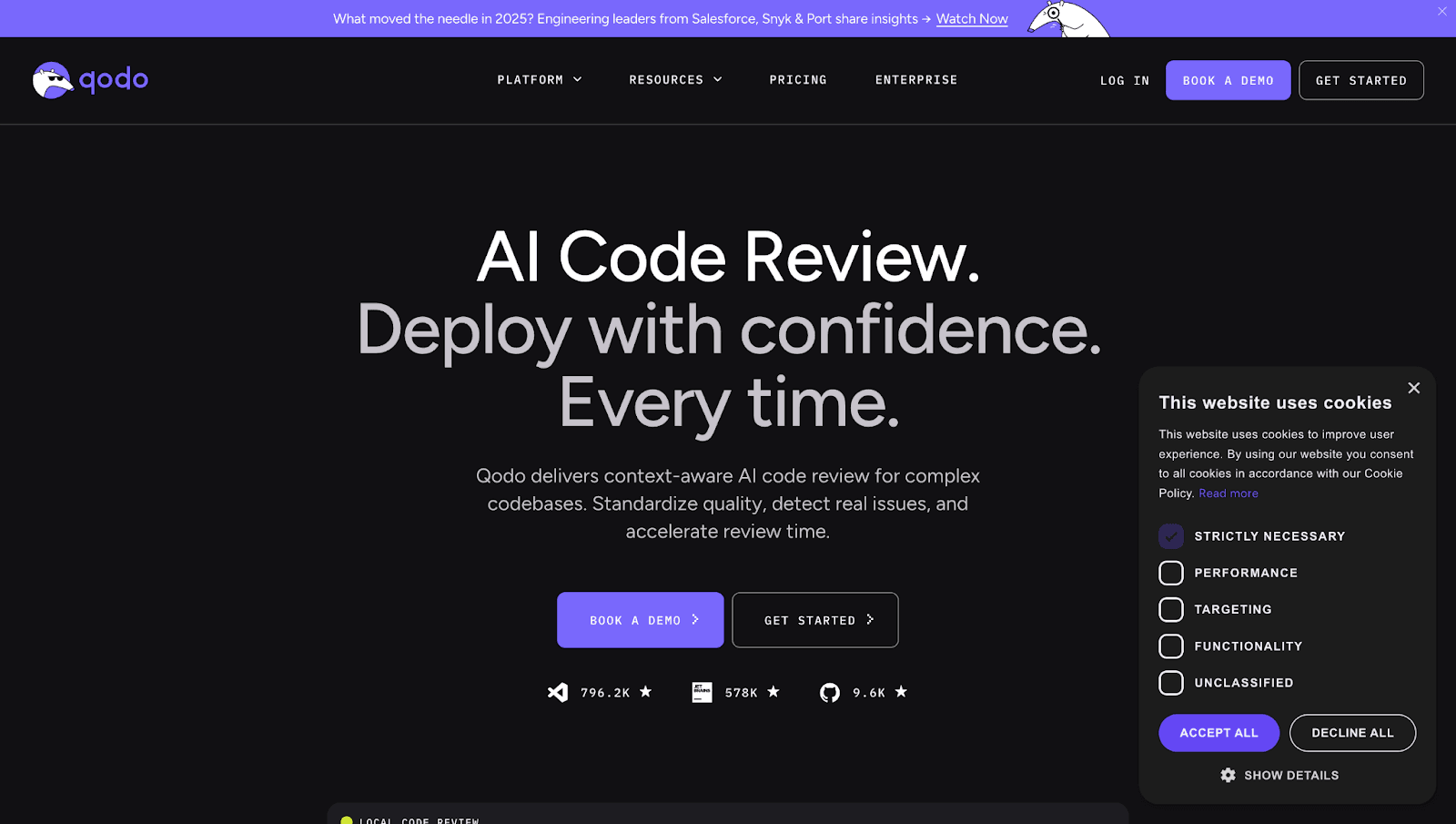
Qodo (formerly CodiumAI) focuses on AI-powered test generation alongside code review. It analyzes code to understand behavior and generates unit tests that cover edge cases developers might miss.
Key Features
AI test generation: Creates unit tests based on code context
PR review: Analyzes changes for potential bugs and edge cases
IDE integration: Works in VS Code and JetBrains editors
Behavioral analysis: Understands code intent beyond syntax
Why Qodo: Qodo is best for teams wanting to improve test coverage alongside code review.
Pricing: Free tier for individuals; Team plans start at $19/user/month.
Limitations: Primarily focused on testing. Security scanning is less comprehensive than dedicated SAST tools.
Checkout this Qodo Alternative.
How to Evaluate Auto Code Review Tools Against CodeQL
Choosing the right replacement requires more than feature comparisons.
Detection Accuracy and False Positive Rate
Run candidate tools in parallel during evaluation. Compare how many issues each tool flags and how many are actionable. A tool that finds 100 issues but 80 are false positives creates more work than one that finds 30 real problems.
Time-to-Value Without Custom Queries
AI tools work immediately after installation. If a tool requires weeks of configuration before it’s useful, you’re recreating the CodeQL problem you’re trying to escape.
Coverage Across Security and Quality
CodeQL only covers security. A good replacement addresses quality and maintainability too, including complexity metrics, duplication detection, and technical debt tracking.
Total Cost of Ownership
Factor in licensing costs, infrastructure requirements for self-hosted options, and the engineering time saved by automation.
Choosing the Right CodeQL Alternative for Your Team
The right tool depends on your team’s priorities. Security-focused organizations might lean toward Snyk Code. Teams wanting comprehensive code health in one platform often find CodeAnt AI fits best. Organizations with strict on-prem requirements may prefer SonarQube despite its maintenance overhead.
What matters most is finding a tool that your developers will actually use. The best security and quality coverage means nothing if the tool creates so much friction that teams work around it.
Ready to simplify your code review workflow?Book your 1:1 with our experts today!

