AI Code Review
Best GitHub AI Code Review Tools for Enterprise Engineering Teams

Sonali Sood

Founding GTM, CodeAnt AI
Your enterprise engineering team runs on GitHub. But once you scale past 100 developers, GitHub's native code review features start showing cracks—PRs pile up, security gaps slip through, and senior engineers become bottlenecks instead of force multipliers.
AI-powered code review tools close these gaps by automating the repetitive work: line-by-line analysis, security scanning, and quality enforcement that would otherwise consume hours of human attention. This guide compares the top options for enterprise teams, breaks down what to look for, and shows you how to choose the right tool for your organization's specific needs.
The best AI code review tools for GitHub enterprise teams combine automated pull request analysis, security scanning, and quality enforcement in a single workflow. The right choice depends on your team's specific priorities, whether that's compliance requirements, developer experience, or scaling across hundreds of engineers.
Why GitHub Native Code Review Falls Short at Enterprise Scale
GitHub's built-in review features work well for smaller teams. You get pull requests, branch protection rules, and inline comments. Solid fundamentals. But once your engineering organization grows past 100 developers, those basics start showing cracks.
No AI-Powered Suggestions or Automated Analysis
GitHub's native reviews rely entirely on human effort. Every comment, every suggestion, every catch comes from a person reading code line by line. There's no pattern recognition, no intelligent suggestions, no automated detection of common issues.
AI-powered code review changes this equation. Tools analyze code context, recognize anti-patterns, and suggest fixes automatically, before a human reviewer even opens the PR.
Manual Reviews Create Bottlenecks for Large Teams
When everything depends on human reviewers, queues pile up fast. Senior engineers become blockers because they're the only ones who understand certain parts of the codebase. You'll notice the symptoms quickly:
PRs waiting days: Developers context-switch while waiting for feedback
Inconsistent quality: Different reviewers catch different things
Knowledge silos: Only certain people can review certain code
Basic Security Scanning Misses Critical Vulnerabilities
GitHub's default scanning catches some issues, but it lacks the depth of dedicated Static Application Security Testing (SAST) tools. SAST analyzes source code for security vulnerabilities before runtime—think SQL injection, hardcoded secrets, and insecure configurations.
Secrets detection and dependency scanning often fall through the gaps too. A hardcoded API key or a vulnerable npm package can slip into production without anyone noticing.
Context Loss Makes Large Pull Requests Unmanageable
Large PRs with hundreds of changed files lose context fast. Reviewers can't see the full picture, so they skim instead of analyze. This leads to superficial reviews and missed issues that surface later in production.
Point Solution Sprawl Fragments Developer Workflows
Here's what typically happens: teams add one tool for security, another for quality metrics, a third for coverage tracking. Suddenly developers juggle five different dashboards and context-switch constantly. Code health works better as a unified concern—not a collection of disconnected tools bolted onto your pipeline.
How AI Code Review Tools Accelerate Enterprise Engineering
AI-powered tools handle the repetitive work so your engineers focus on what matters: architecture decisions, business logic, and mentorship.
Automated Line-by-Line Code Analysis
AI reviews every line and suggests improvements automatically. This differs from traditional linters, AI understands context and intent, not just syntax rules. It catches issues like inefficient algorithms, potential race conditions, and violations of your team's coding patterns.
Real-Time Security and Vulnerability Detection
Tools catch security issues as code is written, not after deployment:
SAST: Scans source code for vulnerabilities before runtime
Secrets detection: Finds hardcoded API keys, passwords, and tokens
Dependency scanning: Flags vulnerable third-party packages
Consistent Quality Enforcement Across Teams
AI applies the same standards everywhere. No reviewer fatigue, no inconsistency between time zones, no variation based on who happens to pick up the PR. This matters especially for distributed enterprise teams spanning multiple continents.
Faster Reviews and Reduced Developer Toil
Developers spend less time on routine review tasks. The AI handles style checks, common bug patterns, and security scanning, freeing humans for complex architectural decisions.
What Enterprise Teams Look for in AI Code Review Tools
Not every tool scales to enterprise requirements. Here's what separates enterprise-ready solutions from tools built for smaller teams.
Native GitHub Integration and PR Workflow Automation
The tool works within existing GitHub workflows: comments directly on pull requests, integrates with GitHub Actions and CI/CD pipelines, and supports both GitHub Enterprise Server and GitHub Enterprise Cloud.
Security Scanning and Compliance Capabilities
Enterprise teams typically look for built-in SAST and secrets detection (not add-ons), compliance standards like SOC 2, GDPR, or HIPAA depending on industry, and audit trails for governance and regulatory requirements.
Scalability for Large Codebases and Distributed Teams
The tool handles monorepos, multiple languages, and high PR volume without slowing down. Performance at scale matters—a tool that works for 50 developers might crawl at 500.
Custom Rules and Organization-Specific Standards
Generic rules generate noise. Enterprise teams define their own coding standards and have them enforced automatically. This is where many tools fall short.
Enterprise Administration, SSO, and Access Controls
Look for SSO support (SAML, OIDC) for identity management, role-based access controls for different teams, and audit logs for compliance and security reviews.
Top GitHub AI Code Review Tools for Enterprise Teams Compared
Tool | Key Strength | GitHub Integration | Security Features | Languages | Pricing Model |
CodeAnt AI | Unified code health platform | Native GitHub App | SAST, secrets, dependencies | 30+ | Per-seat, 14-day trial |
GitHub Copilot Code Review | Native to GitHub ecosystem | Built-in | Limited | All GitHub-supported | Per-seat (Copilot subscription) |
CodeRabbit | Conversational AI feedback | GitHub App | Basic | Major languages | Per-seat |
Snyk Code | Security-first SAST | GitHub App | Deep vulnerability detection | 10+ | Usage-based |
SonarQube | Quality gates and rules | CI/CD integration | SAST included | 30+ | Server-based or Cloud |
Codacy | Automated quality reviews | GitHub App | Moderate | 40+ | Per-seat |
Qodo | AI suggestions and test generation | GitHub App | Limited | Major languages | Per-seat |
Amazon CodeGuru | AWS-native analysis | GitHub integration | Security recommendations | Java, Python | Usage-based |
CodeScene | Behavioral code analysis | GitHub integration | Technical debt focus | 20+ | Per-seat |
CodeAnt AI
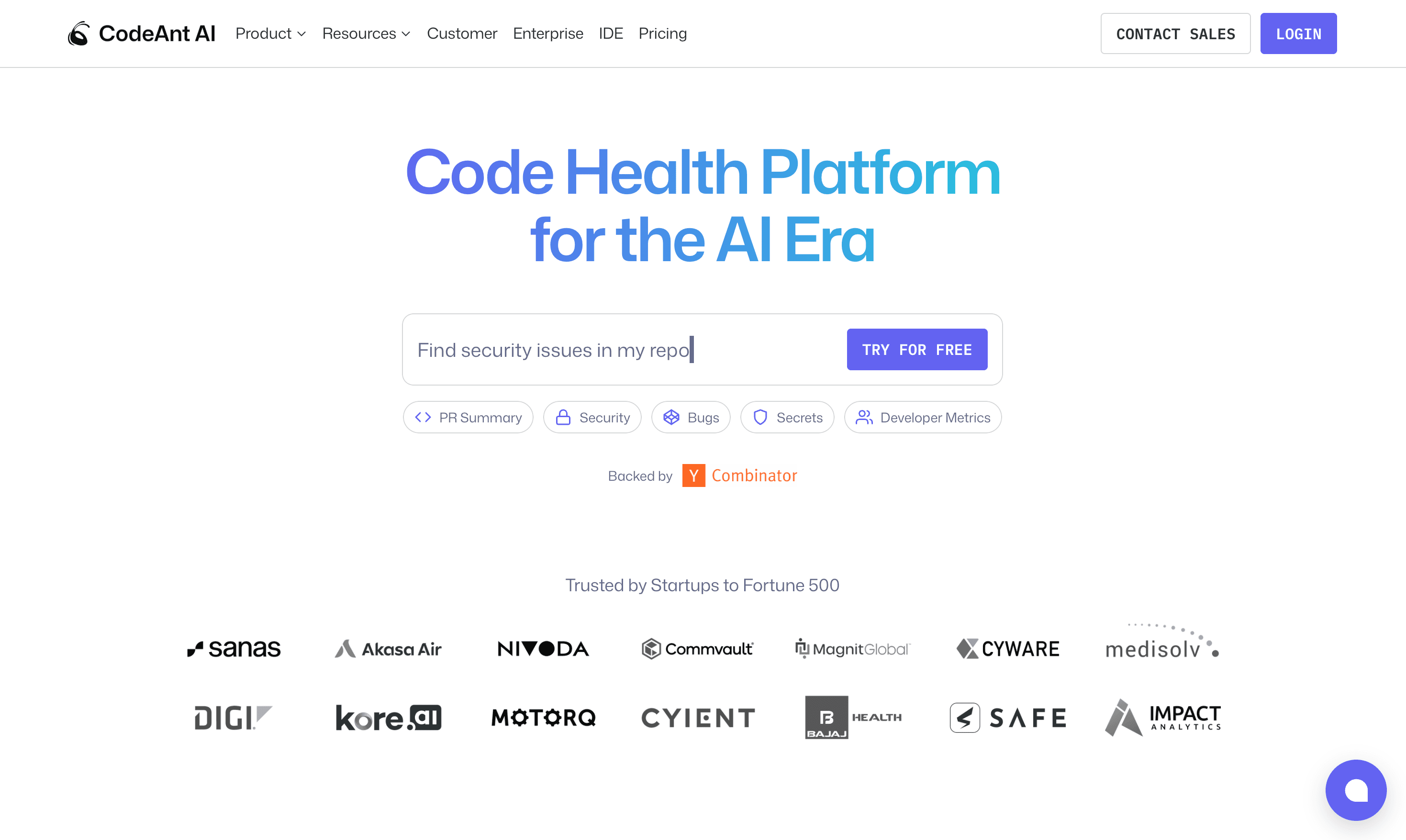
CodeAnt AI brings AI-powered code reviews, security scanning, and quality metrics into a single platform. It scans both new code in pull requests and existing code across every repository, branch, and commit—giving you a complete picture without separate add-ons.
Features:
AI-powered line-by-line PR reviews with fix suggestions
SAST, secrets detection, and dependency scanning in one platform
Custom rules for organization-specific standards
DORA metrics, developer analytics, and maintainability tracking
GitHub Marketplace availability
Supports 30+ languages
The platform delivers a 360° view of engineering performance. Leaders can identify bottlenecks, balance workloads, and track developer-level metrics like commits, PR sizes, and review velocity.
Best for: Enterprise teams wanting a single platform for code health instead of multiple point solutions.
Pricing: Per-seat with 14-day free trial. AI Code Reviews start at $10/user/month.
GitHub Copilot Code Review
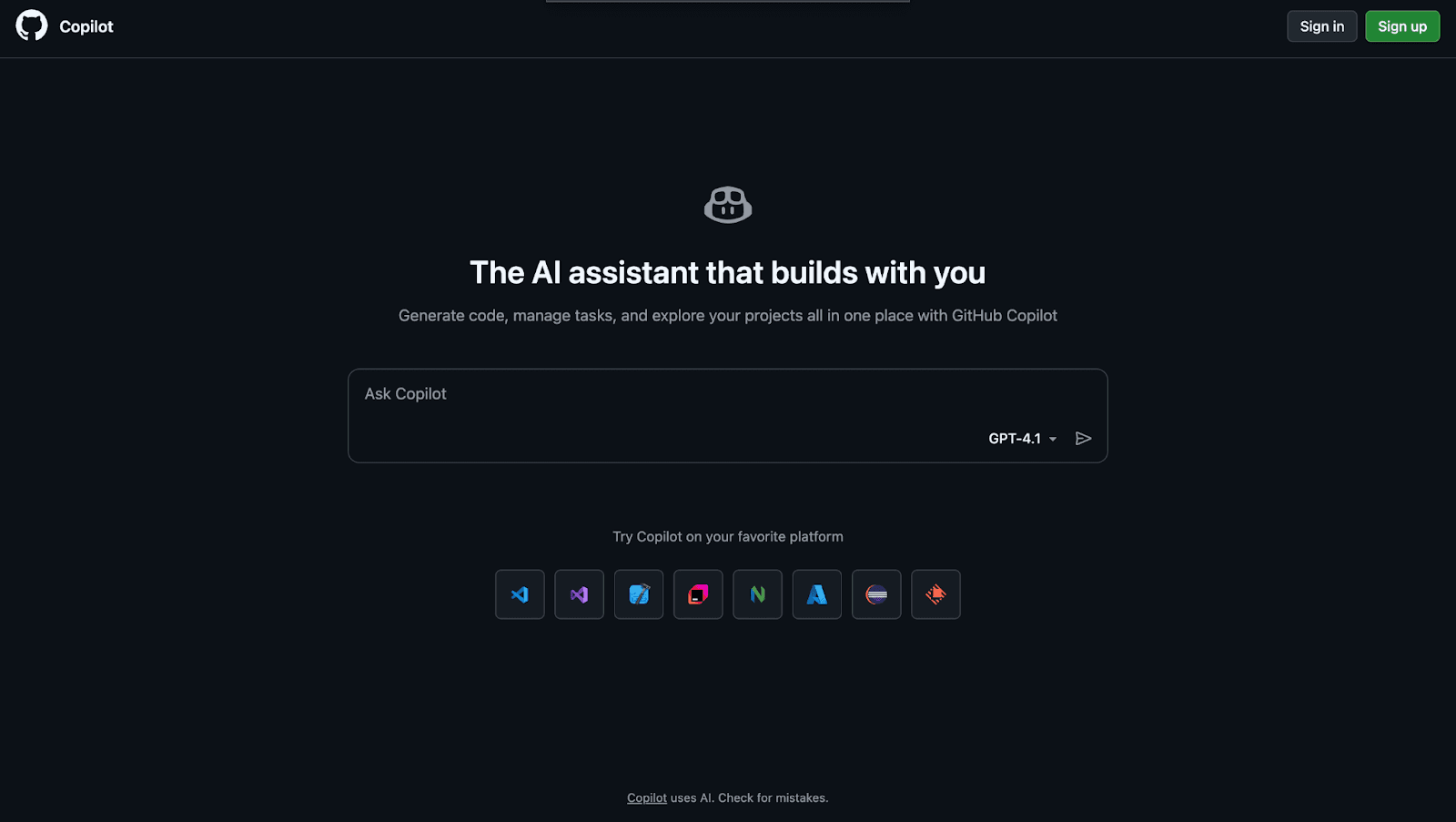
GitHub's built-in AI reviewer uses Copilot's models for review suggestions. It's native to the GitHub ecosystem, so there's no additional integration work.
Features: Auto-suggested fixes directly in PRs, bug and performance issue detection, native branch protection integration.
Best for: Teams already paying for Copilot who want basic AI review without additional tools.
Limitations: Less depth on security scanning. Copilot comments don't currently count as required approvals in branch protection settings.
Checkout this GitHub Copilot alternative.
CodeRabbit
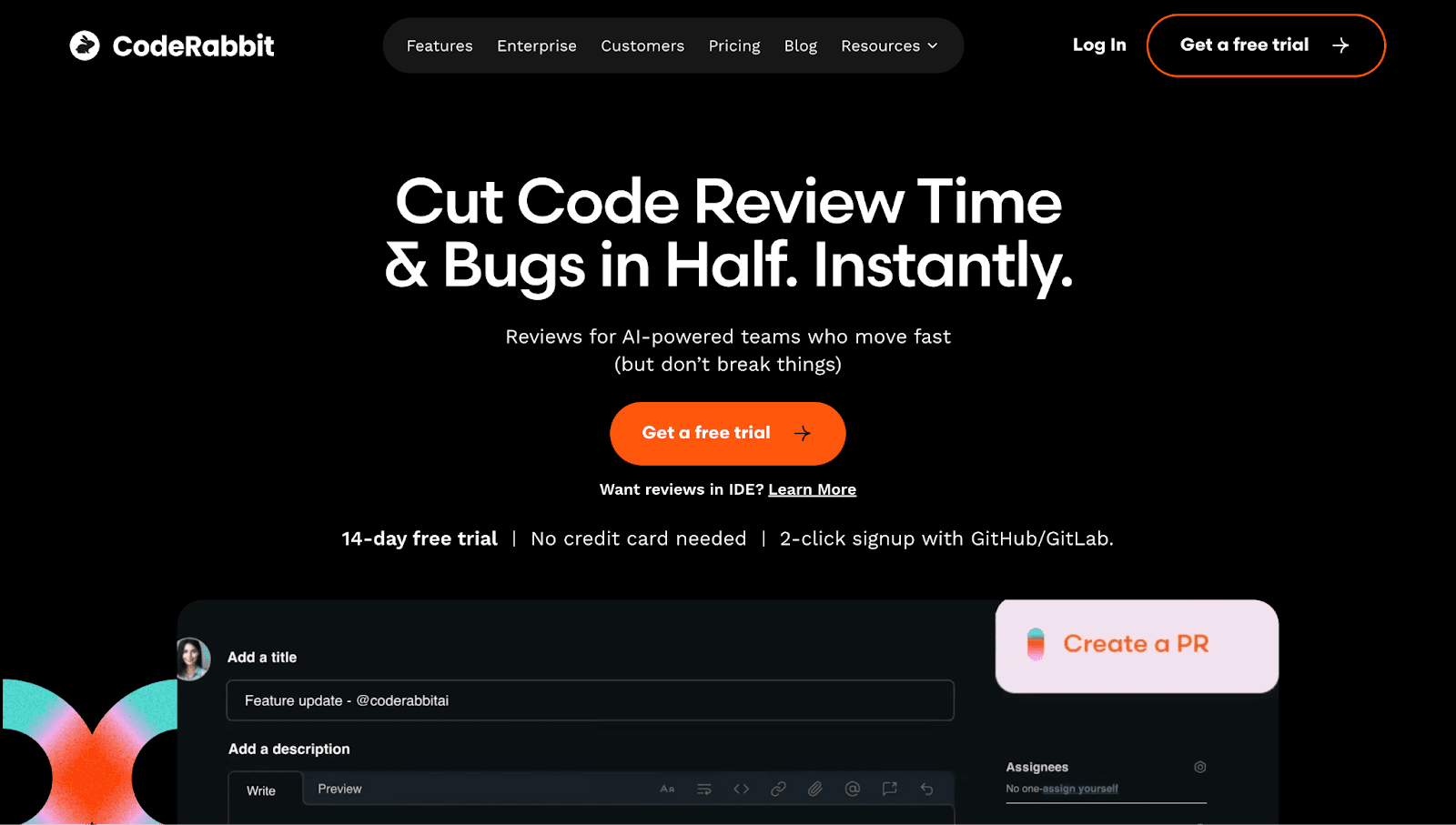
CodeRabbit provides conversational AI feedback on pull requests. It explains issues in natural language and responds to developer questions.
Features: Conversational review comments, context-aware suggestions, interactive feedback loops.
Best for: Teams wanting conversational, educational review feedback.
Limitations: Less comprehensive on security and quality metrics compared to unified platforms.
Checkout this CodeRabbit alternative.
Snyk Code
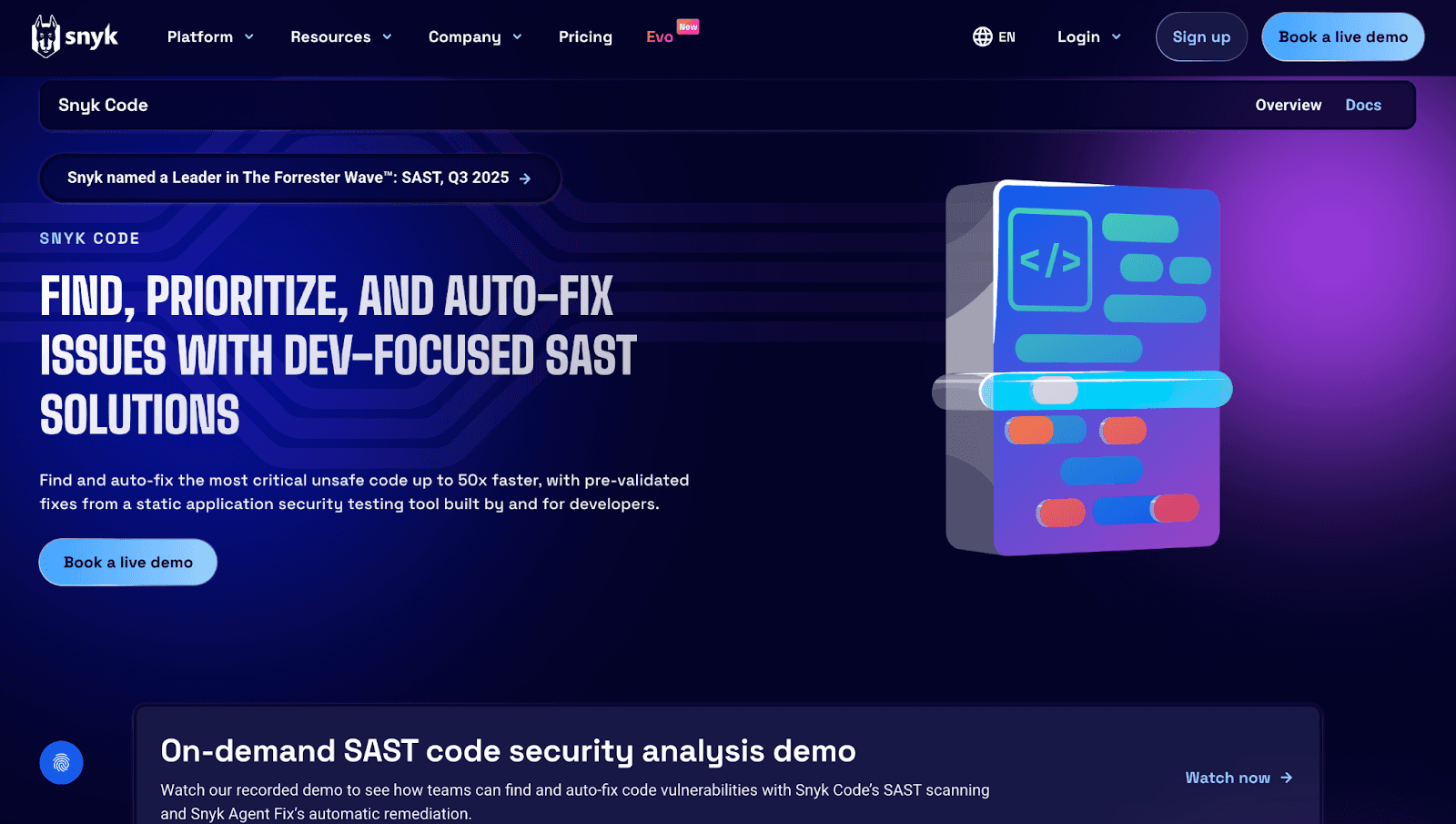
Snyk Code focuses on security-first SAST. It's part of the broader Snyk platform, which also covers open-source dependencies and container security.
Features: Deep vulnerability detection, real-time scanning in IDE and PR, fix suggestions with code examples.
Best for: Security-focused teams, especially those already using Snyk Open Source.
Limitations: More security than general code quality—you'll likely want additional tools for style and maintainability.
Checkout these Top 13 Snyk Alternatives.
SonarQube
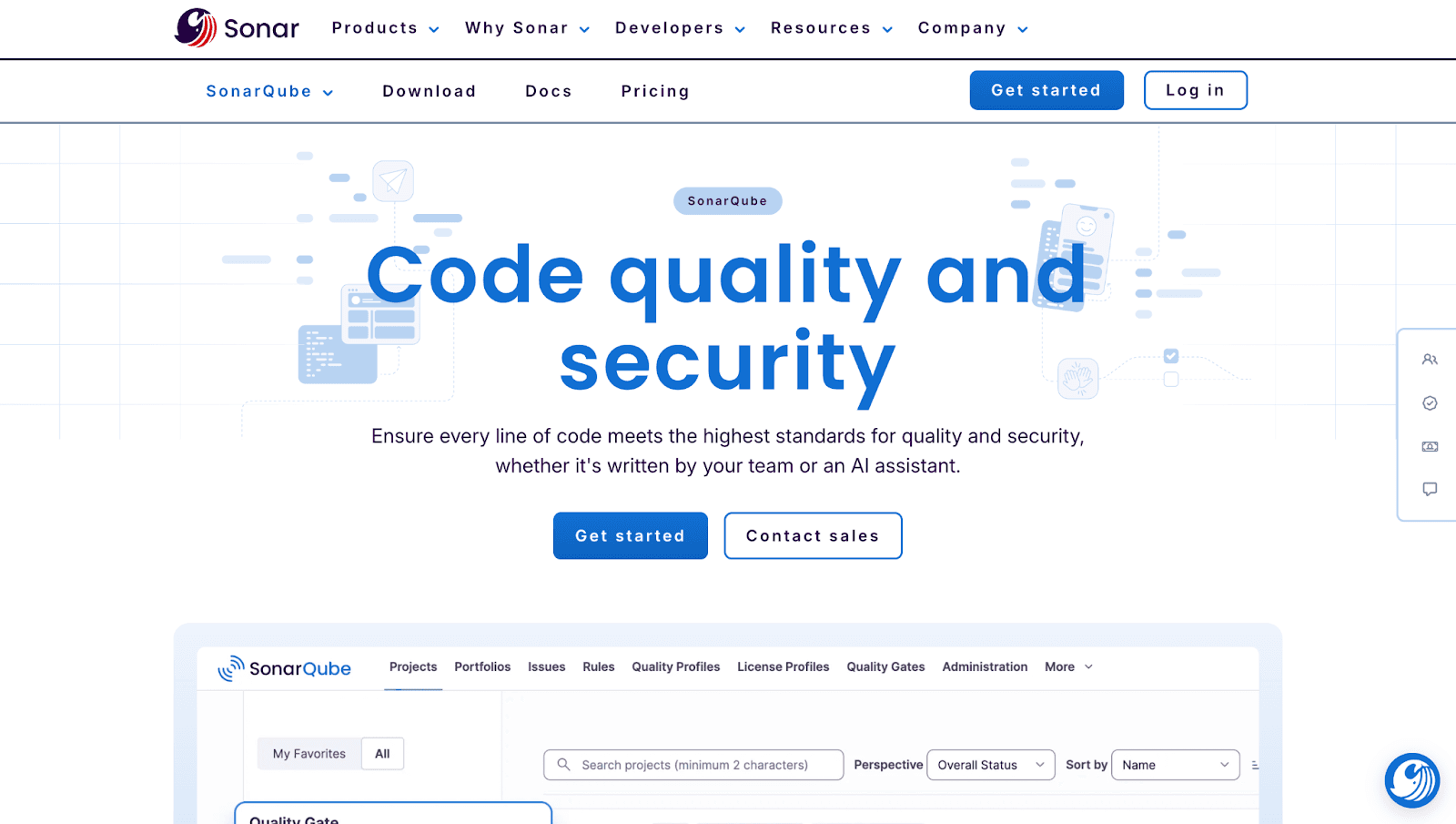
SonarQube is an established quality gate tool with deep rule customization. It's available as self-hosted or cloud (SonarCloud).
Features: Quality gates that block merges, 30+ language support, extensive rule library.
Best for: Teams wanting deep quality rules and existing SonarQube experience.
Limitations: Self-hosted complexity requires dedicated maintenance. Separate add-ons for analytics.
Checkout this SonarQube Alternative.
Codacy
Codacy provides automated code review with quality and security checks. It's cloud-based with quick setup.
Features: Automatic PR analysis, style and duplication detection, security scanning (SAST-lite).
Best for: Mid-size teams wanting quick setup without infrastructure overhead.
Limitations: Less suited for advanced security auditing or enterprise-scale deployments.
Checkout this Codacy Alternative.
Qodo
Qodo (formerly CodiumAI) focuses on AI suggestions and test generation. It helps developers write better tests alongside code review.
Features: AI-powered code suggestions, automatic test generation, IDE integration.
Best for: Teams prioritizing test coverage alongside reviews.
Limitations: Less comprehensive on security scanning.
Checkout this Qodo Alternative.
Amazon CodeGuru
CodeGuru is AWS's machine learning-powered code reviewer. It's optimized for AWS environments.
Features: ML-based code recommendations, performance profiling, security recommendations.
Best for: AWS-heavy environments with Java or Python codebases.
Limitations: Limited language support. Usage-based pricing can scale unexpectedly.
CodeScene
CodeScene takes a behavioral approach—analyzing code patterns and developer workflows to identify technical debt hotspots.
Features: Hotspot analysis, technical debt visualization, team coordination metrics.
Best for: Teams wanting to visualize and prioritize technical debt.
Limitations: Different approach—less real-time PR feedback, more strategic analysis.
How to Choose the Right AI Code Review Tool for Your Organization
Matching Tools to Team Size and Engineering Complexity
Growing teams (50-200 developers) typically prioritize ease of setup and GitHub-native integration. Large enterprises (500+ developers) prioritize scalability, custom rules, and enterprise administration.
Evaluating Security, Compliance, and Governance Needs
If compliance is critical, prioritize tools with SOC 2 Type II certification. Teams handling EU data verify GDPR compliance. Regulated industries may require HIPAA or FedRAMP.
Assessing Integration Depth and Migration Effort
Plug-and-play tools like GitHub Marketplace apps install in minutes. Configuration-heavy tools like self-hosted SonarQube require infrastructure setup and ongoing maintenance.
Comparing Pricing Models for Enterprise Budgets
Per-seat pricing is predictable but scales with team size. Per-repo pricing can be cheaper for large teams with few repos. Usage-based pricing is unpredictable at scale.
Build a Scalable Code Review Strategy for Your Enterprise
GitHub's native tools hit limits fast at enterprise scale. AI code review tools accelerate velocity while improving security and quality. The key is choosing a tool that unifies code health instead of adding more point solutions to your already fragmented workflow.
Ready to ship clean, secure code? Book your 1:1 with our experts today!
FAQs
Can AI code review tools integrate with private GitHub Enterprise Server deployments?
How do AI code review tools reduce false positives in large codebases?
What compliance certifications do enterprise teams typically require from AI code review vendors?
How long does it take for enterprise teams to see measurable results from AI code review tools?
How do AI code review tools handle enterprise monorepos with multiple programming languages?