AI Code Review
Top GitHub AI Code Review Tools for Machine Learning Engineers

Sonali Sood

Founding GTM, CodeAnt AI
Machine Learning code reviews are a different beast. You're not just checking syntax, you're reviewing tensor operations, notebook outputs, training loops, and data pipelines that span dozens of files. Standard GitHub pull requests weren't built for this.
AI code review tools close that gap by automating the repetitive checks and surfacing issues that human reviewers miss under time pressure. This guide compares the top GitHub-integrated options for ML engineering teams, covering features, pricing, and where each tool fits best.
Why GitHub's Native Code Review Falls Short for ML Teams
For AI/ML engineering teams using GitHub, there are many top AI code review tools available in the market. Each offers native GitHub integration, strong Python support, and a mix of code quality analysis, security scanning, and context-aware feedback. Vanilla GitHub pull requests work fine for basic collaboration, but ML workflows expose gaps quickly.
GitHub gives you version control and pull request workflows. That's a solid foundation. However, ML projects involve notebooks, large data transformations, and complex model logic that standard GitHub features weren't designed to handle.
No AI-powered suggestions for complex ML logic
Standard GitHub reviews can't interpret tensor operations, model architectures, or training loops. Your reviewers end up manually catching inefficient patterns in PyTorch or TensorFlow code. That's time-consuming and easy to miss.
Limited automation for large model pull requests
ML pull requests often include notebooks, config files, and data pipeline changes. Without smart summarization or auto-triage, you're staring at a 50-file PR with no clear starting point. Manual review bogs down fast.
Basic security scanning misses ML-specific vulnerabilities
Static Application Security Testing (SAST) analyzes source code for security flaws. GitHub's built-in scanning doesn't catch insecure model deserialization, pickle exploits, or dependency risks in ML frameworks like Hugging Face or scikit-learn.
Poor context awareness across ML pipelines
GitHub sees files in isolation. It can't follow logic from data ingestion through feature engineering to model deployment. Reviewers lose the big picture, and issues slip through.
What AI Code Review Tools Do For Machine Learning Projects
AI code review tools analyze PRs automatically, flag issues, suggest fixes, and enforce standards. Think of them as an expert reviewer that never gets tired or misses a pattern.
Here's what they bring to ML workflows:
Automated PR summaries: Condense large changesets into readable summaries so you know what changed at a glance
Line-by-line suggestions: AI comments directly on code with fix recommendations
Security and vulnerability detection: Catch risks before merge, including ML-specific threats
Quality and maintainability scoring: Track technical debt across the codebase over time
Custom rule enforcement: Apply org-specific ML coding standards automatically
How to Choose an AI Code Review Tool for ML Engineering
Not every tool fits every team. Here's a practical checklist to evaluate your options.
GitHub integration and workflow fit
The tool has to plug into GitHub PRs natively. Check for GitHub Actions compatibility, webhook support, and whether it comments inline or requires context switching.
Python and Jupyter notebook support
ML teams rely heavily on Python and notebooks. Confirm the tool parses .ipynb files and supports popular ML libraries like PyTorch, TensorFlow, and pandas.
Security and access controls for sensitive ML code
Proprietary models and training data require strict permissions. Look for role-based access, private repo support, and compliance certifications if you're in a regulated industry.
Scalability and pricing for growing teams
Evaluate how pricing scales with developers and repos. Some tools charge per-seat without unlimited reviews, and costs can spiral quickly for large teams.
Code quality metrics and technical debt tracking
Maintainability, complexity, and duplication matter for long-lived ML codebases. DORA metrics (deployment frequency, lead time, change failure rate) and coverage trends help you track progress over time.
Top GitHub AI Code Review Tools Compared
Tool | AI-powered review | Security scanning | Python/notebook support | GitHub integration | Pricing model |
CodeAnt AI | Yes | Yes | Yes | Native | Per-seat, unlimited reviews |
CodeRabbit | Yes | Limited | Yes | Native | Tiered |
Qodo | Yes | No | Yes | Native | Free + paid tiers |
GitHub Copilot for PRs | Yes | No | Yes | Native | Subscription |
SonarQube | Limited | Yes | Yes | Via plugin | Free + enterprise |
Snyk Code | Limited | Yes | Yes | Native | Tiered |
Codacy | Yes | Yes | Yes | Native | Tiered |
DeepSource | Yes | Yes | Yes | Native | Free + paid |
Amazon CodeGuru | Yes | Yes | Yes | Via AWS | Pay-per-use |
CodeAnt AI
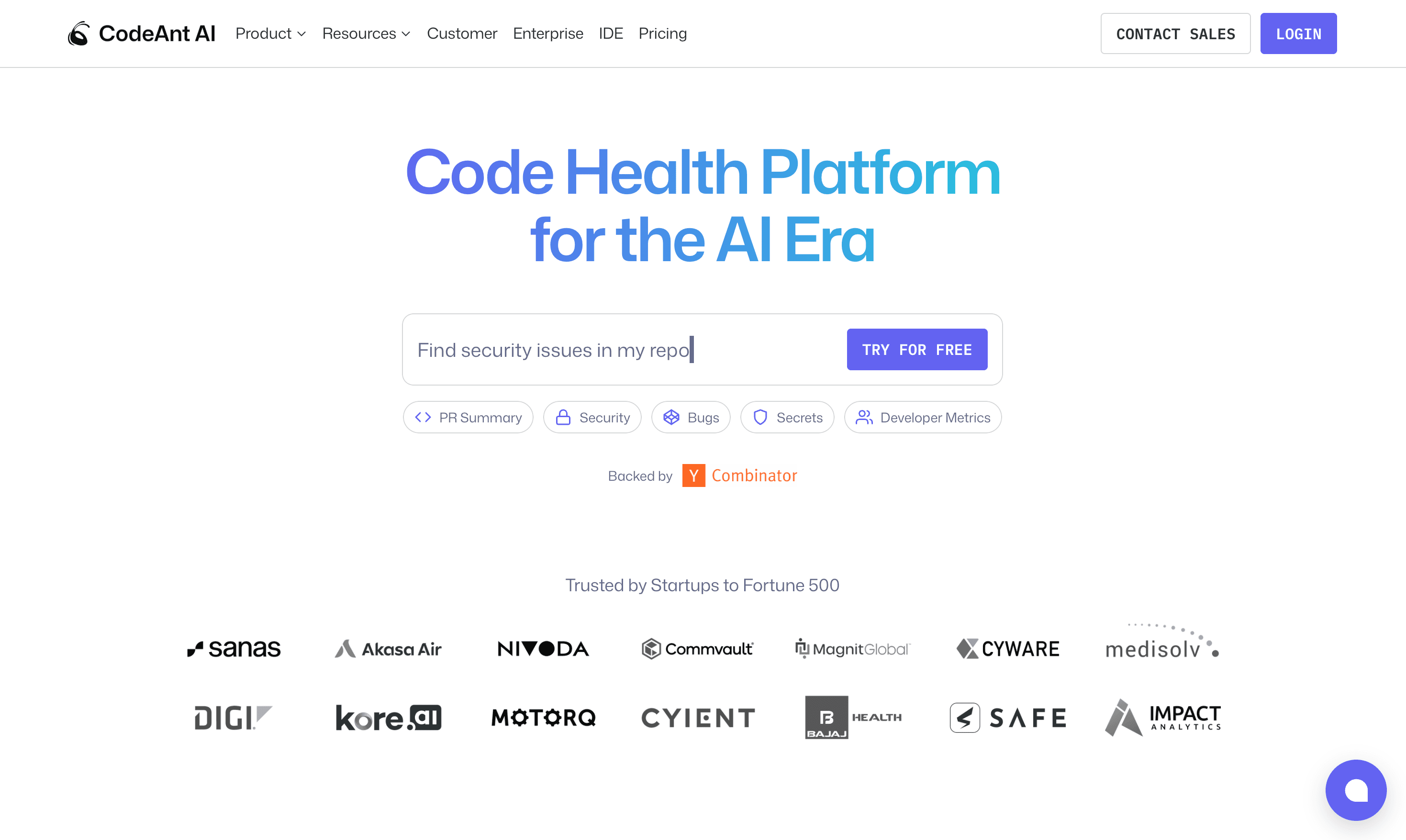
CodeAnt AI is a unified code health platform that brings review, security, quality, and metrics into one tool. It supports 30+ languages and is available on the GitHub Marketplace.
Key features:
AI-driven line-by-line reviews: Context-aware suggestions that understand your codebase, not just syntax
Security scanning: SAST, secrets detection, and misconfiguration checks
Quality gates: Block merges that don't meet defined standards
DORA metrics and developer analytics: Track velocity, bottlenecks, and contribution patterns
Custom org rules: Enforce your team's specific ML coding standards
CodeAnt AI scans both new code and existing code for quality, security, and compliance. It's context-aware, meaning it doesn't just scan code, it understands patterns, team standards, and architectural decisions. For engineering leaders, CodeAnt delivers developer-level insights like commits per developer, review velocity, and security issues mapped to contributors.
Best for: ML engineering teams wanting a single platform for automated review, security, and code health without juggling multiple point solutions.
Pricing: Per-seat pricing with unlimited AI reviews. 14-day free trial available, no credit card required.
Limitations: Enterprise-focused. Smaller hobbyist projects may not need the full feature set.
CodeRabbit
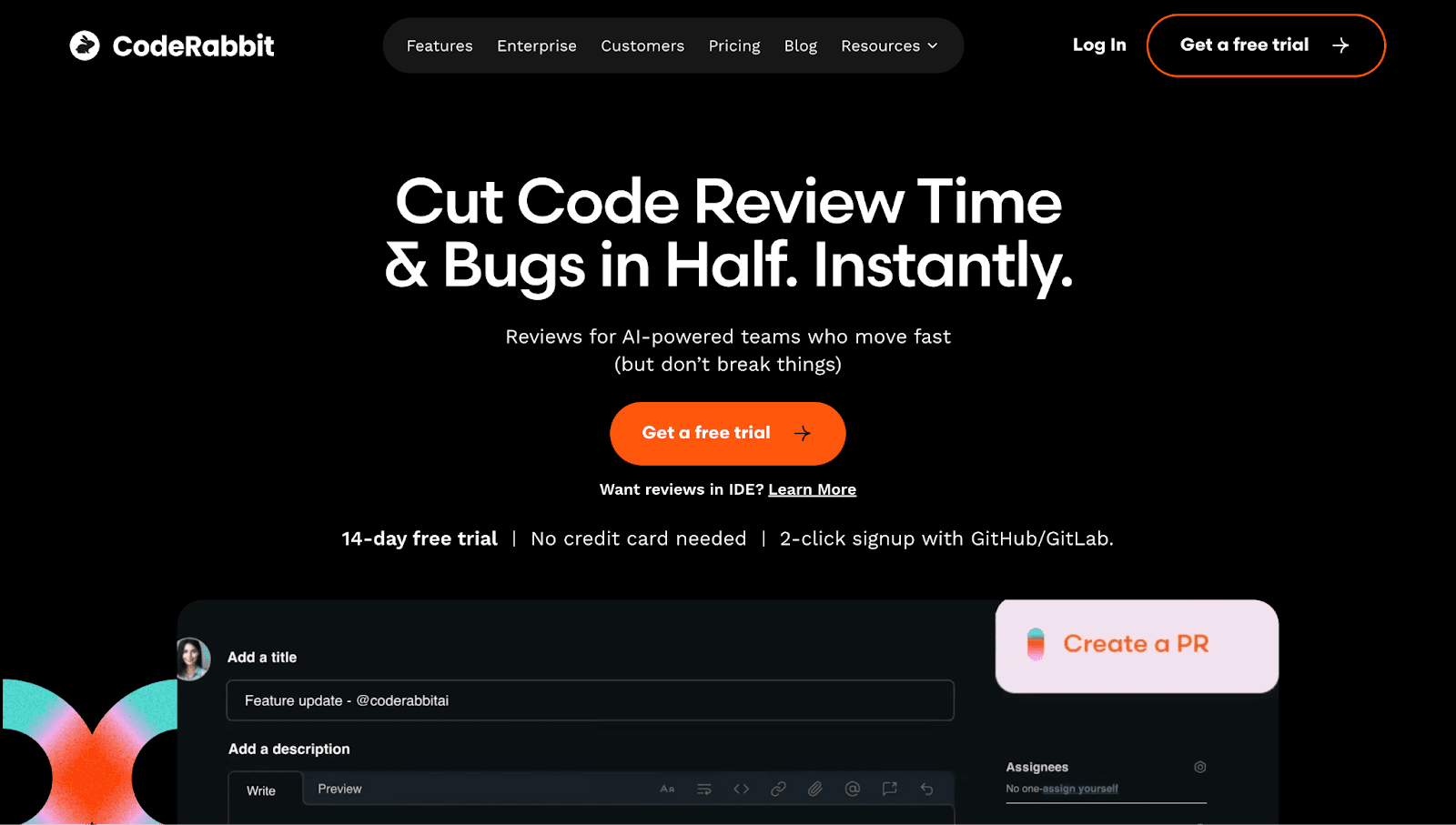
CodeRabbit is an AI-first review assistant that summarizes PRs and suggests changes through a conversational interface.
Key features
AI summaries of pull request changes
Inline suggestions with chat-based interaction
Learns from your team's patterns over time
GitHub and GitLab support
Best for: Teams wanting conversational AI feedback on PRs without heavy security tooling.
Pricing: Free tier for open source. Paid tiers for private repos.
Limitations: Security scanning is limited compared to dedicated SAST tools.
Checkout this CodeRabbit alternative.
Qodo
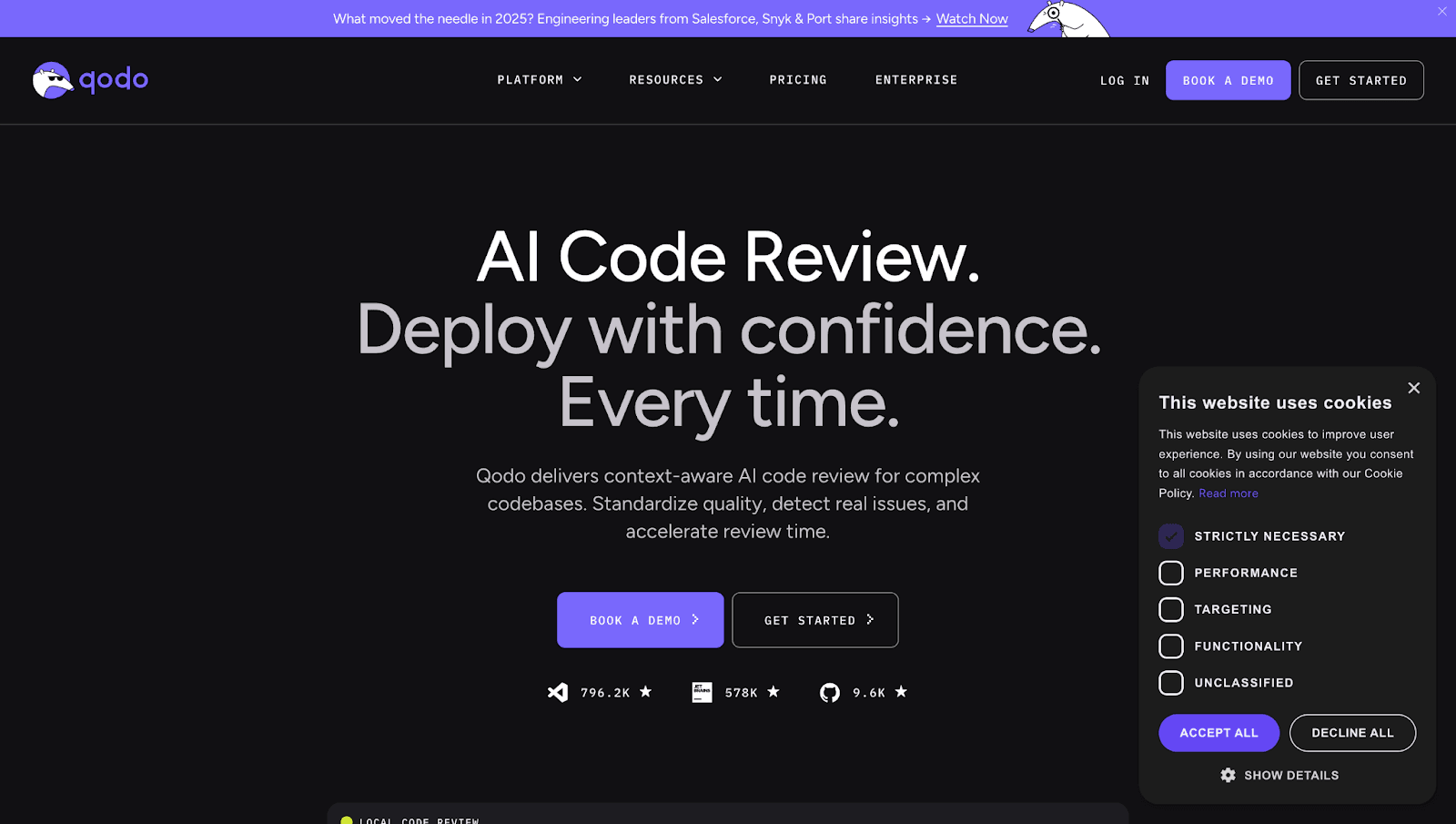
Qodo focuses on developer productivity with AI-generated tests and review assistance.
Key features
AI test generation for better coverage
Code suggestions during review
IDE and GitHub integration
Best for: ML engineers who want AI help writing unit tests alongside code review.
Pricing: Free plan available. Paid plans for teams.
Limitations: Less focus on security scanning and compliance enforcement.
Checkout this Qodo Alternative.
GitHub Copilot for pull requests
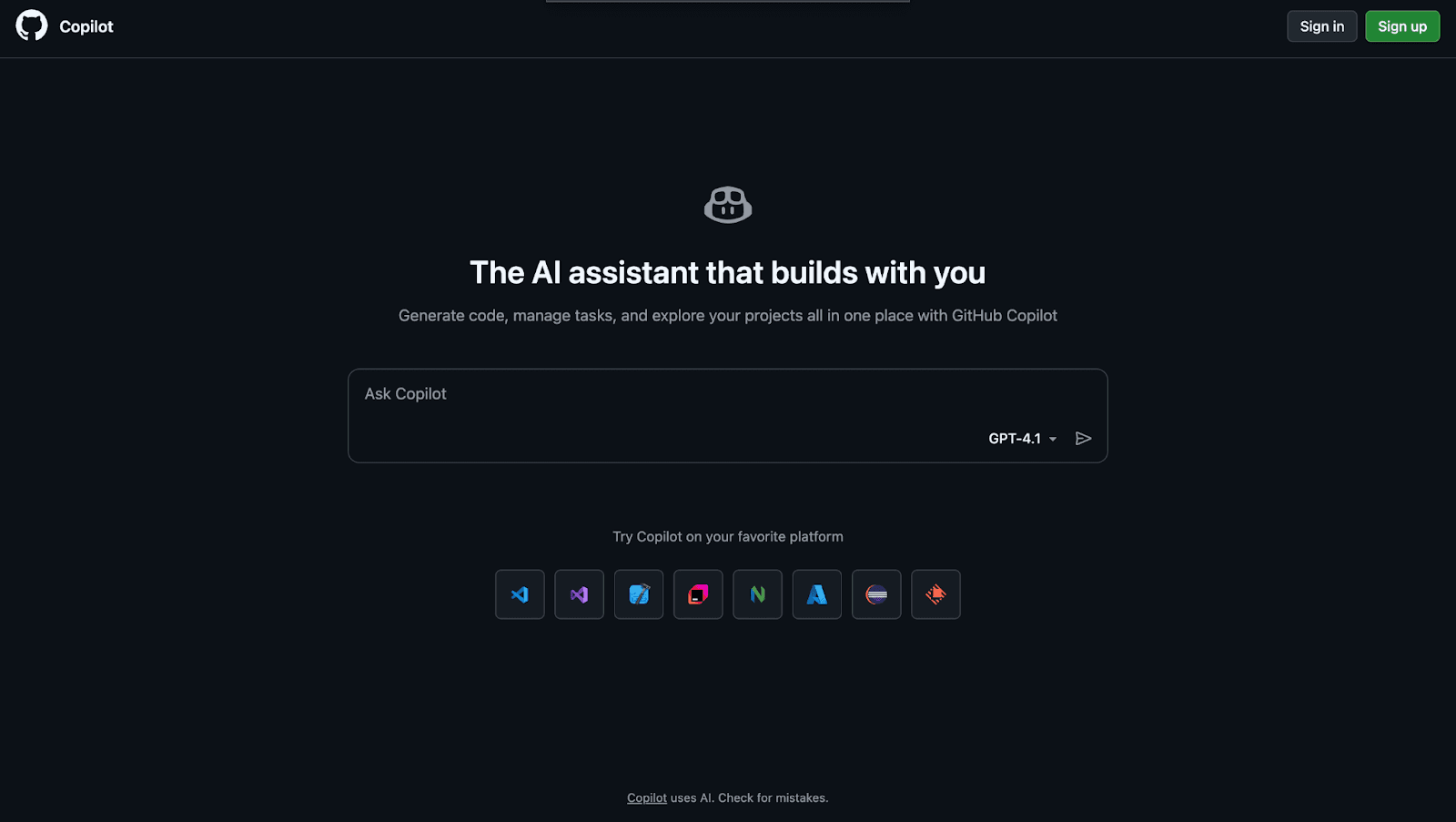
GitHub's native AI assistant now extends into PR summaries and suggestions.
Key features
AI-generated PR descriptions
Code completions in context
Seamless GitHub ecosystem integration
Best for: Teams already invested in GitHub Copilot wanting seamless PR assistance.
Pricing: Included in Copilot subscription tiers.
Limitations: No standalone security scanning. Copilot comments don't count as required approvals in branch protection settings. You'll need GitHub Advanced Security for vulnerability detection.
Checkout this GitHub Copilot alternative.
SonarQube
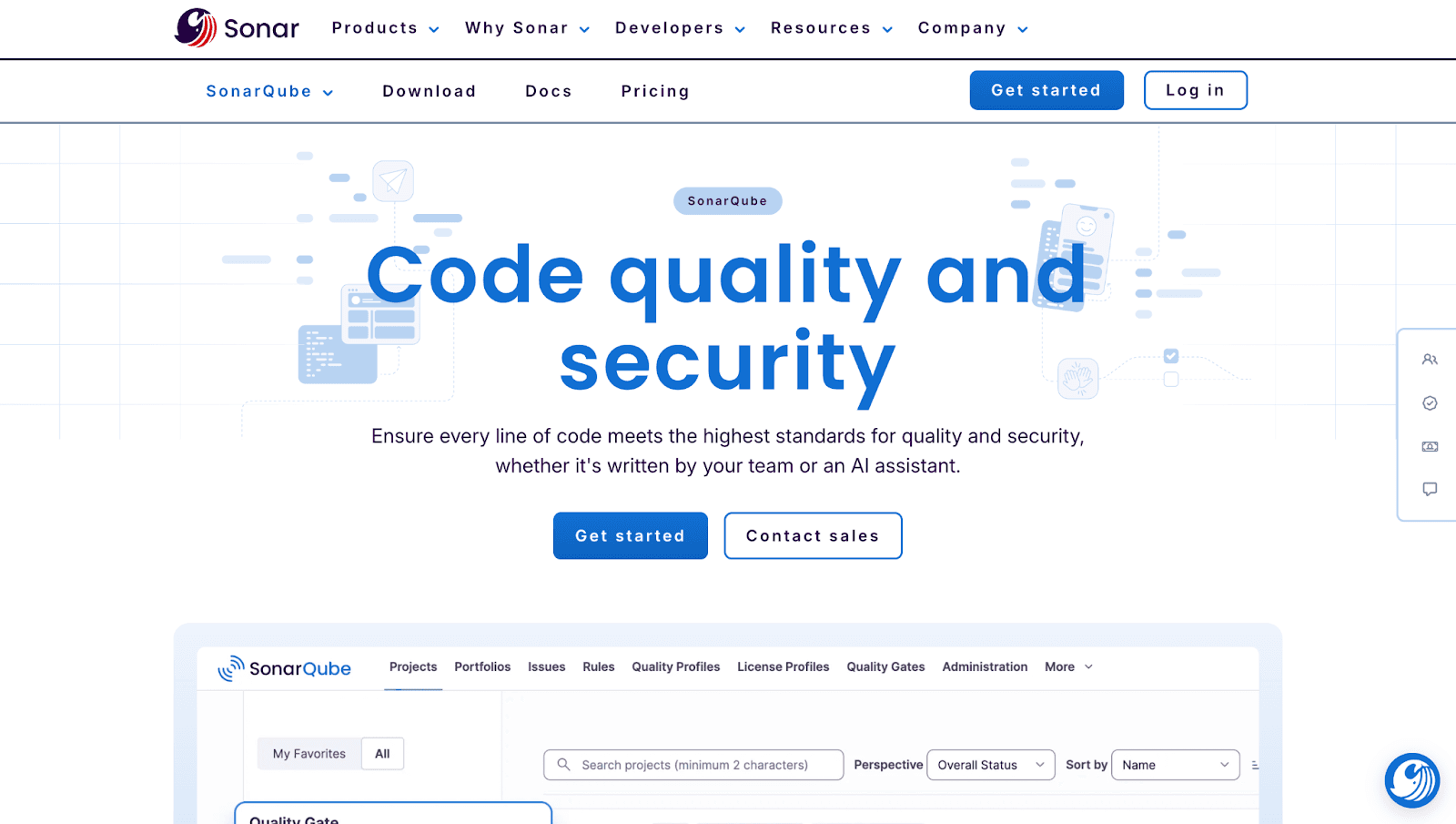
SonarQube is a widely-adopted static analysis platform with community and enterprise editions.
Key features
Quality gates that block bad code
Code smell and bug detection
Security hotspot identification
Self-hosted or cloud deployment options
Best for: Teams needing established quality gates and governance with on-prem deployment options.
Pricing: Community edition is free. Paid editions for enterprise features.
Limitations: AI review capabilities are limited compared to newer AI-native tools. Initial setup can be complex.
Checkout this SonarQube Alternative.
Snyk Code
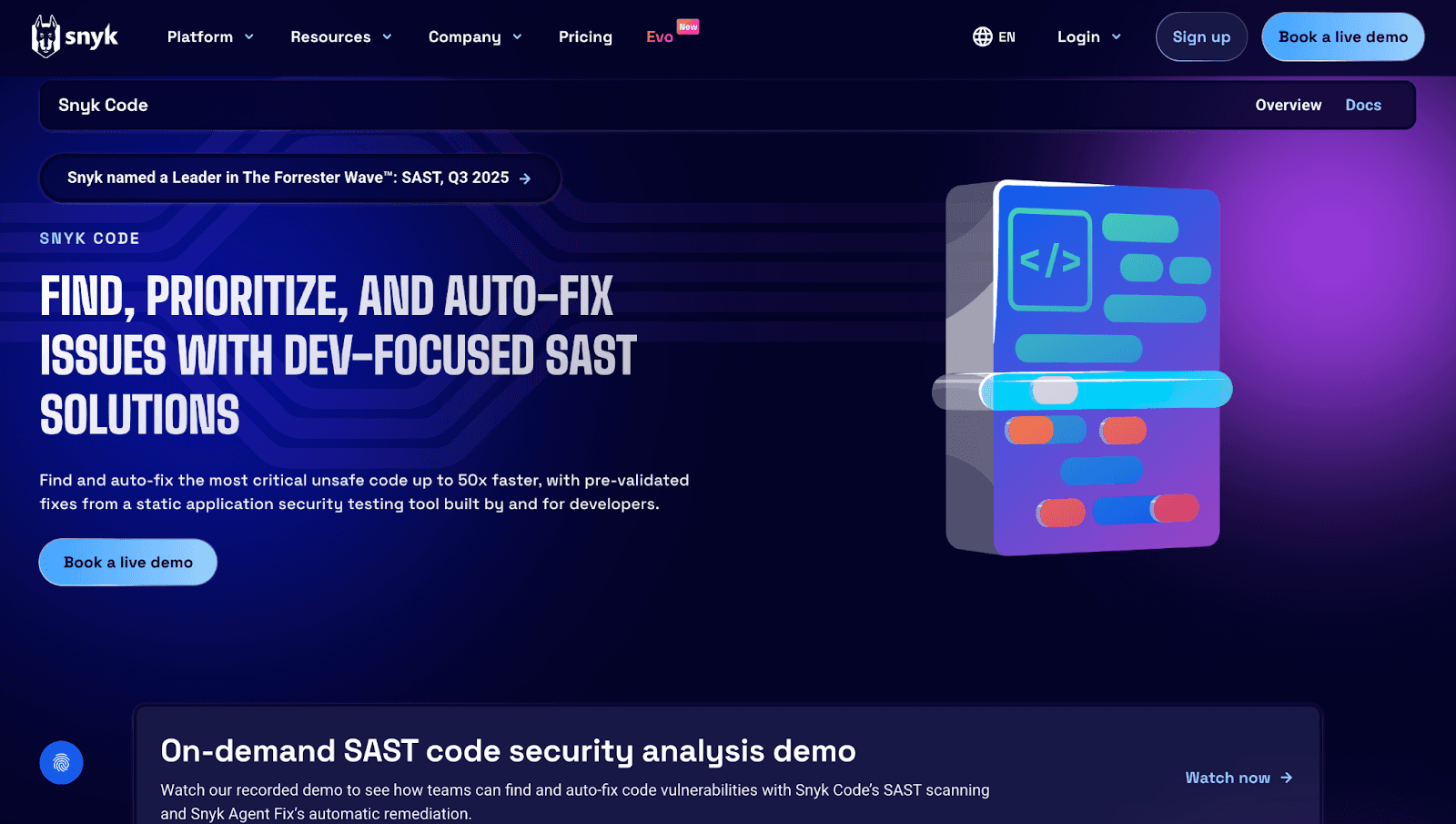
Snyk Code is a developer-first security tool focused on finding vulnerabilities in real time.
Key features
Real-time SAST scanning
Dependency vulnerability detection
IDE integration for shift-left security
Native GitHub app
Best for: Security-conscious ML teams prioritizing vulnerability detection in Python dependencies.
Pricing: Free tier for individuals. Team and enterprise plans available.
Limitations: Primarily security-focused. Code quality and maintainability features are secondary.
Checkout these Top 13 Snyk Alternatives.
How AI and Human Reviewers Work Together on ML Code
AI handles repetitive checks so humans can focus on what matters most. Think of it as division of labor.
AI catches:
Syntax issues and style violations
Security risks and secrets exposure
Code smells and duplication
Common bug patterns
Humans focus on:
ML model design choices
Algorithm correctness
Business logic alignment
Architectural decisions
AI is a tool, not a replacement. Expert judgment remains essential for complex ML decisions, like whether a model architecture makes sense for your use case or whether a training approach will generalize.
Ship Cleaner ML Code With the Right Review Tool
The right AI code review tool reduces tool sprawl and keeps your engineers focused on impactful work. For ML teams, that means faster reviews, fewer security gaps, and cleaner code that's easier to maintain.
Ready to automate your ML code reviews?Book your 1:1 with our experts today!
FAQs
Do AI code review tools support Jupyter notebooks?
Can AI code review tools detect ML-specific security vulnerabilities?
How do AI code review tools handle large pull requests with model files?
Which AI code review tool integrates best with MLOps platforms?
Can teams create custom review rules for ML coding patterns?