AI Code Review
7 Best GitHub AI Code Review Tools Platform Engineering Teams Actually Use

Sonali Sood

Founding GTM, CodeAnt AI
Platform engineering teams review more code than almost anyone else, shared libraries, infrastructure modules, developer tooling, and GitHub’s native PR features weren’t built for that scale. When you’re managing hundreds of repositories across multiple squads, manual reviews become the bottleneck that slows every release.
AI code review tools change the equation by automating the repetitive checks, surfacing security risks, and giving reviewers context before they even open the diff. This guide covers seven tools that platform teams actually use, what makes each one different, and how to pick the right fit for your workflow.
Why GitHub’s Native Code Review Falls Short for Platform Teams
Platform teams managing dozens of repositories and hundreds of developers hit limits fast with built-in pull request reviews alone.
No AI-Powered Suggestions or Contextual Guidance
GitHub’s native review workflow relies entirely on human reviewers to catch issues. There’s no intelligent assistant suggesting fixes or explaining why a change might cause problems downstream.
When your team reviews 50+ pull requests per week, this gap becomes painful. Reviewers burn out, feedback quality drops, and subtle bugs slip through. AI-powered tools fill this void by providing line-by-line suggestions that understand your codebase patterns, not just generic linting rules.
Manual Review Processes That Break at Scale
Assigning reviewers, tracking who’s overloaded, and ensuring consistent feedback across teams? GitHub leaves all of that to you. For a 10-person team, manual coordination works fine. For 100+ developers across multiple squads, it creates bottlenecks that slow every release.
Platform engineering teams often own shared infrastructure, libraries, and tooling that touch every service. Without automated triage and intelligent routing, critical changes sit in queues while reviewers context-switch between unrelated PRs.
Basic Security Scanning with Limited Coverage
GitHub offers Dependabot for dependency updates and basic secret scanning. Both features catch the obvious issues, like known vulnerable packages and accidentally committed API keys, but they miss deeper problems.
Static Application Security Testing (SAST) analyzes your actual code for vulnerabilities like SQL injection, insecure deserialization, and authentication flaws. GitHub’s native tools don’t provide this level of analysis, which means security gaps can reach production undetected.
Large Pull Requests Overwhelm Reviewers
A 2,000-line PR with changes across 40 files? Good luck getting meaningful feedback. GitHub shows you the diff, but it doesn’t summarize what changed, why it matters, or which files deserve the most attention.
AI code review tools solve this by generating change summaries, highlighting high-risk modifications, and breaking down complex PRs into digestible chunks. Reviewers can focus on what matters instead of scrolling through boilerplate.
Disconnected Tooling Across the Developer Workflow
Most teams end up with separate tools for linting, security scanning, code quality metrics, and review automation. Each tool has its own dashboard, its own alerts, and its own configuration. The result is context-switching, alert fatigue, and gaps where tools don’t overlap.
Platform teams benefit most from unified platforms that bring reviews, security, and quality into a single view, reducing vendor sprawl and giving engineering leaders one place to track code health.
What Platform Engineering Teams Look for in AI Code Review Tools
Knowing what’s broken is one thing. Knowing what “good” looks like is another. Here’s what platform teams typically prioritize when evaluating AI code review tools for GitHub.
Deep GitHub Integration and Marketplace Availability
The best tools install in minutes via the GitHub Marketplace and work natively with pull requests:
Native PR comments: AI feedback appears directly in the pull request, not a separate dashboard
GitHub Actions compatibility: Triggers automatically on push, PR open, or merge
Status checks: Blocks merges when quality or security gates fail
If a tool requires complex webhook configuration or manual syncing, adoption will stall.
Automated Code Standards Enforcement
Platform teams maintain coding standards across many repositories, including style guides, architectural patterns, and naming conventions. AI tools can enforce standards automatically, flagging violations in every PR without requiring a human gatekeeper.
This matters especially for infrastructure-as-code (Terraform, Kubernetes manifests) where misconfigurations can take down production.
Built-In Security and Vulnerability Scanning
Security can’t be a separate step that happens after code review. The best tools scan for secrets, misconfigurations, and dependency risks in every PR, catching issues before they merge rather than after.
Look for SAST capabilities, secret detection, and compliance reporting (SOC 2, GDPR) if your organization operates in regulated industries.
Engineering Metrics and Quality Dashboards
DORA metrics, which include Deployment Frequency, Lead Time, Change Failure Rate, and Mean Time to Recovery, help engineering leaders understand team performance. Code quality metrics like complexity, duplication, and test coverage reveal technical debt trends.
Tools that surface metrics alongside PR feedback give you a complete picture of code health, not just per-PR snapshots.
Enterprise Scalability for Large Teams
Platform teams won’t adopt tools that can’t scale. Look for SSO/SAML support, role-based access controls, and the ability to handle hundreds of repositories without performance degradation.
How We Evaluated These AI Code Review Tools for GitHub
We tested each tool against criteria that matter most to platform engineering teams managing large GitHub organizations.
Criteria | What We Assessed |
AI review quality | Accuracy of suggestions, false positive rate, contextual understanding |
Security features | SAST capabilities, secret detection, compliance reporting |
GitHub integration | PR triggers, comment threading, status checks, Marketplace availability |
Pricing model | Per-seat vs. repo-based, free tiers, enterprise options |
Platform fit | Monorepo support, multi-language codebases, IaC review |
We prioritized tools that reduce context-switching by consolidating reviews, security, and quality into fewer dashboards.
7 Best AI Code Review Tools That Integrate with GitHub
Here’s how the top tools compare at a glance:
Tool | Best For | AI Review | Security Scanning | GitHub Marketplace |
CodeAnt AI | Defensive and offensive security platform | Yes | Yes | Yes |
GitHub Copilot Code Review | Teams already using Copilot | Yes | Limited | Native |
CodeRabbit | Fast PR summaries | Yes | Basic | Yes |
Codacy | Quality gates and metrics | Yes | Yes | Yes |
SonarQube | Enterprise compliance | Limited | Yes | Via integration |
Qodo | AI test generation | Yes | Basic | Yes |
DeepSource | Auto-fix suggestions | Yes | Yes | Yes |
CodeAnt AI
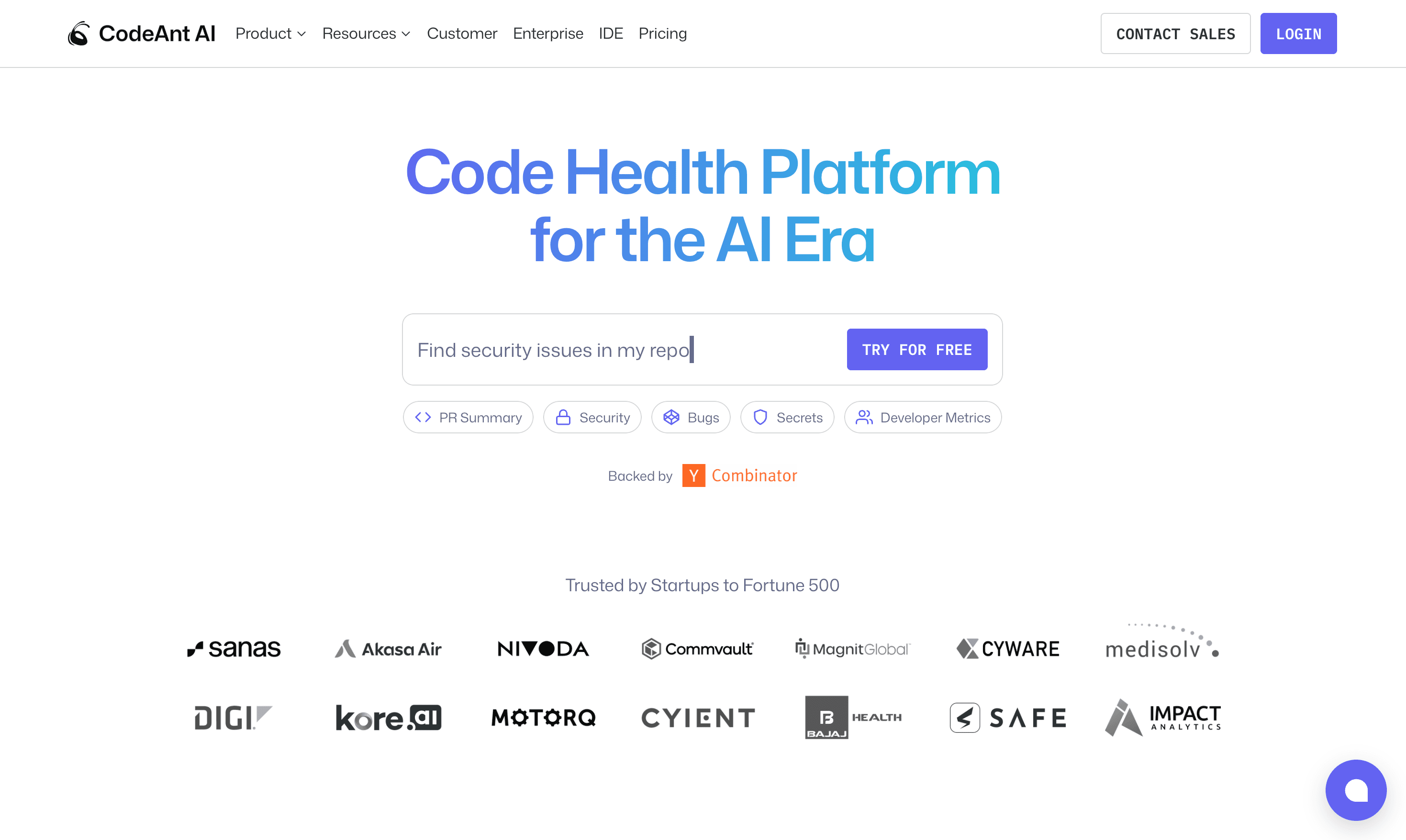
CodeAnt AI brings AI-powered code reviews, security scanning, and quality metrics into a single platform. It scans both new code in pull requests and existing code across all repositories, branches, and commits, catching issues that other tools miss because they only analyze new changes.
Features:
Line-by-line AI suggestions with context-aware understanding of your codebase
SAST, secrets detection, and compliance scanning (SOC 2, GDPR, ISO 27001)
DORA metrics, developer analytics, and test coverage dashboards
Auto-fix suggestions that reduce manual remediation work
Support for 30+ languages including Terraform and Kubernetes manifests
Best for: Platform teams wanting one tool instead of juggling separate solutions for reviews, security, and quality.
Pricing: Free 14-day trial. AI Code Reviews start at $10/user/month (Basic) or $20/user/month (Premium).
Limitations: Newer to market than legacy tools like SonarQube.
CodeAnt AI delivers a 360° view of engineering performance by combining code quality checks with developer analytics, AI-powered contribution summaries, and side-by-side impact comparisons. Engineering leaders can identify bottlenecks, balance workloads, and scale teams effectively from a single dashboard.
👉 Try CodeAnt AI free for 14 days
GitHub Copilot Code Review
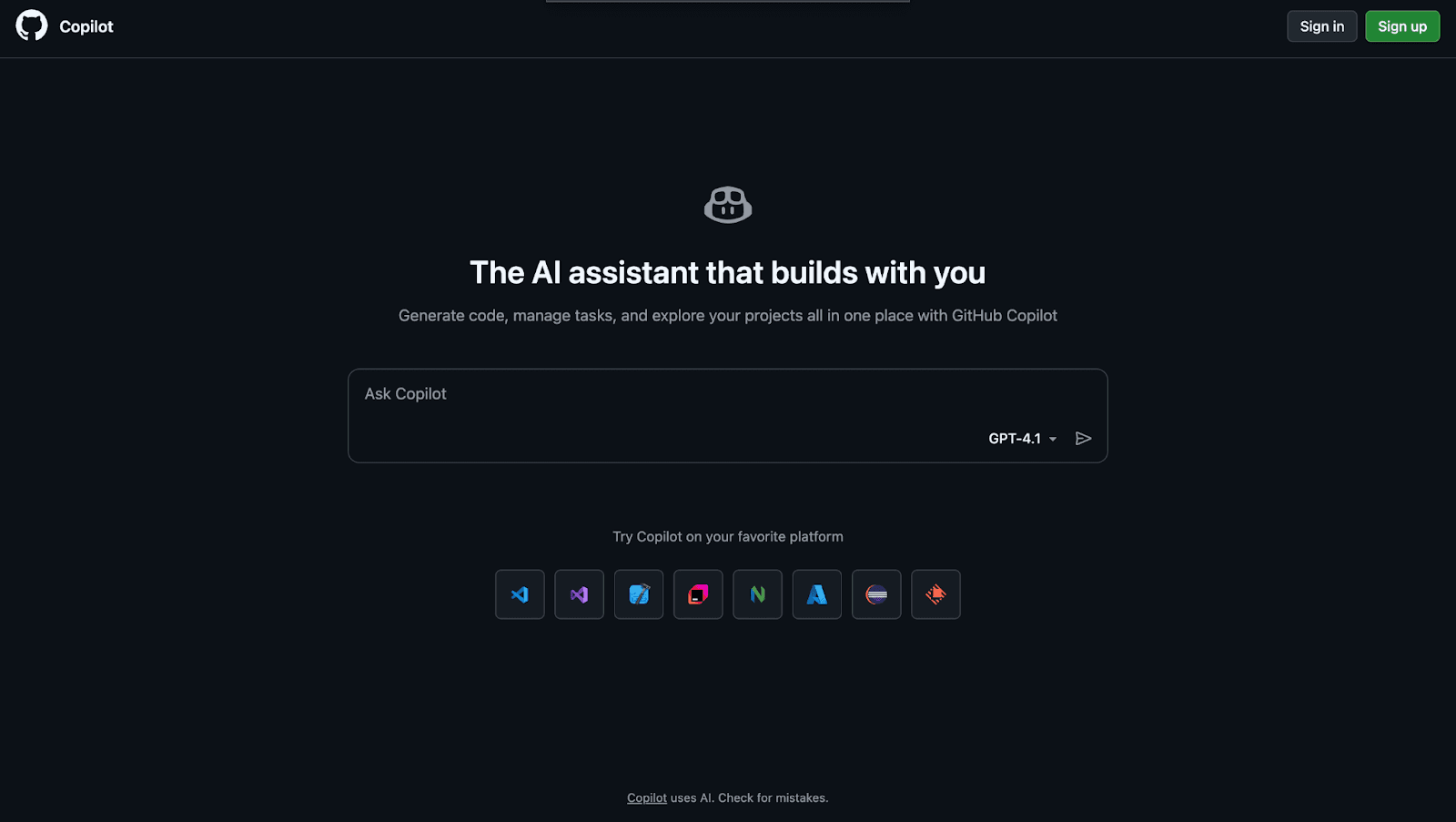
GitHub’s native AI reviewer integrates directly into pull requests for teams already using Copilot. It suggests fixes, flags potential bugs, and summarizes changes without leaving GitHub.
Features:
Native GitHub integration with no additional setup
PR summaries and inline suggestions
Automatic detection of common bugs and performance issues
Best for: Teams heavily invested in the GitHub Copilot ecosystem who want AI assistance without adding another vendor.
Pricing: Included with GitHub Copilot subscription (Pro/Enterprise tiers).
Limitations: Limited security depth compared to dedicated SAST tools. Copilot comments don’t count as required approvals in branch protection rules.
Checkout this GitHub Copilot alternative.
CodeRabbit
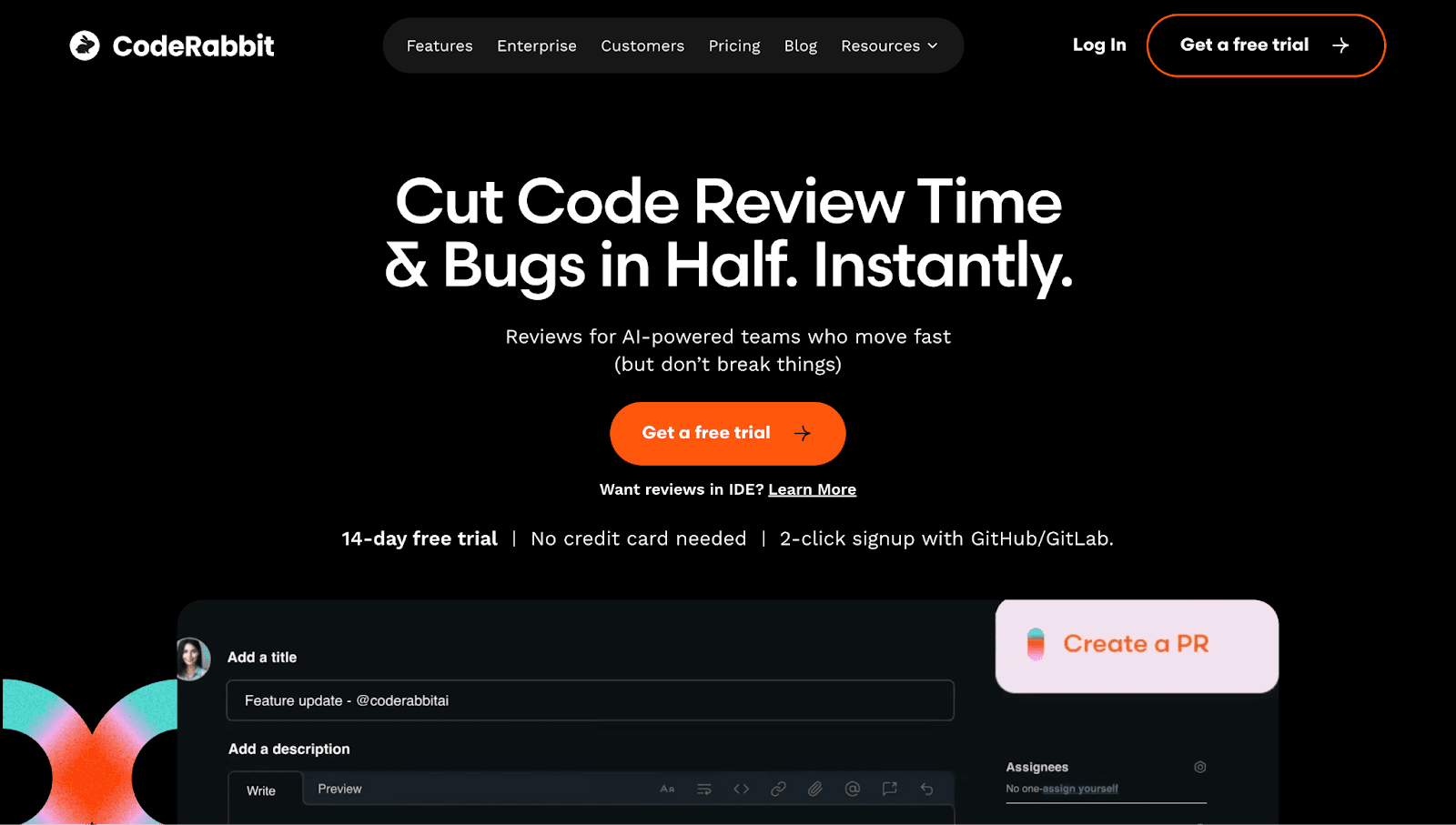
CodeRabbit generates conversational PR summaries that explain changes in plain language. It’s fast, lightweight, and helps reviewers understand context quickly.
Features:
Conversational PR summaries that explain what changed and why
Line-by-line review comments
Quick setup via GitHub Marketplace
Best for: Teams prioritizing review speed and quick context on changes over deep security analysis.
Pricing: Per-developer pricing with a free tier for small teams.
Limitations: Basic security features. Less focused on metrics and compliance.
Checkout this CodeRabbit alternative.
Codacy
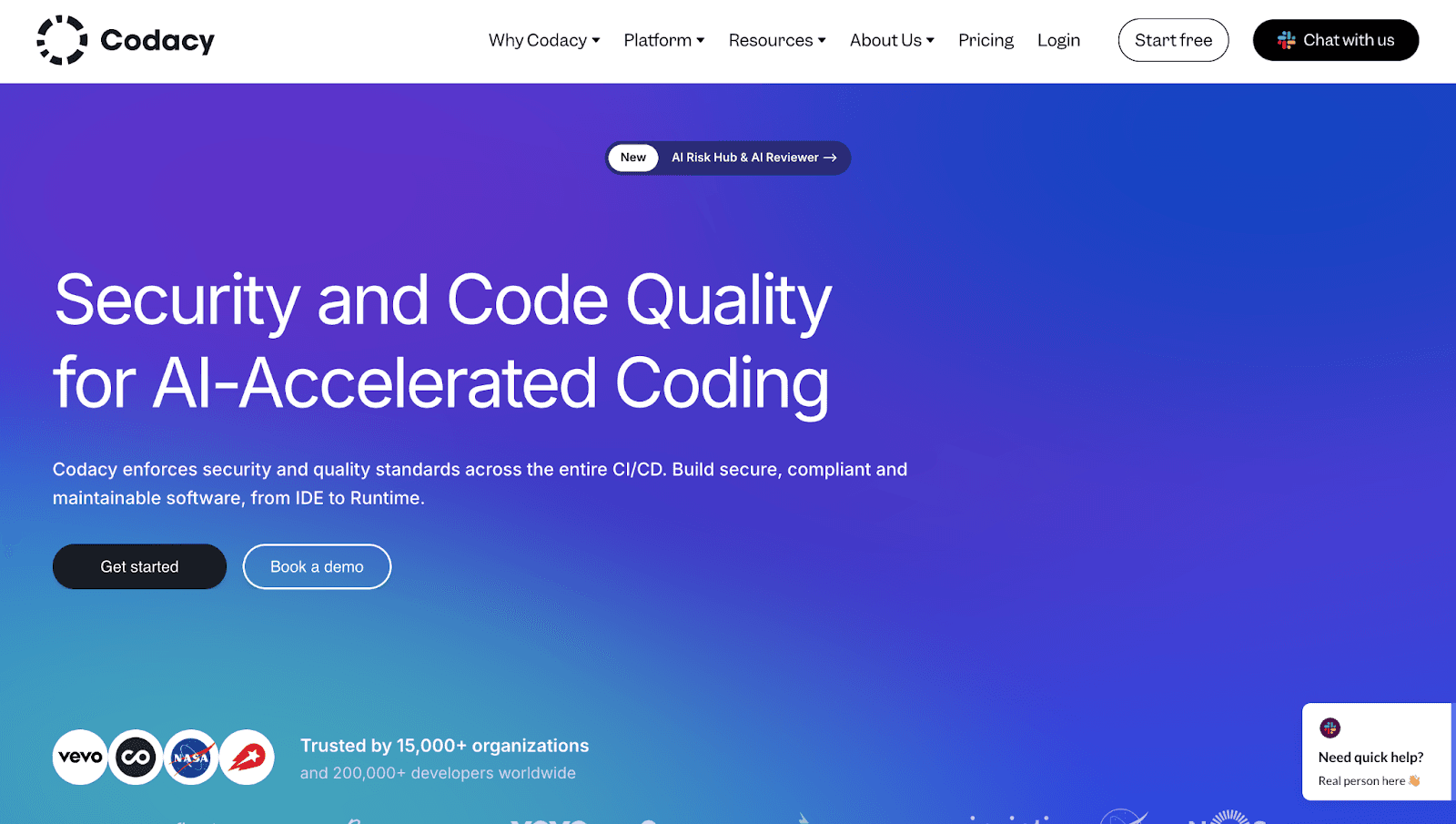
Codacy provides automated code quality analysis with quality gates that block merges when standards aren’t met. It’s been around longer than many AI-first tools, which means mature integrations and extensive rule libraries.
Features:
Quality gates that enforce standards automatically
Code quality metrics, duplication detection, and maintainability scoring
Security scanning for known vulnerabilities
Support for 40+ languages
Best for: Teams focused on enforcing quality standards and tracking metrics over time.
Pricing: Free tier for small teams. Paid plans start around $15/user/month.
Limitations: AI features are less mature compared to AI-first tools. Default rules may generate noise initially.
Checkout this Codacy Alternative.
SonarQube
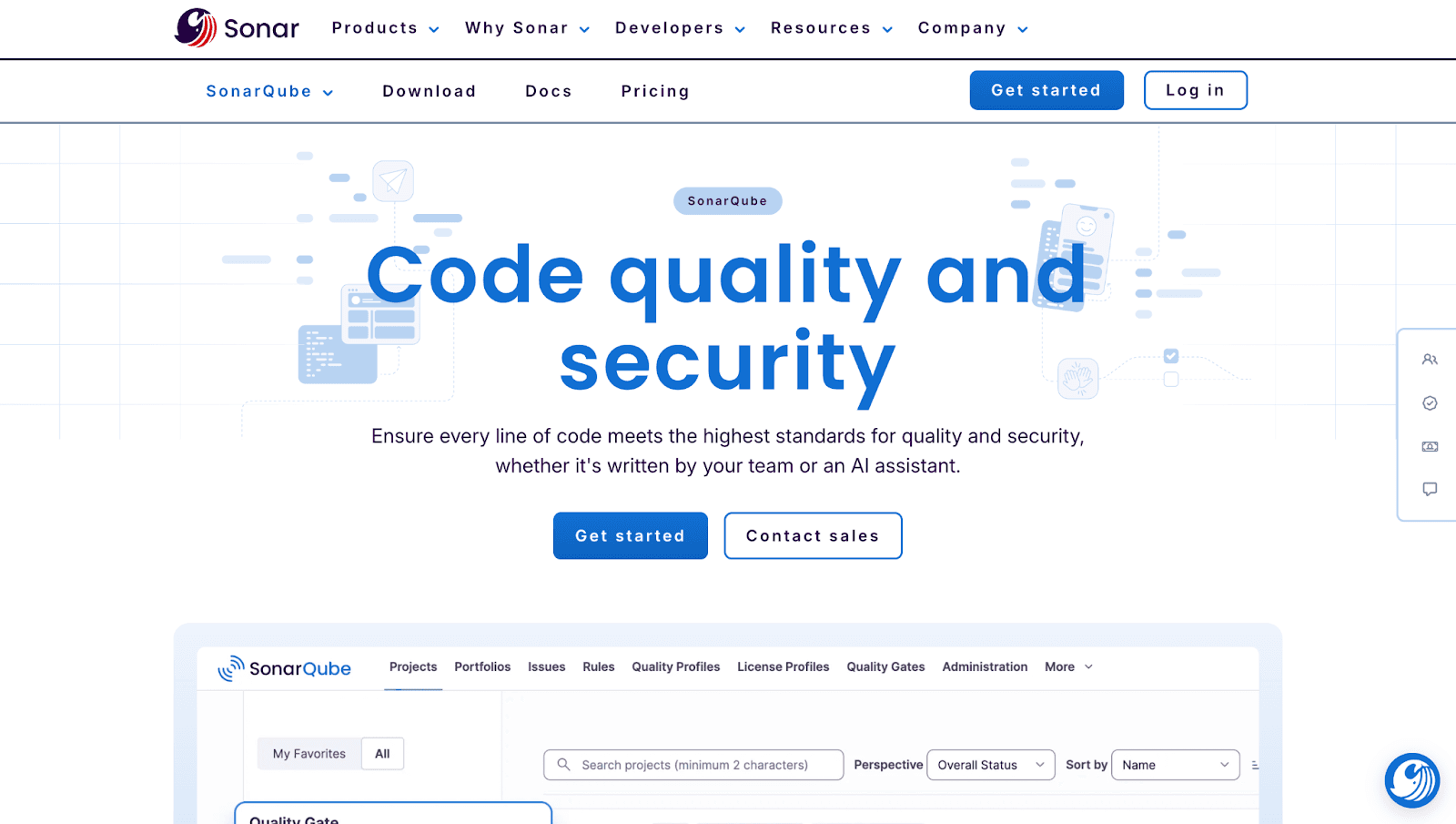
SonarQube is the industry standard for static analysis, with deep rule libraries and compliance reporting. It’s particularly strong for enterprises with strict governance requirements.
Features:
Deep static analysis with thousands of rules across 30+ languages
Quality gates that block builds when thresholds aren’t met
Compliance reporting for regulated industries
Self-hosted or cloud deployment options
Best for: Large enterprises with strict compliance and governance requirements.
Pricing: Free community edition. Commercial editions for enterprise features.
Limitations: AI features are a recent addition and less mature. Configuration can be complex for new users.
Checkout this SonarQube Alternative.
Qodo
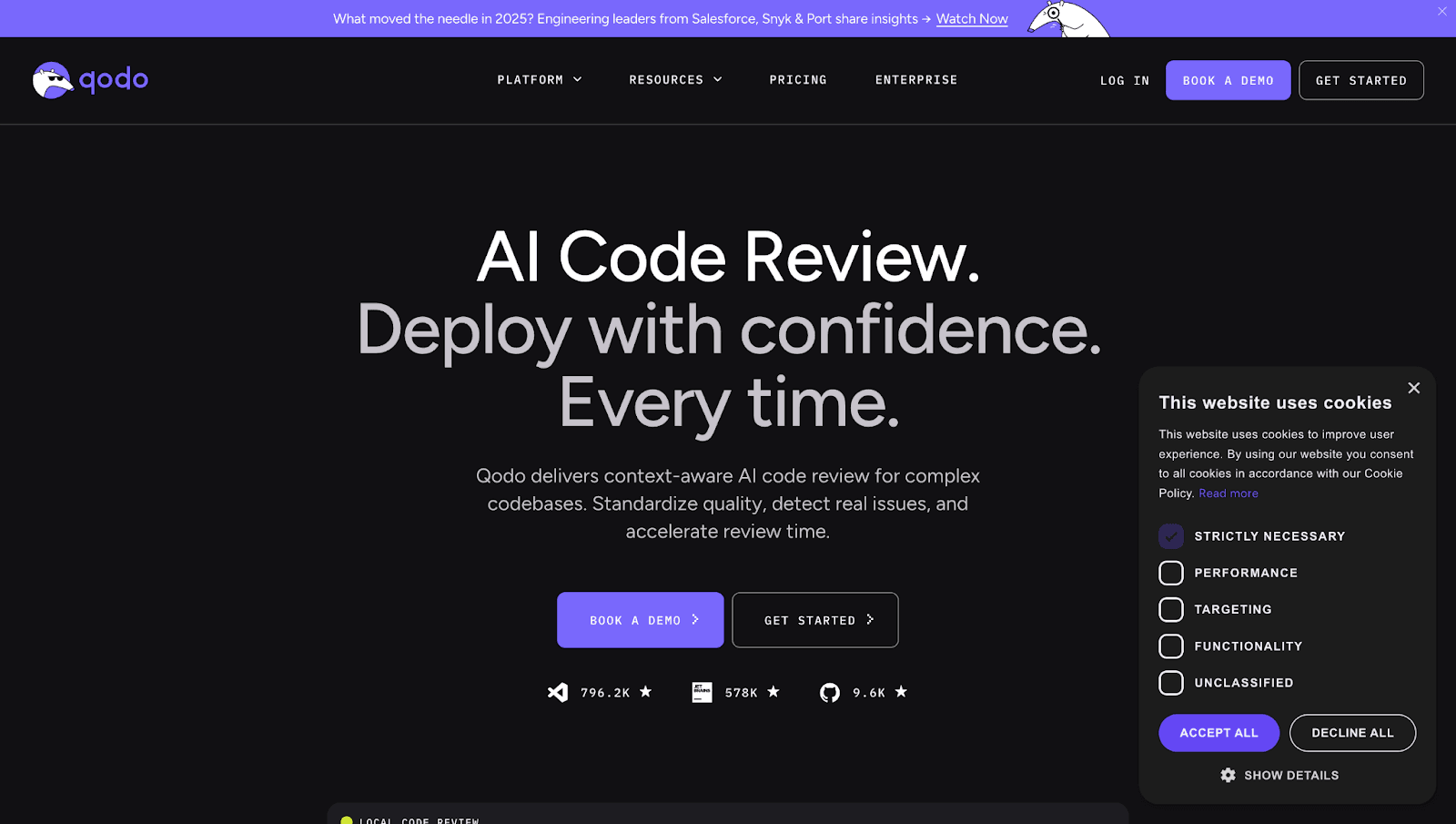
Qodo (formerly CodiumAI) focuses on AI-generated tests alongside code review. Its unique value is suggesting test cases for new code, helping teams improve coverage as part of the review process.
Features:
AI-generated test suggestions for new code
Code review comments and PR summaries
Integration with GitHub and popular IDEs
Best for: Teams looking to improve test coverage as part of code review.
Pricing: Per-developer pricing model.
Limitations: Security scanning is basic. Primary focus is test generation rather than comprehensive code review.
Checkout this Qodo Alternative.
DeepSource
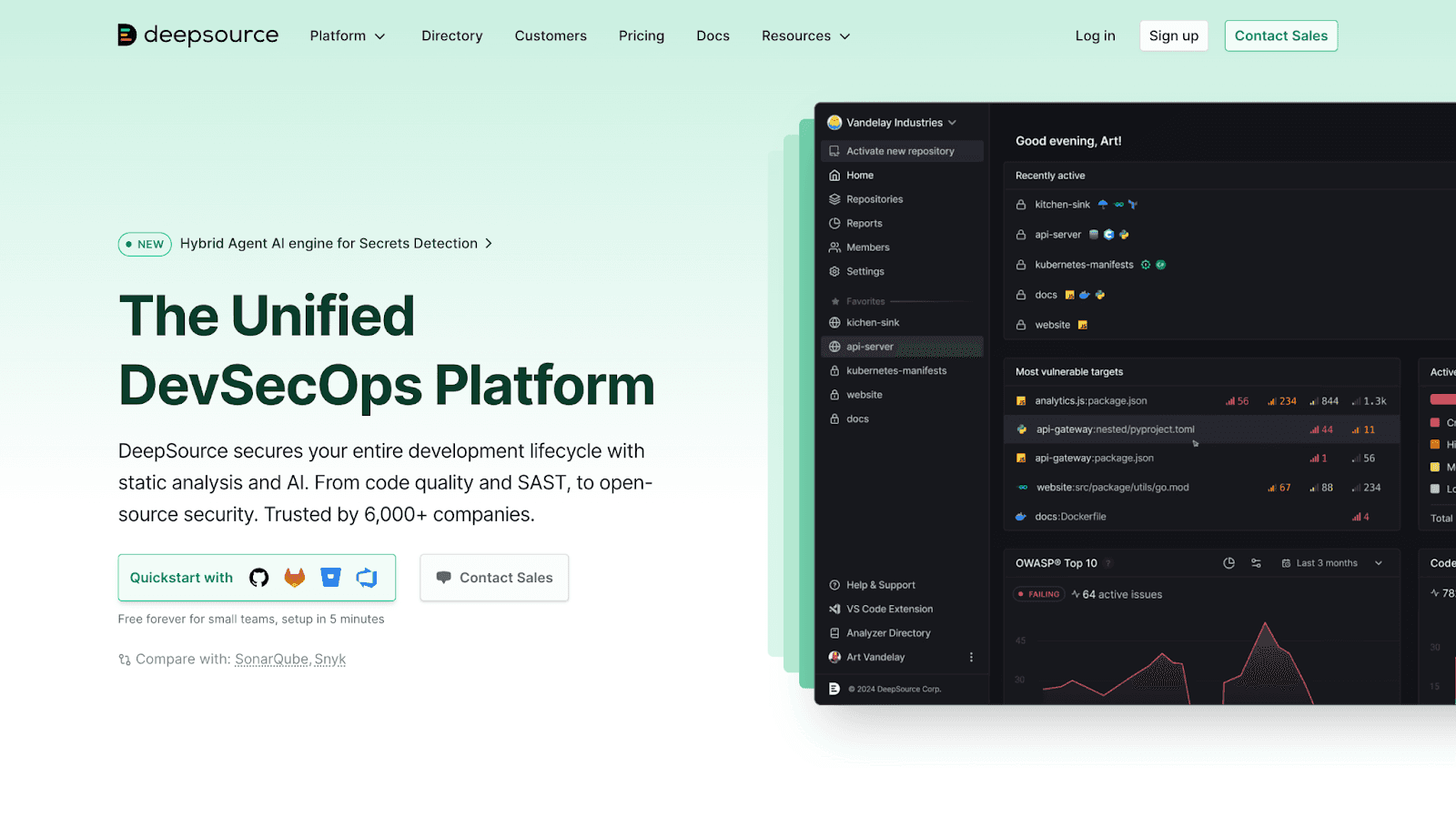
DeepSource excels at auto-fix capabilities. It doesn’t just find issues; it suggests one-click fixes. This reduces the manual work of addressing common code quality problems.
Features:
Auto-fix suggestions for common issues
Continuous quality monitoring across repositories
SAST and security scanning
Support for 20+ languages
Best for: Teams that want to automate fixing common code quality issues, not just finding them.
Pricing: Free for open-source projects. Per-user plans for teams and enterprise.
Limitations: UI can feel dense for new users. Less comprehensive metrics than some alternatives.
Checkout this Deepsource Alternative.
How to Choose the Right AI Code Review Tool for Your Team
With seven solid options, how do you pick? Start by identifying your biggest pain point.
Align Tool Features with Your Biggest Bottlenecks
Speed bottleneck: If reviews take too long, prioritize tools with fast AI summaries (CodeRabbit, CodeAnt AI)
Security gaps: If vulnerabilities slip through, choose tools with built-in SAST (CodeAnt AI, DeepSource, SonarQube)
Quality drift: If technical debt is accumulating, look for metrics dashboards and quality gates (Codacy, CodeAnt AI)
Calculate Total Cost Beyond Per-Seat Pricing
Per-seat pricing adds up fast for large teams. A tool at $15/user/month costs $18,000/year for a 100-person team. Consider whether the tool replaces other tools you’re paying for and whether the time savings justify the spend.
Prioritize Platforms That Consolidate Point Solutions
Juggling separate tools for reviews, security, and quality creates overhead. Multiple dashboards, multiple configurations, and multiple vendors to manage add up. A single platform that handles all three reduces context-switching and simplifies governance.
Tip: Before committing to multiple point solutions, evaluate whether a unified platform like CodeAnt AI can cover your reviews, security, and quality in one tool.
Build a Faster and Safer Code Review Workflow
GitHub’s native pull request features provide a solid foundation, but platform engineering teams managing large codebases and multiple services benefit from AI-powered tools that automate repetitive work.
The right tool depends on your specific bottlenecks. If you’re drowning in slow reviews, prioritize speed. If security vulnerabilities keep slipping through, prioritize SAST. If technical debt is piling up, prioritize metrics and quality gates.
Whatever you choose, the goal is the same: help your engineers move faster with confidence, shipping clean and secure code without sacrificing quality.
Get started today, Book your 1:1 with our experts today.
FAQs
Can AI code review tools fully replace human reviewers?
How long does it take to set up an AI code review tool with GitHub?
Do AI code review tools support monorepo architectures?
What compliance certifications matter for enterprise teams?
How do AI code reviewers minimize false positives?