AI Code Review
7 Best GitHub AI Code Review Tools for SaaS Development Teams in 2026

Sonali Sood

Founding GTM, CodeAnt AI
Code reviews in SaaS teams move fast—until they don't. One bloated PR, a missed security flaw, or a senior engineer out sick, and suddenly your release pipeline grinds to a halt.
GitHub's native review features handle the basics, but they weren't built for teams shipping daily across multiple services. AI-powered code review tools fill that gap by automating feedback, catching vulnerabilities, and enforcing standards without waiting for human availability.
This guide compares seven GitHub AI code review tools built for SaaS development teams, covering features, pricing, limitations, and which scenarios each tool handles best.
Why GitHub's Native Code Review Falls Short for SaaS Teams
For SaaS product teams using GitHub, there are many AI code review tools in the market. Each offers strong security scanning, customizable rules, and full codebase context, exactly what enterprise-grade applications demand.
GitHub's built-in pull request features handle the basics well. You get inline comments, approval workflows, and branch protection rules. But once your team grows past a handful of developers, cracks start to show.
No AI-Powered Suggestions or Auto-Fix
GitHub's native review experience relies entirely on human reviewers. Someone on your team spots the issue, writes the feedback, and explains the fix. There's no automated intelligence suggesting improvements or explaining why a particular pattern causes problems.
AI-powered suggestions work differently. They automatically identify issues and propose inline fixes, saving hours of back-and-forth between reviewers and authors.
Manual Reviews Bottleneck Fast-Moving Teams
Every pull request waits for a senior developer's attention. That wait time compounds quickly when your team ships multiple features daily. Meanwhile, the developer who opened the PR context-switches to other work, then has to reload mental context when feedback finally arrives.
Large Pull Requests Overwhelm Reviewers
GitHub doesn't summarize changes or highlight critical areas. A 500-line PR looks the same as a 50-line PR in terms of presentation. Reviewers read every line, leading to fatigue and missed issues. No prioritization, no guidance on where to focus.
Security Scanning Misses Critical Vulnerabilities
Dependabot covers dependency updates, but that's a narrow slice of security. Static Application Security Testing (SAST)—deep analysis that scans your actual code for vulnerabilities—isn't part of GitHub's native toolkit. For SaaS teams handling customer data, this gap creates real risk.
No Visibility Into Code Health or Technical Debt
GitHub tracks commits and PRs, but it doesn't measure maintainability, complexity, or duplication trends over time. Technical debt (the accumulated cost of shortcuts and quick fixes) grows invisibly until it slows your entire team down.
How AI Code Review Tools Accelerate SaaS Development
AI code review tools fill exactly the gaps outlined above. They work alongside your developers, catching issues humans miss while freeing up senior engineers for higher-impact work.
Instant Feedback on Every Pull Request
AI reviews code the moment a PR opens. No waiting for human availability, no timezone delays. Faster feedback loops mean faster iteration—critical for SaaS teams shipping weekly or daily.
Automated Security and Quality Checks
AI tools scan for vulnerabilities, hardcoded secrets, misconfigurations, and code smells automatically. Every PR gets the same thorough review, reducing the risk of shipping insecure code to production.
Reduced Context Switching for Developers
Developers get actionable suggestions inline instead of hunting through scattered comments. The feedback appears right where they're already working, keeping focus on coding rather than tool-hopping.
Consistent Enforcement of Coding Standards
AI applies the same rules every time. No reviewer bias, no inconsistency based on who's available. For growing SaaS teams onboarding new engineers, this consistency accelerates ramp-up time significantly.
Comparison of the Top GitHub AI Code Review Tools
Tool | Best For | GitHub Integration | Security Scanning | Pricing Model |
CodeAnt AI | Unified code health platform | Marketplace app | SAST, secrets, IaC | Per-user |
CodeRabbit | Fast AI-first reviews | GitHub app | Limited | Freemium |
GitHub Copilot | Native AI assistance | Built-in | Basic | Subscription |
Codacy | Multi-repo quality tracking | Direct integration | SAST-lite | Per-user |
Qodo | Test generation focus | GitHub app | Limited | Freemium |
SonarQube | Enterprise static analysis | Pipeline integration | Deep SAST | Per-instance |
Sourcery | Python refactoring | GitHub Actions | None | Freemium |
CodeAnt AI
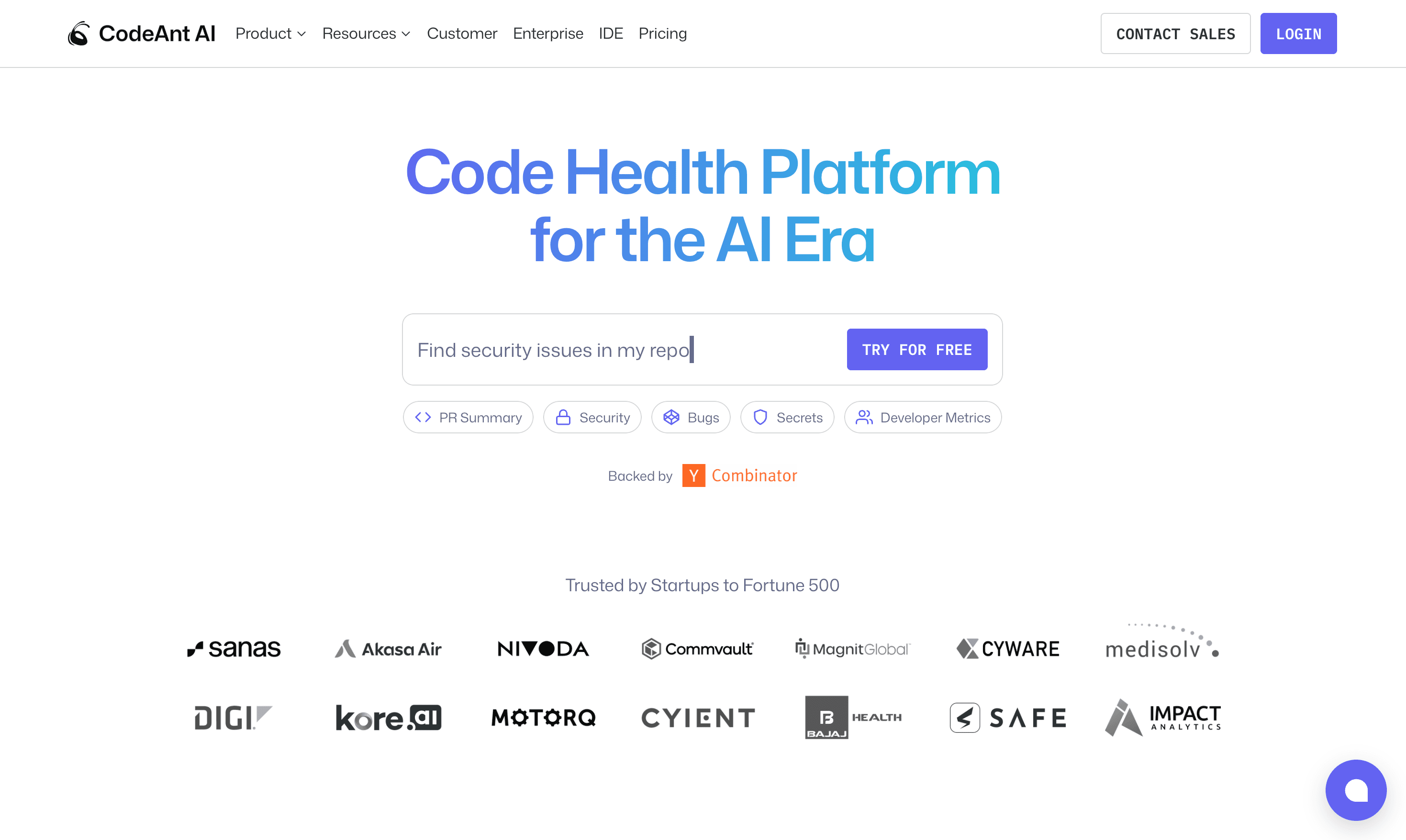
CodeAnt AI brings AI-powered code reviews, security scanning, and quality metrics into a single platform. It's fully context-aware, meaning it doesn't just scan code—it understands your codebase, team standards, and architectural decisions.
Features:
AI pull request reviews with line-by-line feedback and suggested fixes
SAST, secrets detection, and dependency risk scanning
Code quality tracking for complexity, duplication, and maintainability
Custom standards enforcement for organization-specific rules
30+ language support
DORA metrics, developer analytics, and test coverage included
Beyond flagging issues, CodeAnt delivers a 360° view of engineering performance. You get developer-level insights like commits per developer, review velocity, and security issues mapped to contributors.
Pricing: Free tier available. Paid plans start at $10/user/month.
Limitations: Newer entrant compared to legacy tools. Some enterprise features require paid plans.
Best For: SaaS teams with 100+ developers wanting unified visibility across reviews, security, and quality.
👉 Try CodeAnt AI free for 14 days
CodeRabbit
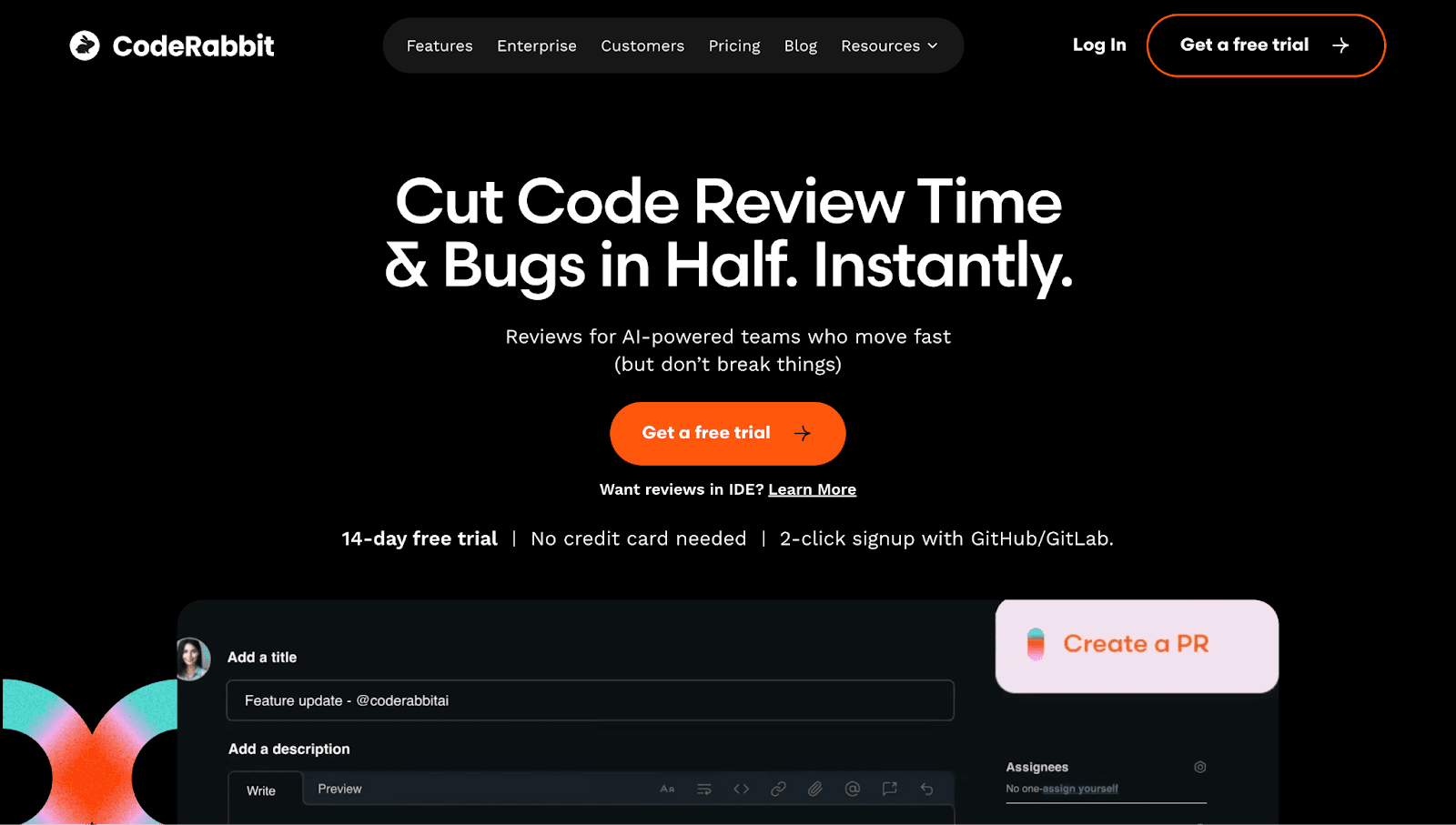
CodeRabbit focuses on fast, AI-generated PR summaries and inline suggestions. It explains changes in plain language and provides reasoning for each recommendation.
Features:
AI-generated PR summaries in plain language
Line-by-line suggestions with reasoning
Customizable review rules
Slack and GitHub integration
Pricing: Free for open source, paid plans for private repos.
Limitations: Primarily focused on code review. Lacks built-in security scanning or quality metrics dashboards.
Best For: Teams wanting lightweight AI reviews without a full code health platform.
Checkout this CodeRabbit alternative.
GitHub Copilot for Pull Requests
GitHub's native AI offering integrates directly into your existing workflow. It auto-generates PR descriptions and provides inline code suggestions during review.
Features:
Auto-generated PR summaries
Inline recommendations during review
No external setup required
Pricing: Part of GitHub Copilot subscription (Individual and Enterprise tiers).
Limitations: Limited security coverage. Doesn't replace dedicated SAST tools. No custom rule enforcement. Copilot comments don't count as required approvals in branch protection.
Best For: Teams already using GitHub Copilot who want basic AI assistance without adding new tools.
Checkout this GitHub Copilot alternative.
Codacy
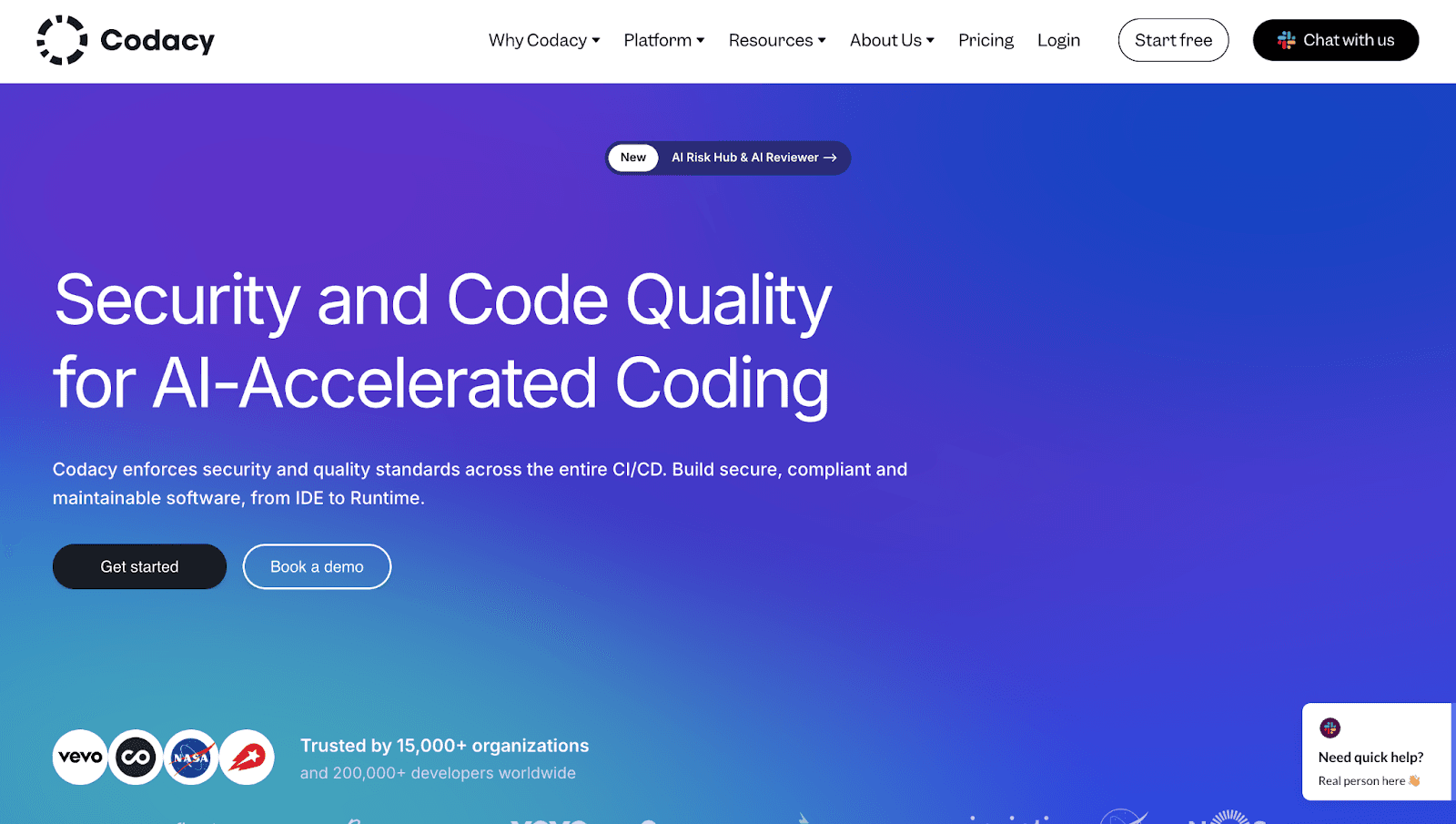
Codacy brings automated code quality, style enforcement, and static analysis into your GitHub workflow. It supports over 49 languages and tracks quality trends across repositories.
Features:
Automated code reviews on every commit
Security analysis for common vulnerabilities
Quality dashboards tracking trends over time
GitHub, GitLab, and Bitbucket support
Pricing: Free for open source, paid plans for private repos and teams.
Limitations: AI capabilities less advanced than newer tools. Can generate noise with false positives initially.
Best For: Teams wanting a mature platform with multi-repo support and quality tracking.
Checkout this Codacy Alternative.
Qodo
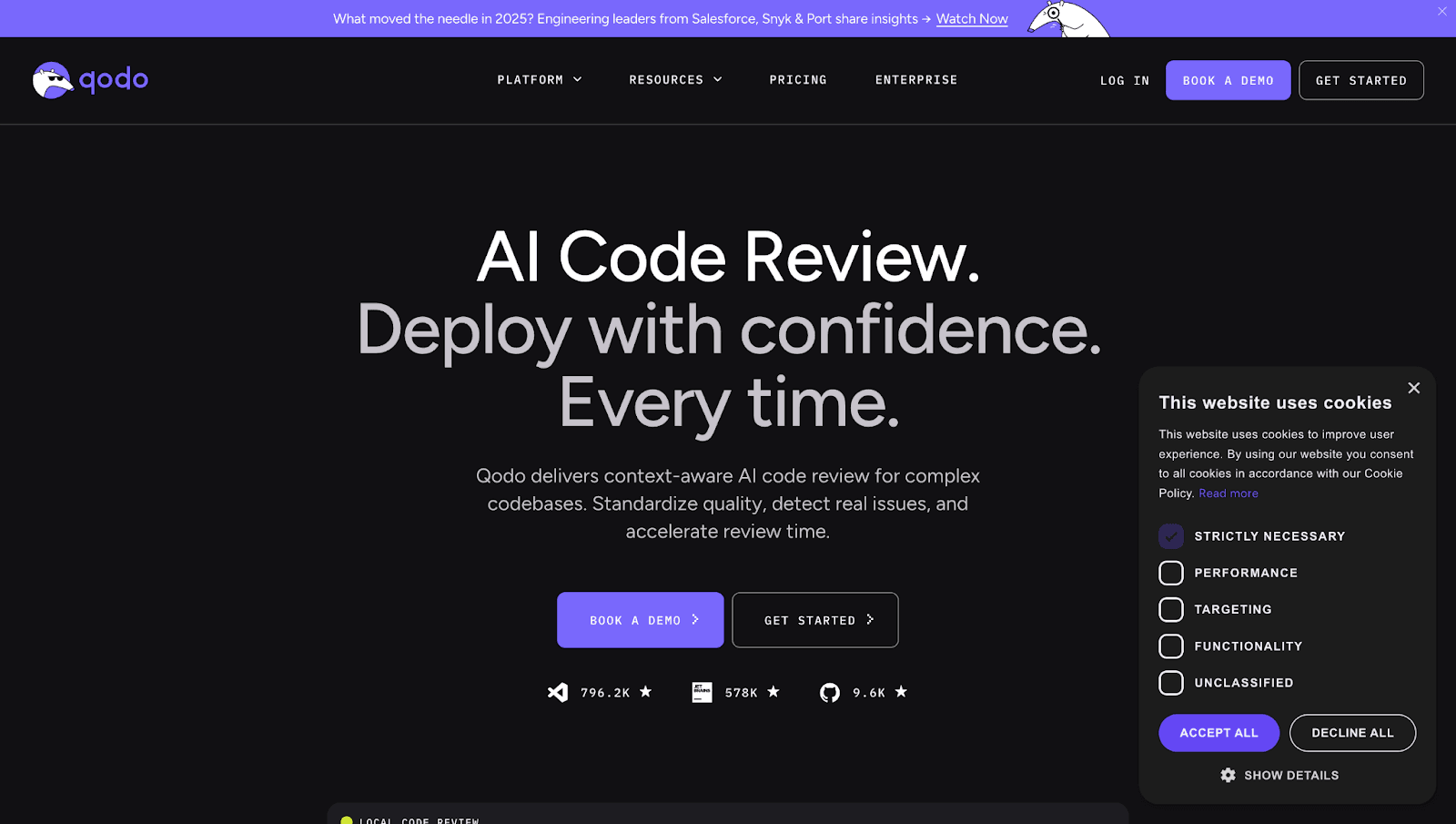
Qodo (formerly Codium) combines AI-powered test generation with code review. It creates unit tests based on your code and suggests improvements in PRs.
Features:
AI-generated unit tests based on code analysis
PR review comments with improvement suggestions
IDE and GitHub integration
Multiple language support
Pricing: Free tier with limited usage, paid plans for teams.
Limitations: Stronger on test generation than comprehensive code review. Security features are limited.
Best For: Teams focused on improving test coverage alongside code reviews.
Checkout this Qodo Alternative.
SonarQube
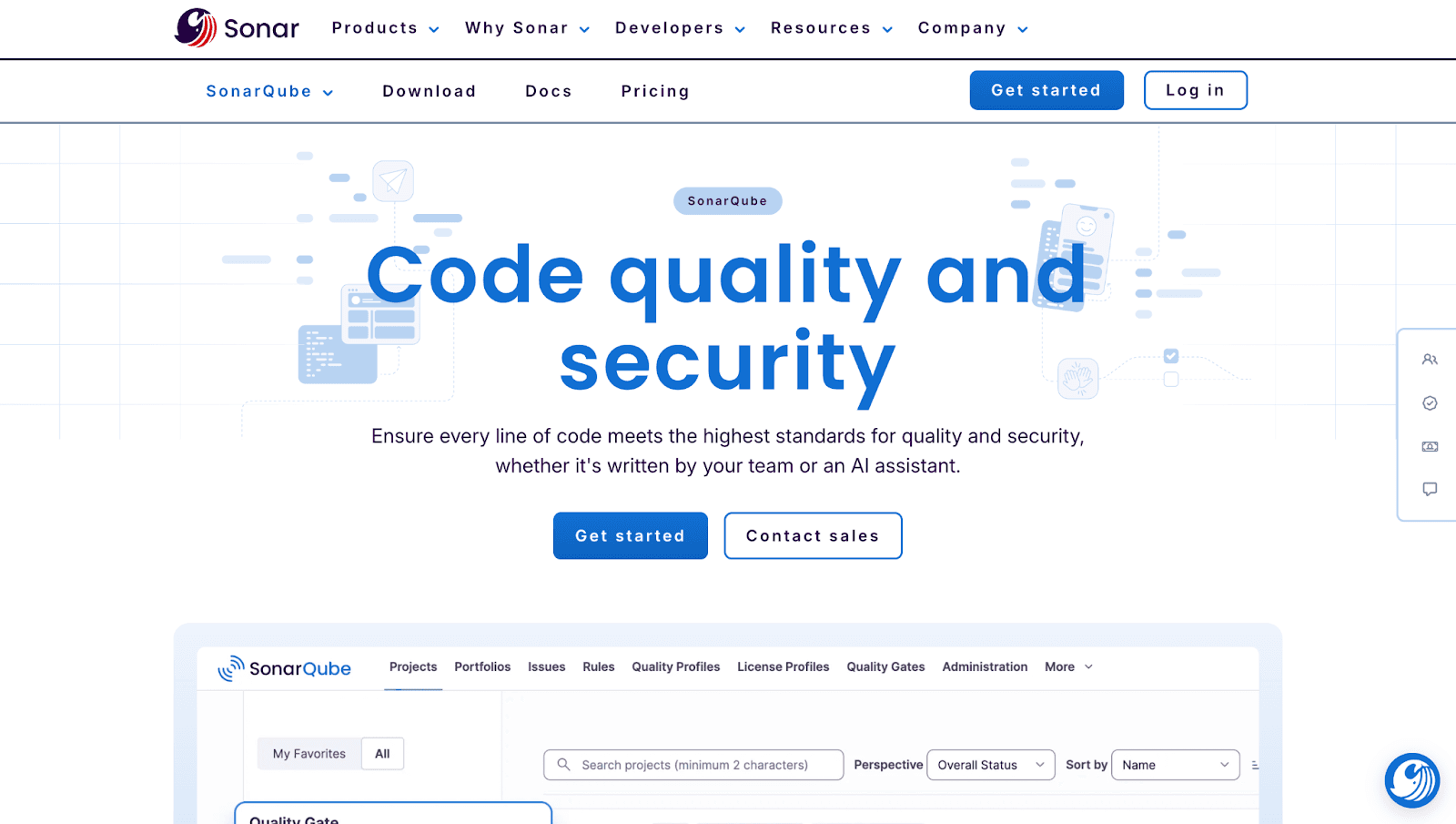
SonarQube is the industry standard for static analysis and code quality gates. It provides deep rule-based scanning and blocks merges when code doesn't meet defined standards.
Features:
Deep static code analysis
Security hotspot detection
Quality gates that block non-compliant merges
Technical debt tracking
On-prem and cloud deployment options
Pricing: Community edition free. Developer and Enterprise editions are paid.
Limitations: Not AI-native—relies on predefined rules rather than machine learning. Setup complexity for self-hosted deployments.
Best For: Enterprise teams with compliance requirements needing deep static analysis and quality gates.
Checkout this SonarQube Alternative.
Sourcery
Sourcery started as a Python-focused AI refactoring tool and has expanded to other languages. It improves code readability and performance automatically.
Features:
AI refactoring suggestions for readability and performance
Instant PR feedback via automated comments
IDE integration for VS Code and PyCharm
GitHub Actions support
Pricing: Free for open source, paid Pro plans.
Limitations: Historically Python-focused—other language support still maturing. Not a full security solution.
Best For: Python-heavy SaaS teams wanting automated refactoring alongside code review.
What to Look for in a GitHub AI Code Review Tool
Choosing the right tool depends on your team's specific pain points. Here's what matters most:
GitHub integration depth: Check for Marketplace availability, GitHub Actions support, and direct PR commenting
Security and compliance: Look for SAST, secrets detection, and dependency scanning—plus SOC 2 or HIPAA compliance support if you handle sensitive data
Language and framework support: SaaS teams often use multiple languages, so verify breadth of coverage
Pricing and scalability: Evaluate per-seat vs. repo-based pricing and confirm the tool scales without cost surprises
How to Choose the Right Tool for Your SaaS Team
Smaller teams often prioritize ease of setup and fast time-to-value. Larger teams typically require enterprise features like SSO, audit logs, and custom rule enforcement.
If your SaaS handles sensitive customer data, security scanning and compliance reporting move to top priority. Regulated industries like fintech or healthcare have non-negotiable requirements here.
Factor in total cost of ownership—not just subscription price. Setup time, maintenance burden, and developer adoption all affect the real cost of any tool.
Build a Unified Code Health Strategy for Your SaaS Team
AI code review is just one piece of the puzzle. Security scanning, quality metrics, and developer analytics all contribute to shipping reliable software faster.
The risk of tool sprawl—bolting on disconnected point solutions—creates its own overhead and blind spots. A unified platform that understands your code and enforces standards automatically lets your engineers focus on impactful work.
Ready to unify code reviews, security, and quality?Book your 1:1 with our experts today.
FAQs
Can ChatGPT replace a dedicated AI code review tool?
How do AI code review tools handle false positives?
Do AI code review tools train on my proprietary code?
Which AI code review tool works best for teams over 100 developers?
Can AI code review tools integrate with GitHub Actions workflows?