AI Code Review
9 Best GitHub AI Code Review Tools for Secure Fintech Development

Sonali Sood

Founding GTM, CodeAnt AI
Fintech teams ship code under pressure that most engineering organizations never face. Every pull request carries compliance implications, every vulnerability could trigger regulatory scrutiny, and every delayed release costs real money.
GitHub's native review features handle the basics, but basics don't cut it when you're building payment systems or handling sensitive financial data. This guide covers nine AI code review tools that bring automated security scanning, compliance enforcement, and intelligent suggestions directly into your GitHub workflow.
Why GitHub's Native Code Review Falls Short for Fintech Teams
The best AI code review tools for fintech teams combine automated security scanning, compliance enforcement, and intelligent suggestions directly in pull requests. GitHub's native review features don't provide this out of the box. You get PR comments, approvals, and branch protection, but fintech teams face pressures that demand more.
No AI-Powered Suggestions or Auto-Fix Capabilities
GitHub's built-in review workflow relies entirely on human reviewers writing feedback line by line. There's no AI analyzing your code for patterns or suggesting fixes. Your senior engineers end up spending hours on routine feedback instead of architectural decisions.
Auto code review—where AI generates suggestions and applies fixes automatically—cuts review cycles dramatically. Without it, every PR waits for a human to catch what a machine could flag in seconds.
Basic Security Scanning Misses Financial Application Risks
GitHub's default security features catch some vulnerabilities, but they lack the depth fintech applications require. Payment logic flaws, hardcoded API keys in transaction flows, and authentication bypasses often slip through pattern-based scanning.
Financial services code handles sensitive data constantly. Surface-level scanning that works for a marketing site won't catch the context-aware vulnerabilities that matter in your domain.
Manual Workflows Slow Down Compliance-Heavy Releases
Every PR in a fintech codebase typically requires security sign-off before merge. When that process is manual, it releases bottlenecks fast ,especially when you're racing toward a regulatory deadline.
Tools that enforce compliance checks automatically let your team move quickly while maintaining the governance your auditors expect.
Missing Audit Trails and Compliance Documentation
PCI-DSS and SOC 2 audits require detailed records: who reviewed what, when approvals happened, which security findings were addressed. GitHub's native features don't generate this documentation automatically.
You end up scrambling before audits, piecing together evidence from PR comments and Slack threads. The right tooling creates audit trails as a byproduct of normal development.
What Fintech Engineering Teams Look for in AI Code Review
Before evaluating specific tools, it helps to know what capabilities actually matter for financial services development.
Real-Time Vulnerability and Secrets Detection
Static Application Security Testing (SAST) scans code for vulnerabilities before it runs. The key word is before—catching issues at PR time rather than post-merge means you fix problems when they're cheap to address.
Secrets detection matters equally. A single exposed API key in your commit history can trigger a breach notification.
Automated Compliance Checks for PCI-DSS and SOC 2
PCI-DSS governs how you handle payment card data. SOC 2 covers broader security controls. Both frameworks translate into specific coding standards—encryption requirements, access controls, logging practices.
AI tools can map your code against compliance standards automatically. Instead of hoping reviewers remember every rule, you get consistent enforcement on every PR.
Native GitHub Integration with Branch Protection Rules
Branch protection rules let you block merges until certain conditions are met. The best AI review tools plug directly into this system as GitHub status checks.
When your security scanner reports as a status check, code that fails security gates simply can't merge. No workflow changes required.
Scalable Pricing for Teams with 100+ Developers
Enterprise pricing models vary wildly—per seat, per repository, or flat rates. For teams with 100+ developers, this difference compounds quickly. Look for pricing that scales predictably as you grow.
How to Evaluate Auto Code Review Tools for Secure Development
With dozens of options available, clear criteria help separate tools that work from tools that transform your workflow.
Security Scanning Depth and False Positive Rates
Not all security scanning is equal. Pattern-matching tools flag anything that looks suspicious, generating noise that teams learn to ignore. Context-aware analysis understands code flow and reduces false positives significantly.
Alert fatigue is real. When developers dismiss warnings habitually, the critical ones get missed too.
AI-Driven Suggestions and Auto-Fix Accuracy
Some tools flag issues. Better tools suggest fixes. The best tools apply fixes automatically with one click.
Evaluate how accurate suggestions are for your stack. An AI trained primarily on JavaScript might struggle with your Python microservices.
CI/CD Pipeline and GitHub Actions Integration
Your code review tool works best when it triggers automatically on PR events. GitHub Actions integration means security scans run without manual intervention, and results appear as PR comments or status checks.
Deployment Flexibility and Data Residency Options
Some fintech teams can use cloud-hosted tools. Others—especially those handling certain regulated data—require self-hosted deployment for data sovereignty. Verify deployment options before committing to a tool.
9 Best GitHub AI Code Review Tools for Fintech Security
Here are nine tools that represent the current best options for fintech teams using GitHub. Each brings different strengths—some excel at AI suggestions, others at security depth.
CodeAnt AI
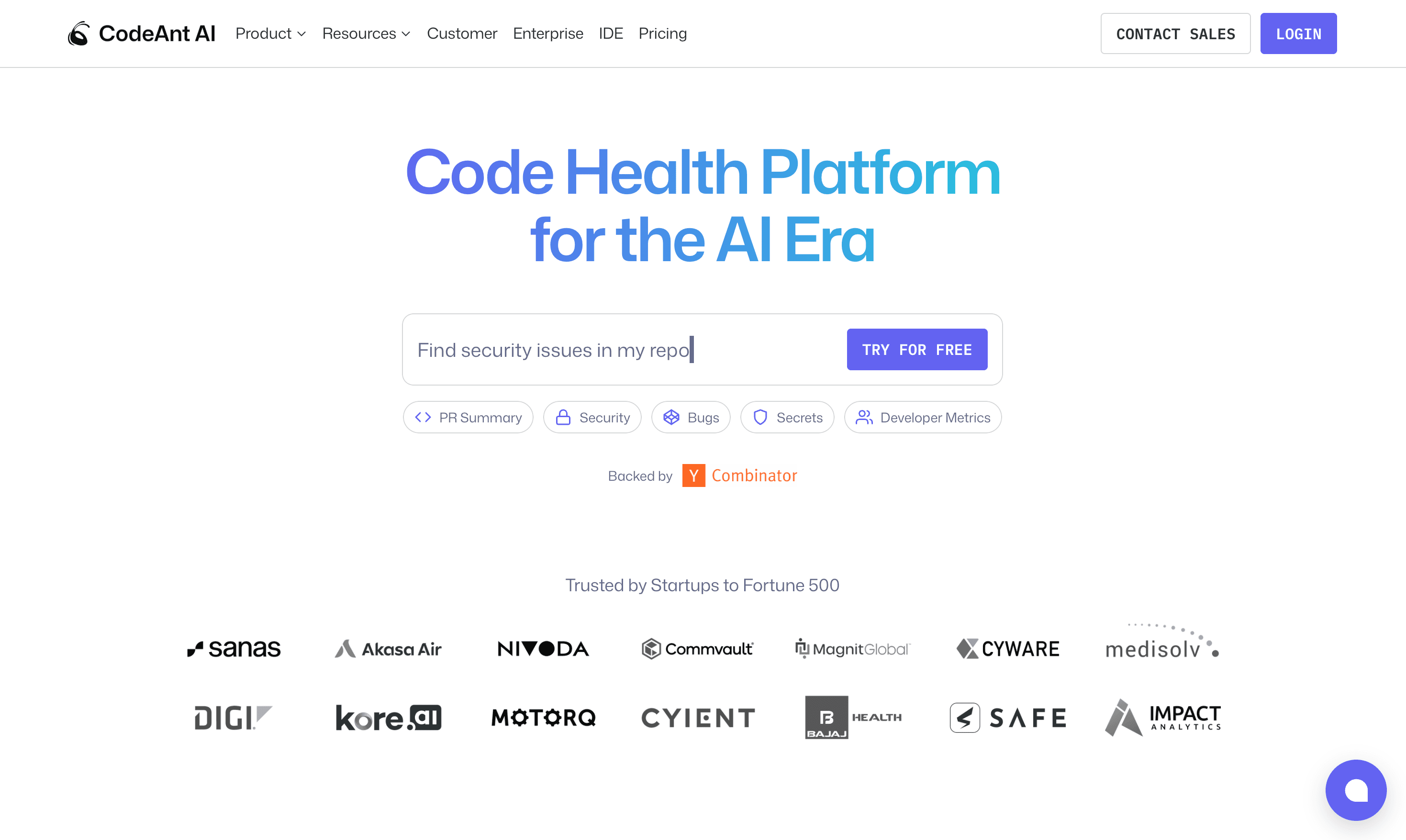
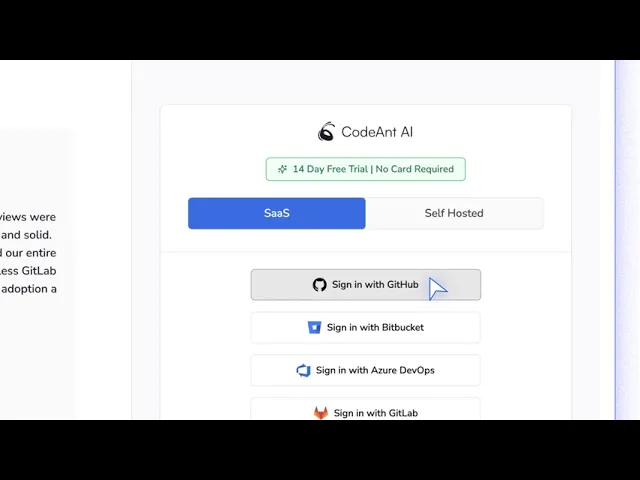
CodeAnt AI delivers AI-powered code reviews, security scanning, and quality metrics in a single platform. It analyzes every pull request in real time and suggests actionable fixes.
Features:
Line-by-line AI review comments with auto-fix suggestions
SAST and secrets detection across 30+ languages
Compliance enforcement for SOC 2, PCI-DSS, and ISO 27001
DORA metrics and developer analytics dashboard
Native GitHub App with branch protection integration
Best for: Fintech teams wanting security, quality, and compliance unified in one tool
Pricing: 14-day free trial, then $10/user/month (Basic) or $20/user/month (Premium)
Limitations: Newer entrant compared to established players
👉 Try CodeAnt AI free for 14 days
GitHub Advanced Security
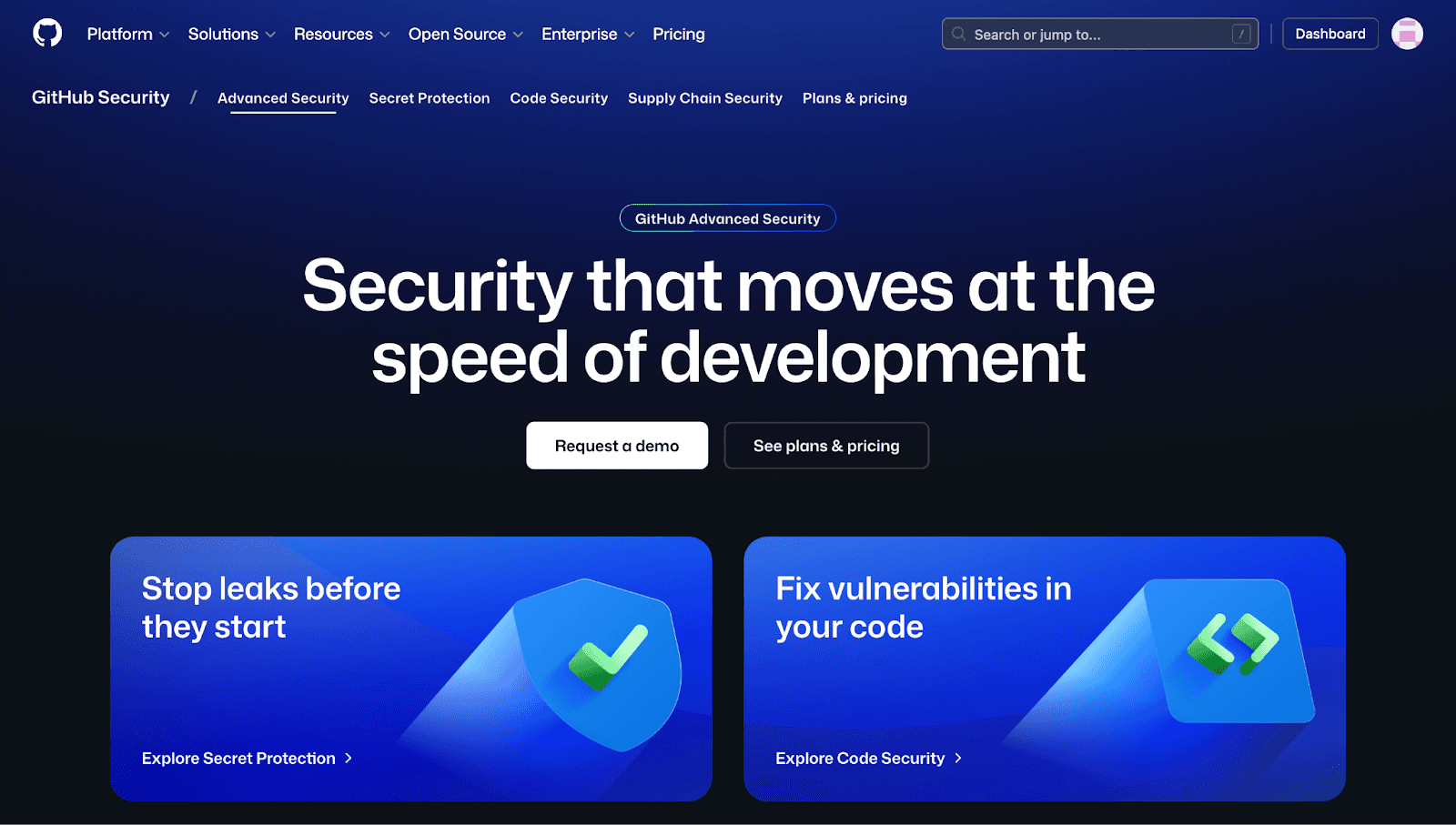
GitHub's premium security add-on brings CodeQL analysis, secret scanning, and dependency review directly into your existing workflow. It focuses on detection rather than remediation.
Features:
CodeQL semantic code analysis
Secret scanning with push protection
Dependency vulnerability alerts
Best for: Teams already on GitHub Enterprise wanting native security features
Pricing: Included with GitHub Enterprise, or $49/committer/month as add-on
Limitations: No AI-powered suggestions or auto-fix capabilities
Checkout this GitHub Security alternative.
Snyk Code
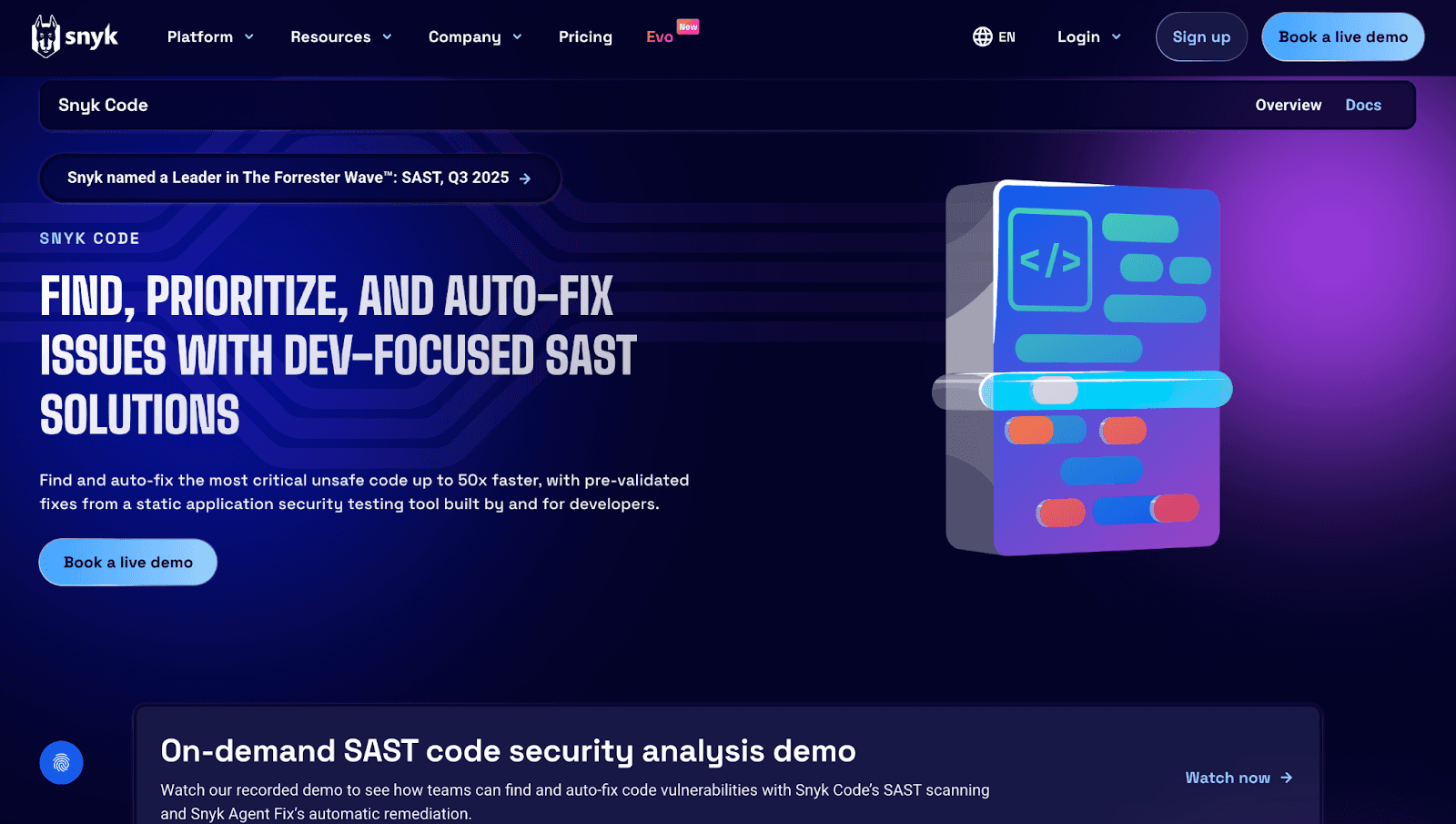
Snyk positions itself as developer-first security, with real-time scanning that integrates into IDEs and PR workflows.
Features:
Real-time SAST with low false positive rates
IDE plugins for shift-left scanning
Auto-fix suggestions for common vulnerabilities
Best for: Teams prioritizing developer experience in security tooling
Pricing: Free tier available, Team plans from $25/developer/month
Limitations: Separate products for different scanning types can fragment visibility
Checkout these Top 13 Snyk Alternatives.
SonarQube
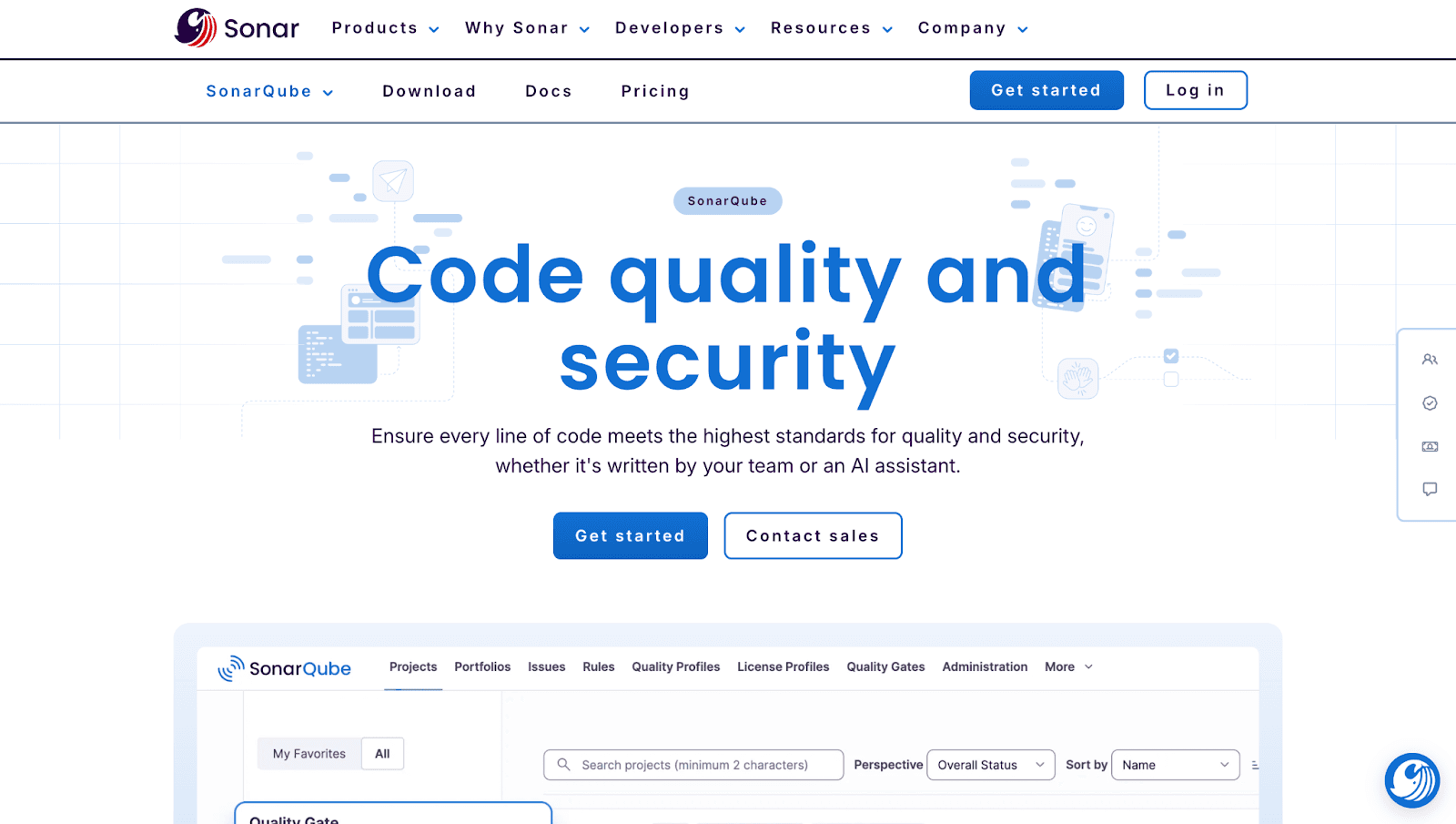
SonarQube has been the industry standard for code quality and security analysis for years. It offers deep customization and self-hosted deployment options.
Features:
Quality gates that block merges on standards violations
Technical debt tracking and maintainability scoring
25+ language support
Best for: Enterprises requiring on-premise deployment and deep customization
Pricing: Free Community edition, Developer from $160/year
Limitations: Steeper learning curve, AI features less mature than newer tools
Checkout this SonarQube Alternative.
CodeRabbit
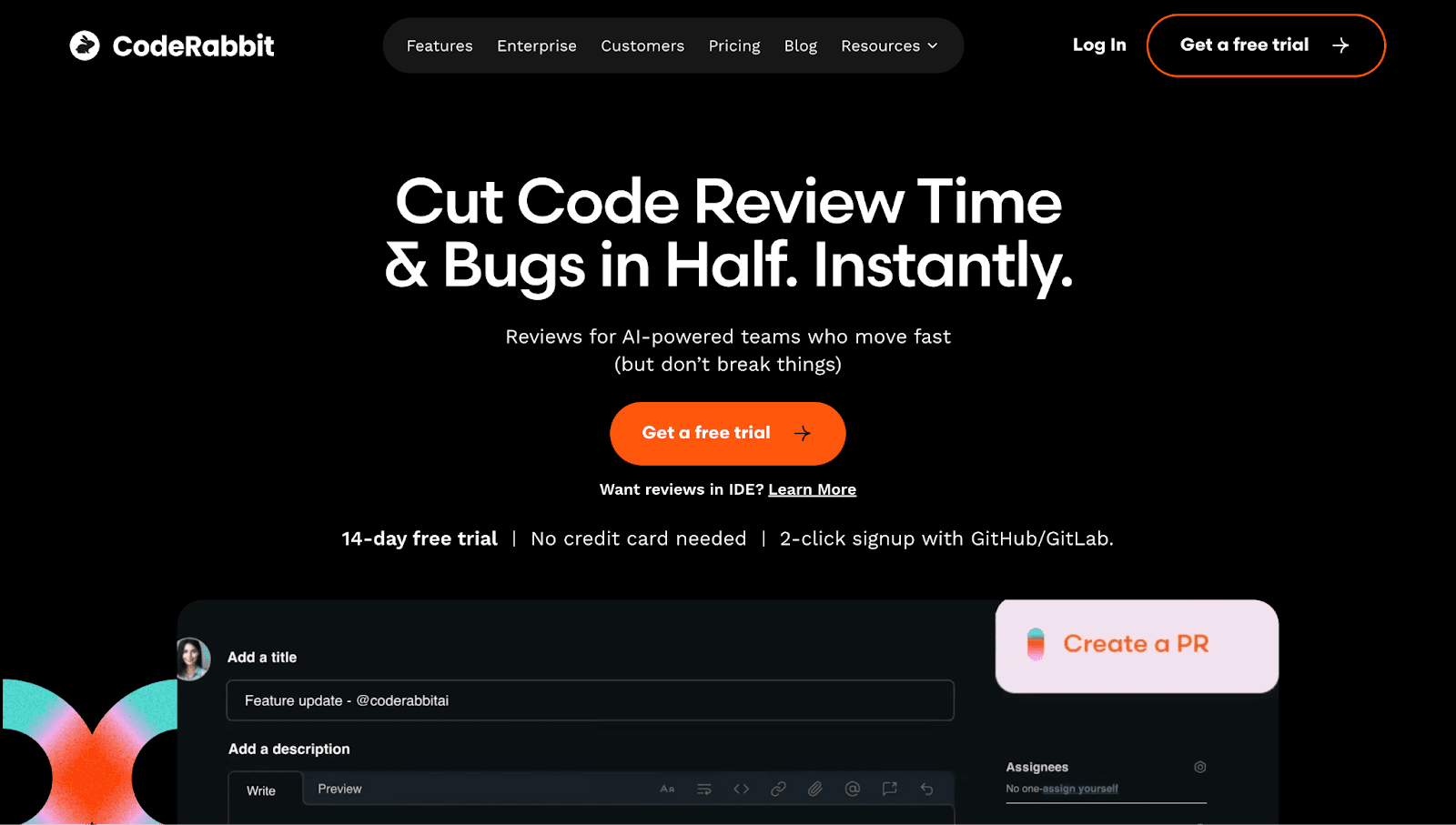
CodeRabbit takes an AI-native approach to code review, providing conversational feedback that learns from your codebase context.
Features:
Conversational AI review comments
Context-aware suggestions based on your codebase
PR summary generation
Best for: Teams wanting an AI-first review assistant
Pricing: Free for open source, Pro from $15/user/month
Limitations: Lighter on security depth compared to full SAST platforms
Checkout this CodeRabbit alternative.
Codacy
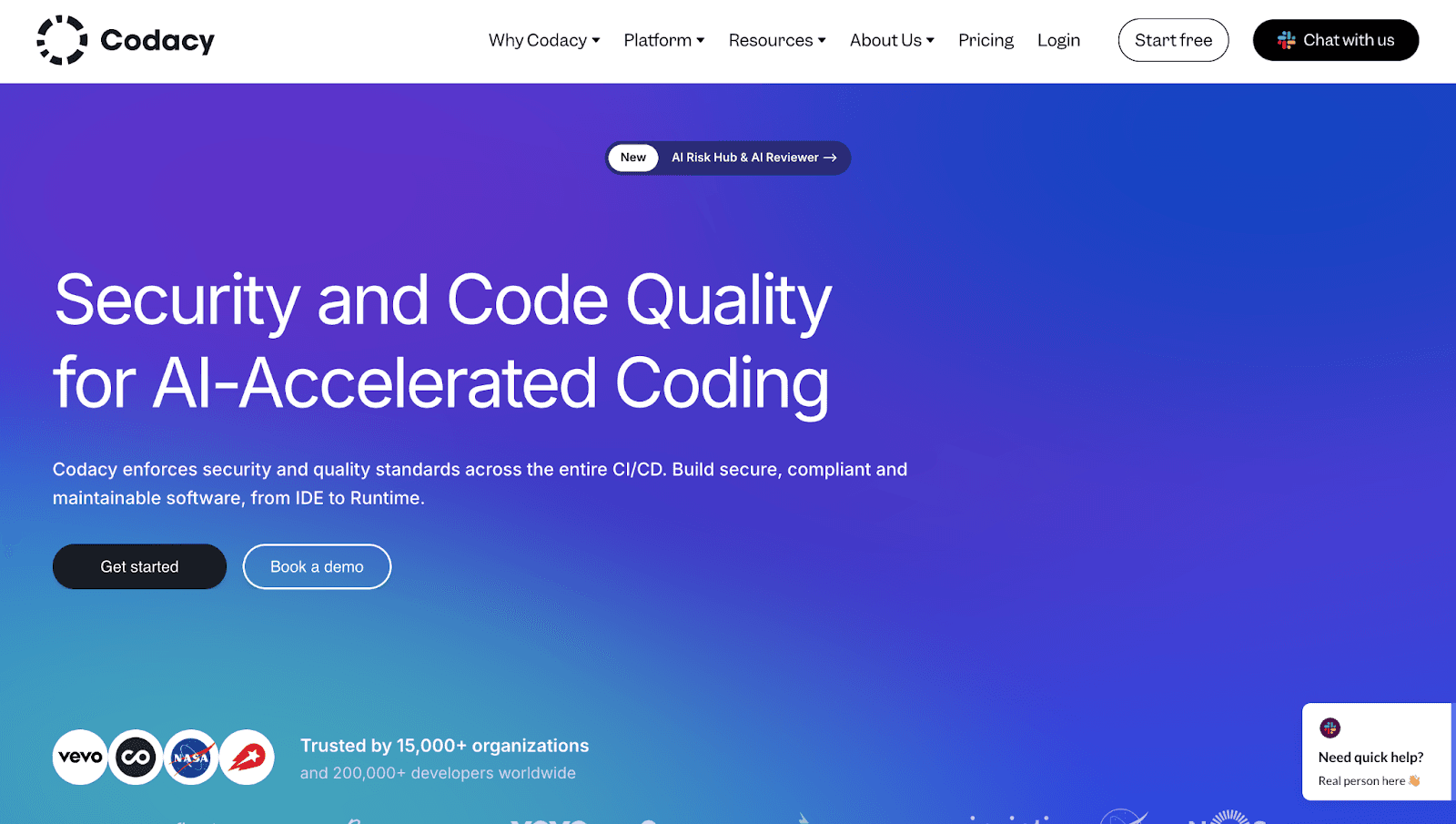
Codacy automates code quality checks with security scanning layered in. It provides visibility into code health trends across repositories.
Features:
Automated PR analysis for style and security
Code duplication and complexity detection
Customizable rule sets
Best for: Mid-size teams balancing quality enforcement with security
Pricing: Free for small teams, Pro from $15/user/month
Limitations: Enterprise features require higher-tier plans
Checkout this Codacy Alternative.
Qodo
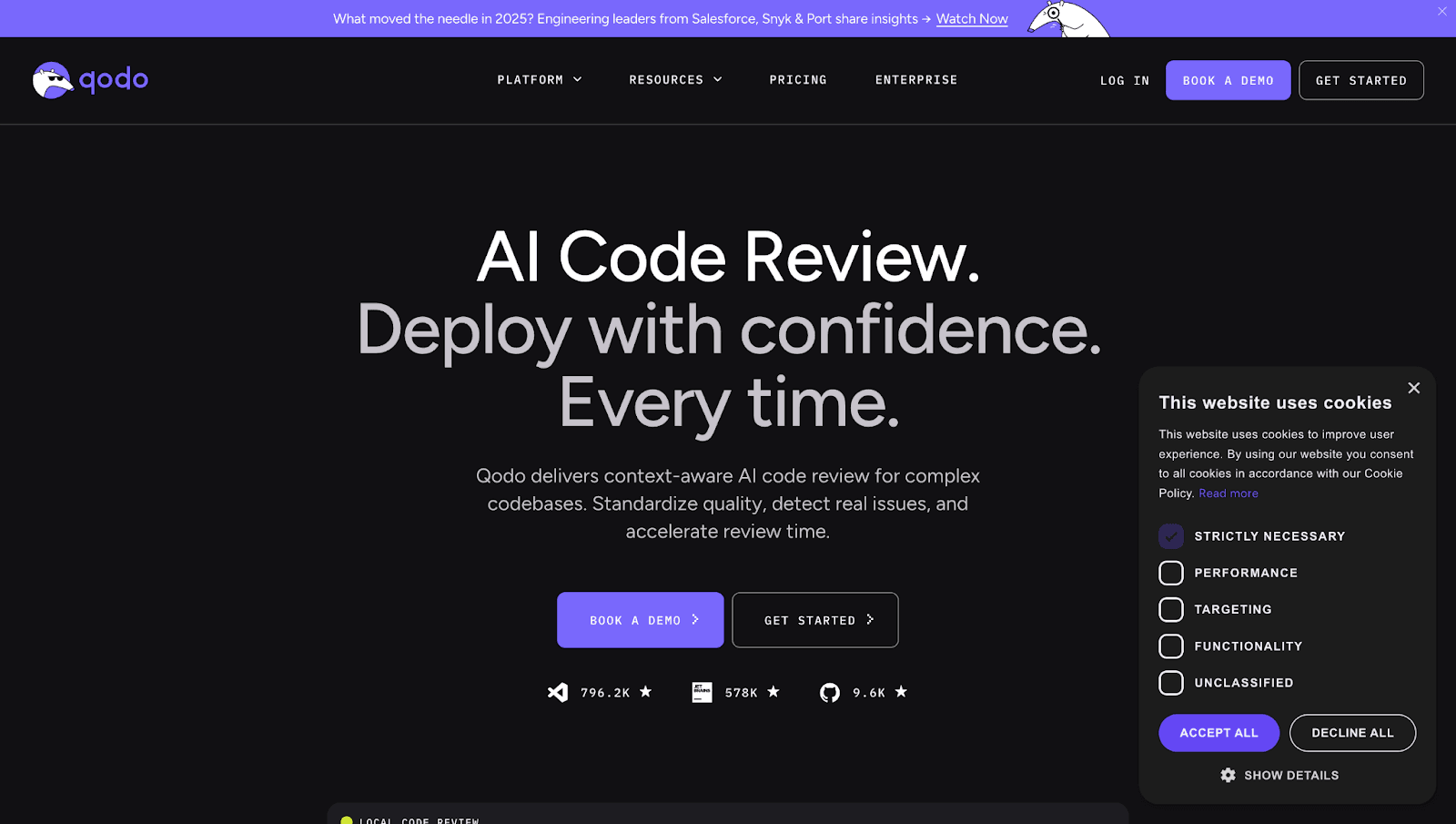
Qodo (formerly CodiumAI) focuses on AI-generated test suggestions alongside code review.
Features:
AI-generated test case suggestions
Coverage gap identification
PR review with testing focus
Best for: Teams focused on improving test coverage
Pricing: Free tier available, Teams pricing on request
Limitations: Narrower scope than full security platforms
Checkout this Qodo Alternative.
DeepSource
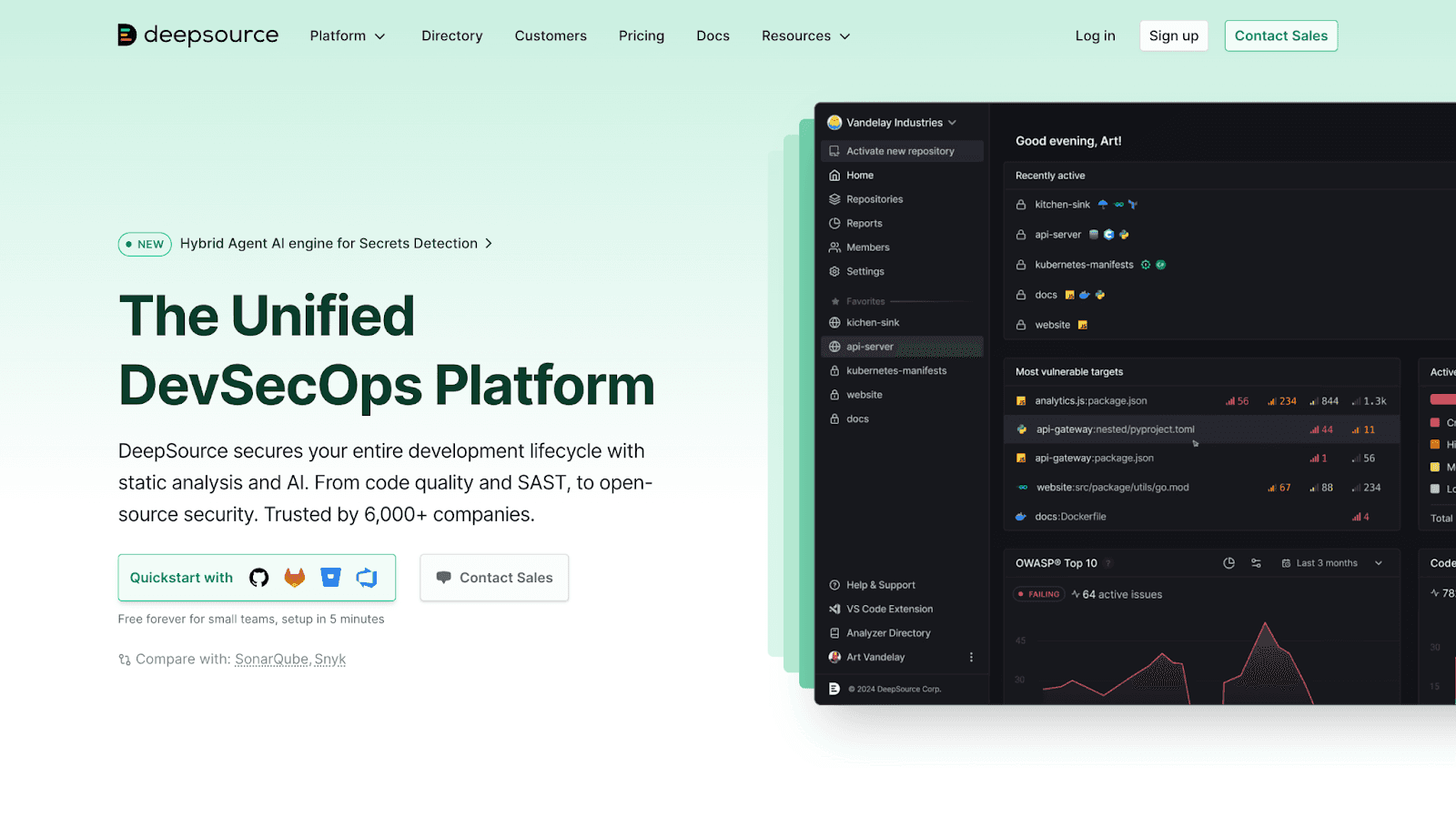
DeepSource combines static analysis with auto-fix capabilities, emphasizing speed and developer experience.
Features:
Fast static analysis across multiple languages
One-click auto-fix for detected issues
GitHub integration with PR comments
Best for: Teams wanting fast, automated fixes
Pricing: Free for open source, Business from $12/user/month
Limitations: Security features less comprehensive than dedicated SAST tools
Checkout this Deepsource Alternative.
Amazon CodeGuru
CodeGuru brings AWS's machine learning expertise to code review, with recommendations trained on Amazon's internal codebase.
Features:
ML-powered code recommendations
Security detector for AWS best practices
CodePipeline integration
Best for: Teams deeply embedded in AWS infrastructure
Pricing: Pay-per-use based on lines of code analyzed
Limitations: Strongest for Java and Python, narrower language support
Code Review Metrics Every Fintech Team Tracks
Measuring code review effectiveness helps you identify bottlenecks and demonstrate improvement over time.
Mean Time to Review and Merge
How long does a PR sit before receiving feedback? Long wait times frustrate developers and slow releases. AI tools that provide instant initial feedback reduce this metric dramatically.
Security Issue Escape Rate
This measures vulnerabilities that reach production despite code review. A declining escape rate indicates your review process is catching issues earlier.
Code Coverage and Technical Debt Ratio
Coverage measures how much code your tests exercise. Technical debt ratio quantifies maintainability issues accumulating in your codebase. Both affect long-term security posture.
DORA Metrics for Deployment Reliability
DORA metrics, deployment frequency, lead time, change failure rate, and recovery time, connect code health to delivery performance.
Build Secure Fintech Software Faster with AI Code Review
GitHub's native features establish a foundation, but fintech teams operating under compliance pressure benefit from purpose-built tooling. The right AI code review tool reduces manual effort while strengthening governance.
The tools in this guide represent different approaches. Some prioritize AI suggestions, others emphasize security depth, and platforms like CodeAnt AI combine both with compliance enforcement and engineering metrics.
Ready to see how AI code review transforms your fintech development workflow?Book your 1:1 with our experts today.
FAQs
Can AI code review tools replace human reviewers in fintech development?
Which GitHub AI code review tools offer on-premise deployment for data residency requirements?
How do AI code review tools minimize false positive security alerts?
What is the typical timeline for seeing ROI from AI code review adoption?
Do AI code review tools generate audit logs for regulatory compliance?