

GitHub Advanced Security catches vulnerabilities, flags secrets, and scans dependencies—but it stops short of actually helping you fix anything. You get the alert, then you're on your own to research, write the remediation, and hope your PR reviewer catches what the scanner missed.
AI code review tools close that gap. They add automated fix suggestions, line-by-line feedback, and code quality checks directly in your pull requests, turning GHAS from a detection layer into a complete security workflow. This guide covers nine tools that complement GitHub Advanced Security, comparing features, pricing, and where each fits best for security-focused teams.
Why GitHub Advanced Security Falls Short on AI-Powered Code Review
If you're already using GitHub Advanced Security (GHAS), you have a solid security foundation. GHAS handles vulnerability detection through CodeQL scanning, catches secrets before they hit production, and flags risky dependencies. But here's the gap: GHAS tells you what's wrong without helping you fix it fast.
For teams that want both security depth and AI-driven review automation, the best options include native GitHub Copilot for seamless integration and third-party tools like CodeAnt AI for more specialized security, compliance, and code quality features that complement GHAS.
Security Alerts Without Automated Fix Suggestions
GHAS flags vulnerabilities, then leaves you to figure out the fix. You get the alert, open a new tab, research the issue, and write the remediation yourself. AI code review tools close this gap by suggesting specific code changes—sometimes with one-click fixes—so developers spend less time researching and more time shipping.
No Line-by-Line AI Review Comments
When you open a pull request, GHAS doesn't leave contextual, inline feedback the way AI-powered tools do. Line-by-line AI review means the tool reads your code changes and comments directly on specific lines, explaining issues, suggesting improvements, or flagging potential bugs. This conversational feedback style speeds up learning and cuts back-and-forth between reviewers.
Manual Pull Request Reviews Still Create Bottlenecks
Even with GHAS enabled, human reviewers handle logic, style, and maintainability checks. On a busy Friday afternoon with 30+ comments on a PR, that manual effort becomes a bottleneck. AI code review tools summarize changes, prioritize what matters, and handle routine feedback automatically—freeing senior engineers for higher-value work.
Code Quality and Technical Debt Blind Spots
GHAS focuses on security, not code quality metrics. Technical debt—the accumulated cost of shortcuts and suboptimal code—grows silently when you're only watching for vulnerabilities. Metrics like cyclomatic complexity (a measure of how many independent paths exist through your code), code duplication, and test coverage fall outside GHAS's scope entirely.
Limited Workflow Automation for Large PRs
Large pull requests overwhelm reviewers. GHAS doesn't summarize changes or help you understand what to review first. AI tools generate PR summaries, highlight high-risk areas, and reduce cognitive load for reviewers facing hundreds of changed lines.
How AI Code Review Tools Complement GitHub Advanced Security
AI code review tools don't replace GHAS—they extend it. Think of GHAS as your security foundation and AI tools as the layer that adds speed, quality, and automation:
Security remediation: AI suggests fixes, not just alerts
Review automation: Summarizes PRs and flags priority issues
Quality enforcement: Tracks complexity, duplication, and coding standards
Developer velocity: Reduces review cycles and back-and-forth comments
Key Features to Evaluate in AI Code Review Tools for Security Teams
Before diving into specific tools, here's what to look for when your team prioritizes security alongside speed.
AI-Driven Code Analysis and Suggestions
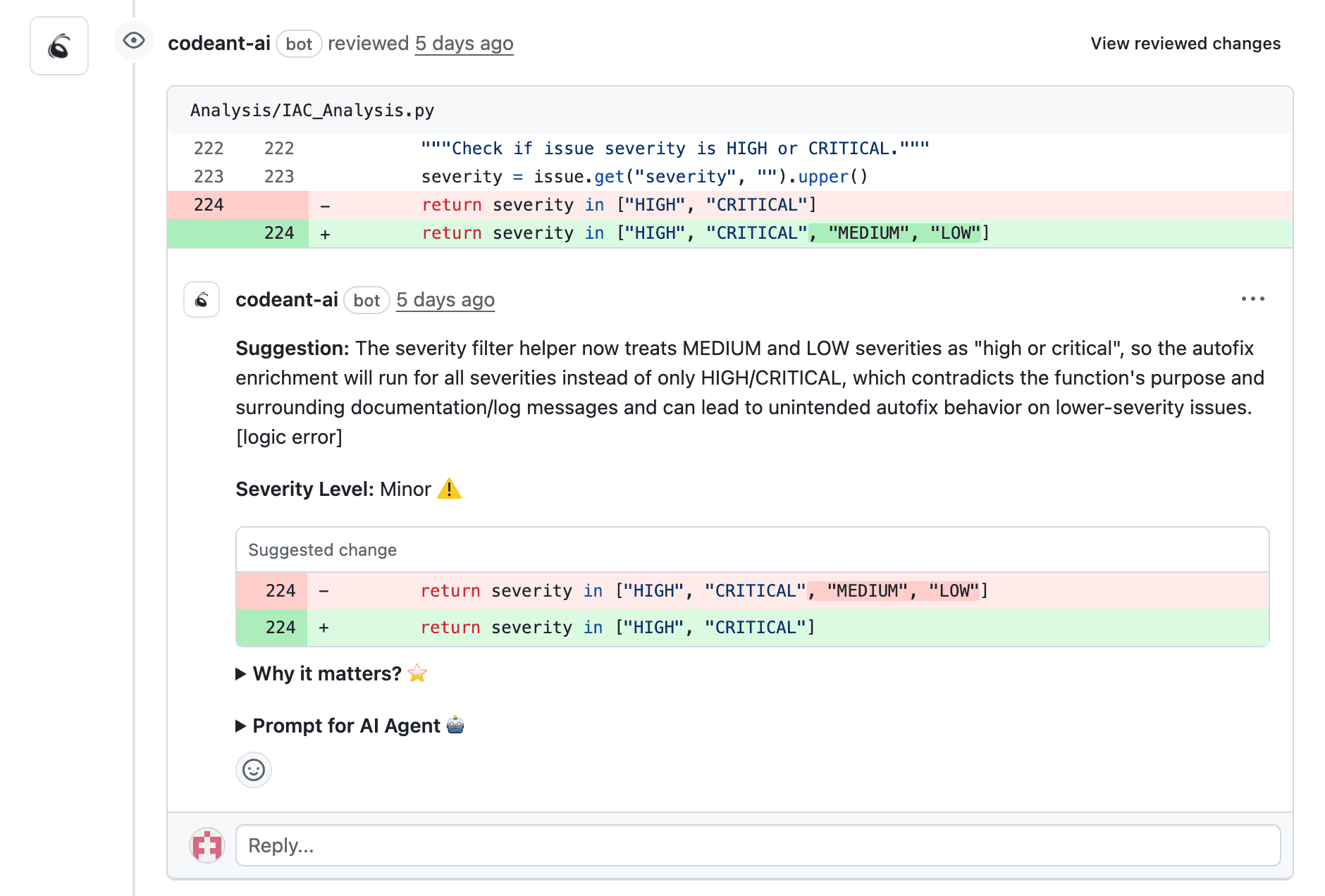
Look for tools that provide contextual fix suggestions, not just issue detection. Static Application Security Testing (SAST) analyzes source code for vulnerabilities without executing it. AI-enhanced SAST goes further by explaining why something is risky and how to fix it.
Secrets and Misconfiguration Detection
AI tools catch hardcoded credentials, API keys, and cloud misconfigurations that slip past basic scans. This matters especially when developers accidentally commit sensitive data in configuration files or environment variables.
Compliance and Governance Automation
For enterprise security teams, SOC 2, HIPAA, and organizational coding standards enforcement are non-negotiable. The right tool enforces standards automatically and provides audit trails.
Native GitHub Integration Depth
Evaluate whether tools integrate via GitHub Actions, GitHub App, or the GitHub Marketplace. If you're running GitHub Enterprise Server, verify support for self-hosted deployments.
Quick checklist:
Inline PR comments and suggestions
Quality gates that block merges
Dashboard with security and quality metrics
Support for your language stack
GitHub Enterprise Server compatibility
Comparison Table of AI Code Review Tools for GitHub
Tool | AI Code Review | SAST/Security | GitHub Integration | Best For | Pricing Model |
CodeAnt AI | ✓ | ✓ | Marketplace + Enterprise | Unified code health | Per user/month |
GitHub Copilot | ✓ | Limited | Native | Copilot ecosystem users | Subscription |
Snyk Code | Limited | ✓ | App + Actions | Security-first teams | Freemium |
CodeRabbit | ✓ | Basic | App | PR automation | Freemium |
SonarQube | Basic | ✓ | Actions | Enterprise static analysis | Tiered |
Qodo Merge | ✓ | Basic | App | Review + test generation | Freemium |
DeepSource | ✓ | ✓ | App | Autofix workflows | Usage-based |
Codacy | Basic | ✓ | App | Quality dashboards | Tiered |
CodeScene | Analytics | Limited | App | Technical debt insights | Subscription |
1. CodeAnt AI
CodeAnt AI brings AI-powered, line-by-line code reviews directly into your GitHub workflow. It combines code quality, security scanning (SAST, secrets, dependencies), and developer productivity metrics into a single platform—so you're not juggling multiple point solutions.
Key Features:
AI-driven line-by-line PR reviews with fix suggestions
SAST, secrets detection, and dependency scanning
Code quality metrics (complexity, duplication, coverage)
Organization-specific standards enforcement
30+ language support
Available on GitHub Marketplace
Best For: Security-conscious teams who want AI code review, SAST, and quality metrics unified. Particularly effective for organizations with 100+ developers who want measurable productivity gains without adding tool sprawl.
Pricing: 14-day free trial, no credit card required. AI Code Reviews start at $10/user/month (Basic).
2. GitHub Copilot Code Review
GitHub Copilot Code Review is the native option for teams already invested in the Copilot ecosystem. It provides AI-powered suggestions directly in pull requests and works seamlessly with GitHub's interface.
Key Features:
AI suggestions in PRs with natural language interaction
Autofix for vulnerabilities detected by CodeQL
PR summaries and contextual code suggestions
Deep integration with GitHub's native workflow
Best For: Teams already using GitHub Copilot who want lightweight AI review without adding external tools.
Limitations: Copilot's review comments don't count as required approvals in branch protection. It lacks dedicated SAST, quality metrics, or compliance features—you'll still rely on GHAS for security depth.
Pricing: Bundled with Copilot subscriptions; Pro and Enterprise tiers offer different feature sets.
3. Snyk Code
Snyk Code offers developer-first security scanning with AI-assisted fix suggestions. If your team already uses Snyk for dependency scanning, adding Snyk Code creates a unified security workflow.
Key Features:
Real-time SAST with IDE and PR integration
AI-powered fix recommendations
Vulnerability prioritization based on exploitability
Strong open-source dependency coverage
Best For: Teams prioritizing security-first workflows who want deep vulnerability detection alongside their existing Snyk setup.
Limitations: Snyk Code focuses on security, not general code quality or review automation. It's not a full code review tool—pair it with other solutions for comprehensive coverage.
Pricing: Free tier available; enterprise pricing scales with developers.
Checkout these Top 13 Snyk Alternatives.
4. CodeRabbit
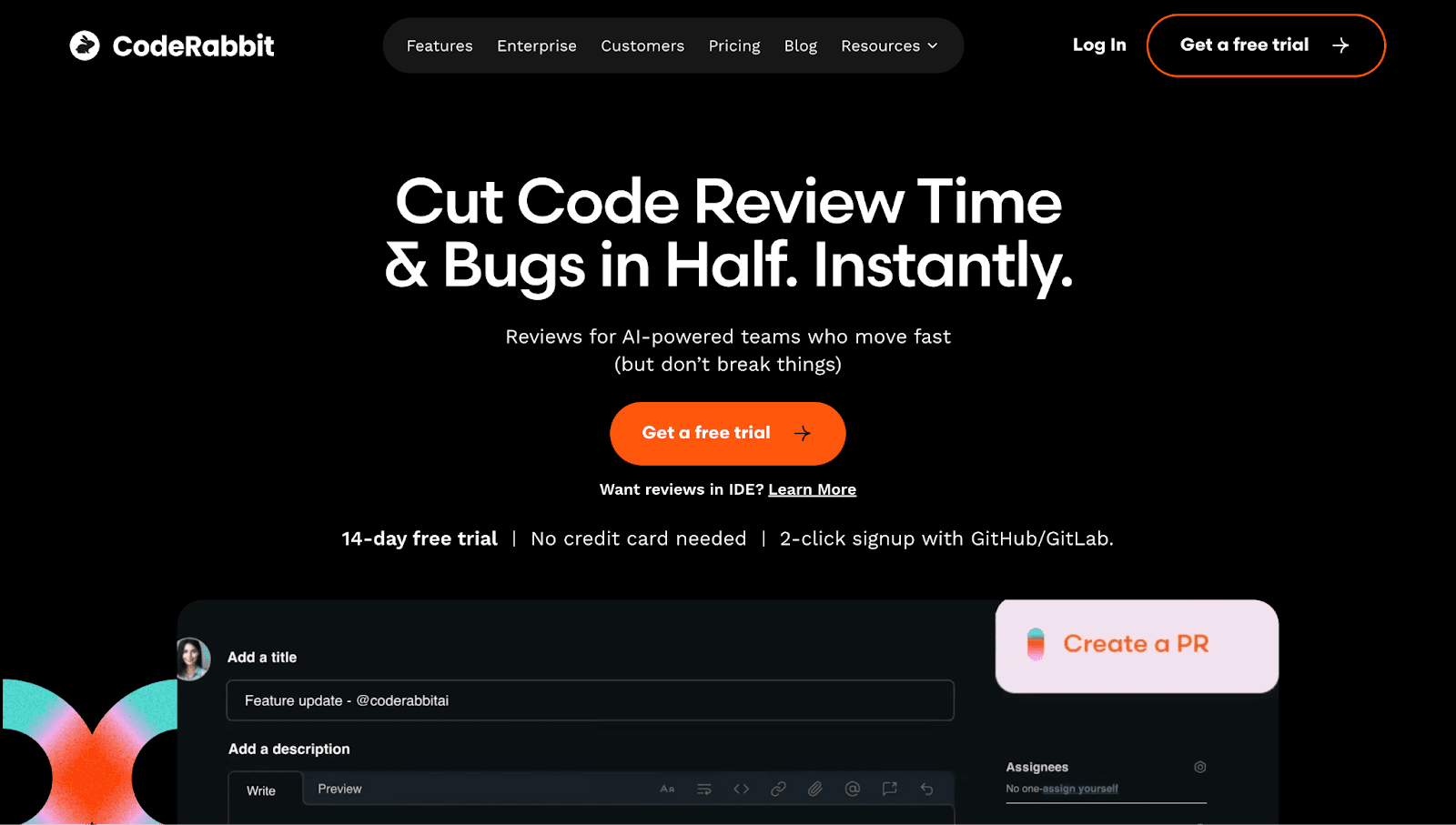
CodeRabbit provides AI-powered PR summaries and review comments with full codebase context. It aims to reduce manual review effort by generating human-like, line-by-line feedback.
Key Features:
Automated PR summaries
Inline suggestions with natural language queries
Full codebase context awareness
Conversational review style
Best For: Teams who want AI to summarize and review PRs but handle security separately through GHAS or dedicated SAST tools.
Limitations: Security scanning is lighter than dedicated SAST tools. You'll likely pair CodeRabbit with GHAS for comprehensive vulnerability coverage.
Pricing: Free for open source; paid plans for private repositories.
Checkout this CodeRabbit alternative.
5. SonarQube
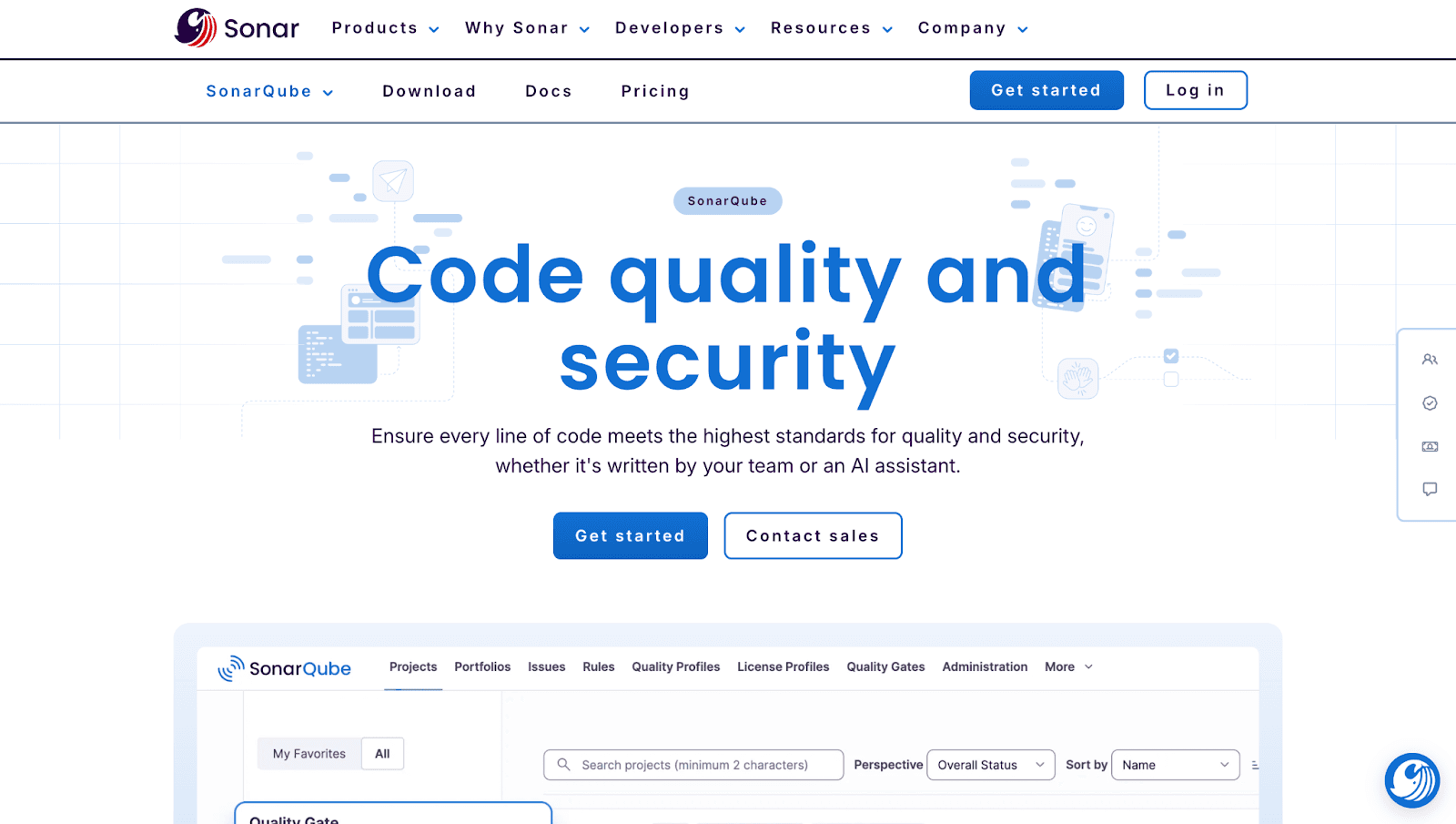
SonarQube is an established static analysis platform with security rules and quality gates. It's a trusted name in enterprise environments, particularly for teams with existing SonarQube infrastructure.
Key Features:
Code smells, security hotspots, and quality gates
Multi-language support (25+ languages)
Self-hosted or SonarCloud options
Customizable rule sets
Best For: Enterprises with existing SonarQube infrastructure who want to add GitHub PR integration and quality gates.
Limitations: AI capabilities are newer and less mature than AI-native tools. Self-hosted setup can be complex, and the learning curve is steeper for first-time users.
Pricing: Community edition is free; paid editions for enterprise features.
Checkout this SonarQube Alternative.
6. Qodo Merge
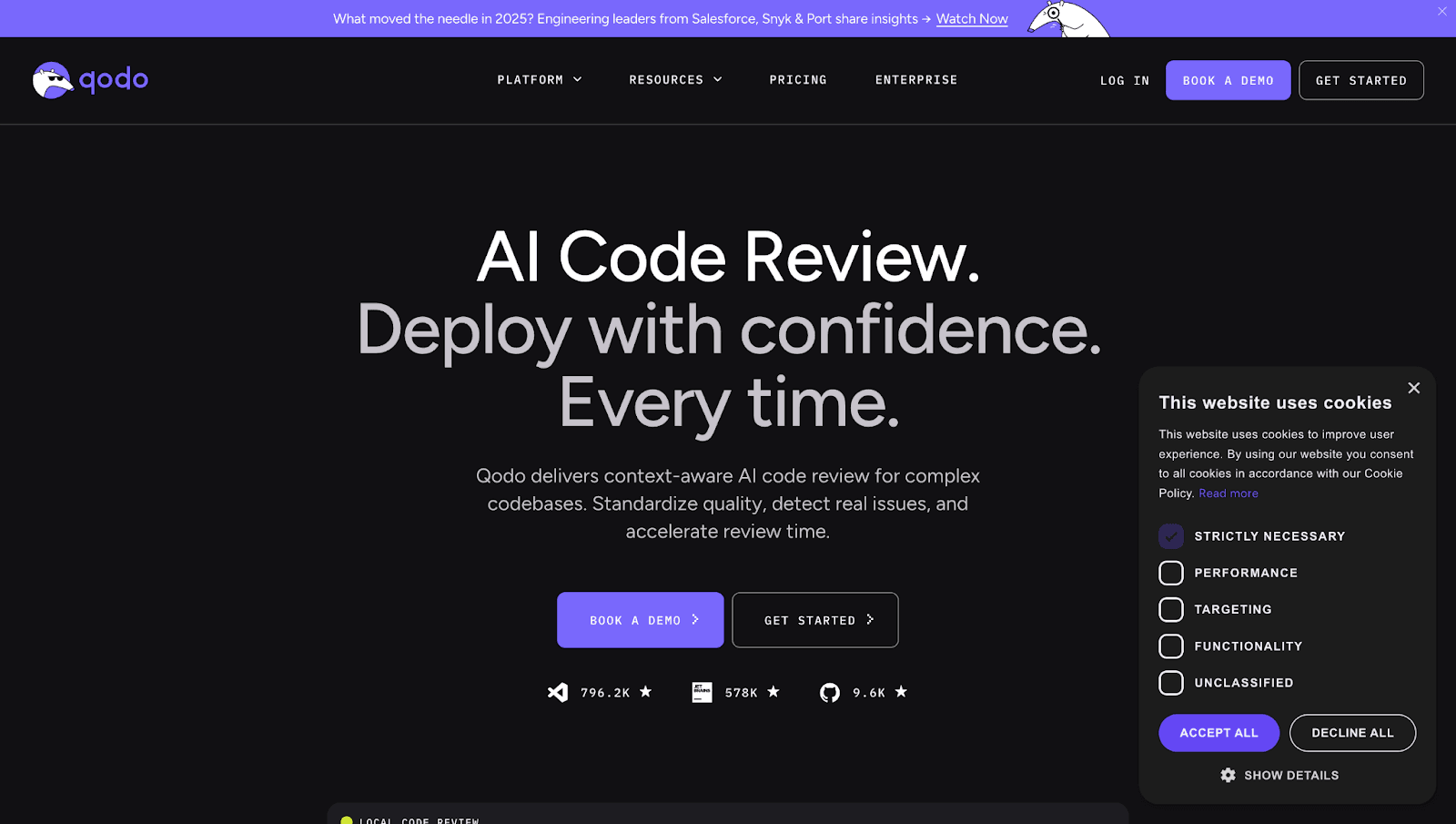
Qodo Merge (formerly CodiumAI) generates PR descriptions, review suggestions, and test cases automatically. It's particularly useful when you want AI assistance with both code review and test coverage.
Key Features:
Auto-generated PR descriptions
Code suggestions and review comments
Test generation for uncovered code paths
IDE and GitHub integration
Best For: Teams who want AI assistance with both code review and test coverage in a single tool.
Limitations: Security scanning isn't the primary focus—pair with GHAS or dedicated SAST for vulnerability detection.
Pricing: Free tier available; enterprise pricing for advanced features.
Checkout this Qodo Alternative.
7. DeepSource
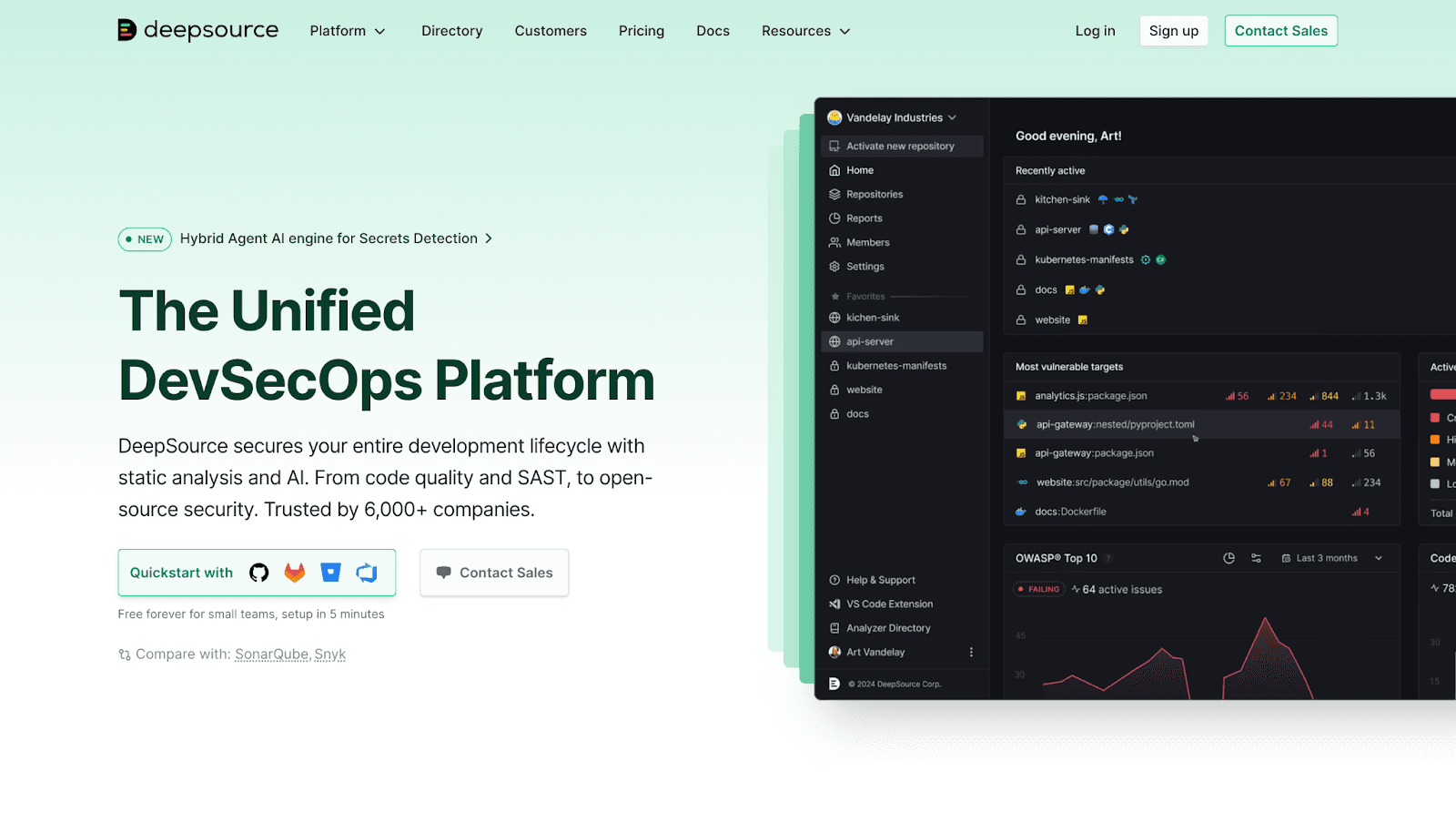
DeepSource provides automated code review with static analysis and autofix capabilities. It pushes fixes directly to PRs, reducing manual intervention for common issues.
Key Features
Autofix for common issues pushed directly to PRs
Security analyzers and code health dashboard
Multi-language support
Quality metrics tracking
Best For: Teams who want automated fixes applied without manual intervention—particularly useful for enforcing consistent standards across large codebases.
Limitations: AI review capabilities are less conversational than newer AI-native tools. The experience is more "automated linting" than "AI reviewer."
Pricing: Free for open source and small teams; usage-based pricing for larger organizations.
Checkout this Deepsource Alternative.
8. Codacy
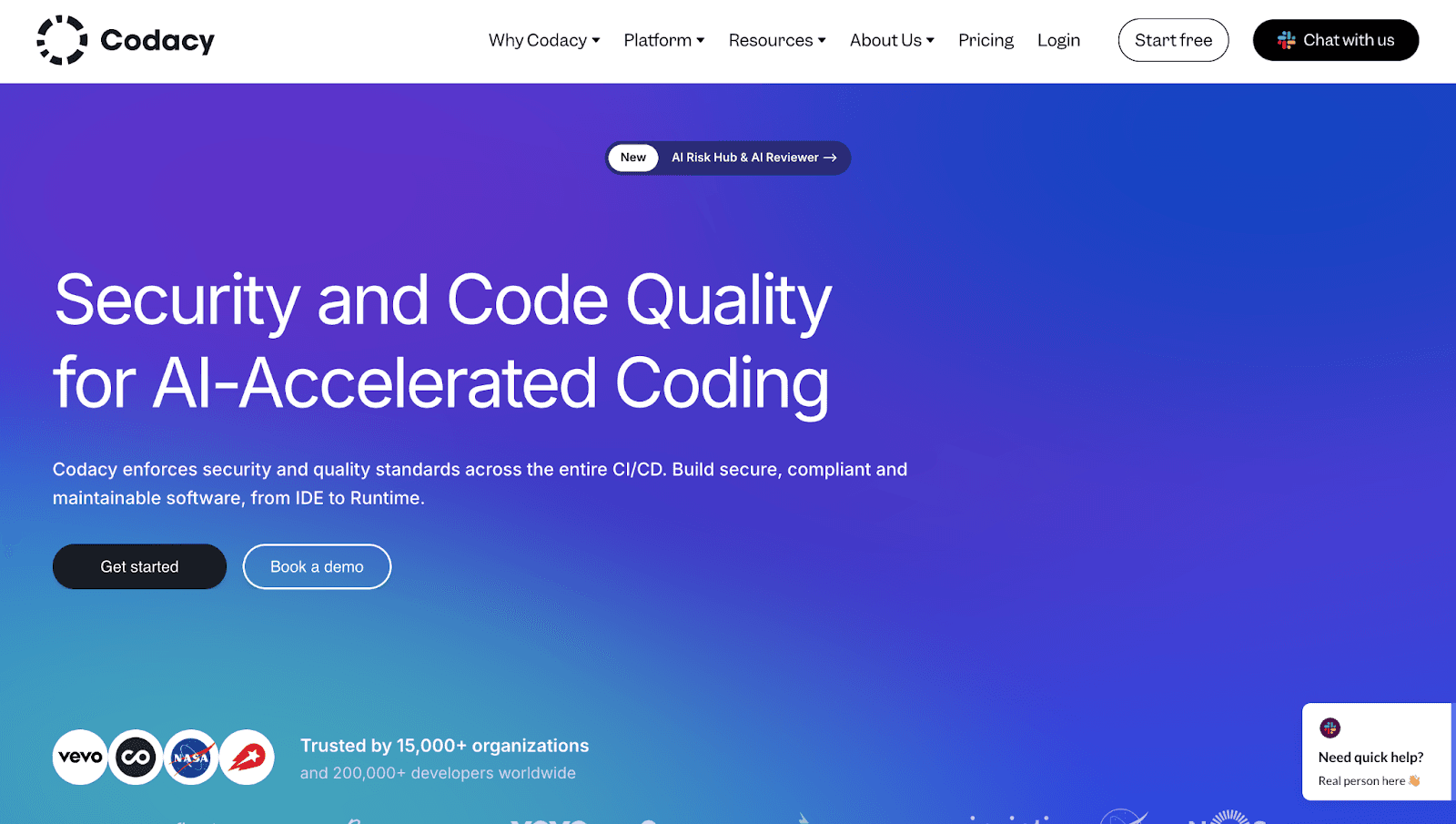
Codacy combines code quality and security scanning with GitHub integration. It provides dashboards, coverage tracking, and automated review comments.
Key Features
Automated code review with security patterns
Quality dashboards and coverage tracking
PR comments and quality gates
Multi-language support
Best For: Teams who want a quality-focused platform with security scanning included—particularly when consistent style enforcement matters.
Limitations: AI capabilities are less advanced than AI-first competitors. Default settings may generate many non-critical alerts initially.
Pricing: Free for open source; tiered pricing for teams.
Checkout this Codacy Alternative.
9. CodeScene
CodeScene takes a different approach—behavioral code analysis focused on code health, hotspots, and team patterns. It's more strategic than tactical, helping engineering leaders understand technical debt trends.
Key Features
Hotspot detection for high-risk code areas
Code health trends over time
Team coordination insights
Technical debt prioritization
Best For: Engineering leaders who want visibility into technical debt and team productivity patterns—less about real-time PR review, more about strategic planning.
Limitations: Less focused on real-time PR review; more analytical and strategic. Pair with other tools for day-to-day review automation.
Pricing
Free trial available; subscription pricing for teams.
How to Choose the Right AI Code Review Tool for Your Security Workflow
Matching the right tool to your workflow depends on where your gaps are:
Unified security and quality
Already invested in GitHub Copilot
Security is the sole priority
Strategic code health insights
PR automation is the main goal
Ready to unify your code review and security workflow?Book your 1:1 with our experts today

