AI Code Review
How to Scale Code Reviews Without Slowing Down Delivery

Sonali Sood

Founding GTM, CodeAnt AI
As engineering teams scale, pull request (PR) volume rises faster than reviewer capacity. What used to be a simple two-person review process suddenly becomes a bottleneck that slows the entire delivery pipeline. PR queues grow, merge conflicts multiply, and developers get stuck waiting for approvals instead of shipping code.
The challenge is simple to describe but harder to solve: How do you maintain code quality while moving at the speed your product demands?
This guide breaks down exactly why review bottlenecks form, and how modern teams use clear standards, lean review practices, automation, and AI to scale code reviews without sacrificing quality.
Why Code Reviews Become Bottlenecks in Fast-Moving Teams
Fast-moving engineering teams generate continuous PR activity. Without intentional review workflows, volume quickly exceeds reviewer bandwidth. Before we explore solutions, it’s important to understand why bottlenecks form.
Reviewer fatigue
Senior engineers usually shoulder the bulk of review workload. As PR queues grow, they’re forced to split attention between deep work and constant reviews, creating burnout and slower approvals.
Context switching
Developers need uninterrupted focus for design-heavy or logic-heavy work. When reviews interrupt their day unpredictably, they lose flow state. Each interruption adds invisible time cost.
Unclear ownership
If PRs are not routed to the right reviewers automatically—or if ownership boundaries are vague—PRs sit idle. The “someone will pick this up” assumption often leads to delays.
Growing queues
As teams add more developers, PR volume increases exponentially. Without load-balancing and automation, review capacity fails to keep up, creating cascading delays.
These constraints affect teams of every size. But the fastest-growing teams are hit hardest.
Principles for Scaling Code Reviews Without Sacrificing Quality
Before diving into tactics, teams need the right foundational mindset. These principles determine whether your review process scales or collapses under growth.
Focus on Improving the Codebase First
The real purpose of code review is to make the codebase healthier, safer, and easier to maintain—not to gatekeep contributions. A review should answer:
Does this change improve the system?
Does it reduce risk?
Is it consistent with long-term architecture?
Reviews that focus on code quality (instead of nitpicking or enforcing personal preference) create a culture where engineers value review time instead of dreading it.
Prioritize Progress Over Perfection
A perfect PR is not the goal. A good, safe, and well-tested PR is. Excessive nitpicking destroys momentum without delivering meaningful quality gains. Teams need a healthy threshold between:
must-fix issues (correctness, safety, test coverage)
optional suggestions (style, alternatives, patterns)
Fast teams approve PRs that are safe and correct—even if they’re not “perfect”—and follow up later when needed.
Treat Reviews as Knowledge-Sharing Opportunities
Strong teams treat reviews as collaborative learning moments:
junior developers gain architecture and domain knowledge
senior engineers explain decisions and patterns
reviewers spread best practices organically
This reduces the bus factor, improves shared ownership, and makes review load more evenly distributed as more developers grow competent in more parts of the system.
How to Set Clear Code Review Guidelines and Expectations
Once your principles are in place, you need a documented process. Clear expectations eliminate confusion, reduce back-and-forth, and help reviewers and authors move faster.
Define What Reviewers Should Evaluate
Reviewers should have a consistent, predictable scope. A clear checklist reduces cognitive load and prevents “I’m not sure what to look for” hesitation.
Reviewers should evaluate:
Functionality: Does the code behave as intended? Does it introduce regressions?
Readability: Can another engineer understand this logic easily?
Security: Are there vulnerabilities, exposed secrets, or dangerous patterns?
Performance: Could this change degrade performance or increase resource usage?
Test Coverage: Are new scenarios covered? Does the change break tests?
Everything outside this scope—formatting, naming preferences, personal style—belongs to automated checks.
Create and Enforce a Style Guide
Style debates waste time and sap reviewer energy. A style guide ensures:
consistent naming conventions
consistent structure
consistent patterns across the codebase
Automate style enforcement with formatters and linters like:
Prettier
ESLint
Black
gofmt
These tools set up the automation section later in this article.
Establish Response Time Expectations
Teams move faster when expectations are clear. Define:
Initial response time: e.g., 4–6 business hours
Review completion time: e.g., same day for standard PRs
Escalation rules: e.g., ping after 24 hours
Async rules: e.g., reviewers leave clear questions and avoid vague comments
Time-boxed expectations prevent PRs from aging in the queue.
Best Practices for High-Volume Code Reviews
This is the tactical heart of the article. Implement these and you’ll feel immediate improvements.
1. Keep Pull Requests Small and Focused
Small PRs move dramatically faster. They’re easier to understand, easier to test, and easier to approve.
A “small PR” usually aligns with:
a single feature
a single refactor
a single bug fix
For large changes, use stacked PRs: sequence multiple small PRs instead of opening one giant one.
2. Distribute Reviewer Load Across the Team
Avoid the trap where senior developers handle every review. Distribute load using:
CODEOWNERS for domain-based routing
round-robin assignment for fairness
load-balancing tools to avoid reviewer overload
Shared ownership prevents bottlenecks and burnout.
3. Use Checklists to Standardize Reviews
A checklist ensures reviewers evaluate consistently, not based on memory or preference.
Sample Review Checklist:
Code follows style guidelines
No hardcoded secrets or credentials
Error handling and edge cases covered
New code includes appropriate tests
Documentation updated if needed
Checklists reduce cognitive overhead and improve review quality.
4. Give Clear and Constructive Feedback
Vague comments create delays. Strong review feedback:
distinguishes blocking issues from suggestions
provides context and reasoning
offers alternatives when appropriate
avoids emotional or ambiguous phrasing
Instead of “This isn’t good,” prefer:
“I think this could break when X happens. Can we handle that case with Y?”
Clear feedback shortens the cycle.
5. Batch Reviews to Reduce Context Switching
Reviewing every time a notification appears destroys deep work. Instead:
schedule daily or twice-daily review blocks
batch reviews together
turn off PR notifications outside review windows
Batching reduces mental fragmentation and increases both review speed and code quality.
How Automation and AI Reduce Code Review Time
Modern teams don’t scale review by adding more reviewers—they scale by reducing the number of things humans must do manually. Automation handles repetitive checks; humans focus on logic and design.
Automate Style and Formatting Checks
Linters and formatters catch:
styling issues
indentation errors
inconsistent naming
accidental whitespace changes
CI can block PRs that fail style checks, ensuring reviewers never waste energy on trivial issues.
Use Static Analysis to Catch Bugs Before Review
Static analysis identifies deeper issues:
unreachable code
unused variables
complexity hotspots
dangerous code patterns
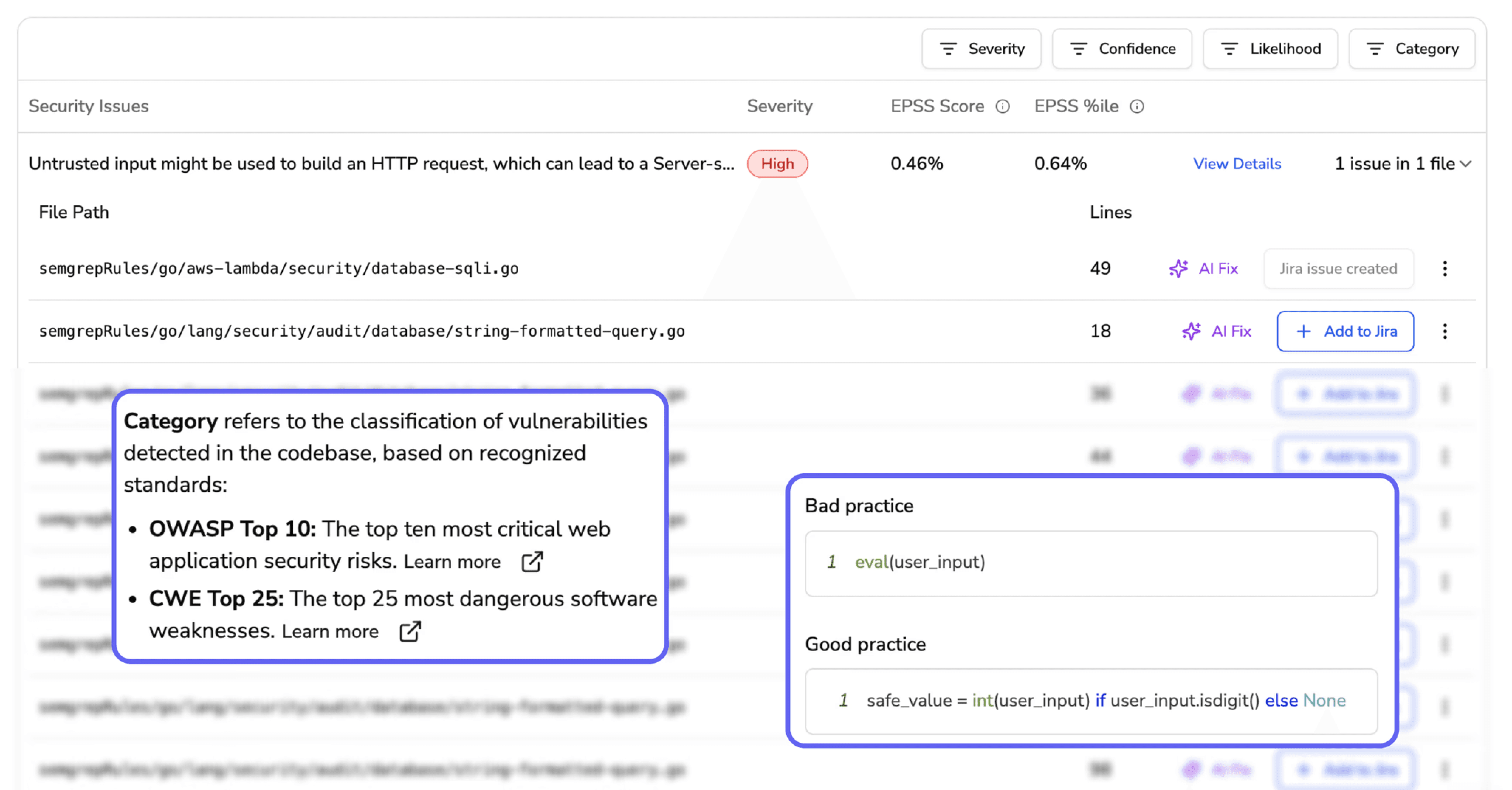
SAST tools add security scanning on top of this, catching:
injection vulnerabilities
unsafe API calls
hardcoded secrets
dependency CVEs
CodeAnt AI provides static analysis + SAST directly inside the PR.
Use AI for PR Summarization and Fix Suggestions
AI reduces reviewer workload by:
summarizing PR changes
explaining risky sections
identifying logic flaws
generating fix suggestions
reviewing instantly when PR is opened
This is especially valuable for large diffs, multi-service changes, or legacy code review.
Comparison Table:
Review Task | Manual Approach | Automated Approach |
|---|---|---|
Style enforcement | Reviewer leaves formatting notes | Linters automatically fix or block the PR |
Security scanning | Reviewer manually identifies vulnerabilities | SAST tools automatically flag security risks |
PR summarization | Reviewer reads the entire diff | AI generates a concise, context-rich summary |
Bug detection | Reviewer catches logic errors during review | Static analysis tools automatically identify issues |
Key Metrics to Track Code Review Efficiency
Teams that measure code reviews improve them. Teams that don’t measure drift into chaos.
Review Cycle Time
The time from PR opened → PR merged. A healthy cycle is usually under 24 hours for most PRs.
Long cycle time signals:
overloaded reviewers
unclear ownership
oversized PRs
PR Throughput
The number of PRs merged per week or sprint.
Higher throughput = healthier velocity.
Declining throughput often indicates bottlenecks in review workflow.
Review Depth and Coverage
Depth answers the question: Are reviewers actually catching issues? Coverage ensures every PR receives meaningful attention.
Low depth = rubber-stamping
Low coverage = risky merges
Automation + AI can increase both without slowing teams down.
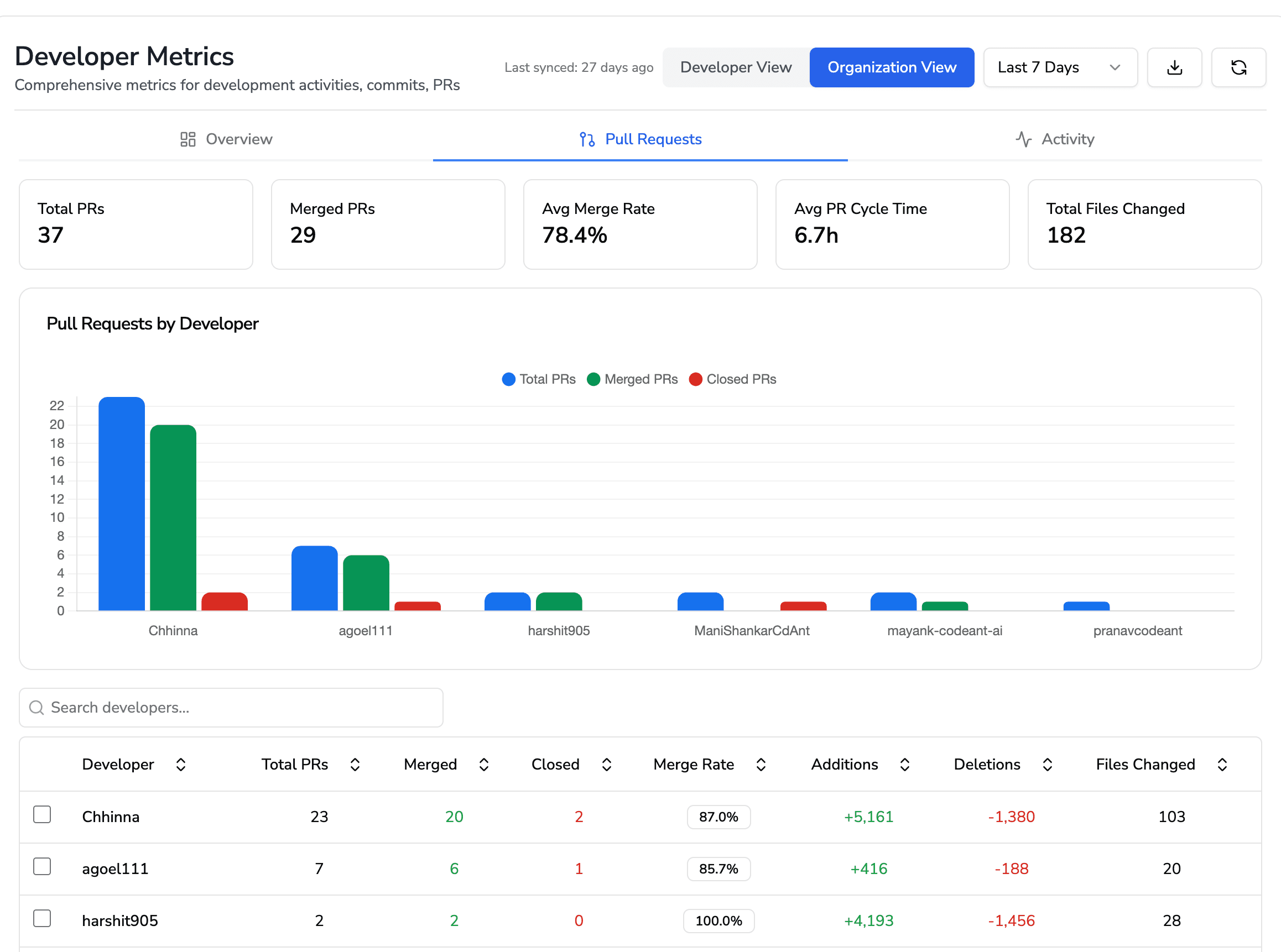
Reviewer Load Distribution
Uneven distribution creates hidden bottlenecks.
If a few developers carry most of the review load, throughput decreases and burnout rises.
Tools like CodeAnt AI show reviewer load across all repos so you can rebalance fairly.
Building a Code Review Process That Scales With Your Team
Scaling reviews is not just a tooling problem, it’s a cultural and process problem. High-performing teams share three traits:
clear review standards
small, frequent PRs
automation that handles repetitive work
CodeAnt AI unifies all of this by combining:
complexity + maintainability scoring
reviewer load analytics
review cycle metrics
cross-repo dashboards
If you want to scale code reviews without slowing delivery—and without burning out your senior engineers, this is the foundation. Wanna know more? Try out our 14-day free trial period.
FAQs
What is the biggest indicator that a team has outgrown its current code review process?
How do you maintain review quality when speeding up the review cycle?
Why do high-volume teams struggle more with inconsistent code reviews, and how do you fix it?
How do you prevent senior engineers from becoming review bottlenecks as the team scales?
What is the most effective way to scale code reviews without hiring more reviewers?