

Pull requests in a monorepo hit different. One change touches a shared utility, and suddenly you're wondering which of your 47 packages just broke—while GitHub's diff view shows you nothing but green and red lines with zero context.
Native GitHub reviews work fine until your repository spans multiple services, teams, and a few hundred thousand lines of code. At that point, you're not reviewing code anymore—you're playing detective. This guide covers eight AI code review tools built to handle monorepo scale, what makes each one worth considering, and how to pick the right fit for your team.
Why GitHub Code Review Falls Short for Large Monorepos
The best AI code review tools for large GitHub monorepos handle full codebase context, provide architectural awareness, and offer robust customization to manage complexity at scale. GitHub's native review features work fine for smaller repositories. But once your codebase spans multiple services, packages, or teams, the diff-based approach starts to break down.
A monorepo is a single repository containing multiple projects, services, or packages. Think of it as one giant repo instead of dozens of smaller ones. The approach simplifies dependency management and code sharing, but it also creates unique review challenges.
No codebase-wide context awareness
GitHub reviews files in isolation. When you open a pull request, reviewers see the changed lines but not how those changes affect the rest of your monorepo.
Here's the problem: a modification to a shared utility might break three downstream services. Nothing in the native review experience flags that risk. AI tools that index your entire codebase can connect the dots and surface cross-package impact before merge.
Large pull requests overwhelm reviewers
Monorepo PRs often touch 50, 100, or even 200 files across multiple packages. Human reviewers lose focus around file 20, and critical issues slip through.
Reviewer fatigue is real. When every PR feels like a marathon, teams start rubber-stamping approvals just to keep velocity up. That's when bugs reach production.
Cross-package dependencies create blind spots
A change in a shared library can break multiple consumers. GitHub doesn't flag cross-package impact automatically. Reviewers catch this manually, or they don't catch it at all.
In a monorepo with 50 packages, manually tracing dependencies for every PR is impractical. Teams either spend hours on impact analysis or accept the risk of unexpected breakages post-merge.
Security scanning lacks depth
GitHub's native security features—Dependabot and code scanning—offer surface-level checks. They catch known CVEs in dependencies and some common vulnerability patterns.
However, native scanning misses organization-specific security policies, secrets buried in config files, and complex dependency chains common in monorepos. For teams with compliance requirements like SOC 2 or HIPAA, native scanning rarely provides the depth auditors expect.
Manual effort does not scale
As teams grow from 10 to 100+ developers, manual review becomes a bottleneck. Cycle times stretch from hours to days. Quality suffers because reviewers rush to clear the queue.
AI automation changes the equation here—not by replacing human judgment, but by handling the repetitive analysis that slows reviewers down.
What to Look for in a Monorepo AI Code Review Tool
Before evaluating specific tools, it helps to know what separates adequate from excellent in this space.
Full codebase indexing and context
The tool ingests and understands your entire repository, not just the diff. This enables suggestions that account for how your code actually works across packages.
Scalable performance on large PRs
Some tools struggle with PRs exceeding 100 changed files. They time out, produce shallow analysis, or skip files entirely. For monorepos, this is a dealbreaker.
Cross-service impact detection
Look for tools that identify which packages or services a change affects. This reduces the risk of unexpected breakages and helps reviewers focus on high-impact areas.
Integrated security and quality scanning
Combined security (SAST, secrets detection) and quality (complexity, duplication) analysis in one platform reduces tool sprawl. Context switching between five different dashboards kills productivity.
Custom rules and organization standards
Every organization has unique conventions—naming patterns, architectural boundaries, security policies. The ability to encode these as enforceable rules across all packages is essential for consistency at scale.
How AI Code Review Tools Solve Monorepo Challenges
AI addresses the gaps outlined above through several mechanisms:
Contextual analysis: AI understands relationships between packages and flags cross-service impact
Automated triage: High-risk changes get flagged for human review while low-risk changes move faster
Consistent enforcement: Standards apply uniformly across the entire codebase, regardless of which team owns which package
Faster feedback loops: Reviews complete in minutes, not hours, so developers stay in flow
Comparison of the Top AI Code Review Tools for GitHub Monorepos
Tool | Monorepo Support | Security Scanning | Quality Metrics | Pricing Model |
CodeAnt AI | Strong | Native | Native | Free tier available |
CodeRabbit | Strong | Limited | Limited | Free tier available |
Graphite | Strong | Limited | Limited | Free tier available |
Greptile | Strong | Limited | Limited | Usage-based |
GitHub Copilot | Moderate | Requires add-on | Requires add-on | Per-seat |
Qodo | Moderate | Limited | Strong | Free tier available |
DeepSource | Strong | Native | Native | Free tier available |
Codacy | Strong | Native | Native | Free tier available |
CodeAnt AI
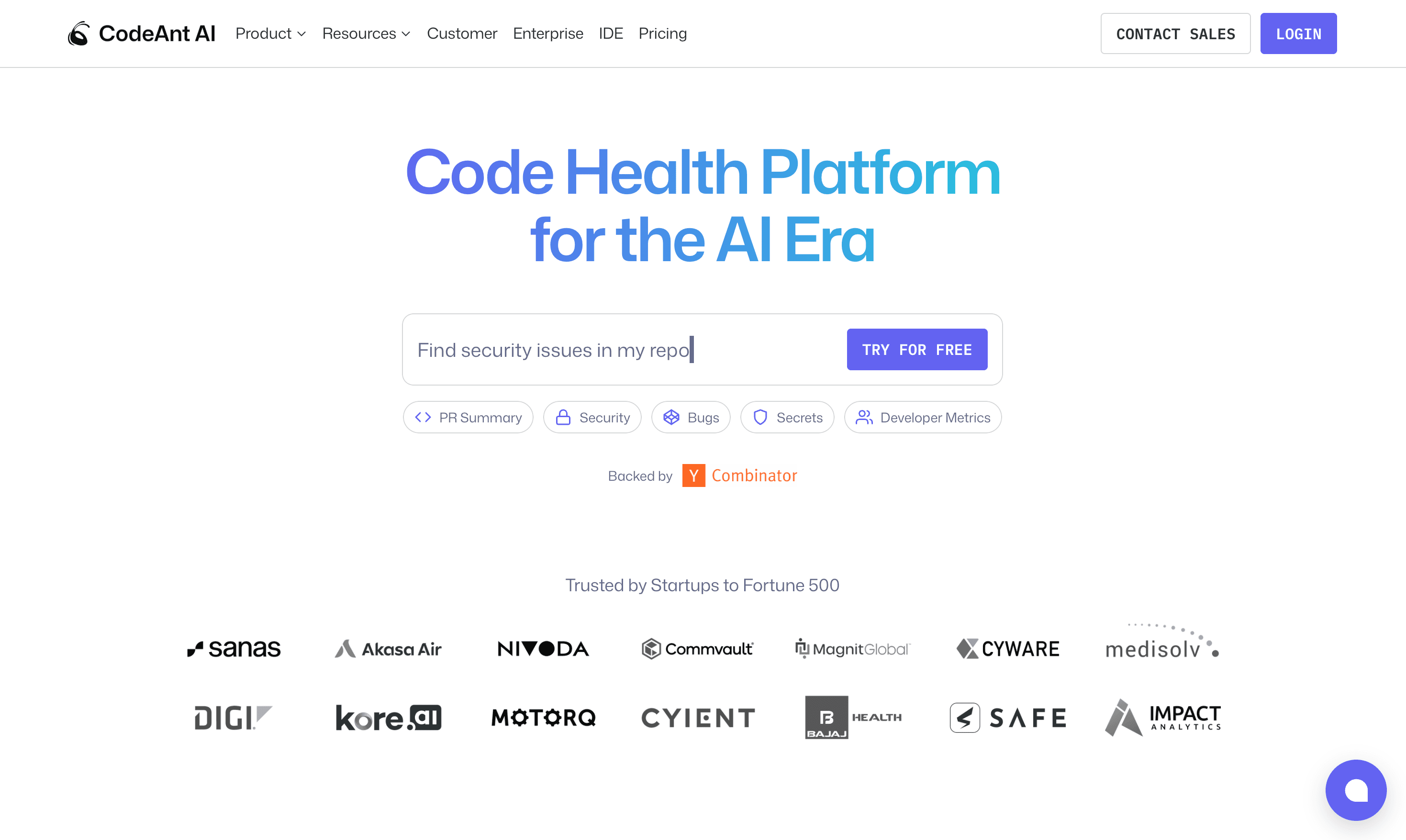
CodeAnt AI brings AI-powered code reviews, security scanning, and quality metrics together in one platform. It's built for teams managing large repositories who want everything in one place.
Features:
AI-powered line-by-line code review with full codebase context
Integrated SAST, secrets detection, and vulnerability scanning
Code quality metrics including complexity, duplication, and maintainability
Custom rule enforcement for organization standards
PR summaries and auto-fix suggestions
Support for 30+ languages
Best for: Engineering teams with 100+ developers managing large GitHub monorepos who want security, quality, and code review unified.
Limitations: Focused primarily on GitHub and GitLab. Teams using other version control systems may want to evaluate integration depth first.
Pricing: Free tier available; enterprise pricing scales with usage.
👉 Try CodeAnt AI free for 14 days
CodeRabbit
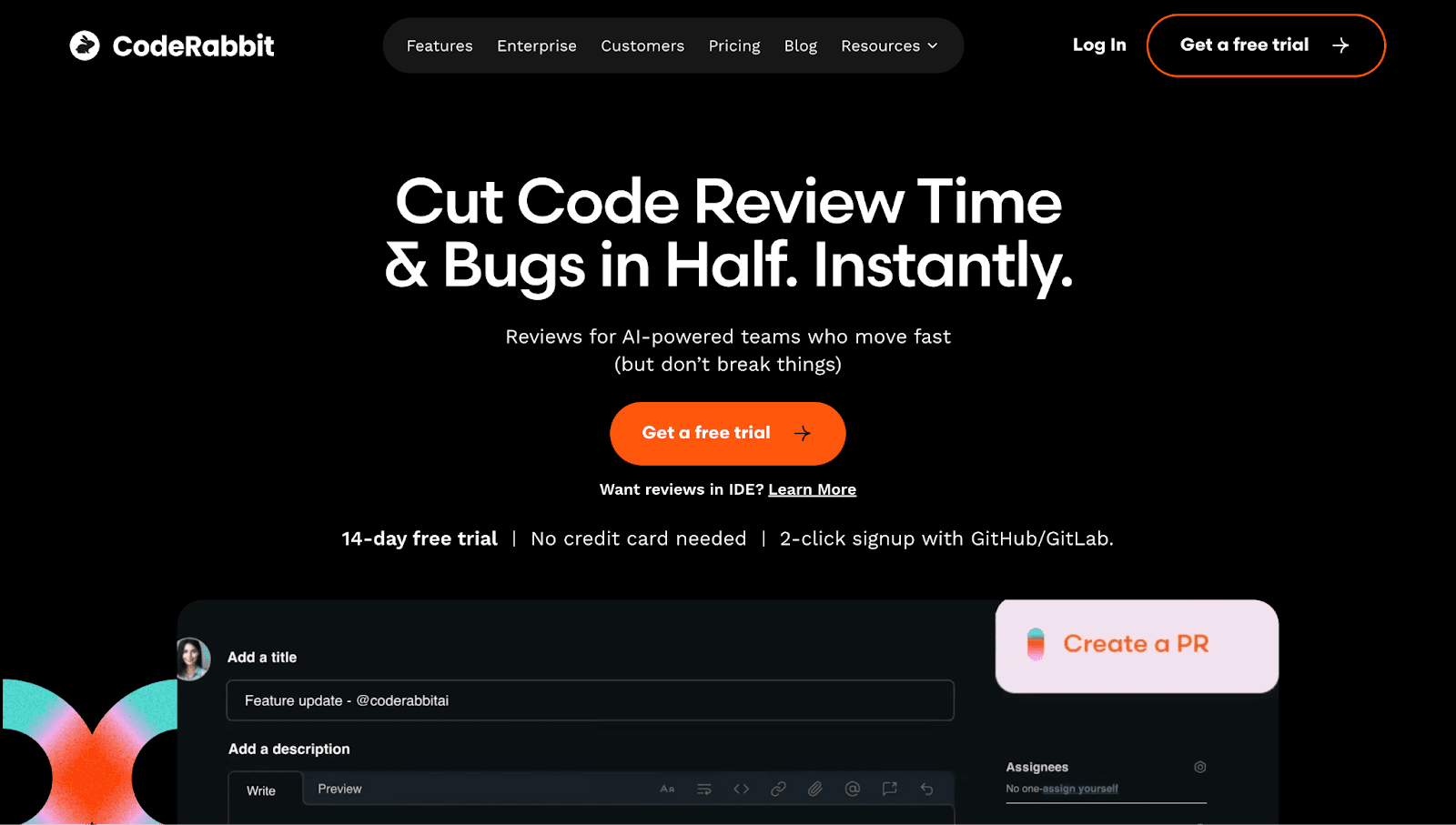
CodeRabbit focuses on detailed, conversational AI feedback. It generates PR summaries, provides line-by-line comments, and lets you ask follow-up questions directly in PR threads.
Features:
AI-generated PR summaries and walkthroughs
Line-by-line review comments
Conversational interaction in PR comments
Integrates with GitHub, GitLab, and Azure DevOps
Best for: Teams seeking detailed, conversational AI feedback on individual PRs. Strong for teams prioritizing review depth over breadth.
Limitations: Primarily focused on review. Lacks integrated security scanning and quality metrics dashboards. May require pairing with additional tools for full code health coverage.
Pricing: Free for open source; paid plans for private repos with per-seat pricing.
Checkout this CodeRabbit alternative.
Graphite

Graphite combines AI review with a PR stacking workflow. If your team already breaks large changes into reviewable stacks, Graphite's AI reviewer fits naturally into that process.
PR stacking means splitting a large change into a series of smaller, dependent pull requests. Each PR builds on the previous one, making reviews more manageable.
Features:
AI reviewer (Graphite Agent) for automated feedback
PR stacking for incremental, reviewable changes
Merge queue management
Dashboard for PR cycle time and throughput
Best for: Teams already using PR stacking workflows who want AI review integrated into their existing Graphite setup.
Limitations: Requires adoption of Graphite's workflow paradigm. AI review is part of a broader productivity suite, not a standalone code health platform.
Pricing: Free tier for small teams; paid plans for advanced features.
Checkout these Graphite alternatives
Greptile
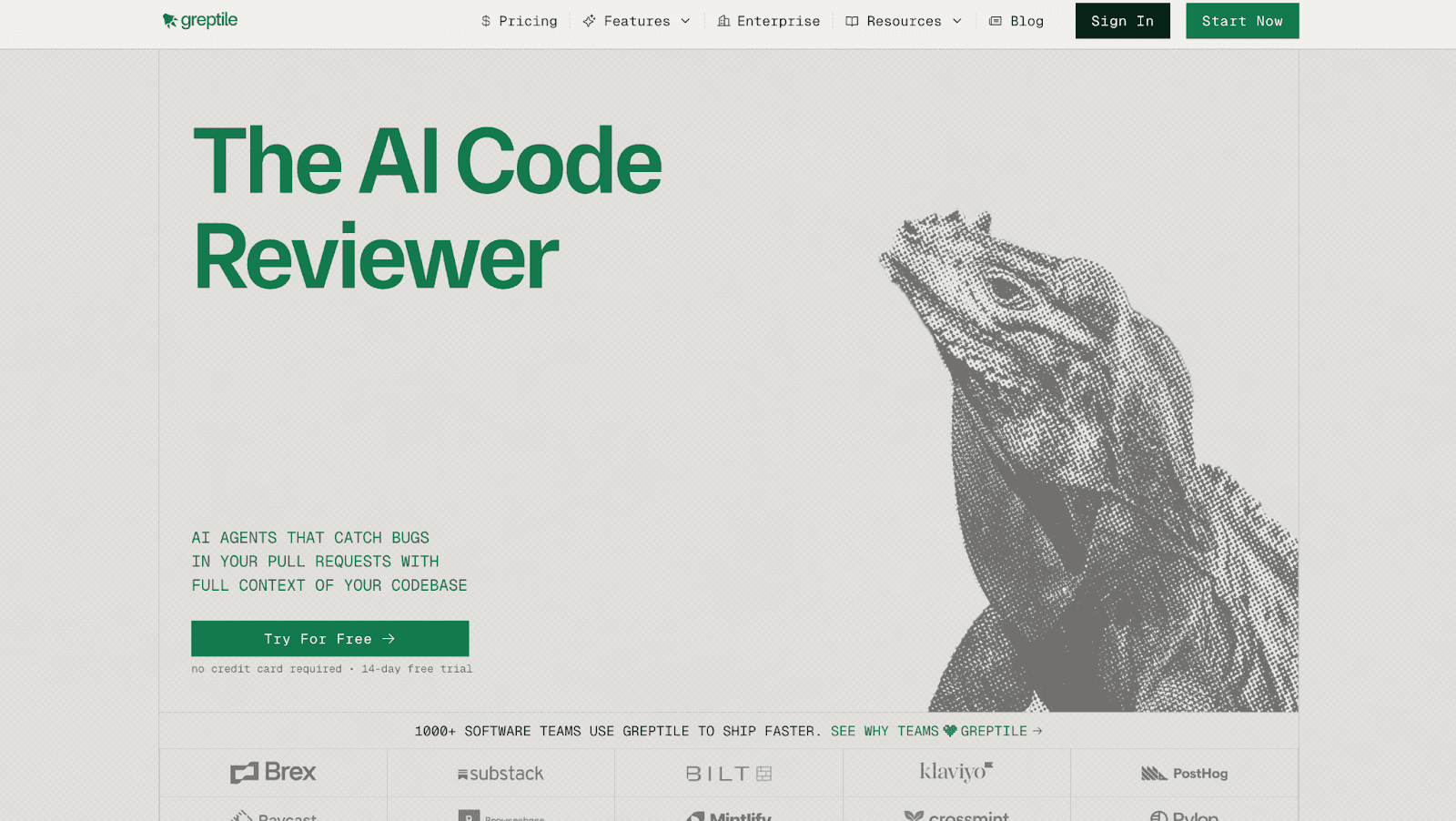
Greptile indexes your entire codebase to provide context-rich answers and reviews. You can ask natural language questions about your code, and the AI responds with awareness of your actual implementation.
Features:
Full codebase indexing for context-aware AI
PR review with cross-file understanding
Natural language queries about your codebase
API access for custom integrations
Best for: Teams that want AI to understand their entire codebase, not just individual PRs. Strong for monorepos with complex interdependencies.
Limitations: Focused on AI comprehension and review. Does not include built-in security scanning or quality metrics. May require pairing with SAST tools.
Pricing: Usage-based pricing; free tier for smaller repos.
GitHub Copilot Code Review
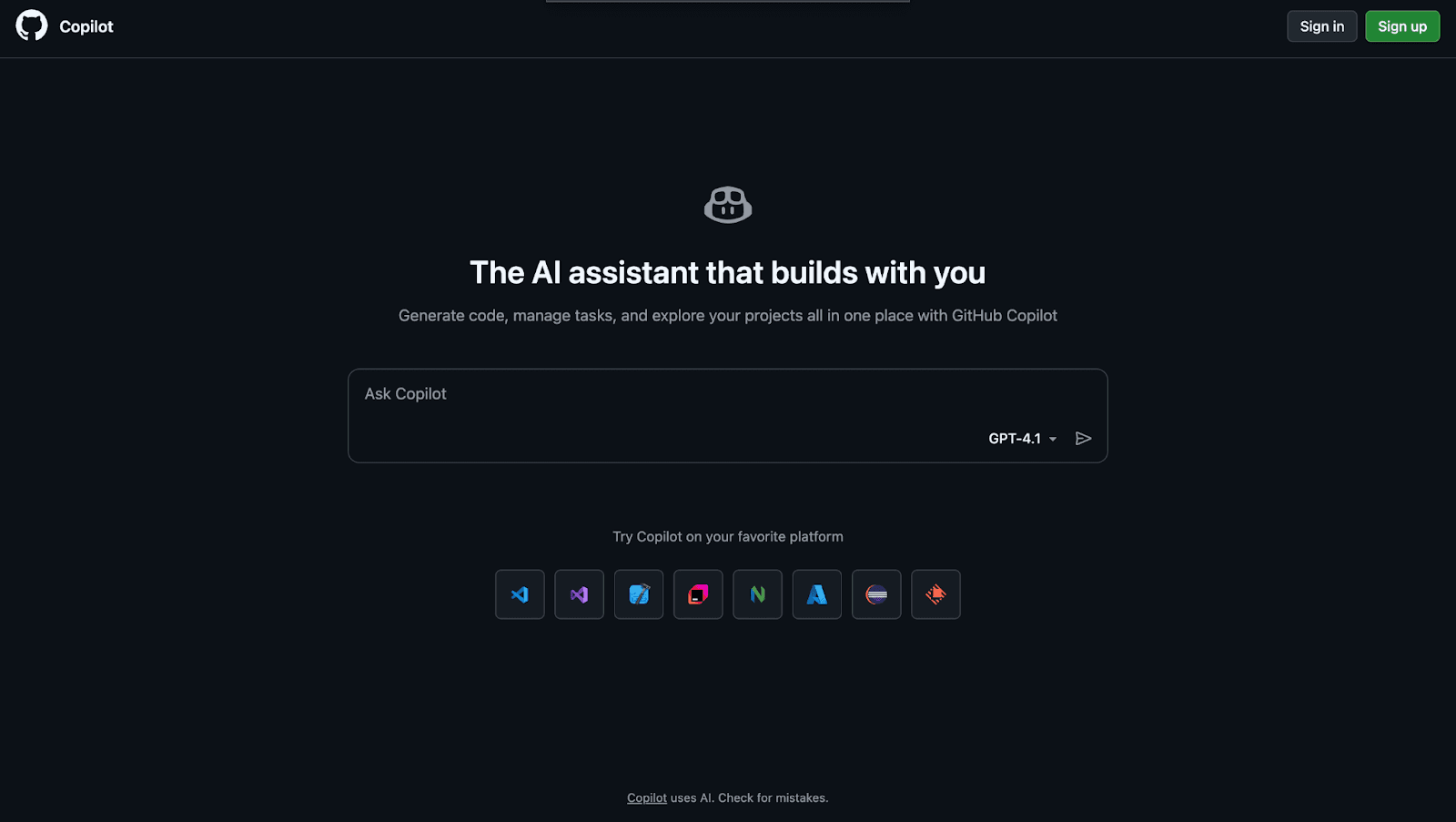
GitHub Copilot Code Review brings AI suggestions directly into the native GitHub experience. For teams already using Copilot for code completion, adding review capabilities requires no new tooling.
Features:
Native GitHub integration with no external setup
AI-powered code suggestions in PRs
Automatic review comments on changed lines
Part of the broader Copilot suite including code completion and chat
Best for: Teams already invested in GitHub Copilot who want a seamless, native review experience without adding third-party tools.
Limitations: Limited codebase-wide context compared to tools that index the full repo. Security and quality scanning still require GitHub Advanced Security or separate tools. Copilot's review comments do not currently count as required approvals in branch protection.
Pricing: Included with GitHub Copilot subscription; Enterprise tier required for advanced features.
Checkout this GitHub Copilot alternative.
Qodo
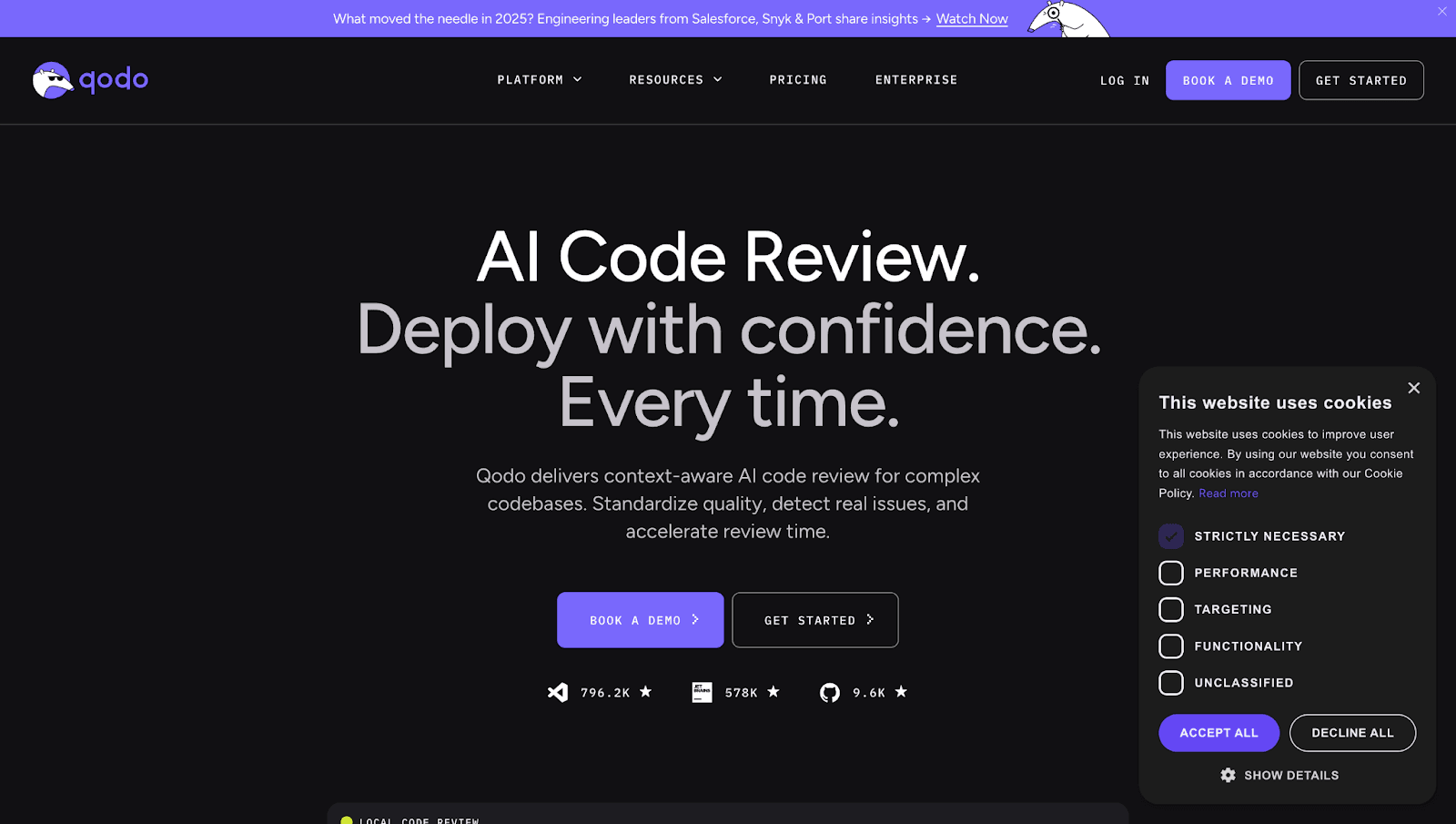
Qodo (formerly CodiumAI) focuses on test generation and code quality. It analyzes PRs for testability, suggests edge cases, and helps teams improve coverage.
Features:
AI-generated test suggestions for PRs
Code review with focus on testability and edge cases
IDE integration for pre-commit feedback
Supports multiple languages
Best for: Teams prioritizing test coverage and quality assurance. Strong for catching untested edge cases in PRs.
Limitations: Primary strength is testing. Code review and security scanning are secondary. May not replace a dedicated review or security tool.
Pricing: Free tier available; paid plans for team features.
Checkout this Qodo Alternative.
DeepSource
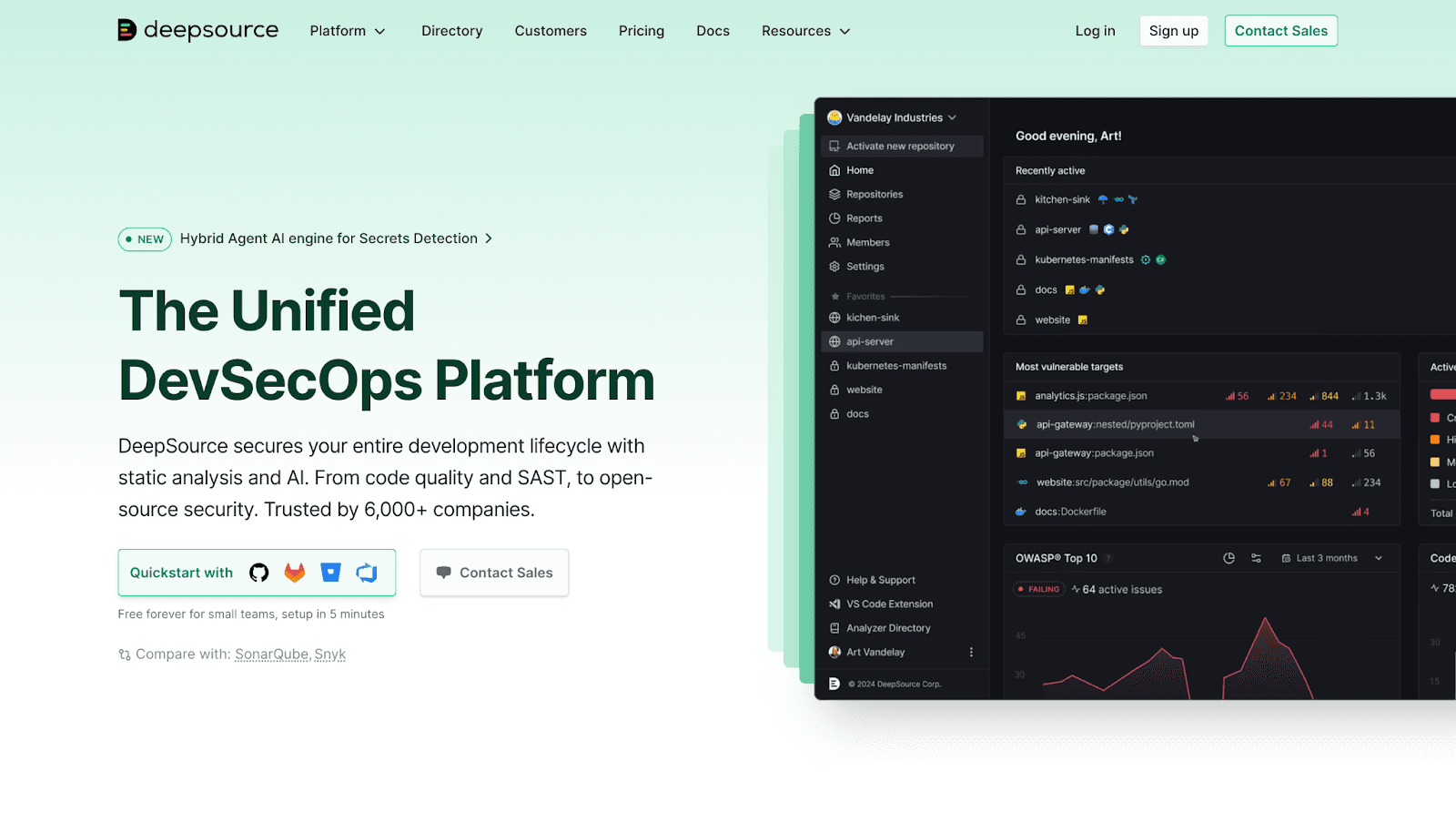
DeepSource provides automated static analysis with actionable fix suggestions. It catches issues on every PR and offers one-click fixes for common problems.
Features:
Automated static analysis on every PR
Auto-fix suggestions for common issues
Security scanning (SAST) and dependency checks
Code quality metrics and trend tracking
Best for: Teams seeking automated static analysis with actionable fix suggestions. Good for enforcing consistent code standards across a monorepo.
Limitations: AI capabilities focus on static analysis. Less conversational or context-aware than newer AI-first tools.
Pricing: Free for open source; paid plans for private repos.
Checkout this Deepsource Alternative.
Codacy
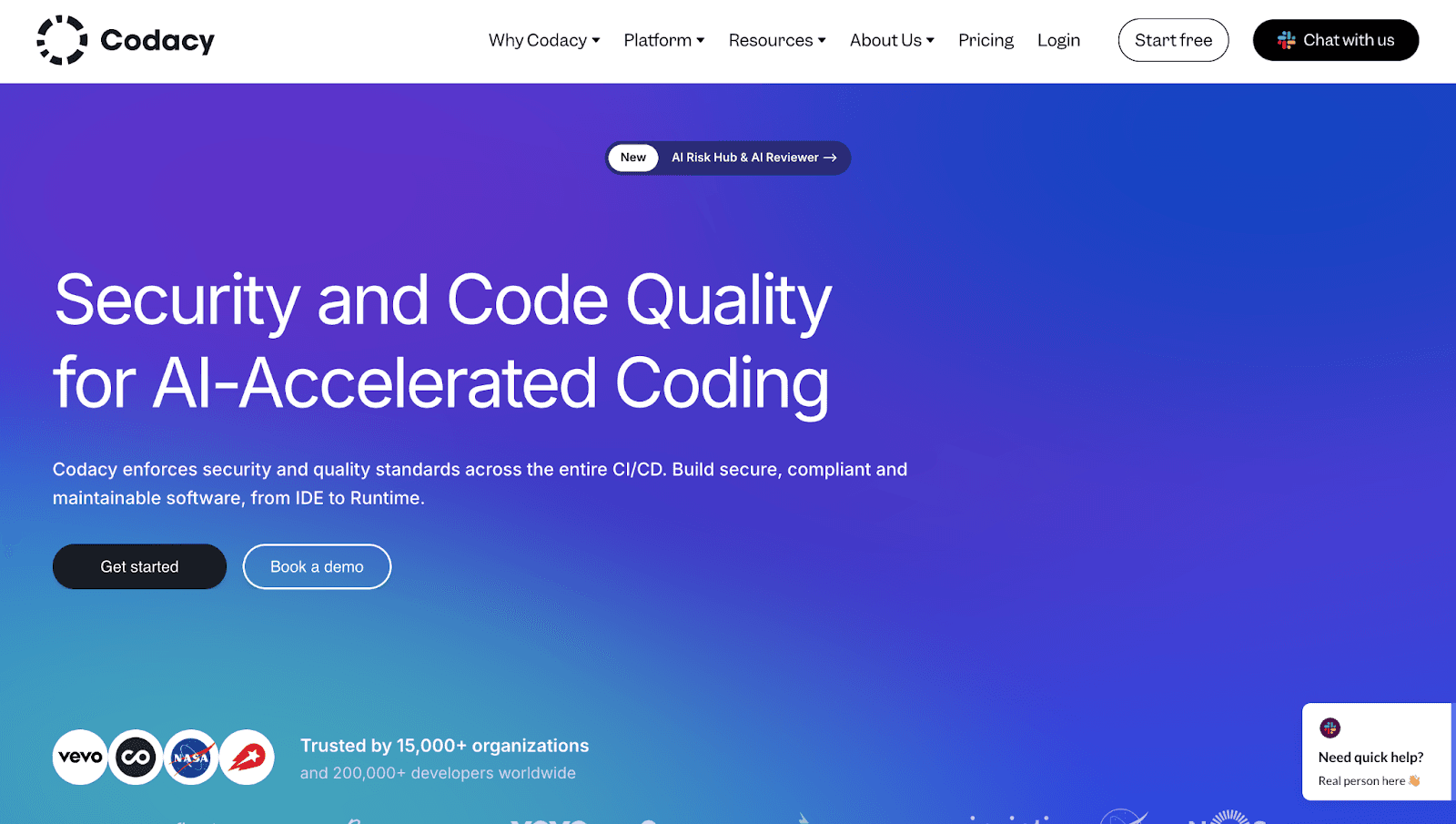
Codacy offers automated code review, security scanning, and quality dashboards. It's a mature platform with broad language support and established enterprise adoption.
Features:
Automated code review on PRs
Security scanning and vulnerability detection
Code quality dashboards and reporting
Support for multiple languages and frameworks
Best for: Teams seeking a mature, established platform for code quality and security with broad language support.
Limitations: AI review capabilities are less advanced than newer entrants. Primarily rule-based analysis rather than context-aware AI.
Pricing: Free tier for open source; paid plans for private repos.
Checkout this Codacy Alternative
How to Choose the Right AI Code Review Tool for Your Monorepo
Picking the right tool depends on your team's specific situation. Here are the key questions to consider:
Unified platform vs. point solution: Do you want one tool for security, quality, and review, or best-of-breed for each?
Codebase context depth: How important is full-repo indexing for cross-package impact detection?
Integration requirements: Does the tool integrate with your existing GitHub workflows, CI/CD, and build systems like Nx or Turborepo?
Team size and scale: Can the tool handle your PR volume and repository size without performance degradation?
Customization: Can you enforce organization-specific rules and standards?
For teams seeking a unified approach where security, quality, and AI review live in one platform, CodeAnt AI offers that consolidation without sacrificing depth.
Ship Cleaner Code Across Your Entire Monorepo
Managing a large monorepo is hard enough without juggling five different code health tools. The right AI code review platform catches issues early, enforces standards consistently, and gives your team the context to review with confidence.
Ready to see how it works?Book your 1:1 with our experts today

