

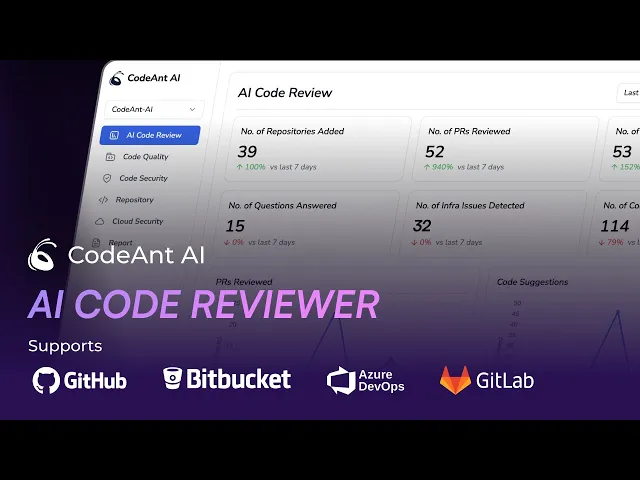
Code reviews aren’t going away, they’re the backbone of engineering quality. But they are changing. With rising PR throughput, complex architectures, distributed teams, and tighter release cycles, the traditional human-only review model no longer scales. That’s where AI-assisted code review workflows come in.
AI is not replacing reviewers; it’s eliminating the repetitive, mechanical parts of review so engineers can focus on logic, architecture, and business impact. This guide explains what AI-assisted code review workflows are, why teams adopt them, how they work technically, and how to integrate them across GitHub, GitLab, Azure DevOps, and Bitbucket.
What Are AI-Assisted Code Review Workflows?
AI-assisted code review workflows use machine learning models, static analysis engines, and security scanners to automatically evaluate pull requests the moment they open. Instead of waiting for a human to notice problems, AI flags issues proactively and posts inline suggestions, right inside the PR view.
These workflows plug directly into GitHub, GitLab, Azure DevOps, and Bitbucket so teams don't need to change how they work. They simply get smarter, faster feedback with every PR.
Typical capabilities include:
Automated PR analysis: AI scans diffs as soon as a pull request opens
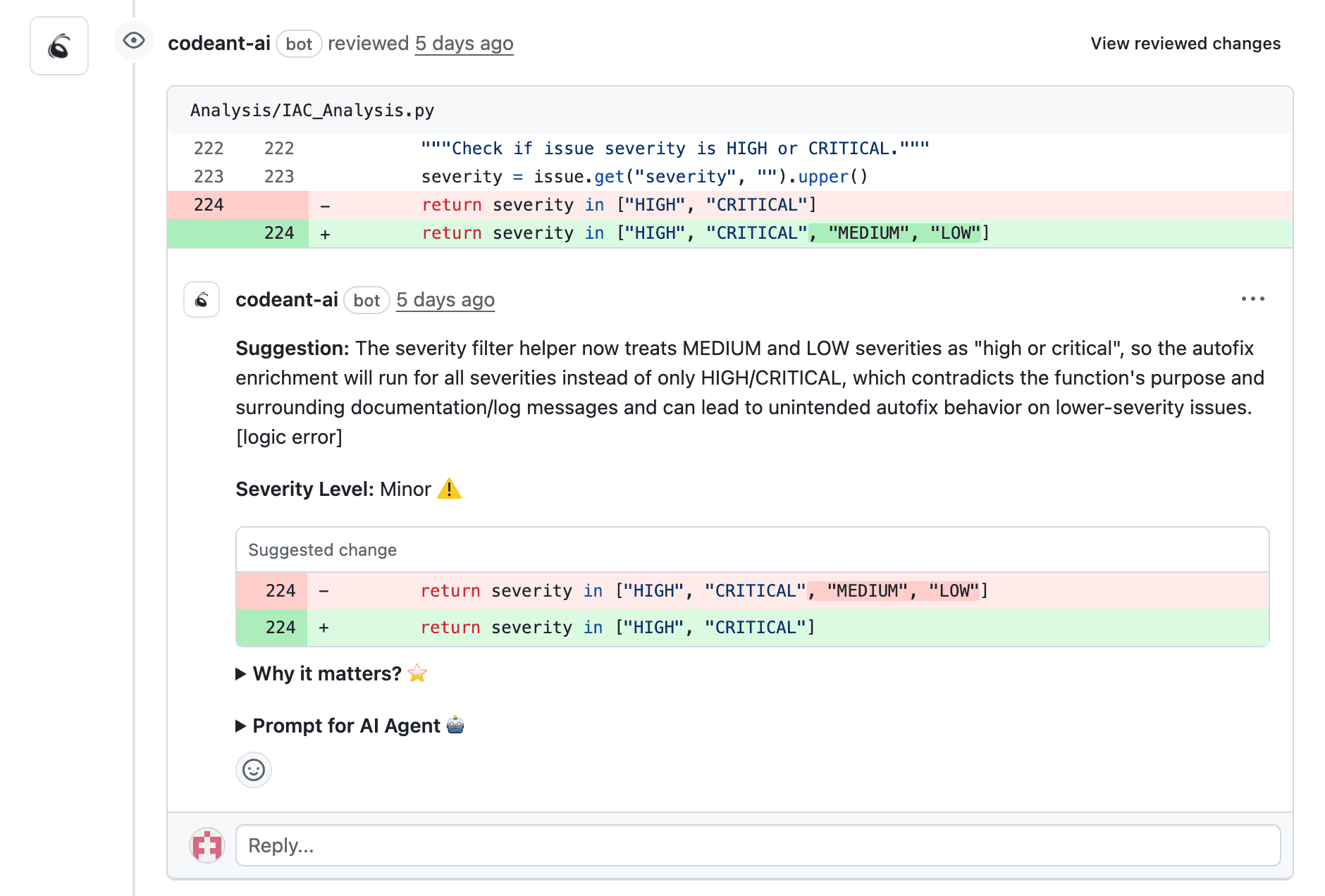
Inline suggestions: Comments appear on specific problematic lines
Security + quality checks: Vulnerabilities, code smells, and complexity flagged automatically
Human review handoff: Developers validate or dismiss AI findings before merge
AI becomes the first reviewer, humans become the final reviewer.
Why Development Teams Need AI-Powered Code Reviews
Slow Review Cycles Create Bottlenecks
Growing teams see PRs sitting idle for hours or days. Authors lose context, reviewers become overloaded, and release cycles slow down. Most delays aren’t technical—they’re bandwidth and attention issues.
Inconsistent Quality Across Reviewers
One reviewer flags security issues, another focuses on naming, another looks only at logic. AI removes inconsistency by applying the same checks across every PR.
Security Vulnerabilities Slip Through Manual Review
Even the best reviewers miss secrets, dependency risks, and OWASP-pattern vulnerabilities—especially when reviewing under time pressure. AI catches these issues instantly.
Difficulty Scaling as Teams Grow
As engineering orgs expand, senior reviewers become bottlenecks. AI absorbs the repetitive checks so senior engineers can focus on architectural and high-risk areas.
How AI Code Review Tools Work
AI-assisted code review looks simple from the outside (“comments magically appear”), but under the hood, the pipeline is structured and deliberate.
1. Code Parsing and Context Extraction
AI parses diffs, identifies languages, understands file types, and loads relevant code context to avoid shallow pattern matching.
2. Pattern Recognition and Static Analysis
ML models + static analyzers detect:
logic bugs
unreachable code
anti-patterns
dangerous coding constructs
potential regressions
3. Security and Vulnerability Scanning
This is where security value spikes. AI performs:
hardcoded secret detection
dependency CVE checks
SAST scanning for injection vectors (SQLi, XSS, command injection)
insecure API usage detection
Check out this Modern Code Security Scanning for CI/CD Pipelines.
4. Suggestion Generation and Prioritization
Not every issue matters equally. AI prioritizes:
critical security risks
crash-level bugs
high-complexity sections
maintainability issues
5. Inline Comment Delivery on Pull Requests
AI posts suggestions directly inside GitHub, GitLab, Azure DevOps, and Bitbucket PRs. Developers can accept, dismiss, or discuss each finding, no switching tools.
Platforms like CodeAnt AI automate this entire pipeline while integrating into existing Git workflows.
Essential Capabilities to Look for in AI Code Review Tools
Below is a simplified version of what teams should evaluate when comparing AI tools for code review:
Capability | Why It Matters |
Line-by-line code analysis | Helps devs fix exactly the right line quickly |
Security vulnerability detection | Prevents high-risk issues from reaching production |
Code quality & complexity scoring | Surfaces maintainability and tech-debt hotspots |
Automated PR summaries | Saves reviewers time understanding changes |
Custom rule configuration | Enforces org-specific standards |
CI/CD + Git platform integration | Ensures AI reviews run automatically |
Line-by-Line Code Analysis
Precise suggestions reduce noise and guesswork during reviews.
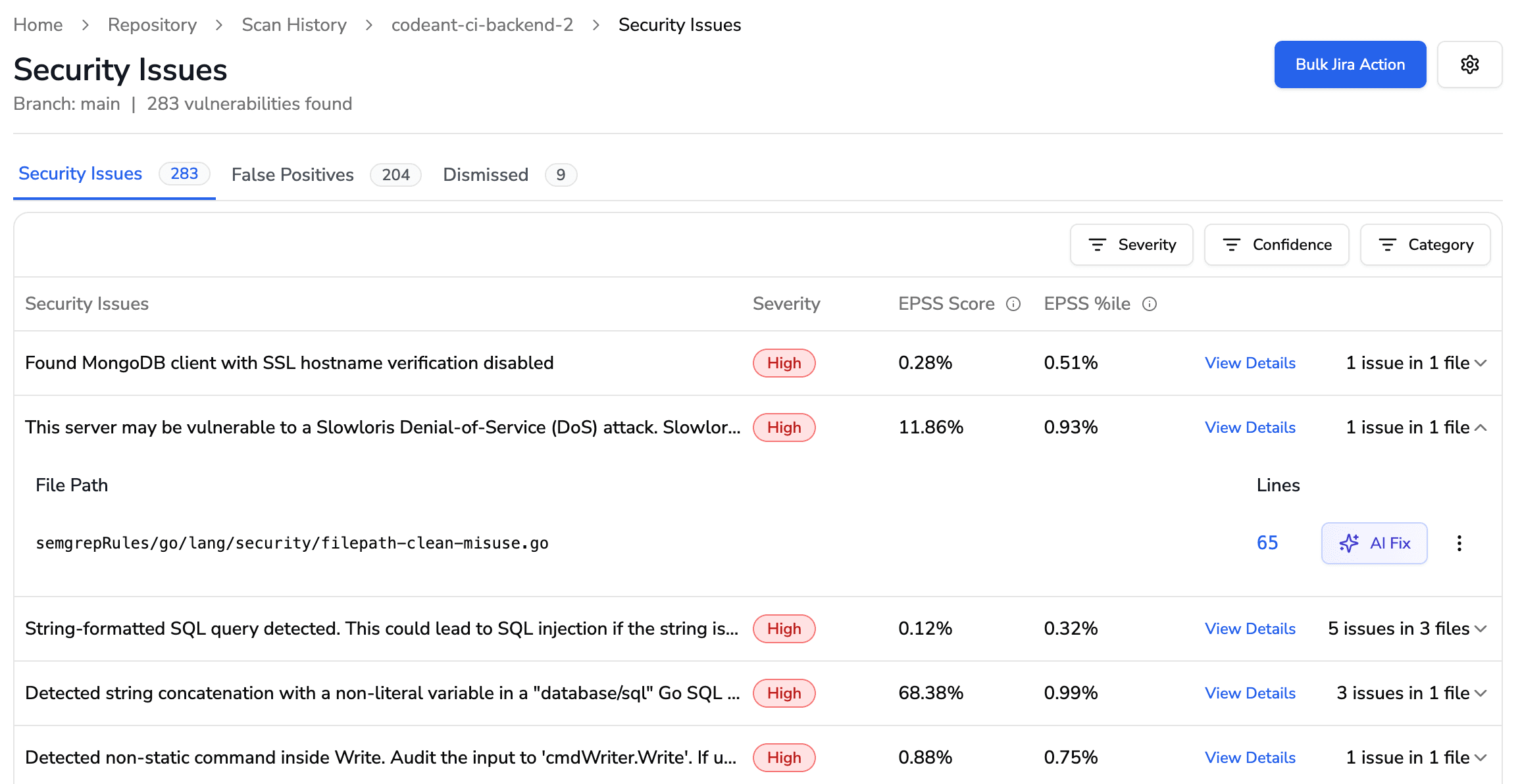
Security Vulnerability & Secrets Detection
AI needs to catch secrets and CVEs—this is table stakes for modern pipelines. CodeAnt AI includes native SAST + dependency scanning.
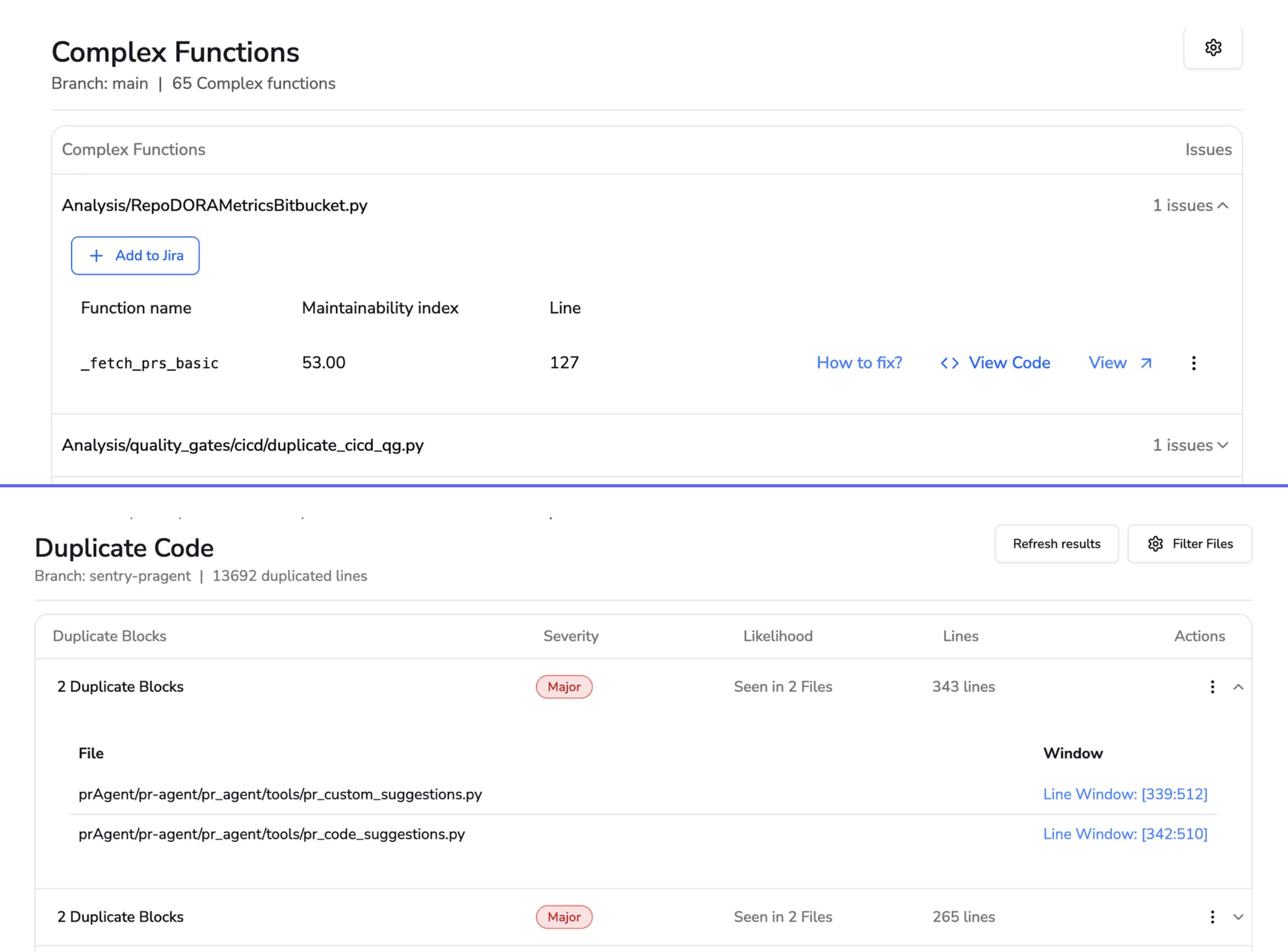
Code Quality and Complexity Assessment
Cyclomatic complexity, duplication, and readability scores help teams understand long-term quality impact.
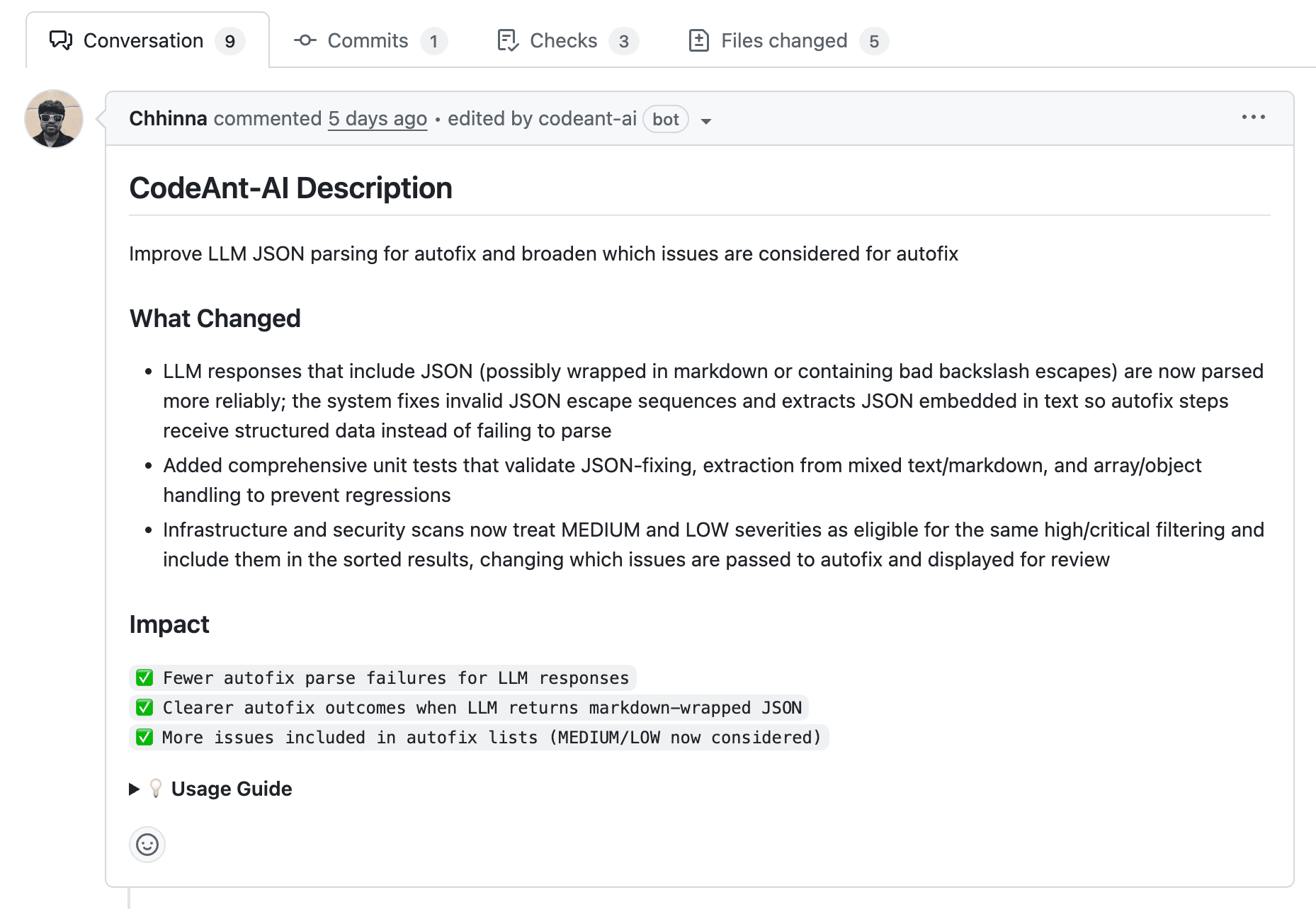
Automated PR Summaries
AI-generated summaries help reviewers get context quickly without reading full diffs.
Custom Rule Configuration
Teams define patterns that matter to them (naming, architecture, style).
CI/CD & Git Integration
AI must plug into existing GitHub, GitLab, Azure DevOps, and Bitbucket pipelines without friction.
How to Integrate AI Code Reviews Into Your Workflow
Implementation shouldn’t take more than 10–30 minutes if the platform is modern.
1. Connect Your Repository to the AI Review Tool
OAuth or app installation links the tool to GitHub/GitLab/Bitbucket/ADO.
2. Configure Review Rules & Quality Standards
Set:
severity thresholds
rule categories (security, style, complexity)
org-wide coding standards
3. Set Up Automated Triggers on Pull Requests
Choose when AI should run:
on PR open
on PR update
on branch target
on merge requests
4. Establish Quality Gates Before Merge
Block merges if critical issues remain unresolved. This improves code health automatically.
5. Monitor Feedback & Iterate
Fine-tune rules, adjust noise levels, and add custom patterns based on team feedback.
Platforms like CodeAnt AI make this mostly one-click.
Best Practices for Team Adoption of AI Code Reviews
Adopting AI is as much about change management as tooling.
Start with a Pilot Team Before Org-Wide Rollout
Begin with one repo or team, collect feedback, tune configurations, then expand.
Define Clear Responsibilities for AI vs Human Reviewers
AI handles:
style
secrets
complexity
known bug patterns
Humans handle:
architecture
logic
business correctness
edge cases
trade-offs
Train Developers to Act on AI Suggestions
Teach devs how to accept, dismiss, or discuss suggestions.
Create a Feedback Loop to Improve Accuracy
Log false positives and misses. Adjust rules accordingly.
Celebrate Early Wins
Share examples of critical bugs caught by AI to build internal momentum.
Balancing Human Expertise with AI Automation
AI augments developers—it doesn’t replace them.
Where AI Excels
catching vulnerability patterns instantly
enforcing style rules consistently
scanning every line of a PR without fatigue
flagging complexity and duplication
providing “always-on” consistency
Where Humans Excel
judging whether code solves the right problem
evaluating architectural implications
mentoring junior developers
reasoning about trade-offs
interpreting business context
Structuring Human-AI Collaboration
A healthy workflow looks like this:
AI reviews first
Humans review AI findings + logic + architecture
Both approvals required before merge
This creates a high-confidence, low-friction system.
How to Measure the Impact of AI-Assisted Code Reviews
Engineering leaders need data—not opinions—to justify adoption.
Review Cycle Time Reduction
Measures how much faster PRs move from open → merge.
Defect Escape Rate
Tracks bugs reaching production after review. Lower means higher review effectiveness.
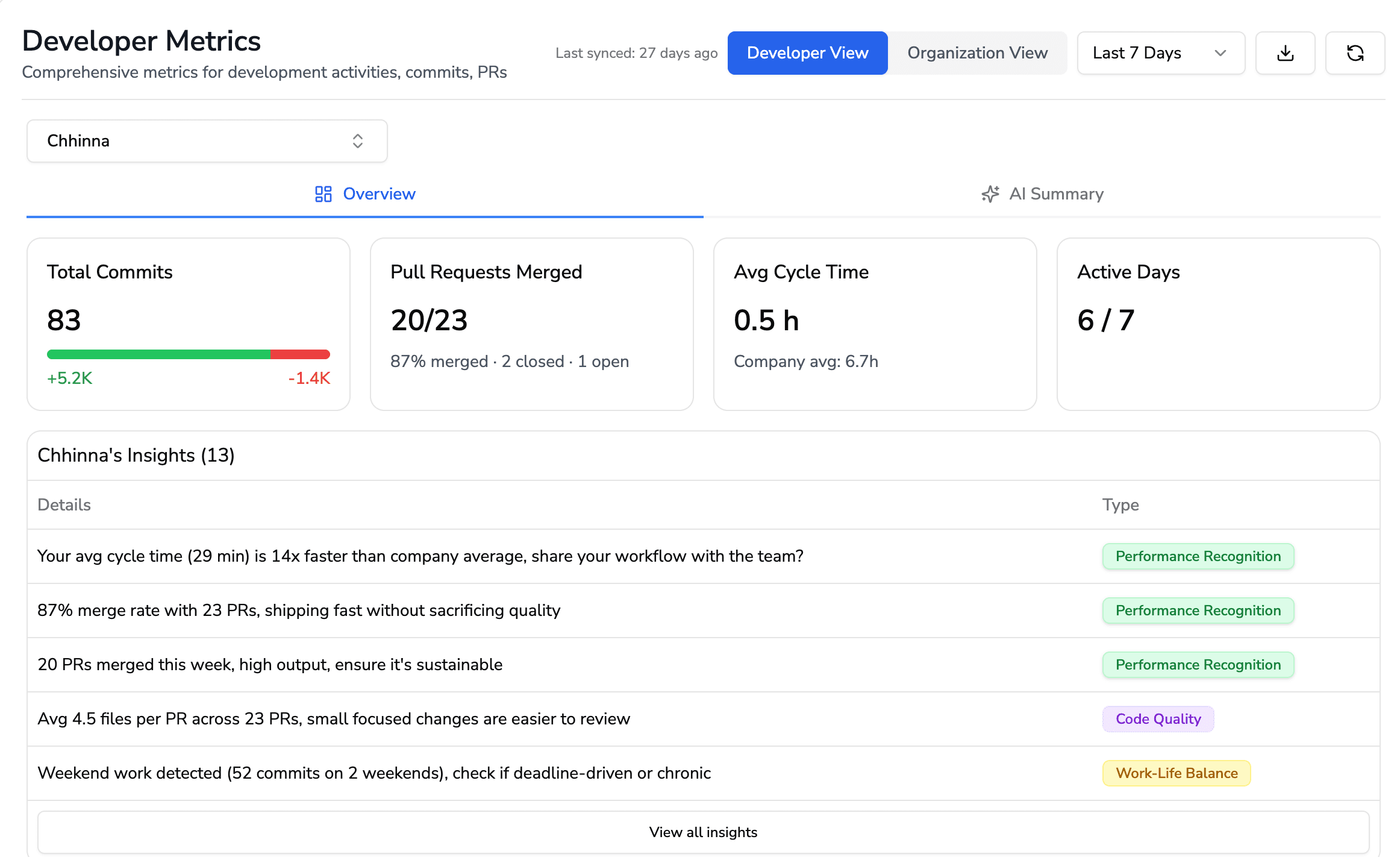
Developer Productivity Metrics
Look at:
PR throughput
time spent waiting for reviews
reduction in reviewer load
Code Quality & Technical Debt Trends
Monitor complexity, duplication, and maintainability scores.
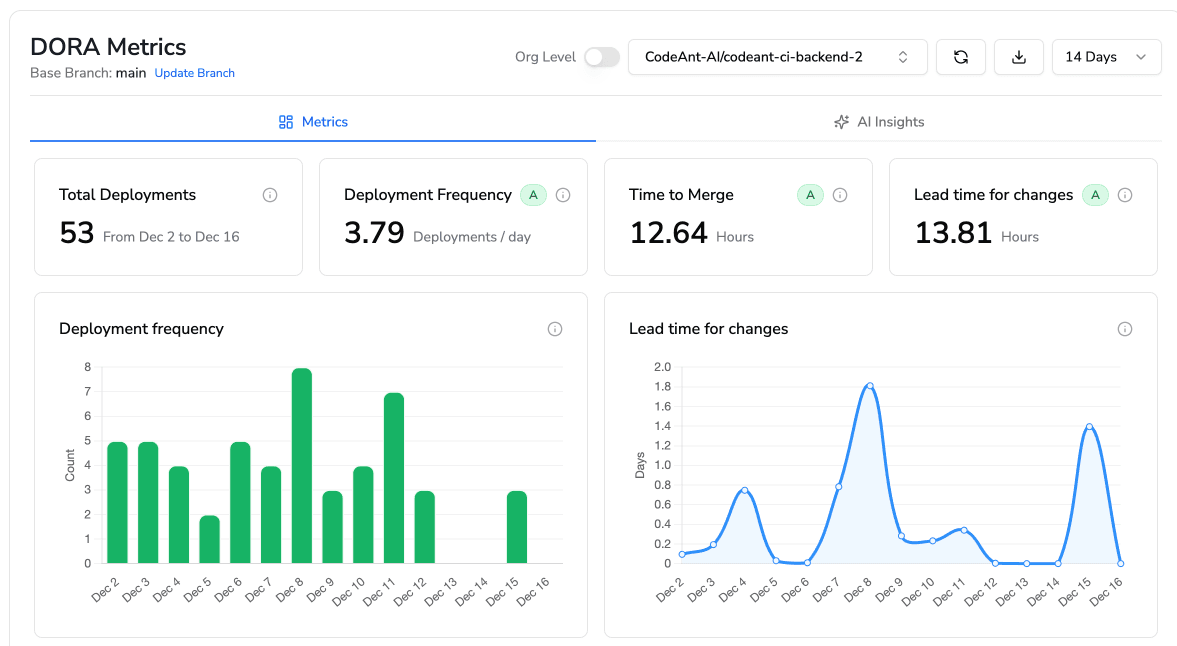
DORA Metrics
AI-assisted reviews improve:
deployment frequency
lead time
change failure rate
mean time to recovery
These metrics show organizational-level ROI.
Building a Scalable AI-Powered Code Review Culture
AI-assisted code review is not a feature—it’s a cultural shift. Teams that embrace automation ship faster, catch more issues early, and maintain higher code quality over time.
Platforms like CodeAnt AI unify:
security
quality
developer productivity
PR review automation
DORA metrics
code health analytics
…into one end-to-end view of engineering performance.
Ready to bring AI-assisted code reviews to your team? Book a 1:1 with our experts today.

