

Your security team runs weekly vulnerability scans. Your compliance framework requires annual penetration tests. But here's the disconnect: VA tools flag 200+ issues, the pentest report arrives months later with 12 critical findings, and no one knows which vulnerabilities are actually exploitable until an attacker proves it for you. This gap between "what's vulnerable" and "what's exploitable" is why organizations with mature security programs still suffer breaches—they're running VAPT (Vulnerability Assessment and Penetration Testing) as separate, disconnected workflows.
What is VAPT?
It's the combined security approach that pairs broad vulnerability discovery (assessment) with deep exploitation validation (penetration testing). The problem: most platforms excel at one or the other. Snyk and Veracode deliver excellent VA through SAST and SCA, but don't perform offensive exploitation. Traditional pentest firms validate exploitability, but only once or twice per year, leaving massive gaps as your codebase evolves daily.
This guide explains when to use VA versus PT, how to bridge the integration gap between them, and why unified platforms that perform both defensive scanning and offensive validation using shared code intelligence deliver stronger security outcomes than point solutions.
VAPT in Depth: The Two-Layer Model Of VA And PT
VAPT combines two complementary approaches that address different questions about your security posture:
Vulnerability Assessment (VA) is your security radar, automated scanning that identifies potential weaknesses across your entire attack surface:
SAST analyzes source code for insecure patterns (SQL injection, XSS, hardcoded secrets)
SCA inventories dependencies and flags known CVEs in your supply chain
DAST probes running applications from the outside, testing runtime behavior
Secrets/IaC scanning catches exposed credentials and infrastructure misconfigurations
VA's strength is breadth, scanning thousands of endpoints and millions of lines of code in hours. But it has a critical limitation: it reports what could be vulnerable without proving what is exploitable. A "critical" SQL injection might be unexploitable due to WAF rules, input validation, or network segmentation, but VA tools can't tell you that.
Penetration Testing (PT) is your exploitation engine, simulated attacks that validate whether vulnerabilities can be chained together to cause real business impact. PT operates in three modes:
Black box: External-only testing with no code access, simulating outside attackers
White box: Full code access enabling deep analysis of logic flaws and data flows
Gray box: Hybrid approach combining external testing with code intelligence—the most effective for modern applications
PT's strength is depth, proving exploitability by constructing attack chains (auth bypass → IDOR → data exfiltration) and measuring real-world impact (476K healthcare records exposed, 742M person records accessed). But traditional PT has a scaling problem: manual engagements happen annually or quarterly while code ships continuously.
The integration gap is where most teams struggle. VA and PT typically run as separate workflows, different teams, different timelines, different tools, with no correlation between findings. When Snyk flags 200 medium/high issues and an annual pentest discovers 12 exploitable vulnerabilities, you can't tell which VA findings actually mattered until six months later. Organizations deploying 10-50 releases per month can't wait for yearly validation.
Vulnerability Assessment Vs Penetration Testing: Practical Differences
Dimension | Vulnerability Assessment | Penetration Testing |
|---|---|---|
Scope | Broad: entire attack surface | Deep: critical paths and exploit chains |
Goal | Identify potential vulnerabilities | Validate exploitability and business impact |
Frequency | Continuous (automated) | Periodic (manual + automated) |
Output | Vulnerability lists (200+ findings) | Prioritized exploits with PoC (10-20 critical findings) |
False Positives | High (20-40%) | Low (confirmed exploits only) |
Evidence | CVSS scores, CWE identifiers | Curl PoC exploits, attack chain diagrams |
Cost | $10K-50K/year subscription | $30K-100K+ per engagement |
When to use VA: Routine security hygiene, shift-left testing in CI/CD, broad coverage at scale, compliance baseline scanning. Use VA as your first line of defense—it's fast, comprehensive, and catches 80% of common vulnerabilities before they ship.
When to use PT: Exploit validation, pre-deployment assurance for critical releases, compliance mandates (PCI-DSS, HIPAA), attack chain discovery, executive-level risk communication. Use PT to validate your highest-risk attack surfaces and satisfy auditors who need proof of exploitability.
The problem: Most teams need both, but running them separately creates operational blind spots. Without PT validation, developers waste cycles triaging 200 VA findings they can't prioritize. Without continuous VA, PT only tests point-in-time snapshots while new code ships daily.
The VAPT Integration Gap Between Scanning And Exploit Validation
When VA and PT operate as disconnected activities, you face three critical problems:
1. The 6-12 Month Validation Window
Your timeline for teams shipping continuously:
January: Annual pentest validates security posture
February-December: 120+ releases deploy with zero offensive validation
January (next year): Pentest discovers vulnerabilities introduced 10 months ago
During that gap, your team deployed new microservices, refactored auth middleware, and updated 47 dependencies—none of it tested offensively. Your SAST scans caught some issues, but they can't answer: Can an attacker chain these vulnerabilities to access production data?
2. Severity Mismatches Between VA and PT
The same vulnerability gets rated differently:
Finding | VA Rating | PT Rating | Why They Differ |
|---|---|---|---|
SQL injection in admin endpoint | High (CVSS 7.5) | Critical (CVSS 9.8) | PT proved it extracts customer PII; VA saw only code pattern |
SSRF in image upload | Critical (CVSS 9.1) | Medium (CVSS 5.3) | PT found network segmentation blocks access; VA assumes worst case |
GraphQL BOLA | Medium (CVSS 6.5) | Critical (CVSS 9.4) | PT chained with auth bypass to access 742M records; VA saw isolated issue |
Without correlation, developers fix the "critical" SSRF that's actually contained, while the "medium" GraphQL BOLA sits in backlog for months—until attackers prove its exploitability.
3. Developer Productivity Tax
Engineering teams report spending 15-25 hours per sprint triaging VA findings that PT later proves unexploitable. That's 60-100 developer hours per month chasing false positives. The re-test friction compounds—when a fix for an 8-month-old vulnerability needs validation, the original developer has moved teams and the architecture has changed.
Exploitability Vs Theoretical Risk In VAPT
VA tools operate on pattern matching. They flag code that could be vulnerable under certain conditions, but don't validate whether those conditions exist in production. Understanding exploitability requires six factors:
1. Reachability: Can an attacker access the vulnerable code path? A critical SQL injection behind SSO + IP allowlist is lower priority than a medium IDOR on a public API.
2. Authentication Requirements: What access level does exploitation require? Rank by escalation potential: unauthenticated (highest priority) → low-privilege user → elevated role → admin.
3. Data Sensitivity: What data can be accessed? Path traversal exposing /etc/passwd is less critical than one exposing customer database backups.
4. Blast Radius: How many users/systems affected? An IDOR leaking one profile at a time is lower priority than GraphQL BOLA dumping your entire users table.
5. Exploit Complexity: How difficult to weaponize? Reflected XSS requiring user interaction + CSP bypass is harder than stored XSS that fires on page load.
6. Compensating Controls: What mitigations exist? SSRF might be flagged critical, but if your cloud uses IMDSv2 + restrictive security groups, actual risk is contained.
Without PT validation, security teams either fix everything (inefficient) or triage by CVSS score alone (risky). CodeAnt's approach validates exploitability automatically—when a pull request introduces a new API endpoint, the platform tests whether vulnerabilities are actually exploitable given your auth middleware, routing config, and data access patterns.
Code-Aware Gray Box Penetration Testing For VAPT
The most effective PT approach combines external testing with code intelligence. Gray box testing sits between black box (zero knowledge) and white box (full access):
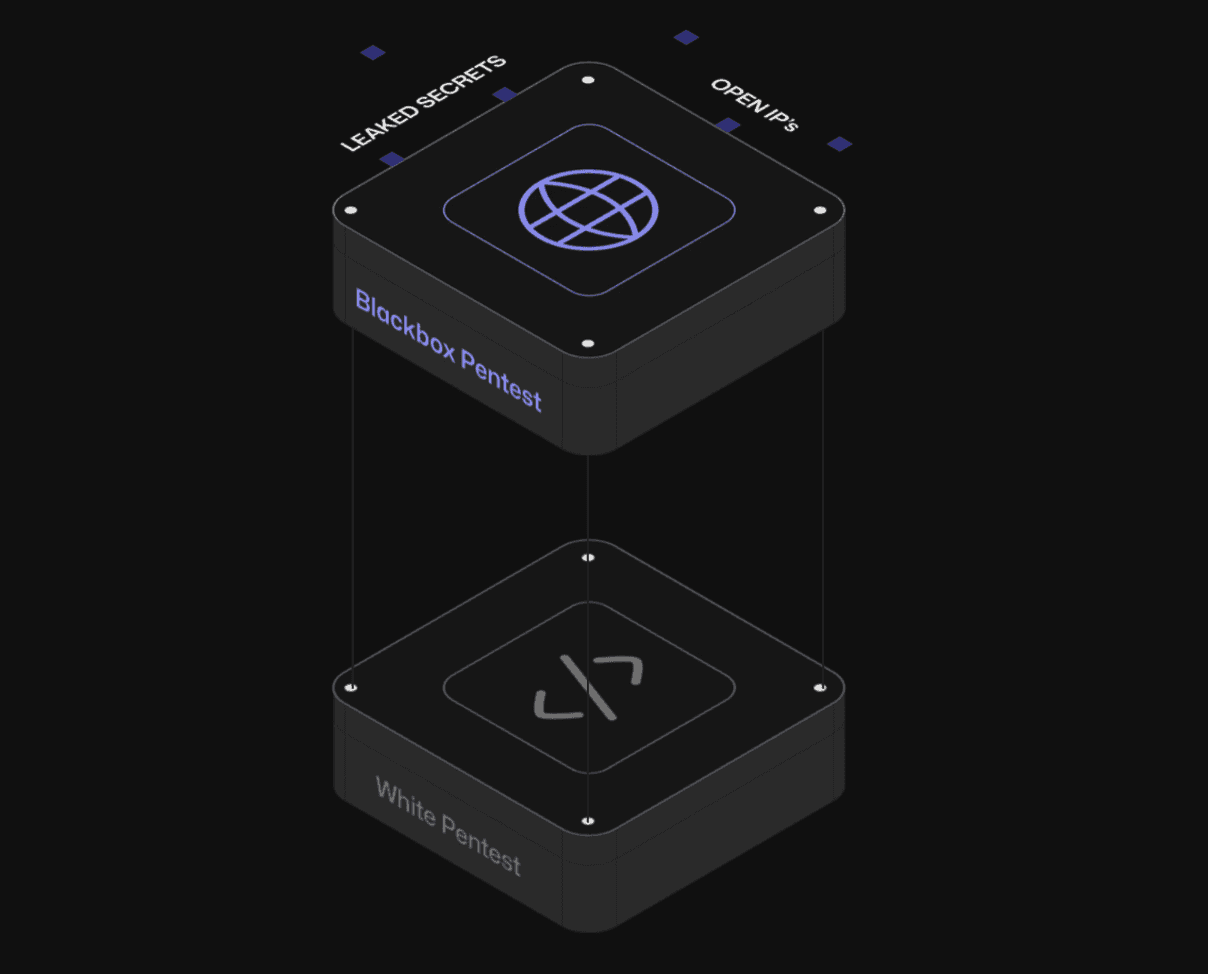
Black box tests from an outside attacker's perspective but misses context-aware vulnerabilities requiring understanding of routing logic, auth middleware, or data flow patterns. It can't validate fixes efficiently without re-running full discovery.
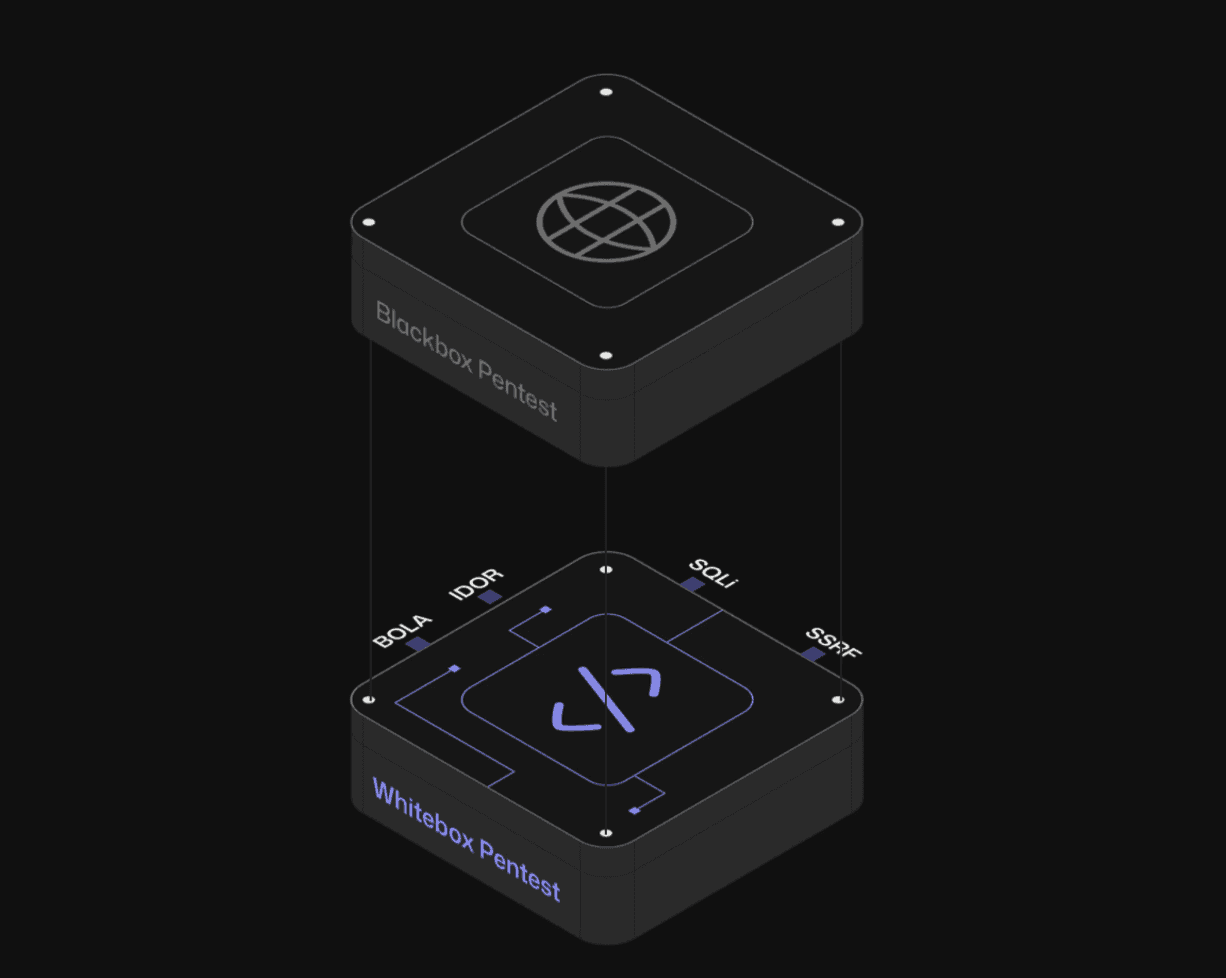
White box performs code-level analysis alongside exploitation but is time-intensive, typically reserved for critical systems or pre-deployment validation.
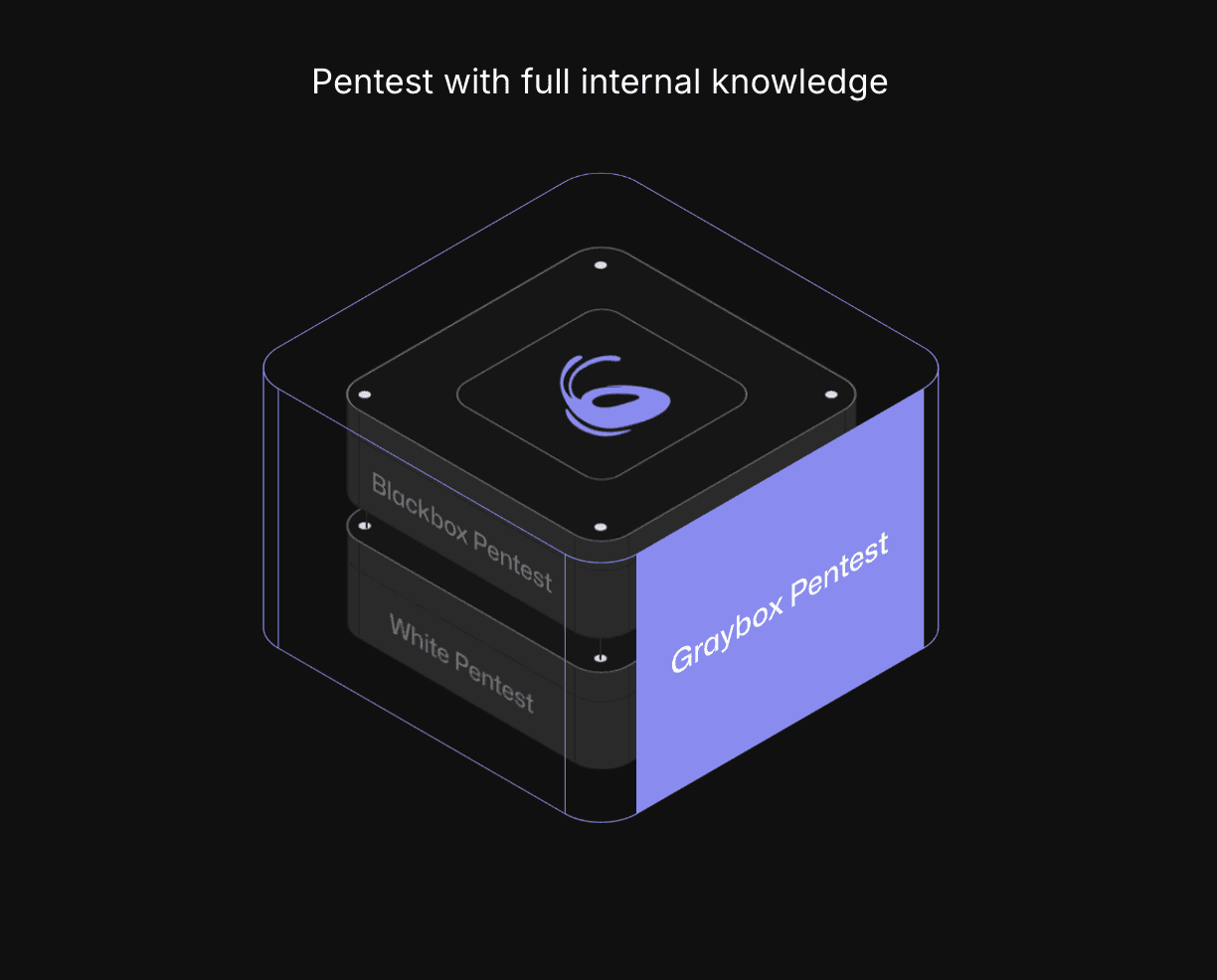
Gray box combines external testing with selective code access, source code, API schemas, routing config, enabling testers to construct attack chains that external-only testing misses.
Those are:
Endpoint Discovery: Instead of crawling
/api/*paths hoping to find hidden endpoints, gray box testing parses routing definitions directly, immediately identifying authenticated endpoints requiring valid session tokens and path parameters vulnerable to IDOR.Authentication Analysis: Traces how auth layers work—not just "requires token" but what validation logic exists and where it can be bypassed. Analyzes middleware application order to find unprotected debug endpoints or admin routes with flawed privilege checks.
GraphQL Resolver Tracing: Maps resolver implementations to understand data flow. Sees missing
if info.context.user.id != id: raise Unauthorized()checks and flags BOLA risks that external testing would miss.Data Flow to Dangerous Sinks: Performs taint analysis to trace user input from entry points through application logic to dangerous sinks (database queries, OS commands, file operations). A black box test might discover an endpoint; gray box testing proves the full exploit chain.
CodeAnt's gray box PT uses the same codebase intelligence from defensive code review to power offensive testing, testing from the outside with inside knowledge of your routing config, auth flows, and data models. This is what enabled discovery of a 742M person record exposure by chaining unauthenticated GraphQL introspection + missing object-level authorization + pagination bypass, an attack path external-only testing couldn't trace.
Why VA-Only Programs Miss Critical Exploit Chains
Vulnerability scanners find isolated issues. Attackers chain them. Here's what that gap looks like:
Healthcare Data Breach: 476K Patient Records
VA flagged two findings:
JWT token validation weakness (Medium severity)
IDOR in
/api/v2/patients/{id}endpoint (Medium severity)
Both sat in backlog for weeks—neither seemed urgent in isolation.
The attack chain:
Crafted JWT with
alg: nonebypassing authenticationEnumerated patient IDs from 100000 to 576000
Exfiltrated 476,000 records (PHI, SSNs, diagnoses)
Impact: HIPAA breach, $2.8M fine, class action lawsuit. Attack took 6 hours.
GraphQL BOLA: 742M Person Records
VA identified:
BOLA in GraphQL resolvers (Medium)
BFLA allowing unauthenticated internal queries (Low)
The attack chain:
Used introspection to map full GraphQL schema
Found
adminUsersquery bypassed role checksDiscovered
userresolver accepted any ID without ownership validationChained to enumerate all user IDs, then bulk-fetch via BOLA
Extracted 742M records (emails, phones, financial data)
Impact: SEC disclosure, $47M settlement. Attack took 18 hours.
The pattern: VA tools flag components of attack chains but can't prove they're chainable or measure business impact. Code-aware PT traces these chains before attackers do, the difference between fixing 200 theoretical vulnerabilities and prioritizing the 12 that threaten your business.
VAPT Platform Comparison: VA Tools Vs Unified VA And PT
Snyk: Developer-First VA
Strengths: Excellent SAST + SCA, seamless CI/CD integration, developer-friendly remediation with fix PRs, broad language support.
Gap: Pure VA play, identifies vulnerabilities but doesn't validate exploitability. No offensive testing, runtime validation, or proof of impact. Creates triage bottleneck: which of 200 findings are actually exploitable?
Best for: Shift-left security, open-source dependency management, budget-conscious VA when you have separate PT strategy.
For deep dive check out CodeAnt AI vs Snyk Code
Veracode: Enterprise Application Security
Strengths: Comprehensive SAST + DAST + SCA, binary analysis without source access, compliance-ready reporting (SOC 2, ISO 27001, PCI-DSS), centralized governance.
Gap: PT available as separate PTaaS offering, manual, external-only, point-in-time testing that doesn't correlate with VA findings. Creates VA/PT integration gap with duplicate findings and delayed remediation.
Best for: Regulated enterprises managing 100+ apps needing centralized policy enforcement and audit-grade VA reports.
For deep dive check out CodeAnt AI vs Veracode
CodeAnt AI: Unified Defensive + Offensive Platform
Differentiation: Only platform performing both VA and PT using shared code intelligence. Same codebase context that flags vulnerabilities in pull requests powers gray box PT, testing from outside with inside knowledge of routing config, auth middleware, data flows.
Capabilities:
Defensive VA: SAST + SCA + secrets detection in CI/CD
Offensive PT: 500+ autonomous exploit agents testing black/white/gray box
Attack chain construction: Chains vulnerabilities (auth bypass → IDOR → exfiltration)
Continuous validation: Unlimited retests after fixes, validates every release
Audit-grade reporting: CVSS scoring, control mapping (SOC 2, ISO 27001, PCI-DSS), curl PoC exploits
Gray box advantage: When CodeAnt discovers an IDOR in a GraphQL resolver, it traces resolver logic through your codebase to prove which database tables are exposed, what data fields are accessible, how many records are at risk, and which compliance controls are violated.
Best for: Organizations deploying weekly/daily needing continuous validation, multiple compliance frameworks requiring unified VA+PT evidence, complex architectures (microservices, GraphQL, serverless).
Capability | Snyk | Veracode | CodeAnt AI |
|---|---|---|---|
SAST/SCA | Excellent | Excellent | Excellent |
Offensive PT | None | Separate service | Autonomous, continuous |
Exploit validation | No | Manual, periodic | Automated, continuous |
Code-aware testing | No | No | Gray box with codebase intelligence |
Testing frequency | Continuous (VA only) | Continuous VA, periodic PT | Continuous VA + PT |
Retest automation | Automatic | Manual scheduling | Unlimited, automatic |
Pricing model | Per developer | Per application | Per codebase + exploit-based PT |
Commercial accountability: CodeAnt's "no working exploit, no payment" model means you pay only for confirmed, exploitable vulnerabilities with reproducible PoCs, not time-boxed engagements that may or may not find issues.
VAPT For Compliance: SOC 2, ISO 27001, And PCI DSS Evidence
Compliance frameworks require evidence of both vulnerability identification and exploitation validation:
SOC 2: Continuous/quarterly VA + annual PT minimum. Auditors want vulnerability inventory, control mapping (CC7.1, CC7.2), remediation timelines, retest validation.
ISO 27001: Risk-based VA (typically quarterly) + annual PT. Must map to controls 8.8 (technical vulnerability management) and 8.16 (monitoring activities).
PCI-DSS v4.0: Quarterly external/internal scans + annual PT + segmentation validation. Requires ASV-approved scans, penetration test methodology, PoC exploits for critical findings.
The continuous VAPT advantage: Point-in-time pentests don't reflect security posture of code deployed months later. Platforms automating both VA and PT provide stronger compliance evidence:
Real-time evidence trail vs. annual snapshots
Unlimited retests proving fixes work
Automated control mapping eliminating manual spreadsheet work
Exploit-based prioritization focusing on findings auditors care about
Audit-grade VAPT reports require:
Executive summary with business impact quantification
CVSS v3.1+ scoring with vector strings for every finding
Control violation mapping (SOC 2 CC6.1, ISO 27001 A.9.4.1, PCI-DSS 11.3)
Reproducible PoC exploits demonstrating data exfiltration
Remediation guidance with code-level fixes
Retest validation timestamps confirming closure
How To Choose The Right VAPT Approach
Choose VA-only tools (Snyk, SonarQube) if:
You deploy quarterly or less
Simple architecture (monolithic, basic microservices)
<50 developers, 0-1 security FTE
Single compliance framework (SOC 2 only)
Budget <$30K annually
You have separate PT strategy (external firms, in-house red team)
Choose separate VA + PT vendors if:
Monthly deployments
Moderate architecture (10-20 microservices)
50-200 developers, 2-4 security FTE
1-2 compliance frameworks
Security team can manage tool correlation
Budget $60K-100K annually
Choose unified platform (CodeAnt AI) if:
Weekly/daily deployments
Complex architecture (20+ microservices, GraphQL, serverless, event-driven)
100+ developers
3+ compliance frameworks or regulated industry (healthcare, finance)
Security team spends >20 hours/month correlating VA and PT findings
Need continuous validation with unlimited retests
Budget $60K-150K annually for better ROI than separate vendors
The inflection point: If deployment frequency exceeds PT frequency by 4x+, you have a validation gap. If architecture complexity makes external-only testing blind to critical attack paths, you need code-aware gray box PT. If managing multiple compliance frameworks with separate vendors, unified platforms deliver better coverage at lower total cost.
Continuous VAPT Roadmap: How To Start In 60 Days
Week 1-2: Baseline Assessment
Run initial VA scans across production (SAST/SCA)
Inventory public-facing assets (APIs, subdomains, cloud endpoints)
Identify 5-10 crown jewel systems for first PT
Document current vulnerability count and severity distribution
Week 3-4: CI Integration
Deploy VAPT platform as required CI check on all PRs
Configure gating: block critical/high, warn medium
Establish suppression workflow for false positives
Target <10% increase in PR cycle time
Week 5-6: First PT Run
Scope 3-5 high-value applications
Configure gray box testing with repository access
Run autonomous PT using exploit agents
Remediate confirmed exploits within SLA (critical: 48hrs, high: 7 days)
MTTR target: <72 hours from disclosure to verified fix
Week 7-8: Continuous Validation
Configure automated retesting on every deployment
Set up compliance reporting with control mapping
Track trends: vulnerability density, MTTR, % exploitable findings
Goal: <5% of VA findings confirmed exploitable (most caught pre-exploitation)
Conclusion: Make VA And PT A Unified Security Feedback Loop
VAPT is strongest when vulnerability assessment and penetration testing work together. Vulnerability assessment gives broad coverage across code, dependencies, infrastructure, secrets, and runtime behavior. Penetration testing proves which findings are actually exploitable, how they chain together, and what business impact they create. Separately, VA can drown teams in theoretical findings, while PT can become too slow for modern release cycles. Together, they turn security testing into a feedback loop.
The real problem is not that teams misunderstand the difference between VA and PT. The problem is that they operationalize them separately. Stop treating VA and PT as separate checkboxes. Use vulnerability assessment to find risk continuously, penetration testing to prove exploitability, and unified VAPT to give developers a clear, prioritized list of issues that actually matter.
See how unified VAPT works in practice. Book your 1:1 with our security experts to walk through defensive + offensive capabilities on your codebase: https://app.codeant.ai

