

Your team ships code daily, but your pentest report is six months old. By the time findings arrive, half the tested endpoints no longer exist, and the business logic vulnerabilities that actually matter, BOLA, IDOR, privilege escalation, weren’t even checked. Traditional pentesting wasn’t built for continuous deployment.
The answer isn’t abandoning pentesting, it’s automating it intelligently. But here’s where teams get stuck: not all “automated pentesting tools“ are created equal. Legacy scanners generate thousands of theoretical alerts. AI-driven platforms model application logic and prove exploitability before raising alarms. This difference determines whether you’re triaging false positives or fixing real exposures.
This guide evaluates 18 automated pentesting tools segmented by capability tier. You’ll learn which tools handle business logic depth, integrate cleanly into CI/CD, and match your team’s technical maturity. No vendor fluff, just capability comparisons that help you close the gap between shipping fast and staying secure.
What Are Automated Pentesting Tools?
The term has evolved significantly. In 2020, it meant running a DAST scanner against staging quarterly. In 2026, it means continuous validation of your attack surface with authenticated testing integrated directly into CI/CD pipelines.
Modern automated pentesting delivers:
Continuous validation, not point-in-time audits
Traditional manual pentests happen quarterly, a 2-4 week engagement costing $15,000-$30,000 that produces a 60-page PDF. By the time you’ve triaged findings and deployed fixes, your codebase has moved on. Modern platforms run continuously, testing every deployment and providing real-time feedback on exploitability.
Authenticated testing that mirrors real attacker behavior
Legacy scanners crawl public endpoints as unauthenticated users, missing the 70% of your attack surface behind login. Modern platforms authenticate as different user roles, test privilege escalation paths, and validate authorization logic, the same way an attacker who compromised a low-privilege account would.
CI/CD integration that shifts security left
The best tools integrate into your CI/CD pipeline, testing feature branches before merge and blocking deployments that introduce exploitable vulnerabilities. This shift-left approach catches issues when they’re cheapest to fix: before they ship.
Automated Pentesting Vs AI Pentesting
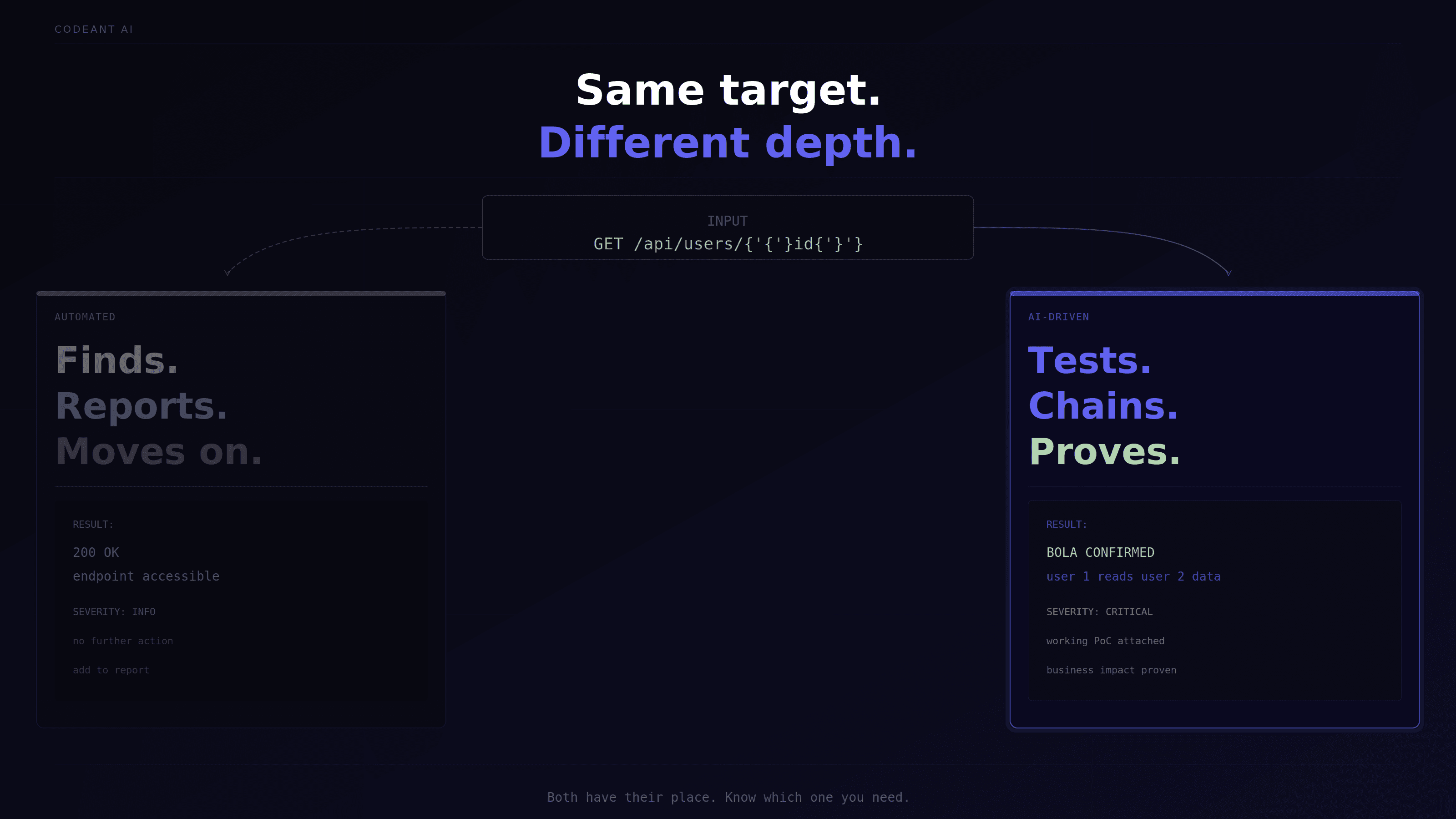
Automated pentesting historically meant rule-based scanners executing predefined test cases, checking for known CVEs, common misconfigurations, and OWASP Top 10 patterns. Fast and consistent, but fundamentally limited: they can’t reason about business logic, adapt testing strategy based on discoveries, or chain multiple low-severity findings into critical exploit paths.
AI-driven pentesting platforms model application state, understand business logic flows, and construct multi-step attack chains the way a human pentester would. They analyze how your authentication system works, map privilege boundaries, and test for authorization flaws (BOLA, IDOR, privilege escalation) that require understanding your application’s intended behavior.
The practical difference: An automated scanner finds that your API endpoint /api/users/{id} exists. An AI platform tests whether user 1 can access user 2’s data by manipulating the {id} parameter, validates authorization logic across different roles, and constructs a working exploit demonstrating business impact.
Both have their place. Rule-based automation excels at CVE detection and compliance scanning. AI-driven platforms excel at business logic vulnerabilities and complex attack chain construction.
How To Choose Automated Pentesting Tools For DevSecOps
Before evaluating 18 best pentesting tools, you need a framework to separate marketing from capability:
Authentication and session management maturity
Most vulnerabilities hide behind authentication. Tools that can’t maintain authenticated sessions, handle multi-step OAuth flows, or test role-based access controls will miss the business logic flaws (BOLA, IDOR, privilege escalation) that cause real breaches.
Business logic vulnerability detection depth
OWASP Top 10 coverage is table stakes. The vulnerabilities that bypass your WAF, BOLA, IDOR, privilege escalation, mass assignment, require understanding your application’s intended behavior, not just pattern matching. External-only scanners can’t see your authorization middleware or database queries. Code-aware platforms test with inside knowledge of how your app should behave.
Proof-based validation and false positive control
A tool generating 500 findings with 40% false positives creates triage backlog, not security improvements. You need tools that prove exploitability with working PoC code. Industry average for legacy DAST: 30-40% false positives. Best-in-class: <10%.
CI/CD automation and developer workflow integration
Real automation means CLI-first, container-native, integrated into the same pipelines where your unit tests run. Can you trigger scans, retrieve results, and enforce policies entirely from command line or CI/CD scripts?
Compliance reporting and control mapping
Tools must map findings to SOC 2, ISO 27001, PCI-DSS, HIPAA controls, not force you to manually translate technical reports into audit evidence.
Tool | Best For | Key Constraint | Pricing |
|---|---|---|---|
CodeAnt AI | Continuous code-aware pentesting; business logic flaws like BOLA, IDOR, and auth bypass | Focuses on web apps and APIs; less comprehensive for internal network exploitation | Enterprise custom; “no exploit, no payment” model |
Pentera | Internal network and Active Directory exploitation; autonomous attack chains | Limited web app and API coverage; expensive enterprise-only | Enterprise, $50k+ annually |
Burp Suite Pro | Security teams with experienced pentesters needing manual depth | Requires skilled operators; not designed for continuous automation | $449/user/year, Pro |
Invicti | Large web app portfolios needing audit-ready compliance reports | Expensive per-seat licensing; limited API protocol support | Enterprise, $10k–$30k+ annually |
Detectify | SMBs needing external attack surface monitoring with simple pricing | Surface-level scanning; no deep business logic testing | $199–$999/domain/month |
Intruder | SMBs prioritizing ease of use and flat-rate pricing | Limited depth on business logic; basic API testing | $109–$549/month |
OWASP ZAP | Open-source advocates and budget-constrained teams | High false positive rate without manual tuning | Free, open-source |
Nessus | Infrastructure teams needing CVE detection and compliance reporting | Vulnerability scanner, not pentesting tool; weak on web app security | $4,890/year, Professional |
Nuclei | Rapid CVE detection and CI/CD pipeline integration | Template-based approach misses business logic flaws | Free, open-source |
Metasploit | Post-exploitation and manual attack chain validation | Steep learning curve; requires skilled operators | Free, Framework; $15k–$50k/year, Pro |
Acunetix | Mid-market teams needing automated web app scanning | Expensive licensing; limited business logic depth | $5,000–$15,000/year |
Qualys VMDR | Enterprise vulnerability management and asset inventory | Vulnerability scanner; limited pentesting depth | Enterprise, $20k+ annually |
Rapid7 InsightAppSec | Centralized management across 100+ applications | Traditional DAST limitations; higher false positives | Enterprise, $25k–$60k annually |
ImmuniWeb | Compliance-heavy environments needing AI-assisted testing | Limited depth on custom business logic | Enterprise custom |
Nikto | Quick web server misconfiguration checks | Outdated detection logic; high false positive rate | Free, open-source |
Nmap | Network discovery and service enumeration | Reconnaissance only; no exploitation capabilities | Free, open-source |
Sublist3r | Attack surface discovery and subdomain enumeration | Reconnaissance only; no vulnerability testing | Free, open-source |
SQLMap | Automated SQL injection detection and exploitation | Single-vulnerability focus; noisy detection signatures | Free, open-source |
Tier 1: AI-Driven Automated Pentesting Platforms
CodeAnt AI: Code-Aware Gray Box Testing with Defensive and Offensive Convergence
The only platform that bridges defensive code review and offensive pentesting, using the same code intelligence to both prevent vulnerabilities in pull requests and exploit them in production-like environments.
Key capabilities:
500+ autonomous exploit agents that chain vulnerabilities across authentication, authorization, injection, and infrastructure layers
Code-aware grey box testing leverages your codebase structure to test business logic flaws external-only tools miss (BOLA, IDOR, privilege escalation, state manipulation)
<10% false positive rate backed by “no working exploit, no payment” commercial model, you only pay for confirmed, exploitable findings with curl PoC
Multi-phase attack engine: Passive recon → application intelligence → exploitation → attack-chain construction → evidence collection
Compliance-aligned reporting (SOC 2, ISO 27001, PCI-DSS, HIPAA) with CVSS scoring and mapped control violations delivered in 24–48 hours
Unlimited re-scans after fixes, enabling continuous validation
Best for: Organizations with 100+ developers needing continuous, code-aware pentesting that scales with deployment velocity; teams handling sensitive data where business logic vulnerabilities pose compliance and reputation risk.
When to use: Primary pentesting platform for organizations where web apps and APIs represent the majority of attack surface; continuous validation layer integrated into CI/CD; compliance evidence generator for frameworks requiring proof of exploitability.
Pentera: Autonomous Attack Chain Execution for Internal Networks
Enterprise-grade breach and attack simulation (BAS) platform focused on internal network, cloud infrastructure, and Active Directory exploitation.
Key capabilities:
Automated attack chain construction across network segmentation, lateral movement, privilege escalation, and data exfiltration
Active Directory penetration including Kerberoasting, pass-the-hash, golden ticket attacks
Cloud infrastructure testing for AWS, Azure, GCP misconfigurations and IAM policy exploitation
Safe exploitation with rollback capabilities
Best for: Large enterprises (1,000+ employees) with complex internal networks and Active Directory environments; organizations prioritizing internal threat modeling.
Limitations: Minimal web application and API coverage, Pentera excels at network/infrastructure but doesn’t test business logic flaws in web apps.
Burp Suite Professional: Manual + Assisted Testing for Expert Operators
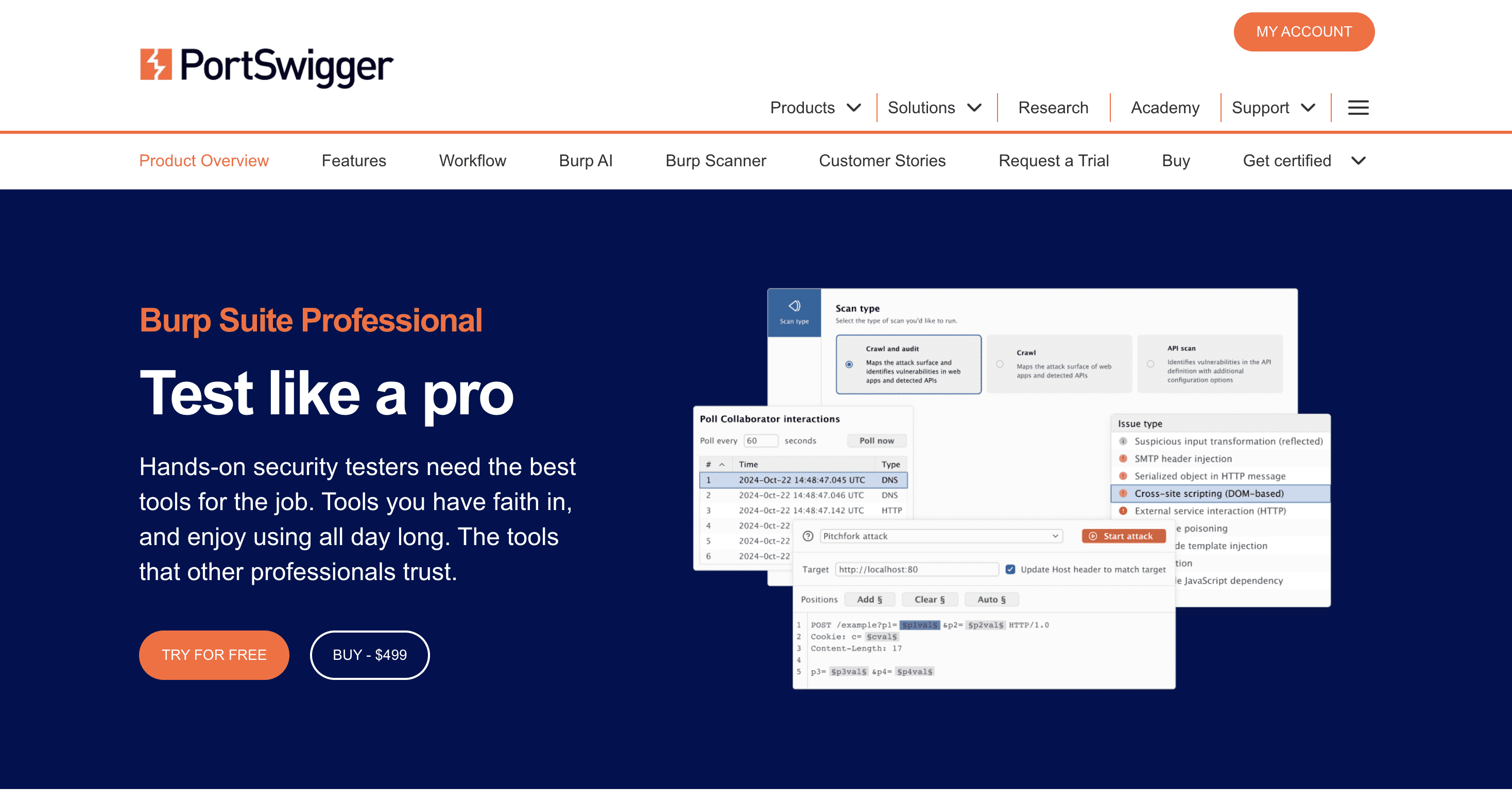
The gold standard for manual web application pentesting, combining powerful interception, fuzzing, and scanning capabilities with deep customization.
Key capabilities:
Intercepting proxy for full HTTP/S traffic manipulation
Scanner with active and passive modes for automated vulnerability detection
Intruder for custom payload fuzzing
Extensibility via BApp Store (200+ community extensions)
Best for: Security teams with experienced pentesters who need granular control over testing methodology; bug bounty hunters conducting deep manual analysis.
Limitations: Not designed for continuous automation; requires skilled operators; high false positive rate in automated scan mode; no business logic reasoning without custom scripts.
Tier 2: Enterprise DAST And Compliance Platforms
Invicti: Proof-Based Validation for Audit-Heavy Environments
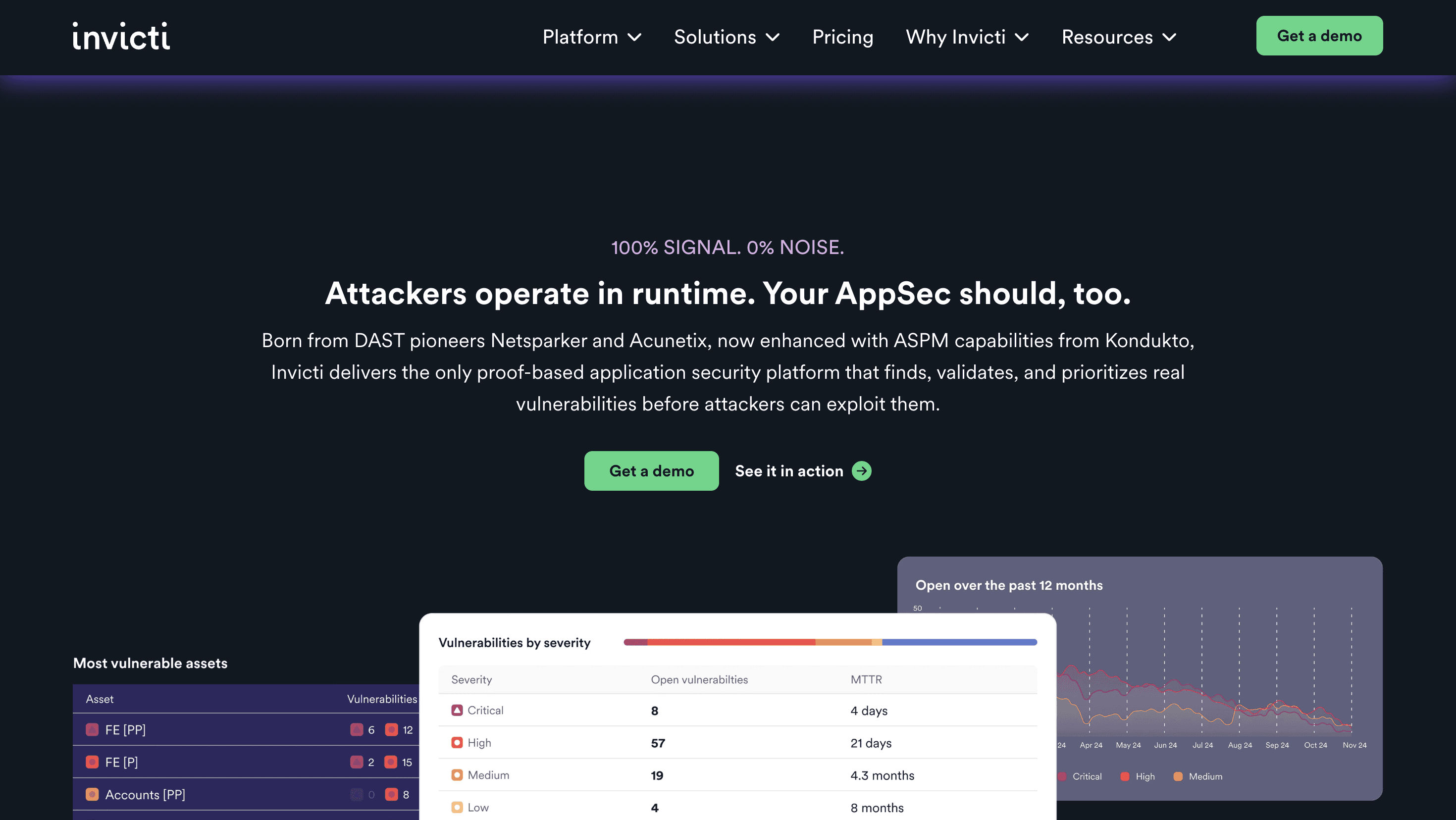
What it does well: Pioneered proof-based scanning, confirms exploitability with actual data retrieval or command execution. Handles complex authentication flows (multi-step login, SAML, OAuth). Generates audit-ready reports mapped to PCI DSS, HIPAA, ISO 27001, SOC 2 controls.
Where it falls short: Excels at OWASP Top 10 but struggles with business logic vulnerabilities requiring understanding authorization models. Can’t detect BOLA where /api/users/123 returns data even when authenticated as user 456. API protocol support limited to REST and SOAP.
Best for: Organizations with large web application portfolios (50+ apps) needing audit-ready compliance reports.
Detectify: Crowdsourced Intelligence with Simple Per-Domain Pricing
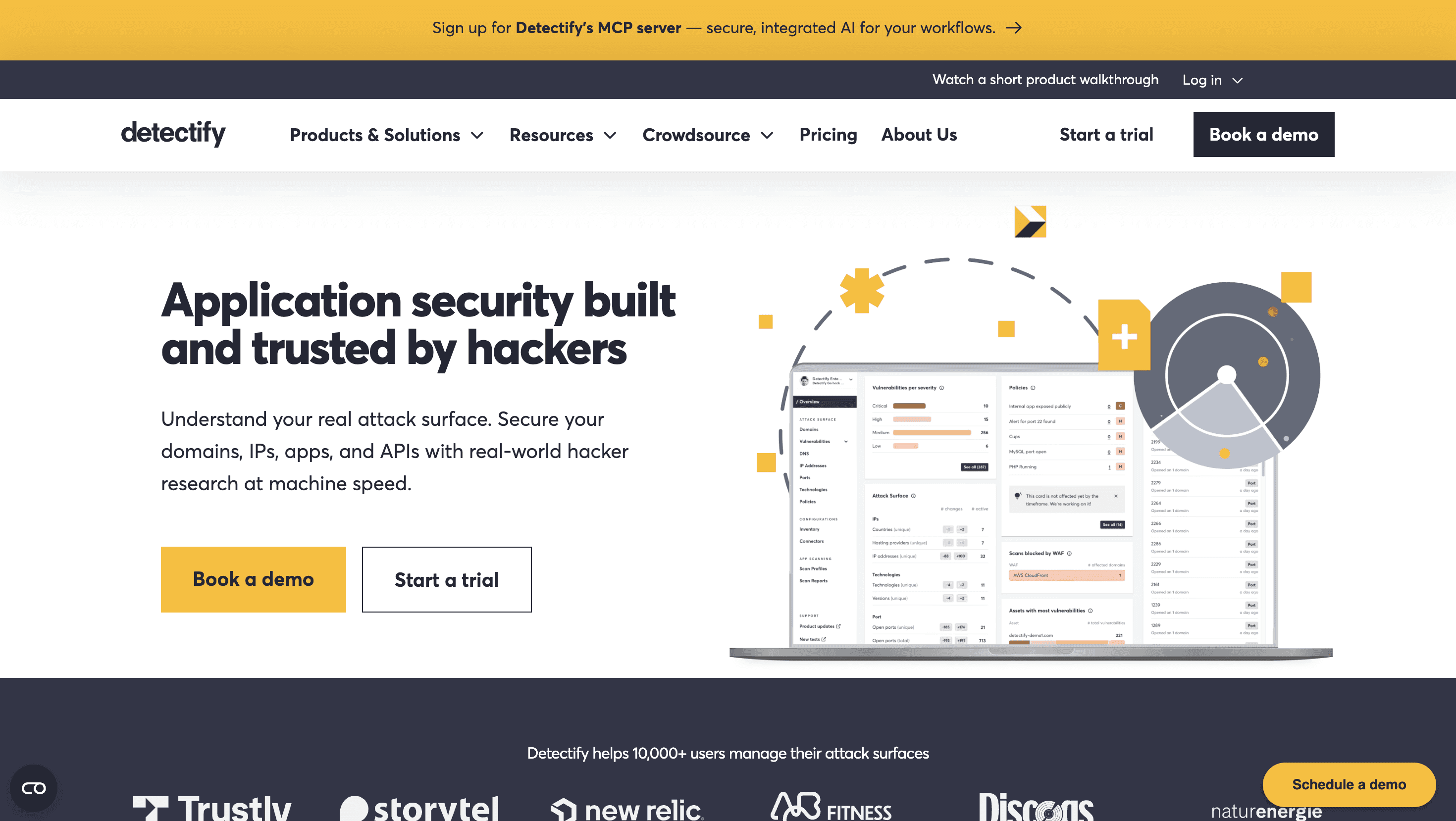
Crowdsourced vulnerability research from 350+ ethical hackers means faster CVE coverage and emerging threat detection. Transparent pricing: flat rate per domain.
Where it falls short: Surface-level scanner, crawls public-facing assets, fingerprints technologies, runs signature-based checks. Doesn’t authenticate into your application or test business logic. Won’t catch authorization bypasses or IDOR vulnerabilities.
Best for: SMBs and startups (10-100 developers) needing external attack surface monitoring without enterprise DAST complexity.
Intruder: User-Friendly Interface with Flat-Rate Pricing
What it does well: Intuitive UI requiring no 40-page manual. Automated rescanning after fixes. Contextual severity scoring based on asset exposure. Flat monthly rates make budgeting predictable.
Where it falls short: Simplicity comes at cost of depth. Business logic testing essentially non-existent. API testing is basic. Authentication handling supports form-based and HTTP basic auth, but struggles with modern federated identity (SAML, OAuth with PKCE).
Best for: Small engineering teams (10-50 developers) needing “good enough” vulnerability scanning without operational overhead.
Rapid7 InsightAppSec & Acunetix
Enterprise workflow orchestration, centralized management for 100+ applications, role-based access control, advanced authentication via Selenium-based macro recording. Traditional DAST with traditional limitations, can’t detect business logic flaws requiring application state understanding. False positive rates 15-25%.
Acunetix
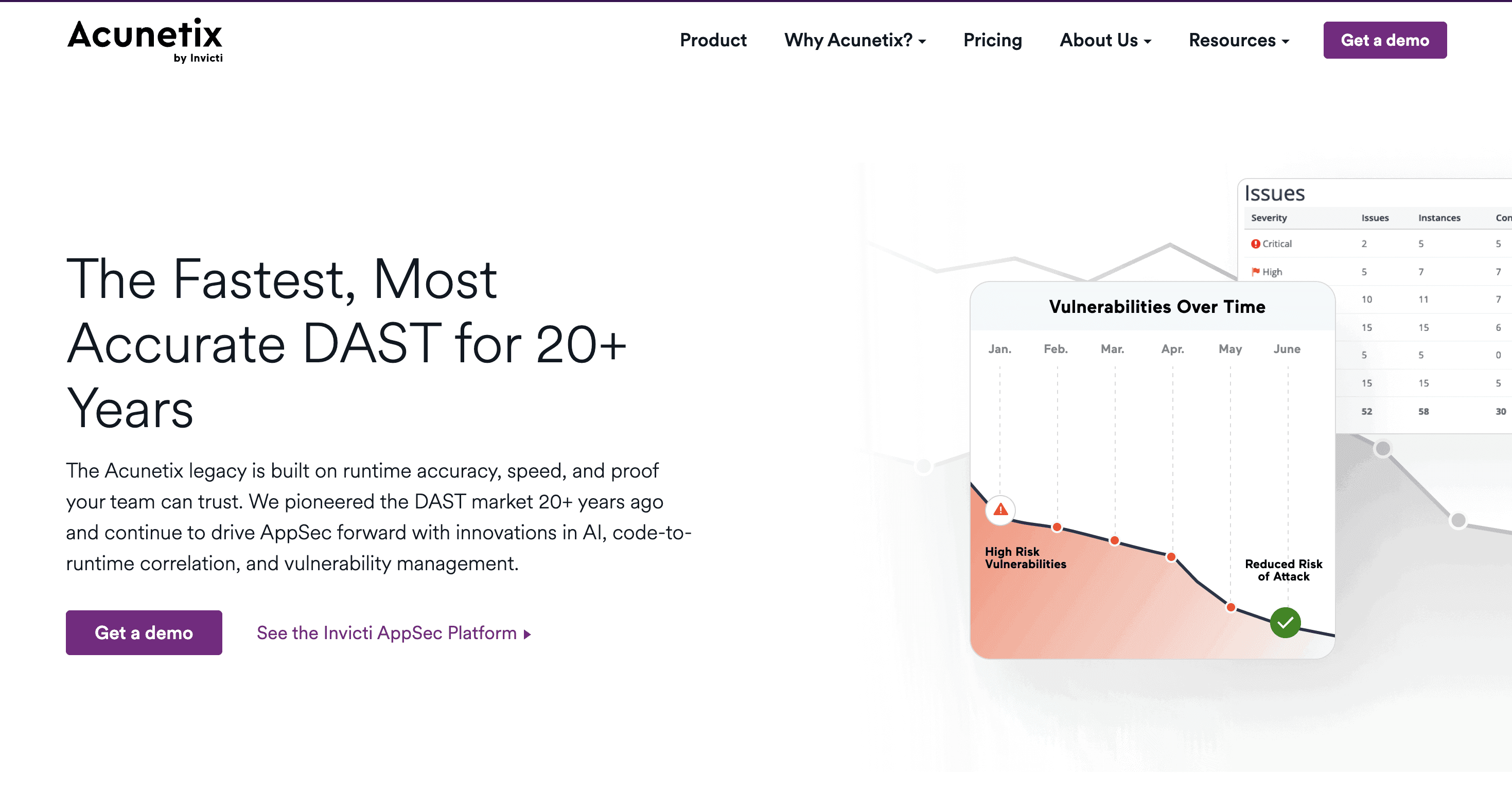
Core strength is JavaScript-aware crawler using headless Chrome to render SPAs and discover client-side routes. Fast scanning (500-page app in 20-40 minutes). Limited business logic testing, operates externally without modeling authorization rules.
Tier 3: Open-Source Automated Pentesting Tools
The Real Economics of “Free” Security Tools
Open-source pentesting tools carry zero licensing cost but require significant engineering investment. The operational burden typically requires 0.5–1.0 FTE for every 50 developers. For teams under 100 developers, this math often works. Beyond that scale, hidden costs start exceeding commercial alternatives.
What you’re trading:
High false positive rates (20–40% for OWASP ZAP, 15–25% for Nuclei without tuning)
Manual template maintenance as new CVEs and attack patterns emerge
Coverage gaps in business logic vulnerabilities
Operator expertise requirements to interpret findings
Core OSS Scanners
OWASP ZAP
Most comprehensive open-source DAST tool with active/passive scanning, scriptable automation via Python/JavaScript, robust plugin ecosystem. CLI (zap-cli) integrates cleanly into CI/CD. Out-of-box generates 30–40% false positives on modern JavaScript frameworks, budget 2–3 weeks initial tuning. Excels at OWASP Top 10 but struggles with authorization logic flaws.
Nessus Essentials
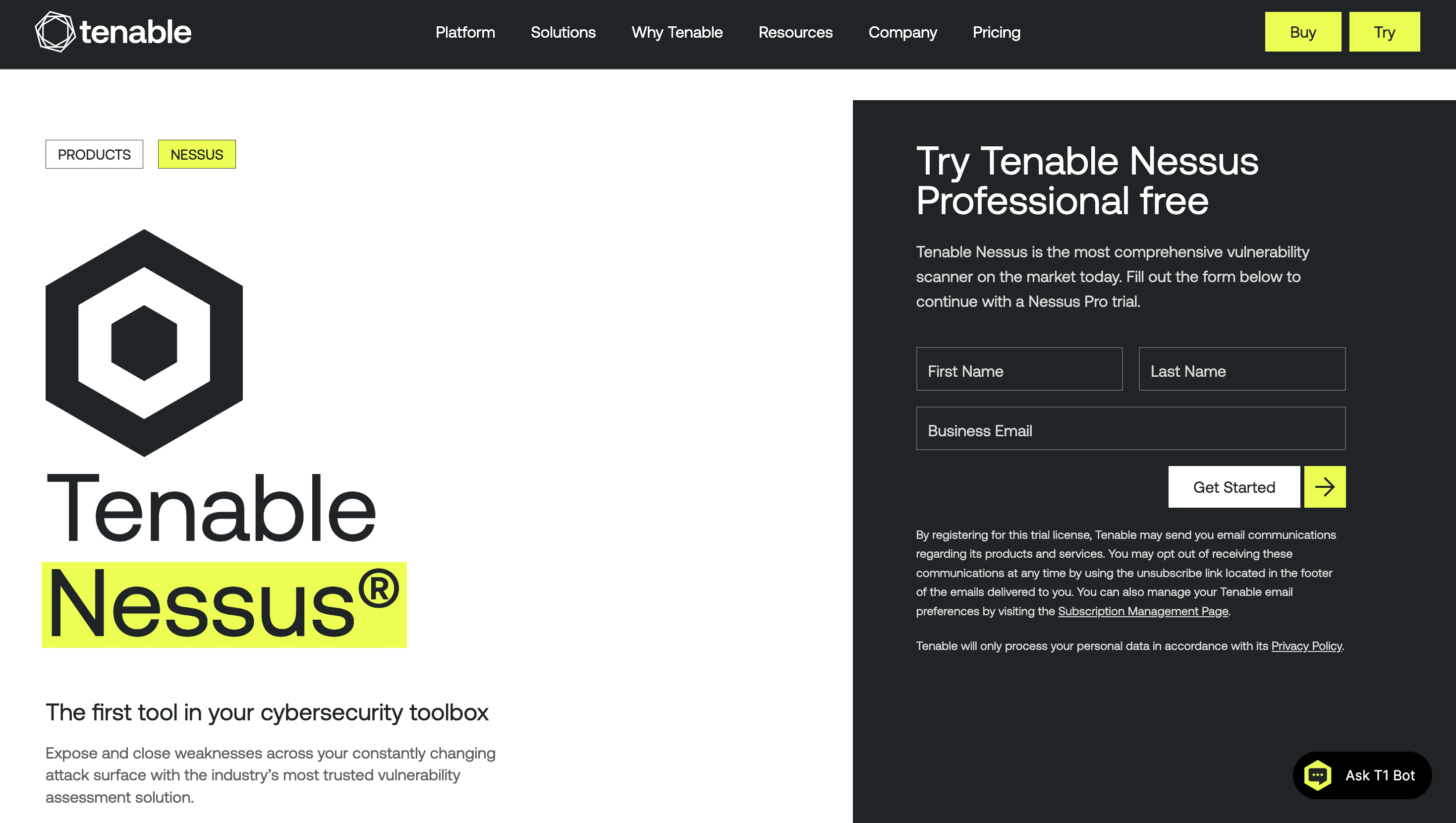
Most comprehensive CVE database for infrastructure scanning—operating systems, network devices, databases, cloud services. Free tier (16 IPs) covers most SMB use cases. Designed for scheduled scans, not continuous CI/CD integration. Vulnerability scanner, not pentesting tool, identifies missing patches but doesn’t validate exploitability or test web application logic.
Metasploit Framework
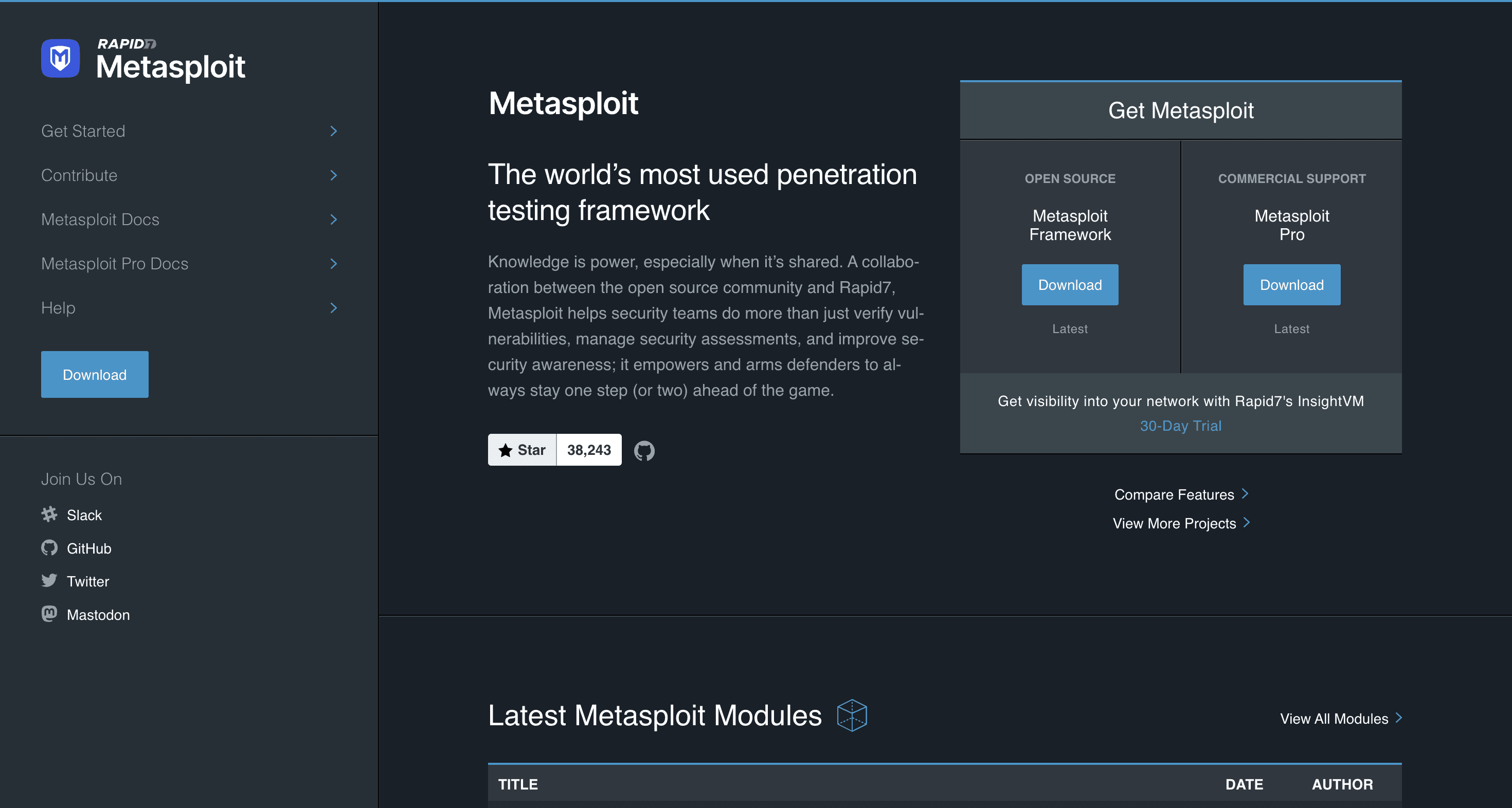
Most extensive exploit database (2,300+ modules) and post-exploitation capabilities. Invaluable for validating whether vulnerability is actually exploitable. Fundamentally designed for interactive exploitation, building reliable automated exploit chains requires deep expertise. Use for validation, not discovery.
Nuclei
Template-based architecture makes it fastest way to scan for known CVEs and misconfigurations. 7,000+ community templates with AI-powered generation. False positives average 15–20% without custom filtering. Template-based detection is binar, can’t reason about business logic or chain multi-step exploits.
Nuclei for rapid CVE detection
Why this works: CodeAnt handles business logic flaws that ZAP and Nuclei miss entirely. ZAP catches surface-level OWASP Top 10. Nuclei flags known CVEs. Total monthly cost: ~$2,000–$5,000 vs. $15,000–$30,000 for single manual pentest that’s outdated when you ship new code.
Reconnaissance Staples
Subdomain discovery chain:
Passive enumeration:
amass enum -passive -d example.com -o subdomains.txtActive DNS resolution and HTTP probing:
cat subdomains.txt | httpx -silent -status-code -tech-detect -json -o live-hosts.jsonDirectory fuzzing:
ffuf -w /usr/share/wordlists/common.txt -u https://FUZZ.example.com -mc 200,301,302
Key tools:
Amass (subdomain enumeration)
httpx (HTTP probing with tech detection)
ffuf (directory/parameter fuzzing)
Nmap (port scanning and service fingerprinting), sqlmap (SQL injection testing)
When OSS Makes Sense
Choose open-source when:
Team size < 100 developers
You have dedicated security engineering capacity (0.5+ FTE)
Application architecture is relatively stable
Budget constraints prohibit commercial tools
Consider commercial alternatives when:
False positive triage consumes >20% of security team time
You need business logic vulnerability detection (BOLA, IDOR, privilege escalation)
Compliance requires proof-based validation and audit-ready reports
Application portfolio exceeds 50+ services
Decision Framework: Choose the Right Pentest Tool Mix
The biggest mistake isn’t choosing the wrong pentesting tool, it’s assuming one tool covers every scenario. Modern application security requires layered approaches where tools complement each other.
Team Type | Recommended Tool Mix | Why This Works | Approximate Cost / Notes |
|---|---|---|---|
Startups and SMBs, 10 to 100 developers | CodeAnt AI + OWASP ZAP + Nuclei | CodeAnt AI handles continuous, code-aware pentesting and business logic flaws that ZAP and Nuclei miss. OWASP ZAP adds free, scriptable DAST coverage in the pipeline. Nuclei adds rapid CVE and misconfiguration detection using community templates. | Around $2,000 to $5,000/month depending on CodeAnt scope, compared with $15,000 to $30,000 for a single manual pentest that may become outdated after new deployments. |
Mid-market and enterprise, 100 to 1,000+ developers | CodeAnt AI + Pentera + Invicti | CodeAnt AI tests web apps and APIs with inside knowledge of the codebase. Pentera validates internal network and Active Directory attack paths. Invicti helps compliance-heavy teams with proof-based validation and audit-ready reporting. | Best for teams that need separate coverage across application security, internal network exploitation, and compliance reporting. |
Security-first organizations, fintech, healthcare, defense | CodeAnt AI + Burp Suite Pro + Pentera | CodeAnt AI validates business logic flaws, authenticated flows, and code-aware exploit paths. Burp Suite Pro gives experienced pentesters manual depth for edge cases. Pentera proves whether internal defenses can withstand lateral movement and attack chain construction. | Best for regulated or high-risk teams that need defense-in-depth evidence for auditors, customers, and internal security leadership. |
Tool | Role In The Stack | Best Fit | Key Limitation |
|---|---|---|---|
CodeAnt AI | Continuous, code-aware pentesting with defensive and offensive validation | Business logic flaws, BOLA, IDOR, auth bypass, API abuse, CI/CD-driven testing | Focuses mainly on web apps and APIs, not full internal network exploitation |
OWASP ZAP | Free, scriptable DAST for pipelines | Surface-level OWASP Top 10 checks and budget-conscious teams | Requires tuning and can produce false positives |
Nuclei | Fast template-based CVE and misconfiguration scanning | Rapid detection of known vulnerabilities in CI/CD or attack surface workflows | Template-based detection cannot reason about business logic or chain multi-step exploits |
Pentera | Autonomous internal network and Active Directory exploitation | Internal network validation, lateral movement, attack chain simulation | Limited web app and API depth compared with app-focused tools |
Invicti | Enterprise DAST and compliance-oriented reporting | Audit-ready web app validation, SOC 2 and PCI-DSS reporting support | Expensive and less effective for custom business logic flaws |
Burp Suite Pro | Manual deep-dive web app testing | Skilled security teams and quarterly manual validation | Requires trained operators and is not built for continuous automation |
Metasploit | Custom exploit validation and post-exploitation workflows | Advanced security teams validating exploit chains manually | Steep learning curve and not ideal as a standalone DevSecOps tool |
Your Scenario | Primary Tool | Complement With | Avoid |
|---|---|---|---|
Startup, fewer than 50 developers, limited budget | CodeAnt AI or OWASP ZAP | Nuclei for CVEs | Burp Suite without trained staff |
Mid-market, 100 to 500 developers, SOC 2 compliance | CodeAnt AI | Invicti for audit reports | Nessus as a pentesting replacement |
Enterprise, 500+ developers, complex microservices | CodeAnt AI + Pentera | Burp Suite for manual validation | External-only tools for business logic |
Security-first, PCI-DSS or HIPAA | CodeAnt AI | Burp Suite + Pentera | Scanners without exploitability proof |
Hybrid environment, web apps plus internal network | CodeAnt AI + Pentera | Metasploit for custom exploits | Running 5+ overlapping tools |
How to Operationalize Automated Pentesting in CI/CD
Rolling out automated pentesting isn’t flip-the-switch, it’s phased integration that starts with low-friction defenses and progressively adds deeper offensive validation.
Phase 1: PR-Time Defenses (SAST + Secrets Scanning)
Start here because: Pull requests are your earliest interception point. Catching vulnerabilities before merge costs minutes to fix; catching them in production costs days.
What to deploy:
SAST for security patterns (SQL injection, XSS, path traversal, hardcoded credentials)
Secrets detection (AWS keys, API tokens, database credentials)
Policy enforcement (organization-specific rules)
Implementation: GitHub Actions example
SLA: Security findings must be triaged within 24 hours, critical issues block merge.
Phase 2: Nightly Authenticated DAST Against Staging
Why nightly, not per-commit: Dynamic testing requires running application, authentication flows, and time to crawl endpoints. Nightly scans balance thoroughness with velocity.
Environment setup (critical):
Staging with production-like data
Valid authentication credentials for each role
Rate limiting mirroring production
What to test:
Business logic vulnerabilities (BOLA, IDOR, privilege escalation, mass assignment)
API-specific flaws (GraphQL introspection leaks, REST endpoint enumeration)
Authentication/authorization (session fixation, JWT algorithm confusion, OAuth redirect manipulation)
SLA: Critical findings (RCE, SQLi, auth bypass): Incident response within 4 hours, patch within 24 hours
High findings (BOLA, XSS, SSRF): Triaged within 24 hours, fix scheduled within sprint
Phase 3: Continuous External ASM + Exploit Validation
Why this matters: Staging doesn’t capture forgotten subdomains, exposed admin panels, misconfigured S3 buckets, leaked API keys in JavaScript bundles.
What to deploy:
Subdomain enumeration via DNS brute-forcing, certificate transparency logs
Port and service scanning for exposed services
JavaScript analysis extracting API endpoints, authentication tokens
Exploit validation with working PoCs
CodeAnt AI’s advantage: Grey-box mode combines external reconnaissance with code-aware testing. When it discovers API endpoint in JavaScript bundle, it cross-references your codebase to understand authorization logic, then crafts exploits that bypass it.
Phase 4: Retesting Gates and Continuous Validation
The problem: You fix critical SQLi, deploy patch, and… hope it worked. Without automated retesting, you’re flying blind.
How to implement:
Post-deployment validation: Re-run exploit PoCs against live environment after every production deploy
Regression testing: Maintain suite of historical exploits, re-test monthly
Continuous re-scanning: For high-risk assets, run lightweight scans every 6 hours
Example:
Triggered after production deployment
Conclusion: Choose Automated Pentesting Tools That Prove Exploitability
The best automated pentesting tools are not the ones that generate the longest vulnerability list. They are the ones that help DevSecOps teams prove which risks are exploitable, prioritize fixes, and validate remediation before vulnerabilities reach customers.
Open-source tools like OWASP ZAP, Nuclei, Nmap, and sqlmap are useful building blocks.
Enterprise DAST tools like Invicti, Acunetix, and Rapid7 InsightAppSec help with web application scanning and compliance reporting.
Platforms like Pentera are stronger for internal network attack simulation.
But for teams that need continuous, code-aware testing across web apps, APIs, authentication, and business logic, CodeAnt AI gives a different advantage by connecting defensive code review with offensive exploit validation.
If your DevSecOps team is still relying on annual pentests or disconnected scanners, use this tool comparison to build a layered automated pentesting stack. Start with the risks that matter most: authenticated access, business logic flaws, exploit validation, CI/CD integration, and retesting after every meaningful fix.

