AI Pentesting
Remote Penetration Testing: How It Works and When to Use It

Sonali Sood

Founding GTM, CodeAnt AI
Can Penetration Tests Be Done Remotely?
Yes. For cloud-native apps, APIs, and distributed systems, remote penetration testing usually beats an on-site consultant on coverage, because it runs from the same cloud regions attackers use.
The trigger is almost always budget. A CISO cutting a $30K on-site engagement wants to know remote testing still holds up for compliance and for the vulnerabilities that actually matter.
It does, with one condition. Your access model decides what gets found.
Black box tests external exposure only. White box needs full credentials and source to validate architecture.
Gray box sits between them. It pairs external recon with source code intelligence, the combination that surfaces business logic flaws like BOLA and IDOR that scanners walk right past.
This guide covers how remote testing works, the access it needs, how it maps to SOC 2, ISO 27001, PCI DSS, and HIPAA, what it costs against on-site, and where you still need someone in the building.
What CodeAnt AI solves here: CodeAnt AI runs remote gray box pentesting as one half of a defensive and offensive platform. Because it already read your code during review, the test starts with context instead of probing blind.
How Remote Penetration Testing Works
Remote penetration testing has matured from rudimentary port scanning to comprehensive adversarial simulation. The shift to cloud-native architectures made remote testing not just viable but often more effective than physical presence.
Four critical advances since 2020:
Cloud-native testing platforms replaced VPN-only models. Modern platforms spin up ephemeral environments in AWS/Azure/GCP that mirror attacker infrastructure, testing from the same cloud regions where real threats originate.
Gray box methodologies emerged as the middle ground. Platforms test from outside your perimeter while leveraging source code intelligence to identify business logic flaws that external scanners miss, think BOLA vulnerabilities in GraphQL APIs or authorization bypasses in microservice authentication flows.
Automated exploit chain construction replaced point-in-time assessments. Instead of manually chaining SSRF → IAM credential theft → S3 enumeration over days, AI-driven platforms execute 500+ exploit agents in parallel, automatically building multi-stage attack paths.
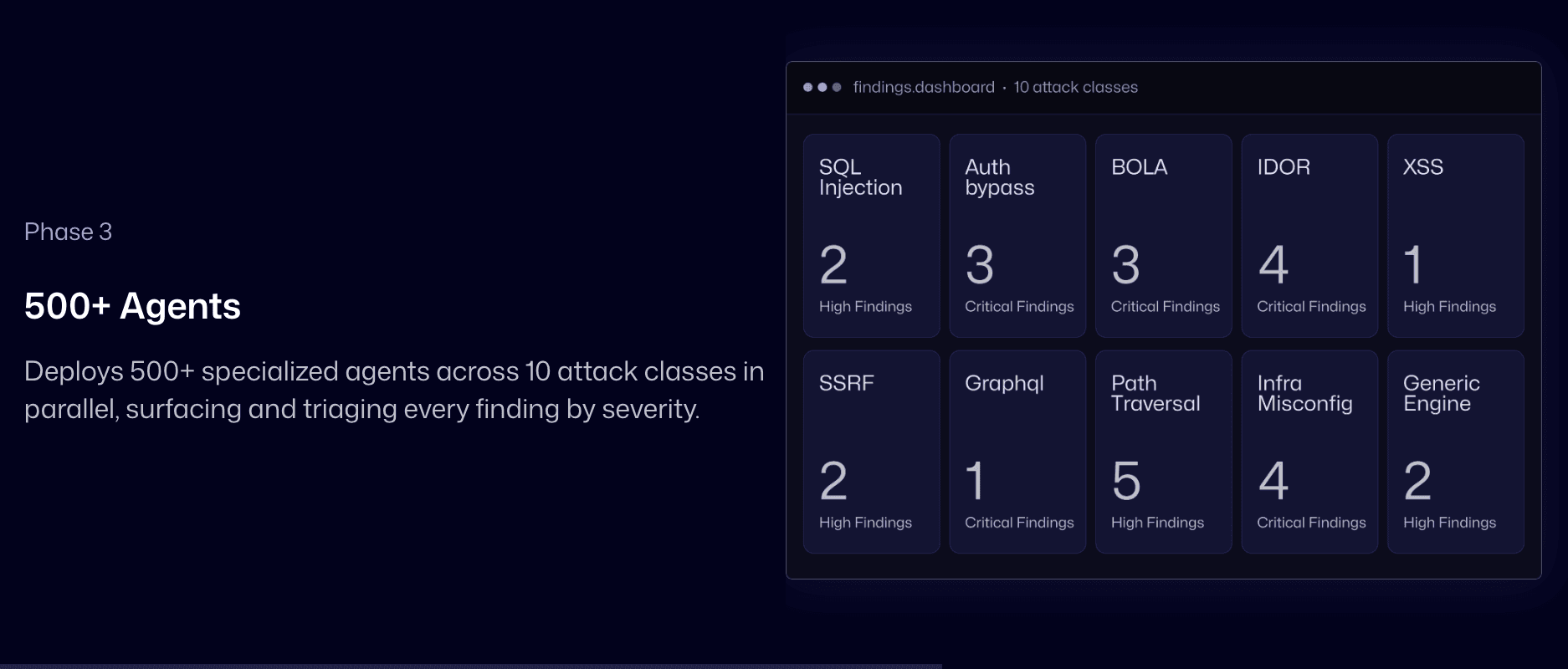
Continuous validation models eliminated annual testing bottlenecks. Organizations can retest after fixes without incremental cost, testing every environment without coordination overhead.
What modern remote testing assesses:
Web applications and SPAs (React, Vue, Angular)
RESTful and GraphQL APIs with complex authorization
Cloud infrastructure (AWS, Azure, GCP) including IAM misconfigurations and storage exposure
Authentication flows (OAuth, SAML, JWT validation)
Business logic flaws requiring code context (BOLA, IDOR, privilege escalation)
Multi-stage attack chains across distributed microservices
Clear limitations:
Physical security (facility access, badge cloning)
Air-gapped networks and isolated OT/ICS environments
IoT/embedded devices requiring physical manipulation
Novel zero-day discovery requiring elite human creativity
Black Box vs White Box vs Gray Box Penetration Testing
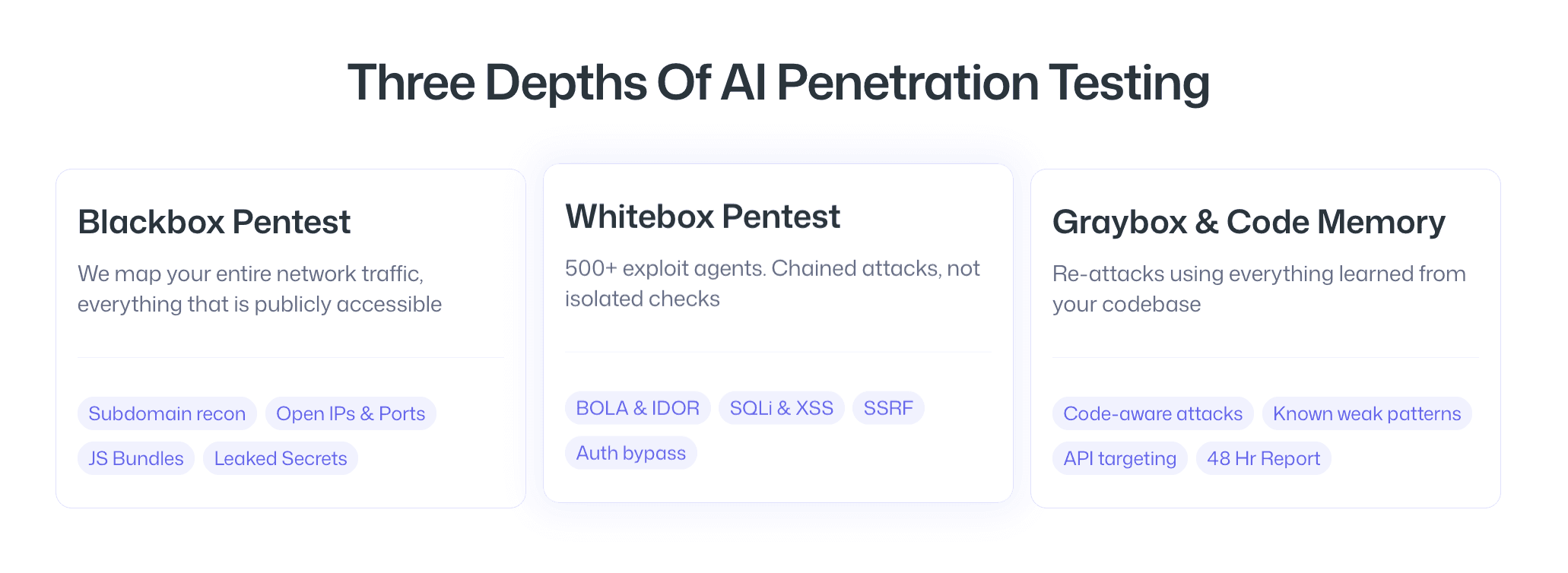
Your access model determines what vulnerabilities you'll find:
Approach | Access Provided | Detection Capabilities | Limitations |
|---|---|---|---|
Black Box | None, external only | Infrastructure misconfigurations, exposed services, common web vulnerabilities | Misses business logic flaws, authorization issues, complex attack chains |
White Box | Full credentials, documentation, source code | Comprehensive coverage including design flaws, logic errors | Time-intensive, expensive, creates false security between tests |
Gray Box | External testing + source code intelligence | Business logic flaws, authorization bypasses, attack chains requiring code context | Requires codebase access |
Gray box in CodeAnt AI performs reconnaissance from an external attacker's perspective while analyzing your codebase to identify vulnerabilities requiring understanding of data flows and authorization logic.
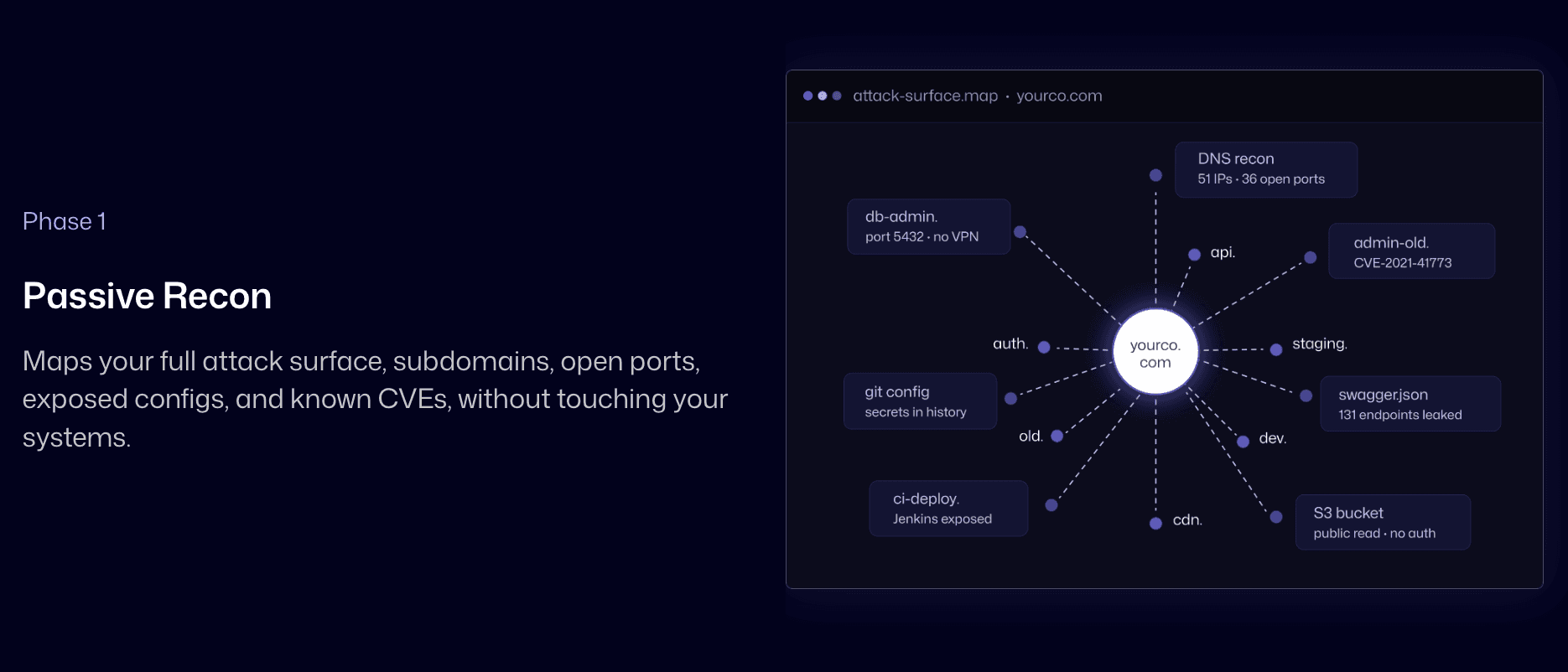
This approach found a 742-million-record GraphQL BOLA that external testing missed for 18 months, the scanner saw the endpoint, but only code analysis revealed the missing authorization check.
What Remote Penetration Testing Requires.
Remote testing requires proper access and coordination:
Network access options:
VPN tunnels for internal applications and private cloud resources
Cloud jump boxes (EC2/Azure VM) in your VPC with scoped IAM role, more stable than VPN
API endpoints with test credentials for authenticated testing
Staging environment access to avoid production impact (though production testing often necessary)
Identity and access:
Test accounts for each role level (guest, user, admin, super-admin)
Service accounts and API keys for machine-to-machine flows
OAuth/SAML test identities if SSO is in scope
Long-lived tokens or automated refresh to prevent mid-test expiration
Operational safeguards:
Whitelist testing IPs in WAF/CDN/rate limiters
Establish communication channels with security teams
Define escalation paths for critical findings
Schedule testing windows to avoid business-critical periods
Common coordination failures:
VPN drops mid-exploit chain, breaking session state
Test credentials expire during multi-day assessment
MFA blocking automation without TOTP seeds
Rate limits throttling legitimate testing
Compliance: SOC 2, ISO 27001, PCI-DSS, HIPAA
Remote testing satisfies every framework on this list, as long as the report documents scope, methodology, and evidence. None of these standards requires the tester to be physically on-site.
What each one expects:
Framework | Pentest required? | Maps to | Remote testing | Cadence |
|---|---|---|---|---|
SOC 2 | Not named. Outcome-based | CC7.1 (vulnerability detection), supports CC4.1 | Accepted with documented methodology and exploit evidence | Typically annual. Continuous testing strengthens the monitoring story |
ISO 27001:2022 | Not named, but expected at audit | A.8.8, A.8.29 | Accepted. The standard is risk-based, not location-based | At least annually and after any significant change |
PCI DSS v4.0.1 | Required, Requirement 11.4 | 11.4.2 internal, 11.4.3 external, 11.4.4 remediation and retest | Accepted. Remote is fine with documented scope and tester independence | Every 12 months and after significant change. Segmentation every 12 months, or 6 months for service providers |
HIPAA | Not currently required. Proposed for 2026 | Current: the §164.308(a)(8) evaluation standard | Accepted with a signed BAA | Proposed at least every 12 months, with scans every 6 months |
The takeaway: PCI DSS is the only one that names penetration testing outright. The other three treat a documented test as the evidence auditors expect for controls they do define.
Two nuances worth getting right.
PCI DSS 4.0.1 does not accept a scanner report as a pentest. Requirement 11.4 expects validated, exploitable findings and a retest that confirms the fix held. A DAST tool that lists potential issues without proving them is exactly what QSAs now push back on.
The HIPAA change is coming but is not law yet. HHS published the proposed rule in December 2024, the comment period closed in March 2025, and as of mid-2026 no final rule has issued. Write to the current §164.308(a)(8) evaluation standard, and treat the annual-pentest mandate as likely rather than in force.
What auditors expect in the report, across all four:
A documented, repeatable methodology
CVSS scoring and risk ranking
Proof of exploitation: working PoC, request and response data, screenshots
Remediation validation showing the fix holds on retest
Each finding mapped to the specific control it satisfies
The rigor that carries weight in an audit is validated findings over theoretical ones. A report that proves a vulnerability is exploitable, then proves the fix closed it, is worth more to an assessor than a scanner dump of unconfirmed alerts.
Grounded the numbers against 2026 pricing data. The draft's on-site range holds up, the timeline needed a small correction, and the "real example" gets relabeled as illustrative since there's no customer or source behind it. Here's the rewrite.
Remote vs On-Site Penetration Testing Cost
The cost gap is real, but the sharper difference is cadence. On-site testing buys a point-in-time snapshot. Remote testing buys coverage on every release.
On-site manual | Remote continuous | |
|---|---|---|
Typical cost | $10,000 to $50,000 per engagement in 2026, more for complex scope | PTaaS subscriptions commonly $15,000 to $60,000 per year, retests included |
Turnaround | 1 to 3 weeks of testing, then the report | Hours to a couple of days per scan. CodeAnt returns a free black box report in 24 hours |
Cadence | Annual, or after a significant change if budget allows | Continuous, every release, no per-scan fee |
Retesting | Often billed separately, 15 to 25 percent of the engagement | Included, unlimited |
Exposure window | Up to 12 months between tests | Closes within a release cycle |
Best fit | Point-in-time depth, plus physical and OT scope | Fast-moving cloud and API apps that need evidence on every change |
The takeaway: on-site wins on depth for a fixed moment, remote wins on how much of the year you are actually covered.
There is a compliance angle to the cadence, not just a cost one. PCI DSS 11.4 requires retesting after any significant change, and "significant change" is defined broadly. If you ship weekly, annual testing does not meet the spirit of that clause, and triggering a manual engagement after every release is neither fast enough nor affordable. Continuous automated testing with a full audit trail is the more defensible posture, and usually the cheaper one.
An illustrative example, using round numbers rather than a specific customer:
Take a $30,000 annual engagement that surfaces a dozen findings. That is roughly $2,500 per finding, delivered once, on a six-week turnaround that often lands after the sprint that introduced the bug has already shipped.
A continuous model spreads a fixed annual fee across every scan and every environment, so cost per finding drops as coverage rises, and the exposure window shrinks from months to a release cycle. The point is not the exact figures. It is that per-engagement pricing optimizes for the audit date, and subscription pricing optimizes for time-to-remediation.
Choosing Remote, Hybrid, or On-Site Pentesting
Remote testing is the right default for cloud-native work. The real question is where to add manual testing on top.
Remote fits best when:
Your stack is cloud-native across AWS, Azure, or GCP with microservices and serverless
You run API-driven architectures with REST or GraphQL and real authorization complexity
You release often and cannot wait weeks for a scheduled engagement
You run multi-tenant SaaS that needs tenant isolation and authorization boundary testing
Match the approach to your situation:
API-heavy SaaS: code-aware gray box for business logic flaws
Infrastructure-heavy: network and segmentation testing, where BAS tools like Pentera fit
Frequent releases: continuous automated testing wired into CI/CD
Annual compliance only: a manual pentest can be enough, with the 12-month exposure window as the trade
Budget shapes the mix:
Under $20,000 a year: remote automation is the only realistic option
$20,000 to $50,000: hybrid, continuous automated plus one annual manual test
Over $50,000: comprehensive, automated plus quarterly manual plus an annual red team
The workable answer is usually hybrid. Run continuous remote testing for application and API security, and bring in manual work for physical, OT, and high-stakes systems. Infrastructure BAS such as Pentera covers network-level testing, and an annual manual pentest covers the deep, point-in-time review that automation does not replace.
CodeAnt's gray box approach excels when:
Your application exposes APIs with complex authorization logic
Multi-tenant SaaS requires tenant isolation validation
High-velocity releases need developer-friendly, fast feedback
Code-aware testing can trace data flows through your architecture
Complement CodeAnt with:
Infrastructure BAS (Pentera) for network-level testing
Annual manual pentests for high-stakes systems
Specialized firms for physical security or OT/ICS
If you arae ready to evaluate code-aware testing schedule a demo to see how gray box testing works for your environment.
The Bottom Line on Remote Penetration Testing
For cloud-native applications, APIs, and multi-tenant SaaS, remote penetration testing is not a compromise. It is the more thorough option. Remote platforms test from the same cloud regions real attackers operate in, retest after every fix without a new invoice, and trace vulnerabilities through your actual code instead of guessing from the outside. On-site testing still earns its place for physical security, air-gapped networks, and OT/ICS, which is why most teams land on a hybrid model: continuous remote validation for application and API security, plus periodic manual assessments for the edge cases.
The deciding factor is your access model. Black box confirms external exposure. White box validates architecture. Gray box, the model CodeAnt runs, pairs external reconnaissance with source code intelligence to surface the business logic flaws (BOLA, IDOR, broken authorization) that external scanners never see. That is the same approach that caught a 742-million-record GraphQL BOLA an external test had missed for 18 months.
See gray box remote testing against your own stack. Launch a free black box scan in 24 hours, or book a 1:1 to evaluate code-aware testing. You only pay for confirmed, exploitable findings with a working PoC. No working exploit, no payment.
FAQs
Can penetration testing be done remotely?
How is remote penetration testing conducted?
What is the difference between black box, white box, and gray box penetration testing?
How often should penetration testing be done?
Does remote penetration testing satisfy SOC 2, ISO 27001, and PCI DSS?