

AI pentesting is becoming important because application security now moves at software delivery speed. Traditional penetration testing still matters, but point-in-time assessments cannot always keep up with weekly releases, API changes, cloud updates, authentication changes, and new business logic.
The real benefit of AI pentesting is not just speed. It is the ability to test more often, validate exploitability, reduce false positives, retest fixes quickly, and connect security findings to the code, workflow, or asset that created the risk.
For modern SaaS, fintech, healthcare, and DevSecOps teams, AI penetration testing helps answer a practical question: can this vulnerability actually be exploited before attackers find it?
This guide explains the top benefits of AI pentesting, where it fits best, and how teams should use it alongside manual penetration testing.
What Is AI Pentesting?
AI pentesting is the use of AI systems, autonomous agents, and automation to perform penetration testing tasks that traditionally required manual effort. A strong AI penetration testing workflow does not only scan for possible vulnerabilities. It attempts to validate whether vulnerabilities are exploitable.
AI pentesting can include black box testing, grey box testing, white box testing, reconnaissance, authenticated API testing, business logic testing, exploit-chain construction, proof-of-concept generation, remediation guidance, and automated retesting.
Phase 1
Passive Recon
Maps your full attack surface, subdomains, open ports, exposed configs, and known CVEs, without touching your systems.
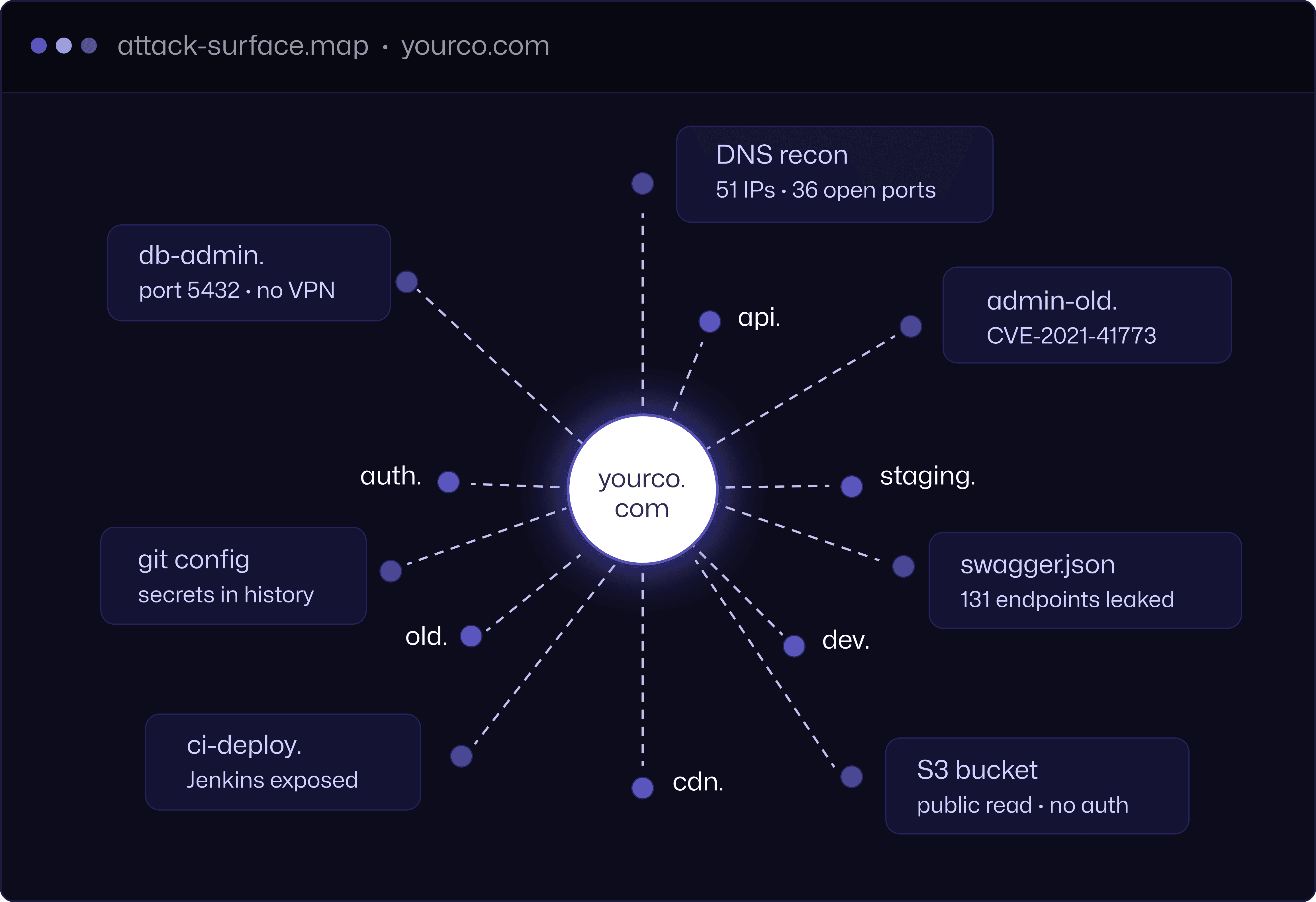
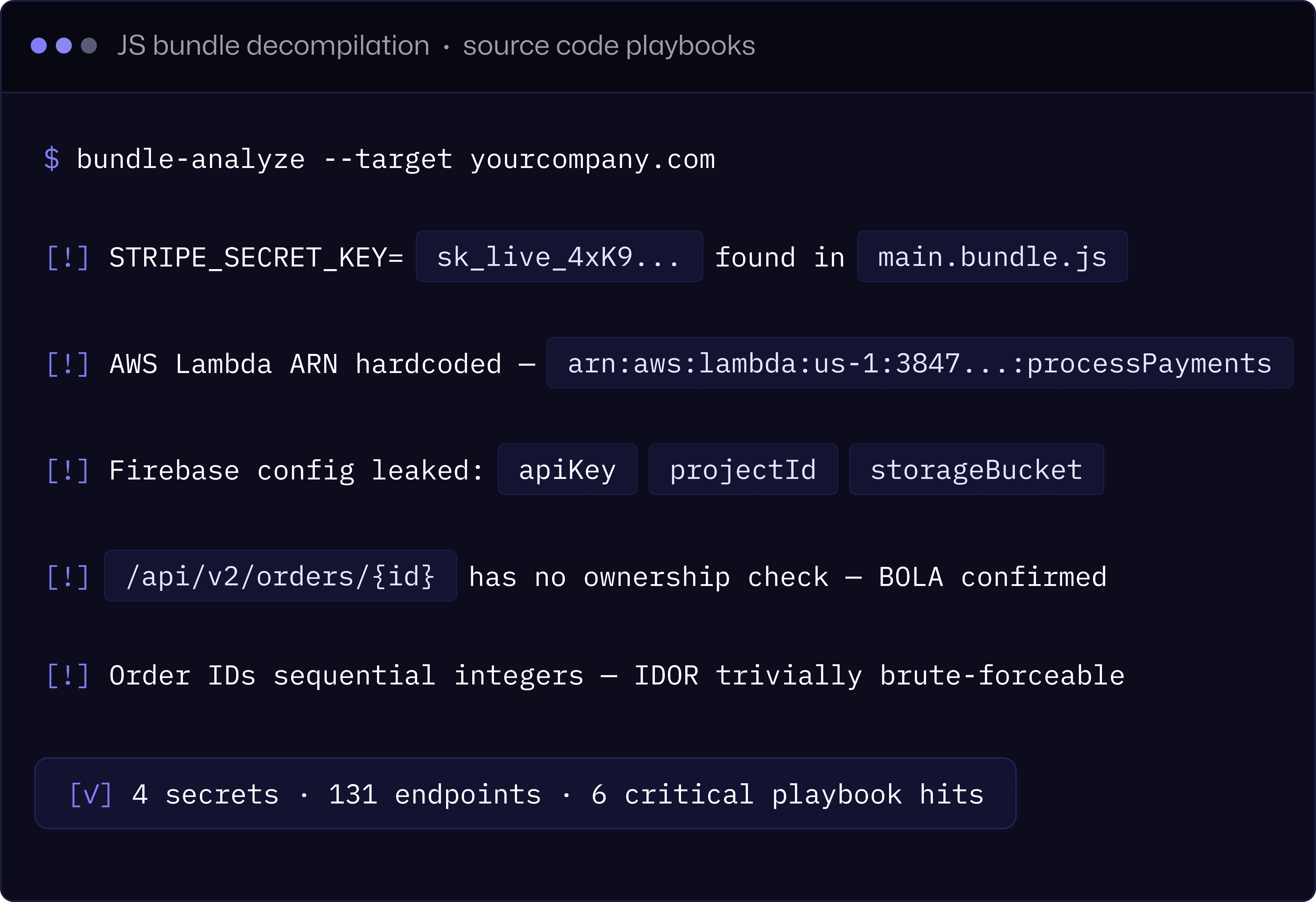
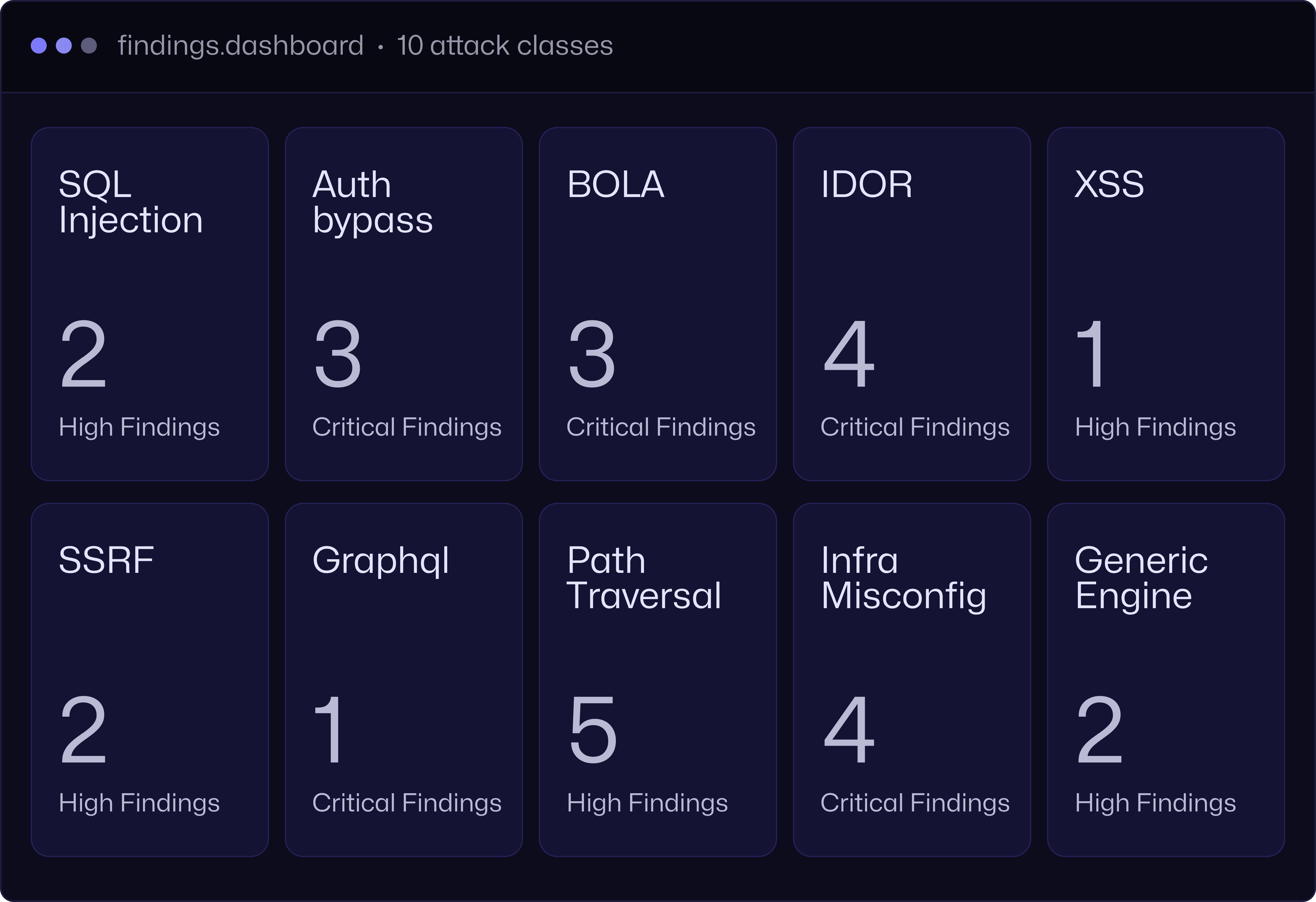
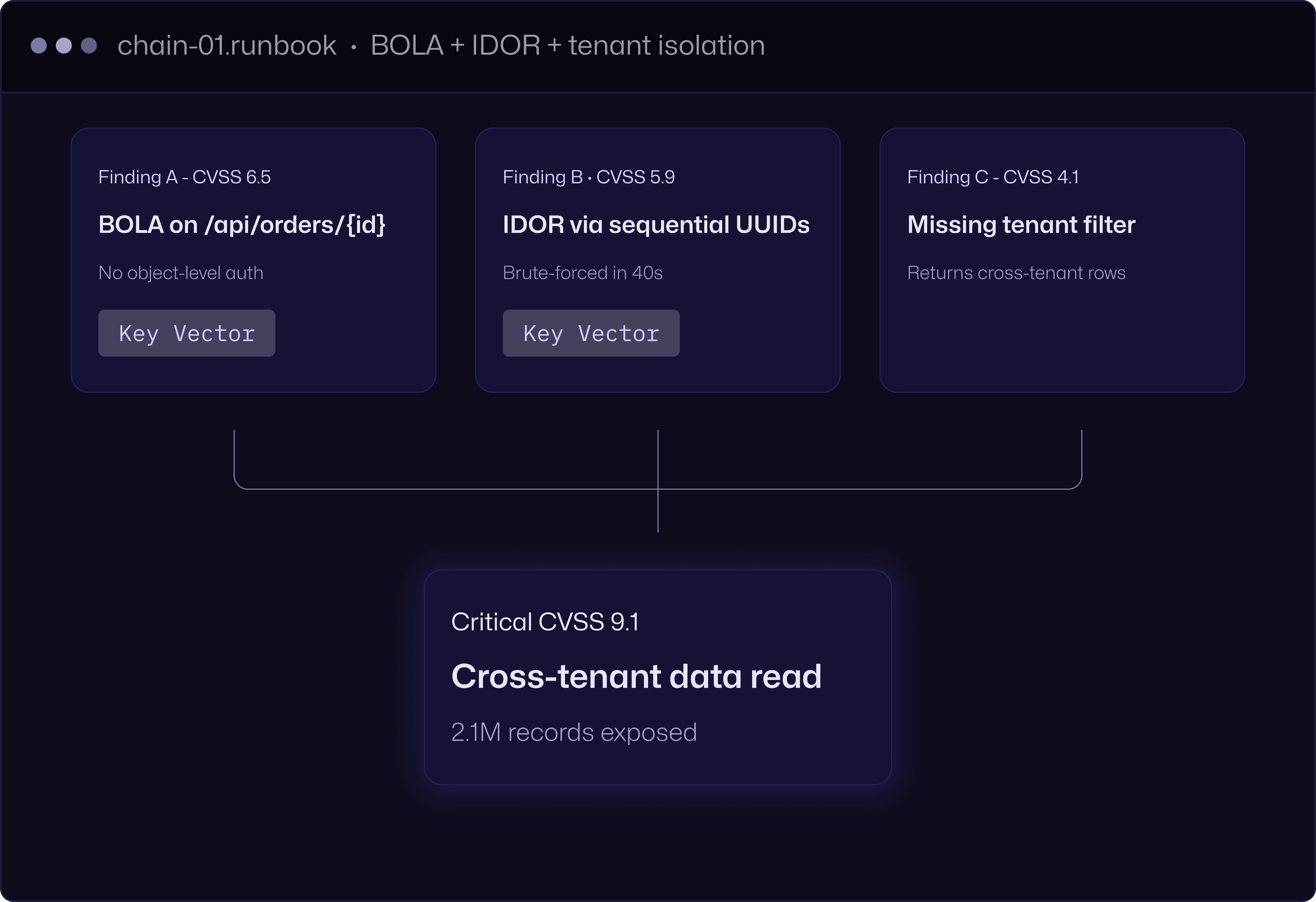
Passive Recon
App Intelligence
500+ Agents
Attack Chains
Evidence
Testing Type | What It Does | Where AI Pentesting Adds Value |
|---|---|---|
Black Box Testing | Tests from the outside with no internal access | Discovers exposed assets, leaked secrets, public endpoints, and unauthenticated attack paths |
Grey Box Testing | Tests with partial internal context or authenticated access | Validates IDOR, BOLA, JWT flaws, role boundary issues, and tenant isolation problems |
White Box Testing | Tests with full source code access | Uses code intelligence to trace user input, find missing checks, and validate exploitability |
Manual Pentesting | Human-led investigation and exploit development | Still useful for creative abuse cases and complex business logic |
AI Pentesting | Automated and agentic exploit validation | Adds speed, scale, repeatability, retesting, and code-aware targeting |
1. AI Pentesting Tests Faster Than Traditional Manual Cycles
The first major benefit of AI pentesting is speed.
Manual pentests often take days or weeks to scope, schedule, execute, review, and deliver. That timeline may work for annual compliance, but it does not match modern release cycles. If a team ships every week, a report from last month may already be outdated.
AI pentesting helps teams test faster by automating repeatable parts of penetration testing, such as reconnaissance, endpoint discovery, payload generation, authenticated testing, exploit validation, and retesting.
This does not mean every test should be fully automated. It means security teams can validate more changes without waiting for a new manual engagement.
Traditional Manual Testing | AI Pentesting Benefit |
|---|---|
Scheduled around consultant or internal tester availability | Can run on a defined cadence or after high-risk changes |
May take weeks to complete | Can surface validated findings faster |
Often tests one application snapshot | Can test more frequently as the application changes |
Retesting may require a new request or engagement | Retesting can be built into the workflow |
2. AI Penetration Testing Reduces Security Blind Spots Between Releases
Point-in-time testing creates blind spots. A manual pentest validates the application as it existed during the test window. But every new release can change the attack surface.
A new API endpoint may expose user data. A new admin feature may miss authorization checks. A GraphQL resolver may expose nested records. A JWT validation change may weaken authentication. A cloud permission update may expose storage.
AI penetration testing reduces these blind spots by making testing more continuous.
For fast-moving teams, the benefit is simple: security validation happens closer to the moment risk is introduced.
Security Gap | How AI Pentesting Helps |
|---|---|
New features ship after the manual pentest | Run AI pentesting after releases or high-risk PRs |
APIs change frequently | Test new endpoints and authenticated flows more often |
Authorization logic changes | Validate role boundaries, IDOR, and BOLA risks |
Fixes are not retested quickly | Run automated retests after remediation |
Evidence gets stale before audits | Produce fresher security evidence over time |
3. AI Pentesting Proves Exploitability, Not Just Theoretical Risk
Security teams already have too many alerts. One of the strongest benefits of AI pentesting is that it can focus on confirmed exploitability.
A weak security finding says: “This endpoint may be vulnerable.”
A strong AI pentesting finding says: “User A can access User B’s invoice by changing the object ID. Here is the request, response, affected endpoint, proof of access, severity, and fix guidance.”
Exploit validation matters because it separates real risk from noise.
Weak Alert | Strong AI Pentesting Finding |
|---|---|
Possible IDOR | Confirmed IDOR with user-to-user data access proof |
Possible SQL injection | Working SQL injection payload with reproducible evidence |
JWT issue suspected | Confirmed JWT tampering leading to privilege escalation |
GraphQL endpoint exposed | Confirmed unauthorized access to restricted nested fields |
Secret found | Secret tested for validity and permission scope |
For developers, this means less guessing. For security teams, it means better prioritization. For leadership, it means findings can be tied to business impact.
4. Code-Aware AI Pentesting Finds Deeper Application Logic Flaws
Traditional black box testing can only see the application from the outside. That is useful, but it often misses flaws that require internal context.
Code-aware AI pentesting can use source code, route definitions, middleware logic, data flows, and authorization patterns to guide offensive testing. This is especially useful for application-layer vulnerabilities that scanners often miss.
Examples include:
BOLA
IDOR
Missing ownership checks
Role boundary failures
JWT validation mistakes
GraphQL field-level authorization gaps
Tenant isolation failures
Business workflow bypasses
Sensitive data exposure through nested APIs
Vulnerability Class | Why Code Context Helps |
|---|---|
BOLA | AI can understand object ownership and test cross-user access |
IDOR | AI can identify object IDs and generate targeted access tests |
JWT flaws | AI can trace token validation logic and test tampering paths |
GraphQL authorization | AI can inspect resolver logic and test nested field exposure |
Business logic flaws | AI can reason about intended vs actual workflow behavior |
Tenant isolation failures | AI can map tenant boundaries and test cross-tenant access |
This is where AI pentesting becomes more than faster scanning. It becomes code-informed offensive validation.
5. AI Pentesting Improves Retesting And Fix Validation
Finding vulnerabilities is only half the job. The real goal is proving that the issue is fixed.
Manual retesting can be slow. It may require a new schedule, a new ticket, a new request, or an additional cost. That delay can leave teams unsure whether a fix actually closed the attack path.
AI pentesting improves retesting by making fix validation repeatable.
A better workflow looks like this:
AI pentesting confirms an exploitable vulnerability.
Developer fixes the issue.
Code is merged or deployed.
AI retests the original exploit path.
Finding closes only if the exploit no longer works.
Retesting Problem | AI Pentesting Benefit |
|---|---|
Retests take days or weeks | Run retests shortly after fixes |
Fix validation is skipped | Make retesting part of the workflow |
Developers assume the issue is fixed | Confirm with exploit failure |
Audit evidence is incomplete | Store timestamped retest proof |
Same bug returns later | Track recurrence and regression |
This is one of the biggest operational benefits for DevSecOps teams.
6. AI Pentesting Helps Small Security Teams Scale
Many companies have small security teams compared to engineering headcount. One AppSec engineer may support dozens or hundreds of developers. Manual testing every feature, API, or release is not realistic.
AI pentesting helps small teams scale by automating repeatable validation work.
It can continuously check known vulnerability classes, run authenticated tests, validate common exploit paths, and retest fixes. That frees security teams to focus on higher-value work.
Security Team Challenge | AI Pentesting Benefit |
|---|---|
Too many releases to test manually | Automates repeatable validation |
Limited AppSec headcount | Expands coverage without adding equivalent manual effort |
Developers need faster feedback | Provides findings closer to code changes |
Security team spends time triaging noise | Prioritizes confirmed exploitability |
Retesting consumes time | Automates fix validation |
AI pentesting does not remove the need for security expertise. It makes that expertise go further.
7. AI Penetration Testing Supports Compliance Evidence
Compliance teams need proof. They need to show that testing happened, issues were documented, fixes were tracked, and remediation was verified.
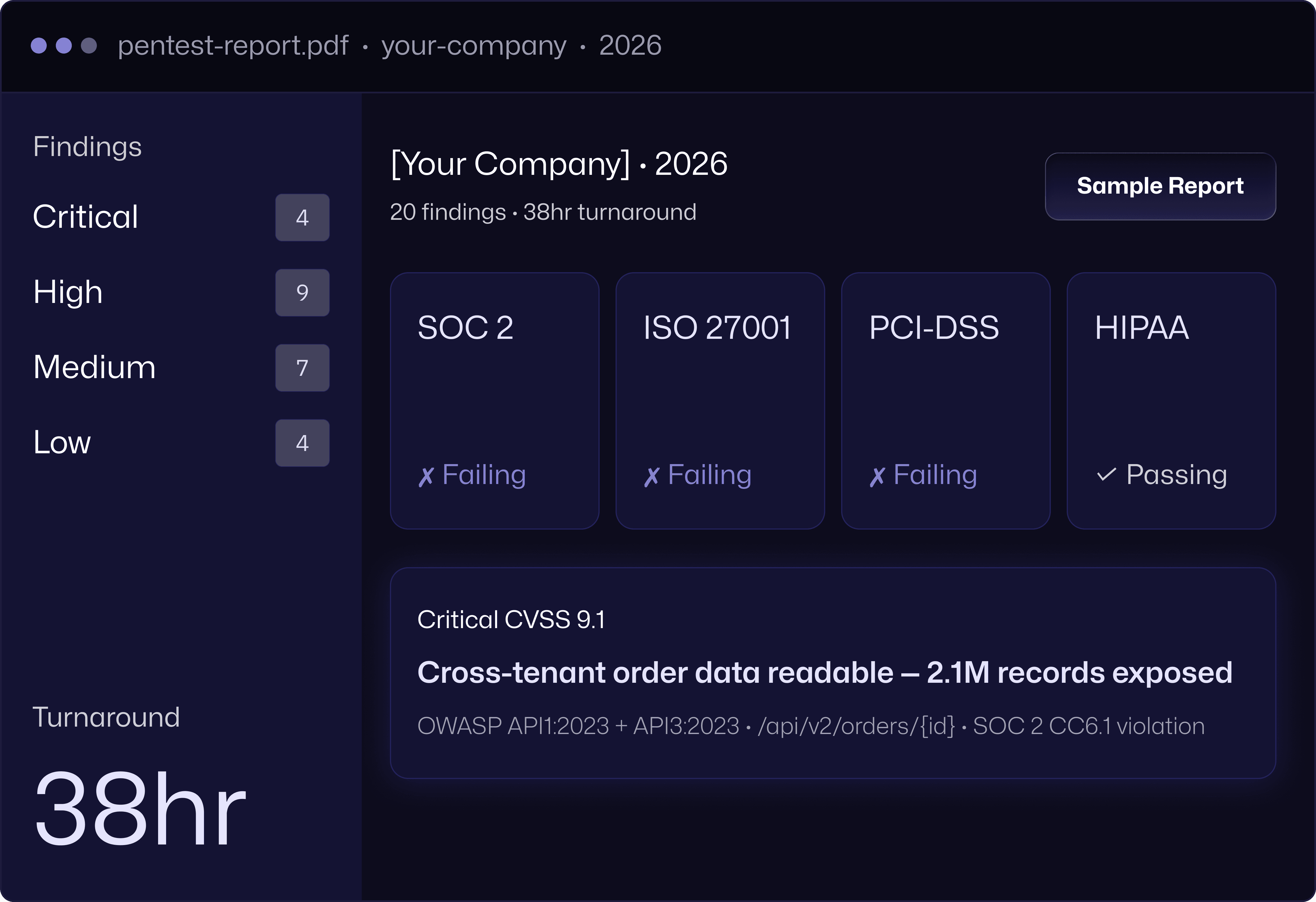
AI penetration testing can help produce more consistent evidence for frameworks like SOC 2, ISO 27001, PCI-DSS, HIPAA, and internal risk programs.
Strong reports should include:
Testing scope
Methodology
Asset inventory
Vulnerability catalog
CVSS scores
CWE or OWASP mappings
Business impact
Proof-of-concept evidence
Remediation guidance
Retest validation
Timeline from discovery to fix
Compliance Need | AI Pentesting Evidence |
|---|---|
Testing frequency | Timestamped testing records |
Vulnerability proof | PoCs, request evidence, screenshots, or attack paths |
Severity scoring | CVSS and business impact |
Control mapping | SOC 2, ISO 27001, PCI-DSS, HIPAA, OWASP, CWE |
Remediation tracking | Discovery, fix, retest timeline |
Fix verification | Evidence that exploit no longer works |
AI pentesting is especially useful for teams preparing for audits while shipping frequently.
8. AI Pentesting Improves Developer Remediation Workflows
A security finding is only useful if developers can fix it.
Traditional pentest reports often arrive as PDFs. Developers then need to interpret the issue, reproduce it, identify the affected code, and decide how to fix it. This creates friction and slows remediation.
AI pentesting can improve remediation by providing more actionable context:
Affected endpoint
Reproduction steps
Exploit request
Business impact
Suggested fix
Code location when available
Retest status
Severity and priority
Developer Need | AI Pentesting Benefit |
|---|---|
Understand the bug quickly | Provides reproduction evidence and context |
Know where to fix | Links exploit to endpoint, route, or code path |
Prioritize work | Shows severity and business impact |
Validate the fix | Runs retest after remediation |
Avoid repeated mistakes | Highlights patterns across codebase |
This turns penetration testing from a report handoff into a feedback loop.
9. AI Pentesting Helps Prioritize Real Business Risk
Not every vulnerability deserves the same urgency.
A missing header and an exploitable authorization bypass should not compete equally for engineering attention. AI pentesting helps prioritize by focusing on what can actually be exploited and what impact it creates.
A strong AI pentesting workflow can show:
Can the attacker access data?
Can the attacker escalate privileges?
Can the attacker cross tenant boundaries?
Can the attacker bypass authentication?
Can multiple low-severity issues chain into a critical path?
Which asset or workflow is affected?
Finding Type | Business Risk |
|---|---|
Low-confidence scanner alert | May not require urgent action |
Confirmed IDOR | Customer data exposure risk |
Confirmed BOLA | API authorization failure with tenant impact |
JWT role tampering | Privilege escalation risk |
Exposed admin panel | Administrative compromise risk |
Chained exploit path | Higher likelihood of real-world breach impact |
This helps teams prioritize based on exploitability, not fear.
10. AI Pentesting Works Best With Manual Pentesting, Not Against It
One of the most important benefits of AI pentesting is that it makes manual pentesting more focused.
Instead of using human testers for every repetitive check, teams can use AI pentesting for continuous coverage and retesting. Then manual testers can focus on work that requires creativity, intuition, and business understanding.
Manual pentesters still matter for:
Novel attack paths
Complex business logic
Red team exercises
Social engineering
Physical security
Custom protocol testing
Deep exploit research
Threat modeling
Human-led abuse cases
Use AI Pentesting For | Use Manual Pentesting For |
|---|---|
Continuous testing across releases | Annual or major-release deep dives |
API and auth validation | Creative business logic abuse |
Automated retesting | Novel vulnerability discovery |
Compliance evidence support | Expert narrative and manual validation |
Known exploit classes | Advanced red team simulation |
Code-aware repeatable checks | Unusual workflows and edge cases |
The best security teams do not treat AI pentesting and manual pentesting as enemies. They use both for different jobs.
AI Pentesting Benefits At A Glance
Benefit | Why It Matters |
|---|---|
Faster testing | Reduces delay between code change and security validation |
Continuous coverage | Limits blind spots between manual assessments |
Exploit validation | Confirms real risk instead of theoretical alerts |
Code-aware testing | Finds deeper application logic and authorization flaws |
Faster retesting | Proves fixes quickly after remediation |
Better scalability | Helps small security teams cover more ground |
Compliance evidence | Produces audit-ready reports and retest proof |
Developer-friendly remediation | Gives actionable reproduction and fix context |
Better prioritization | Focuses on confirmed business impact |
Hybrid testing support | Lets human testers focus on high-value investigation |
These benefits point toward a broader shift in how penetration testing is delivered. See our future of automated penetration testing guide for a look at where continuous validation and autonomous testing are heading.
Conclusion: AI Pentesting Helps Security Keep Up With Software Delivery
The biggest benefit of AI pentesting is that it brings security validation closer to the speed of software delivery. Modern applications change constantly, and traditional point-in-time testing cannot always keep up with new APIs, permissions, cloud assets, authentication updates, and business workflows.
AI penetration testing helps teams test more often, prove exploitability, reduce false positives, retest fixes faster, and produce stronger compliance evidence. Code-aware AI pentesting adds even more value by connecting offensive testing to routes, roles, data flows, middleware, and authorization logic inside the application.
Manual pentesting still matters. Human testers are essential for creative business logic, red team operations, custom workflows, and novel exploit discovery. But AI pentesting gives security teams the repeatable coverage they need between those deeper manual assessments.
If your team ships faster than your current pentest cycle, start with one high-risk application or API. Measure confirmed findings, retest time, false positive rate, and remediation speed. The value of AI pentesting becomes clear when it reduces the gap between code change and verified security.

