AI Code Review
GPT-5.6 Boosts CodeAnt's Unit Economics

Sonali Sood

Founding GTM, CodeAnt AI
On June 26, 2026, OpenAI previewed GPT-5.6, three models, three price points, one direction that every engineering team evaluating automated code review tools needs to understand.
Model | Input | Output | Quality |
|---|---|---|---|
GPT-5.6 Sol | $5.00/M | $30.00/M | Best — new ceiling |
GPT-5.6 Terra | $2.50/M | $15.00/M | GPT-5.5 quality, half the price |
GPT-5.6 Luna | $1.00/M | $6.00/M | Near GPT-5.5, 5x cheaper on output |
Luna costs $1 per million input tokens and $6 per million output tokens. It performs near GPT-5.5 levels on several benchmarks despite being the fastest and lowest-cost model in the GPT-5.6 family. GPT-5.5, the model Luna is being compared favourably against, costs $5 input and $30 output.
That is not a minor pricing adjustment. That is the price floor for frontier-quality automated code review dropping by a factor of five on output tokens. And it happened on a single day.
For CodeAnt AI, that day changed our financial model. Not because we are already calling the GPT-5.6 API, the model is in limited preview with approximately 20 organisations right now. But because the price exists. The market rate for near-GPT-5.5 intelligence is now $1/$6. Every cost projection we run for automated code review at scale starts from that number today, not from GPT-5.5's $5/$30.
This is what a falling cost curve looks like in practice. And it is exactly the business model we built CodeAnt around.
What Is Automated Code Review, and Why the Model Underneath It Matters
Before getting into GPT-5.6 specifically, it is worth being precise about what automated code review actually is and why the underlying model is the single biggest lever on both quality and cost.
Automated code review is the process of analysing source code on every pull request, without a human reviewer reading every line, to catch issues before they merge. The best automated code review tools:
Catch bugs, security vulnerabilities, style violations, and logic errors in seconds
Flag only what matters, no noise, no false positive flood
Integrate directly into the pull request workflow so developers see findings where they already work
Return results faster than any human review queue
The quality of that analysis depends almost entirely on the intelligence of the model doing the reading. A smarter model:
Catches the vulnerability a dumber one misses
Understands context across files, not just the changed lines
Knows what a SQL injection looks like three abstraction layers deep, not just in a toy example
Does not flood you with false positives that train developers to ignore findings
That is why every frontier model launch is a quality event for automated code review, not just a pricing event.
CodeAnt AI runs on frontier large language models to do exactly this.
Every pull request gets analysed by the best available model.
Our cost per review is a direct function of what frontier models charge per token.
Our review quality is a direct function of how smart those models are.
When both go in the right direction on the same day, smarter and cheaper, that is compounding. And GPT-5.6 moved both levers.
GPT-5.6 Sol, Terra, and Luna: What Each Tier Means for Code Review Automation
Model | Input (per 1M tokens) | Output (per 1M tokens) | Release |
|---|---|---|---|
GPT-4o | $2.50 | $10.00 | 2024 |
GPT-5.4 | $2.50 | $15.00 | March 2026 |
GPT-5.5 | $5.00 | $30.00 | April 2026 |
GPT-5.6 Sol | $5.00 | $30.00 | June 2026 |
GPT-5.6 Terra | $2.50 | $15.00 | June 2026 |
GPT-5.6 Luna | $1.00 | $6.00 | June 2026 |
Reported token efficiency across the GPT-5.6 family is about 10 to 15 percent better than GPT-5.5, meaning the same automated code review task completes using fewer tokens, stacking on top of the already lower price.
For code review automation specifically, here is how each tier maps:
Sol ($5/$30): The ceiling. Best for the hardest security analysis, multi-file vulnerability chains, complex logic errors, long-horizon reasoning across a large codebase. Sol advances the performance-efficiency frontier on long-horizon security tasks including vulnerability research and exploitation, achieving competitive results on ExploitBench while using roughly one-third of the output tokens compared to another leading frontier system.
Terra ($2.50/$15): The everyday workhorse. Terra reportedly matches GPT-5.5 quality at roughly half the price, for most teams, migrating that volume is close to a free efficiency win. This is the tier that handles the bulk of pull request review, style, logic, common security patterns, dependency issues.
Luna ($1/$6): The volume tier. Luna performs near GPT-5.5 levels on several benchmarks at one-fifth the output cost. High-volume, routine automated code review, linting, formatting checks, simple bug patterns, runs here.
The right automated code review tool does not use one tier for everything. It routes intelligently: Luna for volume, Terra for everyday PRs, Sol for the security-critical paths. That routing is what turns a price drop into a real cost reduction without sacrificing quality where quality matters.
How GPT-5.6 Directly Improves CodeAnt's Automated Code Review Unit Economics
Here is the honest version of what happened when GPT-5.6 launched, and what it means specifically for CodeAnt.
The moment OpenAI published $1/$6 for Luna, that became the new market rate for near-GPT-5.5 quality code review automation. Not in weeks when the model is generally available. Now. Every financial model we run, every cost-per-PR projection, every customer pricing conversation starts from that number today.
This is the same logic as: "Tesla cut car prices, our fleet operating costs just improved." The cars are not in your driveway yet. The economics changed anyway.
When GPT-5.6 reaches general availability, planned for the coming weeks, CodeAnt routes to the right tier for the right task. No rebuild. No re-engineering. No customer communication. Our automated code review stack picks up the new model the same way your phone picks up a software update. The cost per pull request drops. The quality ticks up. Customers notice neither, they just notice the findings keep getting sharper.
This is not a prediction. It is the same thing that happened when GPT-5.4 shipped in March 2026. And when GPT-5.5 shipped in April. The pattern is the mechanism.
What Is the Best Automated Code Review Tool and How Does GPT-5.6 Change the Answer?
This is the question most engineering teams are searching right now. The honest answer is: the best automated code review tool is the one running on the smartest available model, routed intelligently across cost tiers, with findings that make sense to the developer reading them.
GPT-5.6 changes the answer in two ways.
First, the quality ceiling just went up. GPT-5.6 Sol sets new high-water marks across cybersecurity evaluations measuring vulnerability research and exploitation, pushing past prior performance ceilings. Any automated code review tool that adopts Sol for security-critical analysis is running materially better security reviews than anything available two months ago.
Second, the cost floor just dropped. Luna at $1/$6 means that automated code review tools running on frontier models can now deliver near-GPT-5.5 quality at a fraction of the previous cost. Tools that built on proprietary models or locked to older versions cannot pass this benefit on. They are running on yesterday's intelligence at yesterday's cost.
The best automated code review tool in 2026 is not the one with the most features listed on a pricing page. It is the one whose intelligence upgrades automatically every time OpenAI or Anthropic ships, and whose cost structure gets better every time, too.
Manual Code Review vs Automated Code Review: The GPT-5.6 Argument
The manual code review vs automated code review debate usually runs on two axes: quality and cost. GPT-5.6 just moved both of them significantly in automated code review's favour.
Manual Code Review | Automated Code Review (GPT-5.6) | |
|---|---|---|
Quality consistency | Depends on who is in the queue, how tired they are, whether the senior engineer is in a meeting | Same intelligence, same standard, every PR, every time |
Security depth | Misses the SQL injection at the bottom of a 400-line PR on the sixth review of the day | GPT-5.6 Sol reads the full context regardless of PR length or position in the queue |
Speed | Hours to days depending on reviewer availability | Seconds |
Cost per PR | $75 to $200 (senior engineer at $150 to $400/hr, 30 to 60 mins per PR) | Fraction of a cent on GPT-5.6 Luna |
Monthly cost at scale | Grows linearly with PR volume and headcount | ~$25/month for 2M input + 500K output tokens on GPT-5.5. Luna drops it further |
Availability | Blocked by meetings, timezones, holidays, burnout | 24/7, no queue |
Improves over time | Only if the reviewer gets better | Every frontier model launch upgrades it automatically |
This is not an argument that automated code review replaces human judgment on every decision. It is an argument that the economics and quality of automated code review just improved dramatically on the same day, and any team still relying on manual review for every PR is making an expensive choice.
Benefits of Automated Code Review That GPT-5.6 Makes Stronger
The benefits of automated code review are well documented. GPT-5.6 makes each of them materially better:
Consistency: Every PR gets reviewed to the same standard, by the same intelligence, every time. No reviewer fatigue, no knowledge gaps, no backlog. GPT-5.6 Terra running at GPT-5.5 quality means that standard just went up.
Speed: Automated code review tools return findings in seconds, not hours. The PR does not sit in a queue waiting for a human to clear their backlog. GPT-5.6 Luna is specifically optimised for speed, Luna has the lowest cost and is designed for faster, lower-cost everyday work.
Security coverage: This is where GPT-5.6 makes the biggest leap for automated code review. OpenAI specifically flagged Sol's ability to identify and patch vulnerabilities as a pointed capability, signalling that OpenAI is seriously courting enterprise security teams. The frontier model improving fastest in security is the same model powering CodeAnt's security code review.
Cost: Luna at $1/$6 per million tokens makes the economics of automated code review at scale better than they have ever been. The benefit that was previously only accessible to large engineering orgs with significant AI budgets is now accessible to teams of any size.
Developer experience: Good automated code review does not just flag issues, it explains them. GPT-5.6's improved reasoning means findings come with clearer context, better suggested fixes, and less noise. Developers spend less time dismissing false positives and more time shipping.
How Does AI Help With Code Review Automation: The GPT-5.6 Version
The question "how does AI help with code review automation" has a different answer in June 2026 than it did in January.
Before large language models reached frontier quality on coding tasks, AI-assisted code review meant static analysis with ML scoring, useful for catching known patterns, poor at understanding context. A rule-based tool catches the obvious SQL injection. It does not catch the logic error three abstraction layers deep that only becomes a vulnerability under a specific race condition.
Frontier large language models changed that. A model at GPT-5.5 quality understands the intent of the code, not just its surface patterns. It reads the PR the way a senior engineer reads it, asking what this is supposed to do, whether it does that correctly, and what could go wrong.
GPT-5.6 advances this further on three axes relevant to code review automation:
Security reasoning: Improved long-horizon security task performance including vulnerability research and exploitation analysis
Token efficiency: 10 to 15 percent better token efficiency than GPT-5.5, meaning deeper analysis of the same PR at lower cost
Agentic capability: Sol's new ultra mode uses subagents beyond a single agent setup, enabling multi-file, multi-step reasoning that mirrors how a senior engineer actually approaches a complex review
The answer to how AI helps with code review automation in 2026 is: it reads your code the way your best engineer would, at the speed of a CI pipeline, at a cost that is falling every quarter.
Why the Automated Code Review Tool You Choose Today Determines Your Upgrade Trajectory
Most engineering teams pick an automated code review tool and do not revisit that decision for 18 months. That makes the architectural choice, how the tool relates to the underlying model, more important than any feature on the current pricing page.
There are three architectures in the market:
Proprietary model tools: Built their own model, trained on their own data. Every frontier model launch is a competitive threat. Their intelligence does not upgrade until they retrain and redeploy. That cycle takes months and costs millions.
Locked-version tools: Run on a specific model version for stability. GPT-5.6 launched on June 26. These tools are still running on whatever version they last certified. Their customers are paying for yesterday's intelligence.
Frontier-native tools: Abstract the model as infrastructure, evaluate new releases continuously, and route to the best available model. GPT-5.6 launches. Within weeks it is in production. Customers get the upgrade without asking for it.
CodeAnt is the third kind. We built the code understanding layer, the security context, the PR workflow integration, and the findings quality on top of frontier infrastructure.
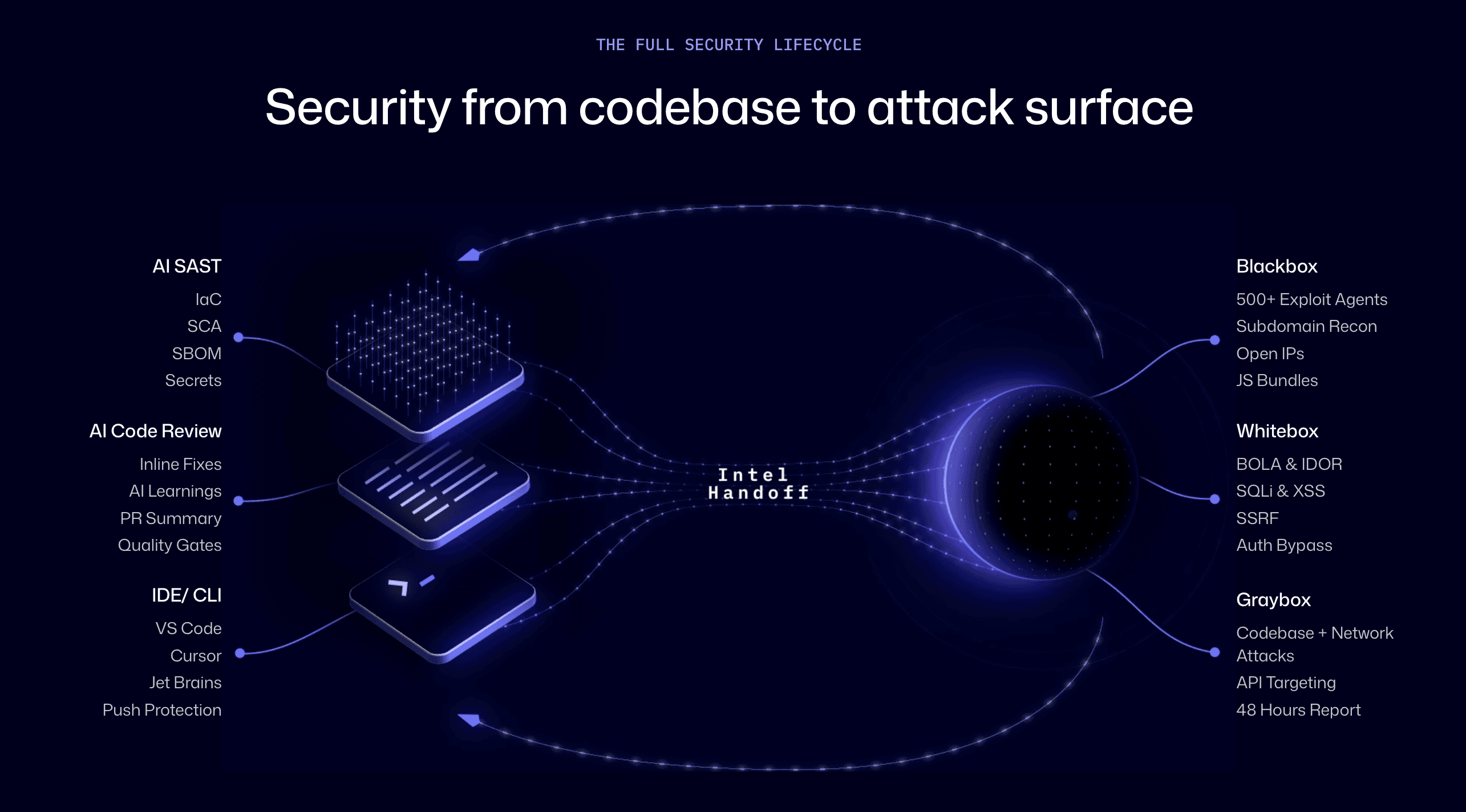
When the infrastructure gets smarter and cheaper, the product gets smarter and cheaper with it, automatically.
The automated code review tool you choose today is not just a tool. It is a bet on which architecture wins as frontier models keep improving. We know which direction that curve goes.
This Is Not Over: What Comes After GPT-5.6 for Code Review Automation
GPT-5.6 Sol Ultra leads Terminal-Bench 2.1 at 91.9%. That is the state of the art in agentic coding today. In six to eight weeks, something will beat it.
Anthropic will ship. Google will ship. OpenAI will respond. The frontier model release cadence has compressed to sub-60-day cycles. Every cycle, the intelligence available to automated code review tools goes up and the cost per token goes down.
For CodeAnt, every one of those cycles is a free product upgrade. For teams that chose the wrong architecture, proprietary model, locked version, wrapper with no abstraction layer, every cycle is a gap that keeps widening.
The question for every engineering team right now is not "which automated code review tool has the best features today." It is "which tool will have the best features in six months, when the next frontier model ships, without us doing anything to make it happen."
That is the question GPT-5.6 answers clearly.
Conclusion: Automated Code Review Just Got Better and Cheaper on the Same Day
GPT-5.6 Sol, Terra, and Luna launched on June 26, 2026. Luna at $1/$6 set a new price floor for frontier-quality automated code review. Sol at GPT-5.5 pricing set a new quality ceiling for security analysis. Terra at half the GPT-5.5 price gave every team a practical path to upgrade their everyday code review automation without changing their budget.
For CodeAnt AI, the moment that pricing published, our unit economics improved. Not because we are running GPT-5.6 today, the general availability rollout is weeks away. Because the market rate for near-GPT-5.5 quality automated code review dropped to $1/$6, and every projection we run from today uses that number.
When the model goes live, we route to it. No rebuild. No migration sprint. No customer communication. The automated code review your team runs on CodeAnt gets smarter and cheaper, automatically, the same way it did when GPT-5.4 shipped and when GPT-5.5 shipped.
That is the architecture we built. And GPT-5.6 is the latest proof it works.
Want automated code review that upgrades every time OpenAI ships, without waiting for your vendor to catch up?
Start your first review with CodeAnt AI →
See how CodeAnt uses AI for security vulnerability detection →
FAQs
What is GPT-5.6 and what are Sol, Terra, and Luna?
How much does automated code review cost with GPT-5.6?
Does CodeAnt AI use GPT-5.6?
Why is GPT-5.6 only available to 20 organisations right now?
Is GPT-5.6 Sol better than GPT-5.5 for security and coding?