Code Quality
12 Best AI Code Review Tools for Developers in 2026

Ninad Pathak

Organic Growth
The best AI code review tool in 2026 depends on what your team’s biggest bottleneck actually is.
Reviews and security in one. AI line-by-line PR reviews plus SAST, secret detection, and IaC scanning caught before merge, not two hours later in a separate scan. CodeAnt AI runs all of it in one CI/CD workflow across GitHub, GitLab, Bitbucket, and Azure DevOps, in the PR, the IDE, and the CLI.
Conversational PR summaries. CodeRabbit focuses on plain-language summaries and interactive review chat on every diff, and reports 15,000+ customers.
Code quality metrics and org-level visibility. SonarQube remains the enterprise standard for static-analysis depth, and Sonar now sells an AI reviewer of its own.
This guide covers the 12 leading AI code review tools in 2026 from a developer’s seat, meaning where each tool actually shows up in your day (PR flow, IDE, CLI), what it costs, and which teams it is right for.
No equal-weight list. Actual verdicts.
Here is the full roster with verified pricing, checked against every vendor’s own pricing page on July 5, 2026.
Tool | Best for | Reviews where | Pricing (verified July 2026) |
|---|---|---|---|
CodeAnt AI | Code review plus SAST, secrets, IaC in one pass | PR, IDE (VS Code, Cursor, JetBrains) | 14-day trial (100 PR reviews), Premium $24/user/mo |
CodeRabbit | Fast automated PR reviews everywhere | PR, IDE (VS Code, Cursor, Windsurf), CLI | Free tier, Pro $24/user/mo annual, Pro Plus $48 |
Cursor Bugbot | Usage-based logic-bug hunting | GitHub PRs | ~$1.00-1.50 per PR review, usage-based |
GitHub Copilot Code Review | GitHub-native review on paid Copilot plans | PR (github.com), VS Code | Pro $10, Business $19/seat, Enterprise $39/seat, review billed via AI credits |
Greptile | Full-codebase context on big repos | PR | Free Starter (1 dev, 50 credits/mo), Pro $30/seat/mo |
Graphite | Stacked PRs and merge-queue workflow | PR, stacked-PR flow | Hobby free, Starter $20, Team $40/user/mo annual |
Qodo (formerly Codium) | Review depth plus test generation | PR (Qodo Merge), IDE (Qodo Gen) | 14-day trial, Pro Team $30/mo base, credit-based |
Claude Code Review | Deep multi-agent reasoning per PR | GitHub PRs, local CLI | Usage-based, $15-25 average per review |
SonarQube | Quality gates and governance at scale | PR gate, IDE | Team from $34/mo (100k LOC), Gitar AI reviewer $20-40/user/mo |
Snyk | Dependency, container, and code security | PR checks, IDE, CI | Free tier, Team from $25/mo per contributing dev |
Codacy | Affordable standards enforcement | PR, IDE | Developer free, Team $18/dev/mo annual |
Bito | LOC-metered reviews for small teams | PR, IDE | Team $12/seat/mo annual ($15 monthly) |
Prices move fast in this category. Two of the twelve changed their pricing model in June 2026 alone, so treat any list without a verification date as historical fiction.
Which Developer Tools Company Has the Best AI-Powered Code Review in 2026?
The honest answer by category:
Best for security-first code review (SAST + secrets + IaC unified): CodeAnt AI. It combines AI PR reviews, SAST, secret detection, and IaC scanning in one platform without third-party plugins, so a security finding in a PR is caught before merge rather than in a separate scan two hours later.
Best for automated PR reviews: CodeAnt AI, which runs AI line-by-line reviews with SAST, secret, and IaC checks in the same pass across GitHub, GitLab, Bitbucket, and Azure DevOps, plus IDE and CLI. CodeRabbit is the fastest to set up if you want review comments on their own.
Best for enterprise code quality governance: CodeAnt AI, which pairs quality gates, DORA metrics, and org-wide reporting with security scanning in one platform. SonarQube remains the pick when the deepest static-analysis rules library is the priority.
Best for AI-powered code review with test generation: Qodo (formerly Codium). Context-aware enterprise reviews with automated test suggestion built in.
Best for deep repo-wide architectural analysis: Greptile. It reviews each change against an index of the whole codebase, which pays off in large monorepos where a change’s implications only make sense with whole-repo context.
Best for PR workflow automation (stacked PRs, merge speed): Graphite, now owned by Cursor. It solves the review-queue problem, which is a different problem from analysis depth.
Best for pay-per-review economics: Cursor Bugbot at roughly $1.00-1.50 per PR review, and Claude Code Review at the other end of the depth-and-cost curve.
Every ranked list carries a methodology, stated or not. Here is this one’s.
How We Evaluated These Tools
Every AI code review tool here was scored on the criteria that decide whether developers keep it enabled after week two:
Workflow surface: does it review in the PR only, or also in the IDE and CLI where the fix actually happens?
Context depth: full-codebase understanding or diff-only analysis?
Security coverage: SAST, secrets, and IaC natively, or via plugins and separate tools?
Setup friction: time from install to first useful review comment.
Signal quality: whether findings are worth reading or the bot becomes background noise.
Org-level reporting: dashboards that give engineering leaders more than per-PR comments.
Every price in this article was checked against the vendor’s own pricing page on July 5, 2026.
For a head-to-head ranking measured on catch rate, see our companion benchmark-ranked list of the best AI code review tools. This page is the workflow-fit guide.
1. CodeAnt AI
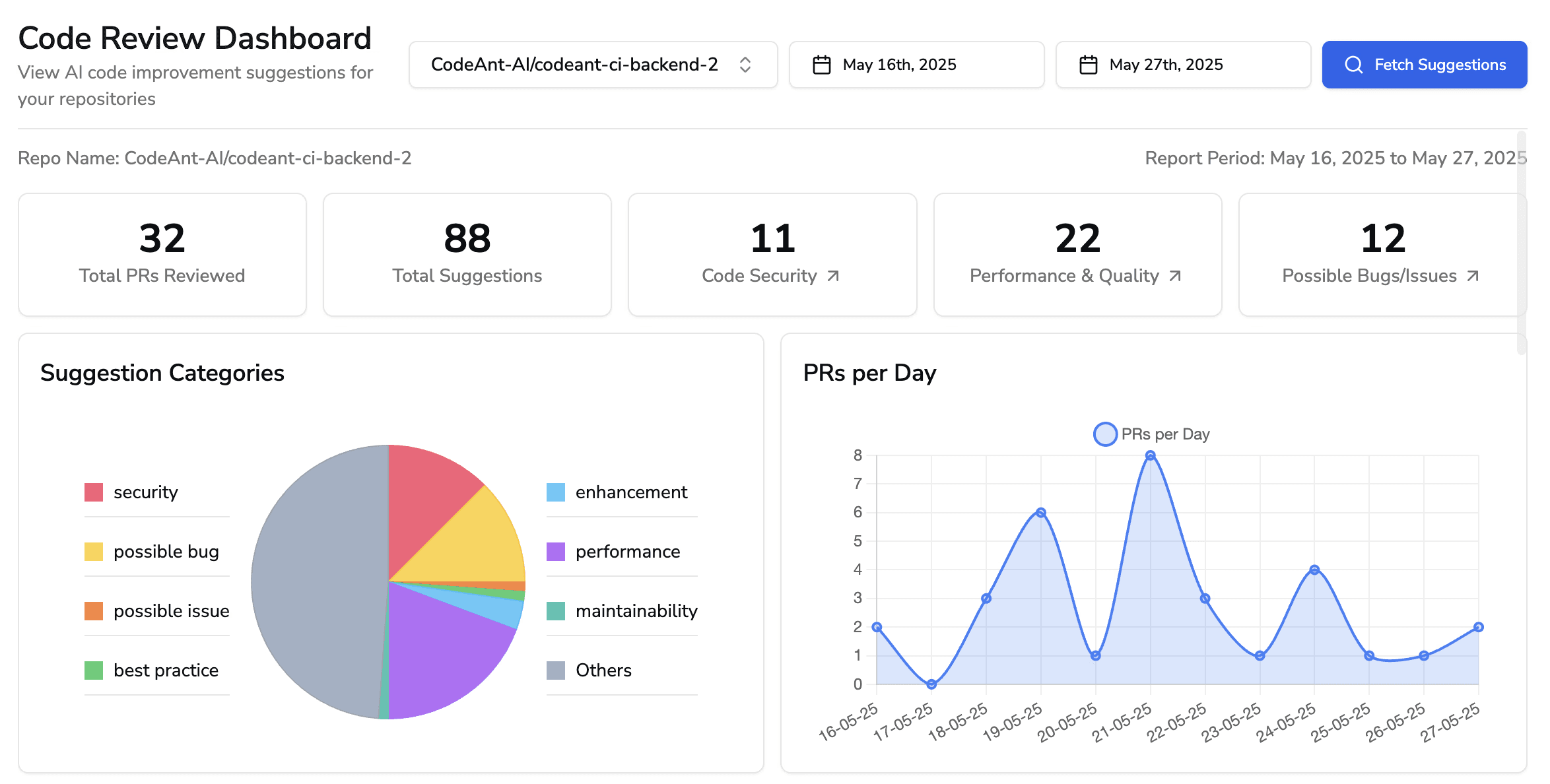
CodeAnt AI is a defensive and offensive security platform that unifies AI code review, SAST, and agentic pen testing.
In a developer’s day it lives in the PR as a reviewer that reads the diff and runs security scans in the same pass, with code quality and security dashboards behind it.
That single-pass design is the structural difference. A PR that introduces a SQL injection pattern gets a review comment and a SAST finding in the same review instead of a bot comment now and a scanner ticket later.
The same code intelligence feeds CodeAnt’s offensive penetration testing. When code review keeps flagging an authentication pattern, the offensive testing cycle targets that exact pattern externally.
Teams usually run review and penetration testing as separate programs with findings that never talk to each other. Here the pentest confirms which review flags are genuinely exploitable versus theoretical.
Here is how it lines up against CodeRabbit, the tool it gets compared with most:
CodeAnt AI | CodeRabbit | |
|---|---|---|
AI PR review | Line-by-line, summaries, chat | Line-by-line, summaries, chat |
SAST, secrets, IaC | Built in, no plugin | Via integrated third-party linters and scanners |
Agentic pen testing | Built in | Not offered |
Git platforms | GitHub, GitLab, Bitbucket, Azure DevOps | GitHub, GitLab, Bitbucket, Azure DevOps |
IDE and CLI | VS Code, Cursor, JetBrains | VS Code, Cursor, Windsurf, plus CLI |
Engineering dashboards | DORA metrics, security audit reports | Review reports and analytics |
Pricing | Premium $24/user/mo, 14-day trial | Pro $24/user/mo annual, Pro Plus $48 |
At the same $24 seat price, CodeAnt AI pairs AI review with native SAST, secret, and IaC scanning in one pass, while CodeRabbit centers on review breadth and comment volume.
Teams moving toward SOC 2 Type II tend to value a code review tool that also runs the penetration test, because defensive and offensive findings map to the same codebase.
Why developers actually use it: running a PR bot alongside a separate security scanner means two finding streams, two dashboards, and two sets of alerts. This collapses that into one review pass and one remediation queue.
Who it is right for: teams where security is a first-class concern, such as SaaS companies handling customer data, working toward SOC 2, or operating in regulated industries.
Who it is wrong for: teams that only need lightweight PR summaries and already have mature security tooling they will not consolidate.
Pricing: 14-day free trial with 100 PR reviews and no credit card, then Premium at $24/user/month with unlimited PR reviews. Enterprise adds SSO, audit logs, and on-prem or VPC deployment. Free for open source.
2. CodeRabbit
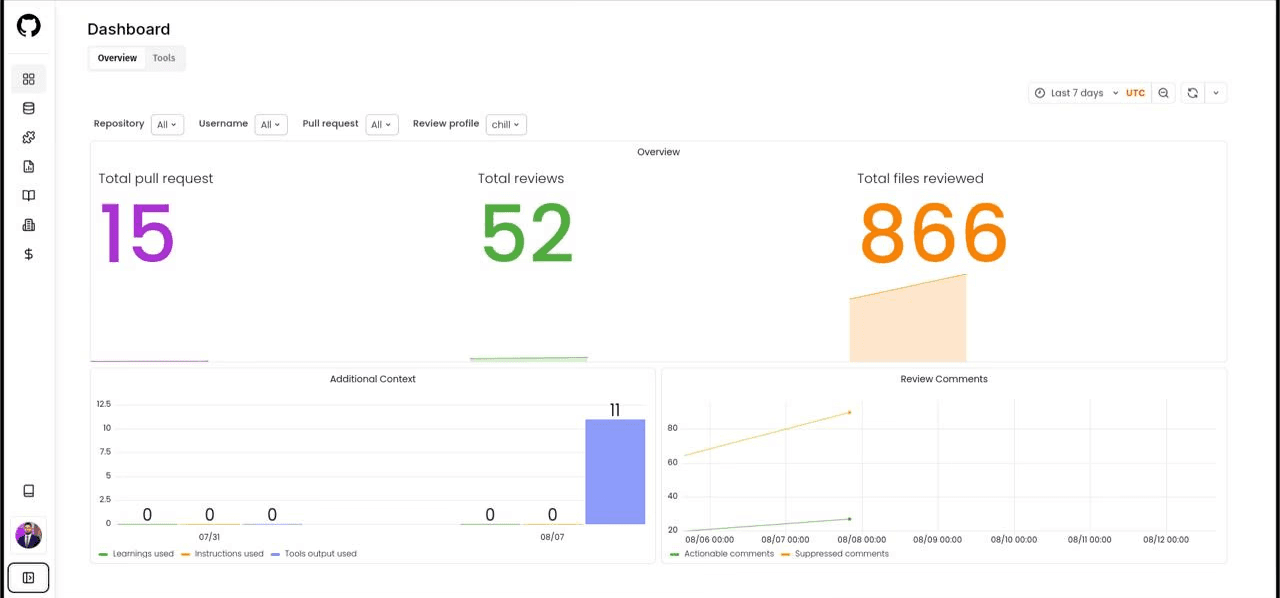
CodeRabbit is the most-installed dedicated AI reviewer in the PR flow, and in 2026 it also meets you in the editor.
It reviews on GitHub, GitLab, Bitbucket, and Azure DevOps, ships VS Code, Cursor, and Windsurf extensions, and has a CLI for pre-push reviews.
Its reviews learn from your feedback, apply path-based instructions, and pull in results from integrated linters and scanners. Review chat lets you ask the bot to explain or adjust a finding without leaving the PR.
Strengths: fastest setup in the category, broad platform and IDE coverage, summaries and diagrams that make big PRs skimmable.
Limitations: security scanning comes from integrated third-party tools instead of a native engine, and comment volume needs tuning on busy repos.
Pricing: free tier with PR summaries, Pro $24/user/month billed annually, Pro Plus $48/user/month, usage-based add-ons for CLI reviews.
Best for: teams that want automated review comments running today with minimal configuration.
How CodeAnt AI, CodeRabbit, and Qodo Compare for Your Team
These three win the “best AI code review tool” conversation most often in 2026. The honest breakdown of when to choose each:
Choose CodeRabbit if: your primary need is fast, automated PR review comments and summaries, you already have separate security tooling you are keeping, and you want the least configuration.
Choose CodeAnt AI if: you want PR reviews and security scanning (SAST, secrets, IaC) in one platform, you are working toward SOC 2, and you need one tool across GitHub, GitLab, Bitbucket, and Azure DevOps with org-level DORA metrics.
Choose Qodo if: you are at enterprise scale, need context-aware reviews with policy enforcement across a large codebase, and want automated test generation alongside review.
Choose SonarQube if: code quality governance and long-term technical debt tracking are the primary requirement and you will invest in configuration for static analysis depth.
On the speed versus depth tradeoff, CodeRabbit deploys fastest and generates the most review comments per PR, CodeAnt AI weights its reviews toward security in a single pass, and Qodo goes deepest but needs more enterprise setup.
3. Cursor Bugbot
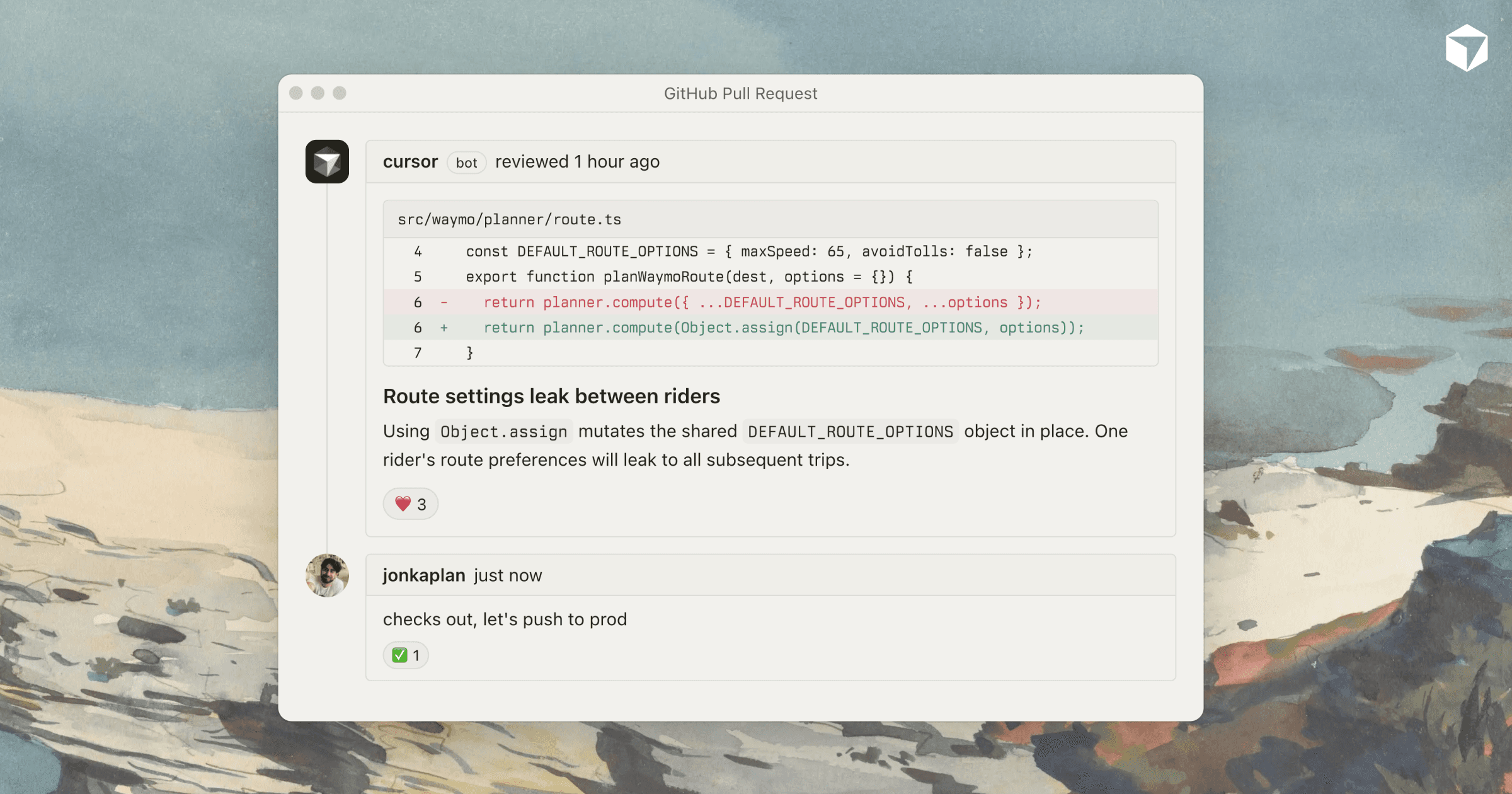
Bugbot is Cursor’s PR reviewer, and it does one job, which is hunting logic bugs in GitHub pull requests. It skips style commentary, supports custom Bugbot Rules, and Cursor reports that more than half of the bugs it flags get fixed.
The pricing model is the story. In June 2026 Cursor moved Bugbot from $40 per seat to pure usage-based billing at roughly $1.00-1.50 per PR review, effective at renewals after June 8, 2026.
That makes it the cheapest way to put a serious bug-hunter on every PR.
An effort-level selector trades cost for thoroughness, with high effort finding materially more bugs per Cursor’s own numbers. If your team pairs Cursor with a security-focused reviewer, see how CodeAnt AI runs alongside Cursor.
Strengths: high-signal logic-bug detection, negligible per-review cost, natural fit for teams already writing code in Cursor.
Limitations: GitHub-only, no security scanning dimension, and usage-based billing needs a spend cap on high-churn repos.
Pricing: usage-based at about $1.00-1.50 per PR review, 14-day free trial.
Best for: teams that want a second pair of eyes on every PR without a per-seat contract.
4. GitHub Copilot Code Review
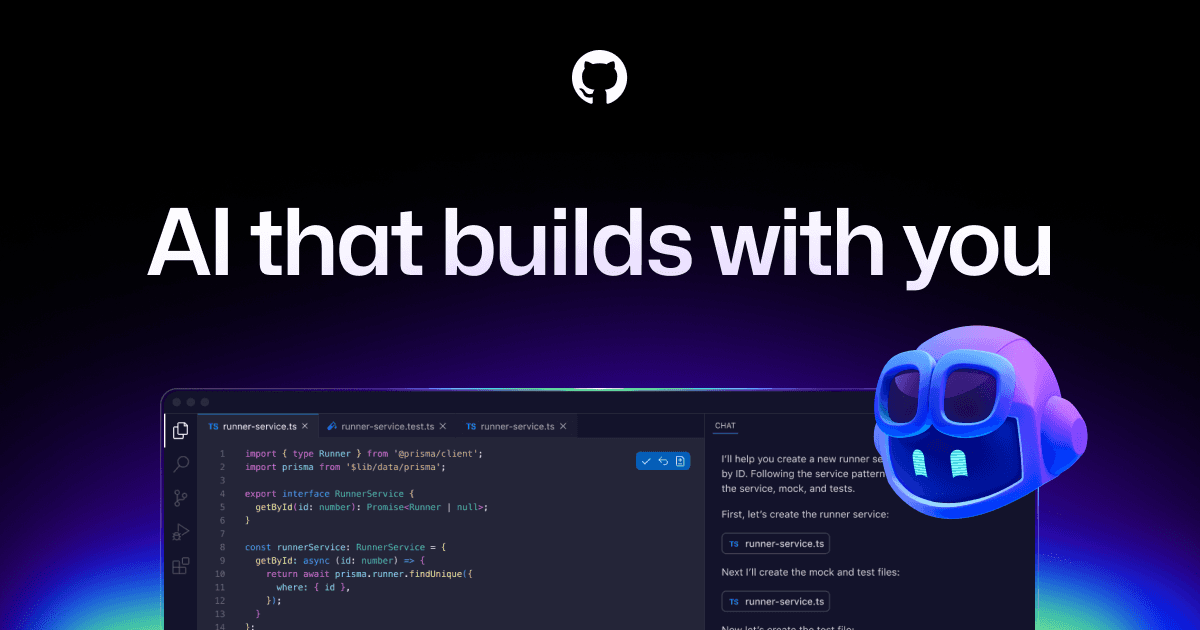
Copilot stopped being an autocomplete story. Copilot code review is a distinct product on every paid plan that reviews pull requests directly on github.com and can review selections in VS Code.
For GitHub-resident teams the workflow fit is unbeatable, since there is nothing to install and the review shows up like any human reviewer’s. It also respects your repository’s custom instructions.
Billing runs through GitHub’s AI credits, where one credit equals $0.01, so review usage scales with how hard you lean on it.
Plans run Free ($0, review of selections in VS Code only), Pro $10/month, Pro+ $39, Max $100, Business $19/seat, and Enterprise $39/seat.
If you are weighing the wider assistant ecosystem, we compared the Copilot alternatives for VS Code separately.
Strengths: zero-friction GitHub integration, one subscription covering assistant plus review, org policy controls on Business and Enterprise.
Limitations: GitHub-only, review depth trails the dedicated reviewers on multi-file logic, and credit-based billing takes watching.
Pricing: included in paid Copilot plans, metered via AI credits (1 credit = $0.01).
Best for: teams already paying for Copilot that want baseline AI review without adding a vendor.
5. Greptile
Greptile’s pitch is context. It builds a full index of your codebase and reviews each PR against it, so it catches the cross-file implications that diff-only reviewers miss.
That is exactly the failure mode that hurts in monorepos and service sprawl.
Reviews run on credits: one credit for a standard review, three for a deeper “trex” review. Since June 29, 2026 there is a free Starter plan for individual developers with 50 credits a month and unlimited repos.
The free tier makes Greptile the easiest full-context reviewer to trial solo.
Strengths: repo-wide reasoning, custom rules on Pro, self-hosting and SSO at enterprise, free for MIT and Apache open source.
Limitations: PR-flow only with no IDE surface, and credit accounting adds a budgeting step per team.
Pricing: Starter free (1 developer, 50 credits/month), Pro $30/seat/month with $1 per extra credit, Enterprise custom.
Best for: monorepo and multi-service teams where diff-only review keeps missing the real bug.
6. Graphite
Graphite attacks the queue rather than the diff. Stacked PRs, an automated merge queue, and review assignment keep changes small and moving, with AI Reviews (the capability formerly branded Diamond) layered on top of the workflow.
Cursor acquired Graphite in December 2025, and the product continues independently with Cursor integration. For developers the draw is that reviews happen on small stacked changes, which is where both human and AI reviewers perform best.
If the workflow appeals but you want deeper analysis attached to it, we covered the Graphite alternatives for code review in depth.
Strengths: best-in-class stacked-PR experience, merge automation that measurably cuts wait time, AI review included in plans.
Limitations: the AI analysis layer is not the depth leader, and the workflow asks the whole team to adopt stacking conventions.
Pricing: Hobby free, Starter $20/user/month, Team $40/user/month, billed annually.
Best for: teams whose bottleneck is review-queue management rather than finding quality issues.
7. Qodo (Formerly Codium)
If you are still searching for “Codium code review,” the brand has been Qodo since late 2024. Qodo Merge handles PR review, Qodo Gen works in the IDE, and the platform’s distinctive move is generating tests alongside review findings.
Enterprise is where Qodo leans: self-learning review policies, a centralized rules engine, SSO and SAML, and on-prem or air-gapped deployment for teams that cannot send code to a shared cloud.
Strengths: review depth plus test generation in one platform, strong policy enforcement, deployment options regulated enterprises actually need.
Limitations: credit-based pricing takes modeling before you know your real monthly cost, and full enterprise configuration is a project.
Pricing: 14-day free trial with unlimited reviews, Pro Team at $30/month base (up to 30 users, credit-based at $0.012 per credit), Enterprise custom. Free for qualified open source.
Best for: large codebases that want review, tests, and policy enforcement from one vendor.
8. Claude Code Review

Anthropic’s managed Code Review sends a fleet of specialized agents at each GitHub PR, verifies candidate findings against actual code behavior to cut false positives, and posts severity-tagged inline comments.
It is in research preview for Claude Team and Enterprise plans.
Reviews average 20 minutes, which is slow for a bot and still faster than the teammate who promised to look after standup. Findings never block the merge, and a REVIEW.md file at the repo root tunes severity, nit caps, and skip rules.
Cost is the trade. Anthropic’s own docs put the average at $15-25 per review, billed through usage credits and scaling with PR size and complexity.
Developers can also run the same review locally with the /code-review command in Claude Code. We looked at Claude for code review in more detail separately.
Strengths: deepest per-PR reasoning in this list, verification pass that filters false positives, local CLI review of a diff before pushing.
Limitations: research-preview status, GitHub-only as a managed service, and per-review cost that is 10-20x Bugbot’s.
Pricing: usage-based, $15-25 average per review, requires a Claude Team or Enterprise subscription.
Best for: high-stakes changes where one caught regression pays for the review many times over. Skip it for dependency bumps.
9. SonarQube
SonarQube (Cloud for SaaS, Server for self-managed) remains the governance layer: quality gates in the PR, a rules library nothing else matches, and 30+ languages on Team rising to 40+ on Enterprise.
SonarQube for IDE brings the same checks into the editor for free.
Sonar’s 2026 story is AI on both sides of the review. AI Code Assurance applies a quality gate to AI-generated code, and Sonar now sells Gitar, an AI code reviewer that fixes issues and commits only when the build passes.
Strengths: unmatched static analysis depth, audit-ready reporting, the default answer when compliance asks “what enforces your quality standard.”
Limitations: configuration investment is real, and the classic engine’s PR comments read like a linter rather than a reviewer unless you add Gitar.
Pricing: SonarQube Team from $34/month for up to 100k LOC, Enterprise custom. Gitar runs $20/user/month annual (Core) to $40 (Pro).
Best for: enterprises standardizing quality gates across hundreds of repos and languages.
10. Snyk
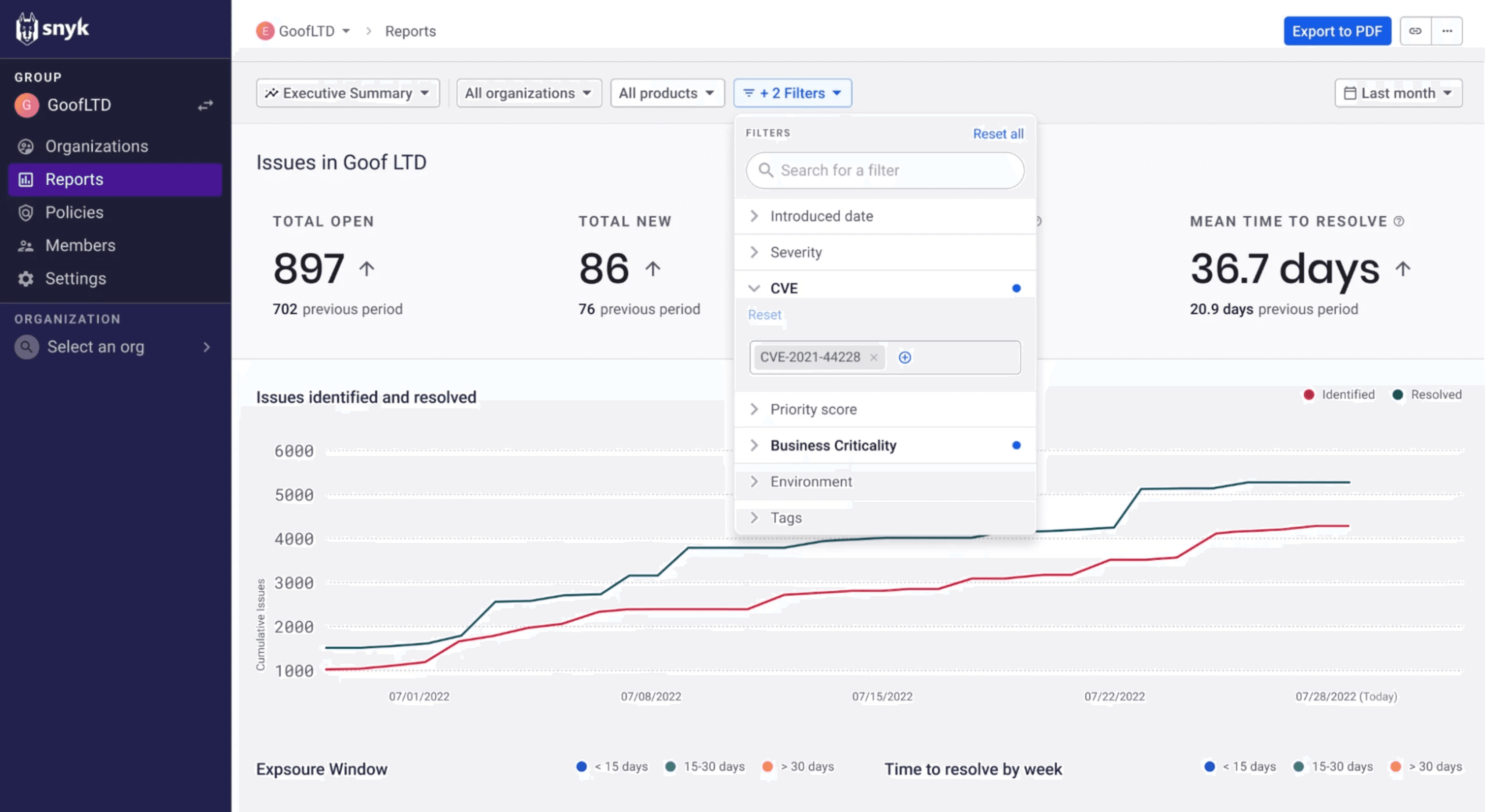
Snyk is a security platform that behaves like a reviewer. Snyk Code runs AI-powered SAST on PRs and in the IDE, while the wider platform covers open-source dependencies, containers, and IaC, with fix advice attached to findings.
It pairs naturally with a review-first tool. The AI reviewer catches logic and design issues while Snyk owns the vulnerability and supply-chain surface, and the cost of that pairing is the two-dashboard life.
Strengths: first-class dependency and container security, mature IDE and CI integrations, actionable fix guidance.
Limitations: it covers the security surface only, so it does not replace a PR reviewer, and per-developer costs climb with the product surface.
Pricing: Free tier (200 Snyk Code tests/month), Team from $25/month per contributing developer, Ignite from $1,260/year per developer for teams under 50, Enterprise custom.
Best for: teams whose primary review gap is vulnerabilities and dependencies.
11. Codacy

Codacy is the budget-sane standards enforcer. The free Developer tier gives individuals an IDE plugin plus AI guardrails with SAST, SCA, and secrets for JavaScript, TypeScript, Python, and Java.
The Team tier adds an AI Reviewer with merge gates across 49 languages.
It will not out-reason the frontier reviewers on subtle logic, but for consistent quality and security checks per seat per month it is hard to beat on price.
Strengths: genuinely useful free tier, AI Reviewer with merge gates at a low seat price, free forever for open source.
Limitations: analysis depth trails the dedicated AI reviewers, and Business-tier features like DAST and SSO push the price up.
Pricing: Developer free, Team $18/dev/month billed annually ($21 monthly, up to 30 devs), Business custom.
Best for: small-to-mid teams that want standards enforcement and basic security without a platform bill.
12. Bito
Bito’s AI Code Review Agent meters by code reviewed rather than by seats alone. Each seat includes 5K lines of reviewed code per month, with overage at $5 per extra 1K lines, which keeps costs predictable for teams with modest PR volume.
Reviews run in the PR and the IDE, and the Professional tier adds custom review guidelines and analytics. It suits teams that want an inexpensive reviewer and can live without the deeper context engines above.
Strengths: lowest entry price on this list for a dedicated reviewer, LOC-based metering that matches light usage, 14-day trial on Professional.
Limitations: the LOC meter punishes high-volume repos, and context depth sits behind Greptile and Qodo.
Pricing: Team $12/seat/month annual ($15 monthly), Professional $20/seat/month annual ($25 monthly).
Best for: small teams that want per-PR AI feedback at the lowest predictable cost.
Tools That Left the 2026 Roster
Here are some tools from before that no longer exist or are outdated enough to be considered deprecated. For rolling out whichever replacement you pick, our guide to AI-assisted code review adoption still applies.
Former entry | What happened | Where to go now |
|---|---|---|
Amazon CodeGuru Reviewer | Closed to new repository associations on November 7, 2025 | Amazon Q Developer for reviews in IDE, GitHub, and GitLab |
Code Climate | Pivoted to AI-transformation consulting, product plans gone | Qlty (qlty.sh), the founders’ successor: free tier, Pro $20, Enterprise $30 per contributor/mo |
PullRequest | Rebranded after the HackerOne acquisition | HackerOne Code, AI plus vetted human expert review, pricing on request |
Codium / CodiumAI | Rebranded in late 2024 | Qodo, ranked at #7 above |
CodeMind | Defunct, the domain now redirects to a domain-for-sale page | No successor. Remove it from your shortlists |
Panto AI | Repositioned around AI mobile QA testing | The Panto code review agent still exists, with no public per-seat pricing |
CodeScene | Still active and fairly priced (€18-27 per active author/mo) | Kept off the main list only because its center of gravity is code-health analytics rather than PR review |
Best AI Code Review Tool by Team Size and Use Case
Team size and constraints are usually the better one:
Small teams (1-20 developers): CodeAnt AI, because its 14-day trial (100 PR reviews, no card) gives a small team AI PR reviews plus SAST, secret, and IaC scanning in one place, no DevSecOps hire required. CodeRabbit and Greptile have free tiers if you only need review comments to start.
Mid-size engineering teams (20-200 developers): CodeAnt AI, because it combines AI PR reviews, SAST, secret detection, IaC scanning, and DORA metrics in one platform across GitHub, GitLab, Bitbucket, and Azure DevOps, right as separate tools become operational overhead. CodeRabbit is an option for teams that only want review comments.
Enterprise teams (200+ developers): CodeAnt AI, because it pairs review depth and org-wide velocity metrics with SOC 2 and PCI-DSS-ready security in one platform, deployable on-prem or in a VPC. Qodo focuses on review depth with policy enforcement, and GitHub Copilot Enterprise fits GitHub-committed orgs.
Speeding up PR reviews and merge velocity: CodeAnt AI, because it collapses PR review and security scanning into a single pass, so feedback lands fast without bolting on a second tool. Graphite adds stacked PRs and merge queues, while CodeRabbit and Cursor Bugbot are lightweight always-on reviewers.
Regulated industries (fintech, healthcare, compliance-bound SaaS): CodeAnt AI, because SAST, secret detection, IaC scanning, and security audit reports are built into the PR review workflow, mapping directly to SOC 2, HIPAA, and PCI-DSS evidence. Claude Code Review can add depth on the highest-risk changes if per-review spend is acceptable.
Best Practices for Integrating AI Code Reviews
Whichever tool wins your bake-off, the rollout decides whether it sticks. The teams that keep AI review enabled a year in tend to do five things:
Define the job first: decide whether the tool exists to cut review latency, catch security issues, or enforce standards, and measure that one thing.
Start on two or three repos: tune noise thresholds and custom rules where the blast radius is small before turning it on org-wide.
Make ownership explicit: every bot finding needs a human who either fixes it or dismisses it with a reason, or the comments become wallpaper.
Track the counter-metrics: watch time-to-first-review and escaped defects, and also watch dismissal rates, because a 90% dismissal rate means the tool is configured wrong or wrong for you.
Re-run the bake-off yearly: pricing models and capabilities in this category changed materially twice in the first half of 2026 alone.
Conclusion
AI code review in 2026 is a workflow decision as much as a tooling one, and the right answer follows your bottleneck. Pick the reviewer that shows up where your developers already work, run a two-week trial on live PRs, and hold it to the metrics above.
Try CodeAnt AI free for 14 days if that bottleneck is shipping secure code without adding another dashboard.
FAQs
What is the best AI code review tool in 2026?
Do AI code review tools replace human reviewers, or just speed them up?
How do AI code review tools integrate with GitHub, GitLab, Bitbucket, and Azure DevOps?
Which metrics prove that AI code reviews are worth it (ROI)?
How should I compare pricing for AI code review tools without blowing the budget?